Google released three Gemini 4 models between mid-October and mid-November. Argon reached the Gemini API first, Carbon followed on November 10, and Hydrogen arrived two days later as the fast, lower-cost tier of the family, before a fourth model, Gemini 4 Neon, followed on November 18.
All three share the same context window and much of the same API surface, so choosing between them comes down to how much reasoning a task needs and how much you're willing to pay and wait for it. That math also changes on December 1, when Argon's and Carbon's prices go up and Hydrogen's stays where it is.
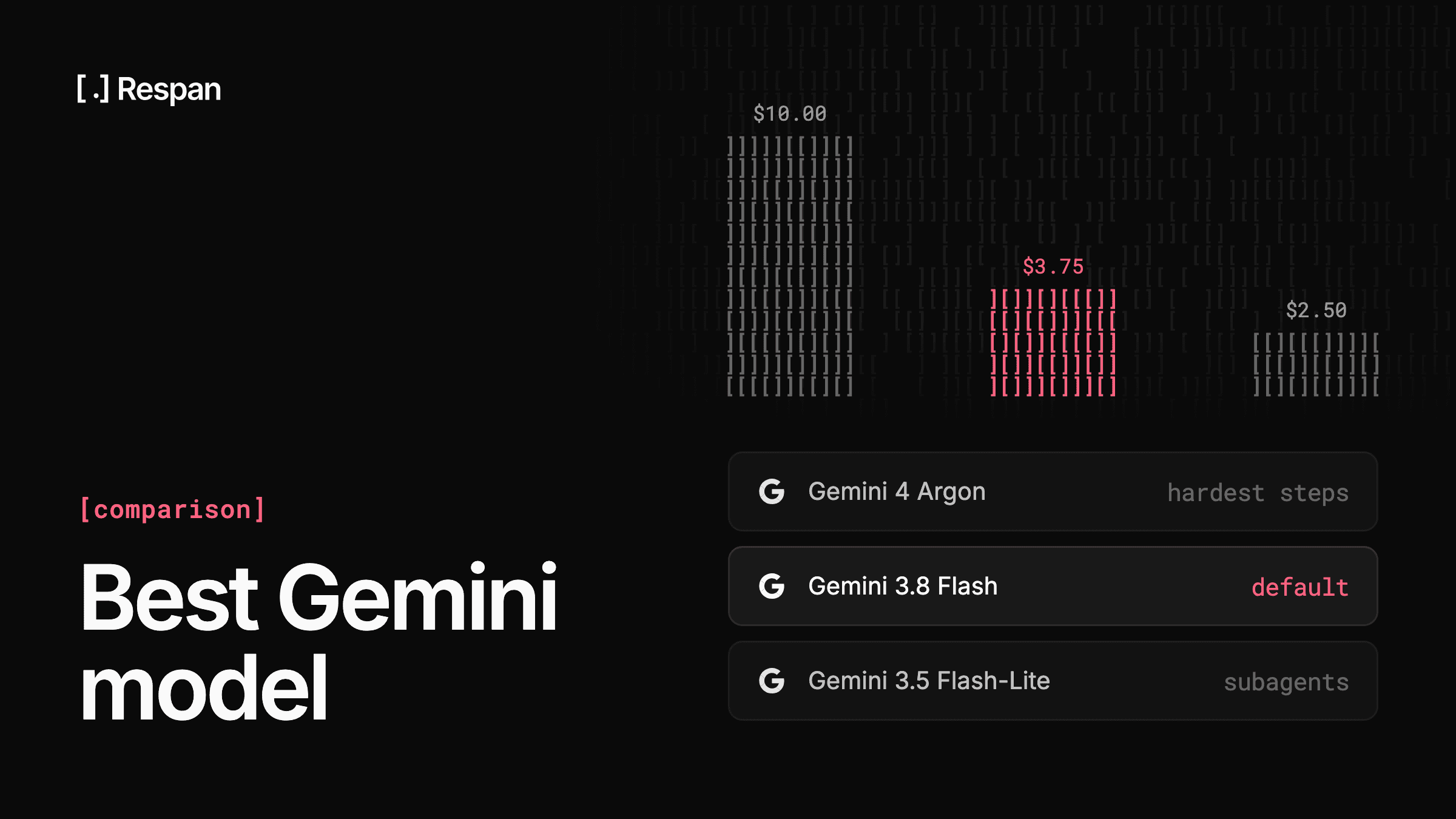
Hydrogen should be the default for most coding and agent work, with Carbon held for the hardest steps. Argon is the one that now has to justify its place.
On Gemini 4 Hydrogen vs Argon vs Carbon, which to use depends on where each model lands on benchmarks, price, and speed.
TL;DR: Gemini 4 Hydrogen vs Argon vs Carbon
Use Gemini 4 Hydrogen by default, step up to Gemini 4 Carbon for the hardest long-horizon work, and keep Gemini 4 Argon for the cases where spending fewer thinking tokens than Carbon pays off. Hydrogen trails Argon by 2 to 4 points on two shared coding benchmarks, costs less per token, and runs much faster through the Respan gateway. Carbon leads Argon by about 6 points on the same benchmarks at the same price.
- Gemini 4 Hydrogen - The default for everyday coding, agent loops, and high-volume work. $1.50 / $7.50 per million tokens, with a free API tier.
- Gemini 4 Carbon - The step up for hard reasoning, architecture, and security work. $2 / $10 through November 30, then $4 / $20.
- Gemini 4 Argon - Long-horizon tasks where Carbon's thinking spend runs too high. Priced the same as Carbon.
Gemini 4 Neon, which Google released on November 18 at $3 / $15, now scores above Carbon on the Respan Index, so it's worth testing alongside Carbon before you commit the hardest steps to either.
What is Gemini 4 Hydrogen?
Gemini 4 Hydrogen is Google's fast, lower-cost Gemini 4 model, released on November 12, 2026, for everyday coding, debugging, and agentic workflows. Google positions Argon and Carbon as its frontier models for deep, long-horizon reasoning, and Hydrogen as the model for fast, high-volume work.
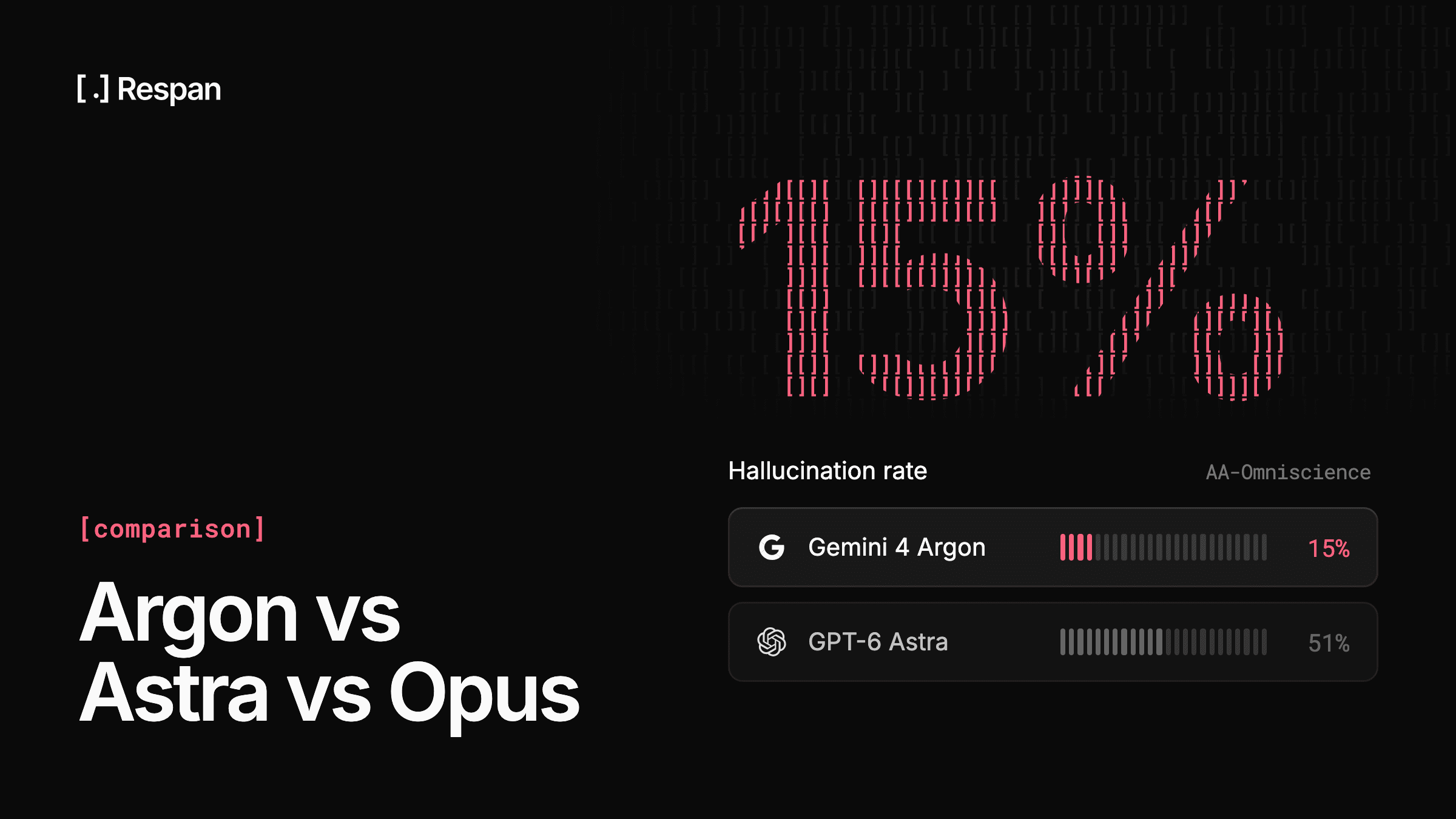
That gap is smaller than the positioning suggests. In Google's announcement, Hydrogen edges out Argon on the Artificial Analysis Intelligence Index at its default high thinking level, 51 to 50, and reaches 54 at its highest setting. That figure is Google's own, and the independent coding benchmarks in the comparison put Argon slightly ahead, but either way Gemini 4 Hydrogen lands in the same range as Argon rather than a tier below it.
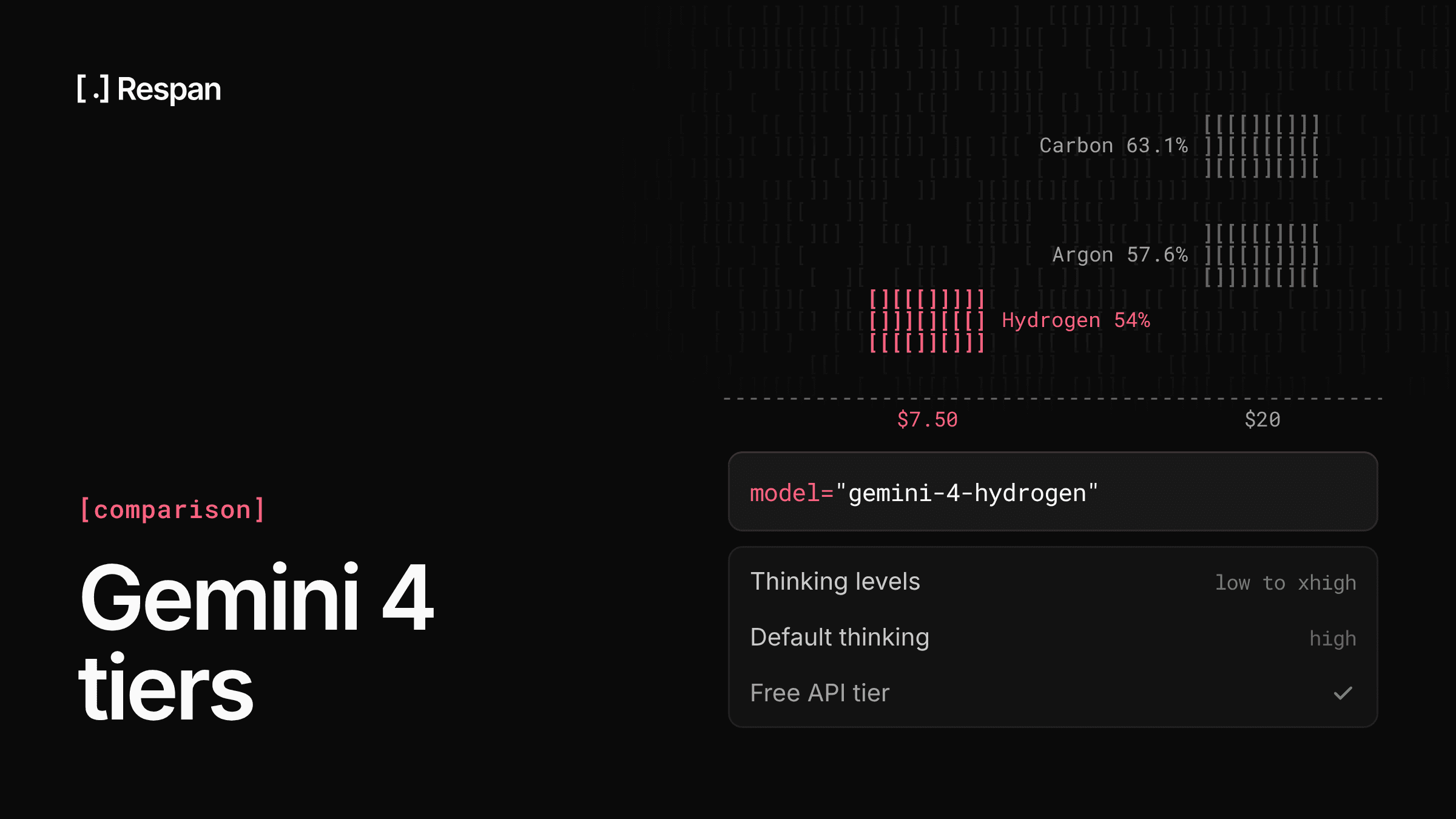
Hydrogen also has more thinking levels than its siblings. Per Google's model docs, it supports low, medium, high (the default), and a new xhigh level, while Argon and Carbon support low through high and default to medium. Output on all three includes thinking tokens, so each step up in thinking level trades cost and wait time for depth.
Gemini 4 Hydrogen vs Argon vs Carbon: comparison
The three models share a 1M-token context window, so the differences that matter for choosing between them are coding benchmark scores, price, output limits, and speed.
| Gemini 4 Hydrogen | Gemini 4 Argon | Gemini 4 Carbon | |
|---|---|---|---|
| Model ID | gemini-4-hydrogen | gemini-4-argon | gemini-4-carbon |
| Generally available | Nov 12, 2026 | Oct 13, 2026 | Nov 10, 2026 |
| Price per 1M (in / out), through Nov 30 | $1.50 / $7.50 | $2 / $10 | $2 / $10 |
| Price per 1M (in / out), from Dec 1 | $1.50 / $7.50 | $4 / $20 | $4 / $20 |
| Free API tier | Yes | No | No |
| Context window | 1M tokens | 1M tokens | 1M tokens |
| Max output per non-streaming call | 65,536 tokens | 32,768 tokens | 32,768 tokens |
| Thinking levels (default) | Low to xhigh (high) | Low to high (medium) | Low to high (medium) |
| Terminal-Bench 4.0 (Vals AI) | 54% | 57.6% | 63.1% |
| FrontierSWE V2 (Proximal Labs) | 53.1% | 55% | 61.2% |
| Respan Index | 70.8 | 69.3 | 76.2 |
| Output speed (Respan gateway) | 1,684 tokens/s | 89 tokens/s | 582 tokens/s |
| Time to first token (Respan gateway) | 7.8 s | 15 s | 47 s |
Benchmarks
On the two coding benchmarks all three models share, the order matches Google's positioning. Gemini 4 Carbon scores 63.1% on Terminal-Bench 4.0 and 61.2% on FrontierSWE V2, Gemini 4 Argon scores 57.6% and 55%, and Hydrogen scores 54% and 53.1%. Each row comes from one publisher on one version of the test (Vals AI for Terminal-Bench 4.0, Proximal Labs for FrontierSWE V2), so the three scores in a row are directly comparable.
That puts Hydrogen 3.6 and 1.9 points behind Argon, while Carbon leads Argon by 5.5 and 6.2 points. Combined with Google's Intelligence Index figure, which has Hydrogen one point ahead of Argon, Hydrogen sits a little above or a little below Argon depending on the test, and Carbon sits clearly above both.
The Respan Index, which combines public benchmarks into one 0 to 100 score, puts Hydrogen narrowly ahead of Argon overall. Carbon ranks third of 175 models at 76.2, behind Claude Fable 5.2 and Gemini 4 Neon, while Hydrogen ranks 11th at 70.8 and Argon ranks 13th at 69.3.
Pricing
Through November 30, Argon and Carbon both cost $2 per million input tokens and $10 per million output tokens on the Gemini API, and Hydrogen costs $1.50 and $7.50. From December 1, Google's pricing page lists Argon and Carbon at $4 and $20, while Hydrogen has no scheduled change. As a result, Hydrogen goes from 75% of their per-token price through November 30 to 37.5% from December 1.
Cached input follows the same pattern, at $0.075 for Hydrogen and $0.10 rising to $0.20 for the other two, and Batch runs at half the standard rate on all three. Hydrogen is also on the Gemini API free tier, which Argon and Carbon are not.
The per-token rate is only part of the bill, however. Output includes thinking tokens on all three models, so a higher thinking level raises the cost of a request even when the price per token stays the same. At the base rates, a call with 20K input tokens and 3K output tokens costs about $0.05 on Hydrogen and $0.07 on Argon or Carbon through November 30, rising to $0.14 from December 1, and any thinking tokens add to the output side of that.
Speed and latency
Through the Respan gateway, Hydrogen averages 1,684 output tokens per second and 7.8 seconds to first token. Carbon averages 582 tokens per second and 47 seconds to first token, and Argon averages 89 tokens per second and 15 seconds.
These are 30-day averages across Respan gateway traffic at whatever thinking level each request used, so they mix settings rather than come from a controlled test. All three models reason before they answer, so time to first token includes thinking time and moves with the thinking level a request uses.
Keep in mind that Hydrogen's averages cover only its first days of gateway traffic since its November 12 release, so expect them to move as volume grows.
Which to use: Hydrogen, Argon, or Carbon?
Because Hydrogen lands close to Argon on coding benchmarks at a lower price and with much faster output, the practical split is Hydrogen as the default and Carbon as the step up, with Argon kept for a narrower set of jobs.
When to use Gemini 4 Hydrogen
Respan Index: 70.8, 11th of 175 models
Hydrogen fits everyday coding, debugging, tool-calling agent loops, and high-volume work where cost and latency per request add up, which lines up with the uses Google lists for it. If you swap Argon or Carbon for Hydrogen without setting a thinking level, requests move from medium to high by default, so pin the level you tested at.
Hydrogen's 65,536-token limit on a non-streaming call is also double what Argon and Carbon allow, which helps when one call has to return a long file or report. When streaming, all three allow up to 65,536 tokens per segment.
Before moving a task up to Carbon, try Hydrogen at xhigh, since that's the level where Google's reported score rises from 51 to 54. xhigh spends more thinking tokens per request, however, so compare cost and latency per task against Carbon rather than only the per-token rate. The free API tier also means you can prototype on Hydrogen before paying anything.
When to use Gemini 4 Carbon
Respan Index: 76.2, third of 175 models
Carbon is the pick for the hardest long-horizon reasoning, such as architecture decisions, debugging across a large codebase, and security work. That's where Google aims it and where its lead over Argon on the shared benchmarks shows up. Its time to first token is the longest of the three, so it suits steps where depth matters more than response time.
Carbon is no longer the top-scoring Gemini 4 model, though. Gemini 4 Neon scores 80.6 on the Respan Index against Carbon's 76.2 and costs $3 / $15 per million tokens, below Carbon's rate from December 1, so test both on your hardest steps before settling on Carbon.
Carbon and Hydrogen also work well inside the same agent. Google describes Hydrogen as a high-efficiency execution engine that pairs with Carbon and Argon in multi-model workflows, and its Antigravity Orchestrator switches between Carbon and Hydrogen within a session. In your own agent, that means sending planning and review steps to Carbon and the edits, tool calls, and tests to Hydrogen, so the high-volume execution steps run at Hydrogen's rate.
When Gemini 4 Argon still makes sense
Respan Index: 69.3, 13th of 175 models
Argon's case is narrower, but it exists. Google describes Argon as spending fewer tokens per turn than Carbon at the same per-token price, so it can make sense for long-horizon tasks where Carbon's thinking spend runs high and Hydrogen falls short. Google gives no figure for the difference, so compare total output tokens per task for Argon and Carbon on your own runs before choosing Argon on cost.
Argon also makes sense for production workloads already tuned on it and passing your evals, where switching tiers means re-testing first.
Argon's position also depends on which other models are in play. Choosing the best Gemini model across Google's full lineup, Neon included, is a broader question than these three, and outside Google, Argon's pricing looks different against the frontier models it competes with in Gemini 4 Argon vs GPT-6.2 Astra vs Opus 5.5.
Route Gemini models through one API
Splitting work across tiers is easy to wire up and harder to verify, because you need to see what each step costs and whether quality held after the switch, especially once Argon and Carbon double in price on December 1.
Respan is the AI router that gives you one API key for 1,000+ models at up to 55% off per token, with a 0% fee and built-in observability and automated evals. Point the OpenAI SDK at Respan's gateway, and moving a step between Gemini 4 tiers becomes a change to one parameter:
import os
from openai import OpenAI

client = OpenAI(
    base_url="https://gateway.respan.ai/v1",
    api_key=os.environ["RESPAN_API_KEY"],
)

# Planning step on Carbon
plan = client.chat.completions.create(
    model="google_gemini_ai/gemini-4-carbon",
    messages=[{"role": "user", "content": "Plan the refactor for this module."}],
)

# Execution step on Hydrogen
edit = client.chat.completions.create(
    model="google_gemini_ai/gemini-4-hydrogen",
    messages=[{"role": "user", "content": plan.choices[0].message.content}],
)
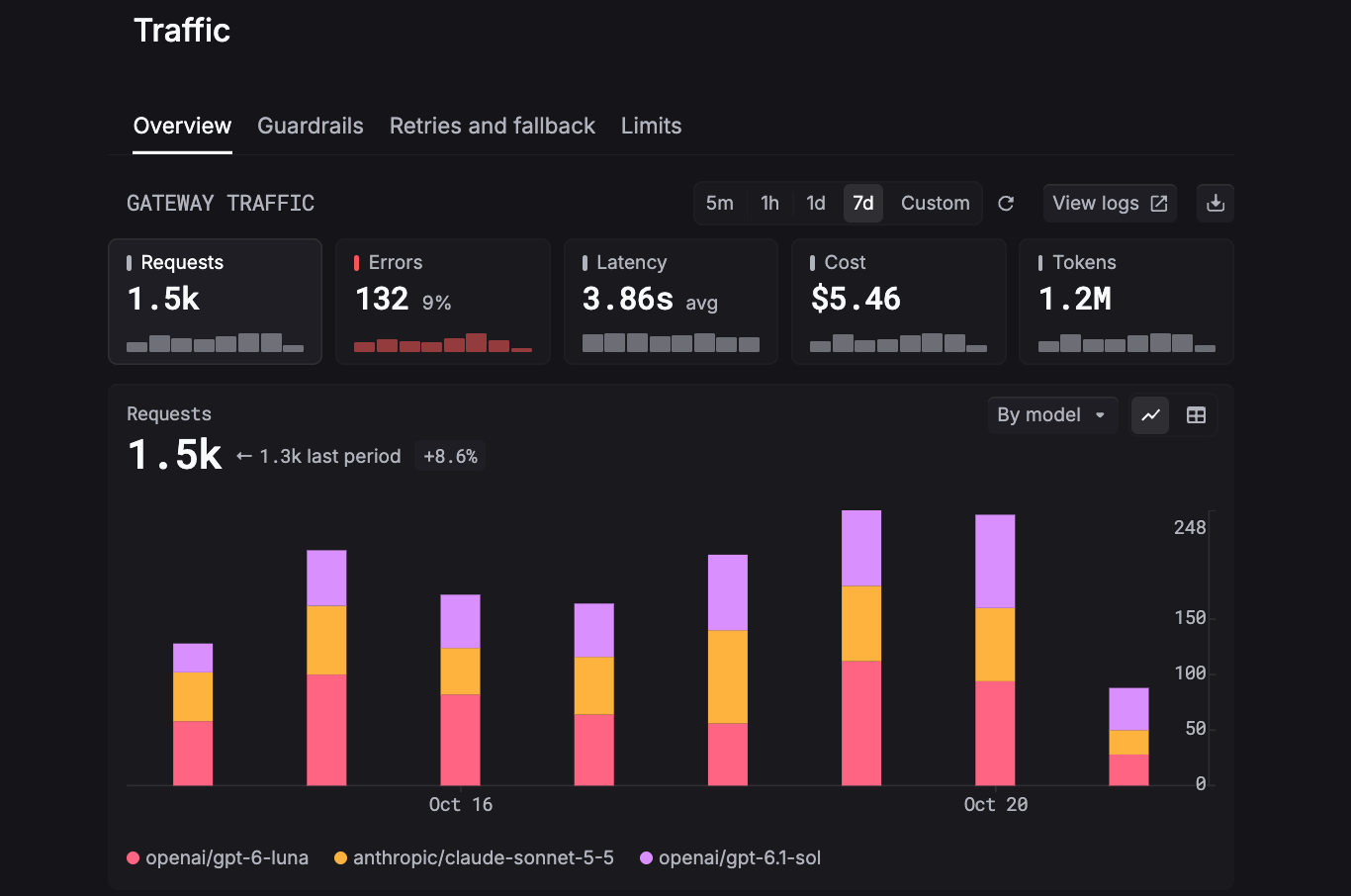
Every call in that script is logged as a span with its model, latency, and cost attached, so the tradeoffs in the benchmark and pricing tables get measured on your own traffic instead of estimated.
- Cost per step, per tier - See spend broken down by model and request, with monitors and hard spend limits set before the December 1 price change lands.
- Evals before you move traffic - Build a dataset from your production requests, run it through Hydrogen and Argon in an experiment, and compare evals row by row, with the trace behind each score one click away.
- Fallbacks - When a tier errors or rate-limits, requests move to the next model in a chain you define.
Route, observe, and evaluate every LLM call, so the tier each step runs on is the one your own data supports.
FAQ
Is Gemini 4 Hydrogen good?
Yes, for everyday coding and agent work. Google reports it one point ahead of Argon on the Artificial Analysis Intelligence Index at its default setting, and it trails Argon by 2 to 4 points on Terminal-Bench 4.0 and FrontierSWE V2 while costing less and running faster. Carbon still leads it on the hardest tasks. Whether it holds up on your workload is easiest to settle by scoring it against your own test cases, which Respan's evals do on the same requests it routes.
How much does Gemini 4 Hydrogen cost?
Gemini 4 Hydrogen costs $1.50 per million input tokens and $7.50 per million output tokens on the Gemini API, with cached input at $0.075 and Batch at half price. The rate is flat across the 1M-token context window and has no scheduled change, while Argon and Carbon rise to $4 and $20 on December 1. Respan breaks cost down by model and request, so you can see what Hydrogen costs per request rather than per token.
How do I use the Gemini 4 Hydrogen API?
Call gemini-4-hydrogen through the Gemini API with a key from Google AI Studio, or through Google's OpenAI-compatible Chat Completions endpoint. Through Respan, the same model is google_gemini_ai/gemini-4-hydrogen on an OpenAI-compatible endpoint, so you can switch between Hydrogen, Argon, and Carbon by changing the model name, with every call traced.
Is Gemini 4 Hydrogen free?
Yes. Hydrogen is on the Gemini API free tier, which covers input, output, and caching at no charge within Google's free-tier limits, while Argon and Carbon are paid only. Respan's Free plan is $0 as well, so you can route and trace Hydrogen calls without a platform fee within the Free plan's limits, with the model's own token rates applying on paid calls.