One user request rarely means one model call anymore. It means a sequence: a model call, a retrieval against a vector store, a tool that hits an internal API, a handoff to a second agent, then another model call to judge whether the result is worth returning. Orchestration is the layer that decides what runs, in what order, with what context carried forward, and what happens when a step comes back wrong.
That layer has to do work no ordinary workflow engine was built for. A model holds no memory of the previous call and will not reliably return the same output twice for the same input, so a step can succeed, return well-formed JSON, and still be wrong.
What changed by 2026 is that these systems left the prototype stage in volume and the economics followed. A supervisor pattern that fans one request out to six model calls costs roughly six times a single call and can fail at any one of those points without the others noticing, and vendors have been repricing around that, moving from seats toward metering steps, executions, and seconds of active compute.
The tooling split the same way, with frameworks expressing the workflow and a separate layer underneath routing calls, enforcing spend, and recording what each step did. Most teams end up owning both halves, which is why the ten LLM orchestration tools below are grouped by which half they cover.
What Is LLM Orchestration?
LLM orchestration is the coordination of everything that happens between a request arriving and an answer going back out, once more than one model call is involved. It covers selecting a prompt, calling a model, passing that output into a retrieval step or a tool, carrying state forward, deciding what runs next, and retrying when something fails.
The reason this needs a layer of its own is that language models are stateless and unreliable in a specific way. A model has no memory of the previous call, no way to fetch data it was not given, and no guarantee it will return the same thing twice for the same input. Something has to hold the context, hand it to each step in order, and decide what to do when a step returns nonsense.
Traditional workflow engines assume a step either succeeds or throws. Here a step can succeed, return valid JSON, and still be wrong, which is why orchestration in this context always ends up entangled with evaluation and tracing rather than sitting cleanly apart from them.
AI Model Orchestration
Orchestrating across models is a narrower job than orchestrating across steps, and the two get confused because both are called orchestration. Model orchestration is about which provider serves a given call: routing by cost, latency, or capability, failing over when a provider returns a 429, load balancing across keys, and holding a budget ceiling per team or per customer.
This lives below the framework rather than inside it. A graph does not care whether the call was served by Claude or GPT, so the decision belongs at the layer every call passes through, which is generally a gateway. That layer is also where a model swap stops being a code change, since routing production traffic across models can be done by configuration once every call goes through one endpoint.
One caveat on the term. "AI model orchestration" also gets used in classical ML to mean scheduling training jobs and managing model deployment, which is a different discipline with different tools. This guide uses it in the inference sense.
Multi-Agent LLM Orchestration
Multi-agent orchestration means splitting work across several agents that each hold their own instructions and tools, then coordinating them. A supervisor agent decides which specialist handles a request and collects the result. Or agents hand off to each other directly, each passing along the conversation so far.
The appeal is that a specialist with four tools behaves more predictably than a generalist with forty. The cost is that every handoff carries context with it, so a three-agent chain can send the accumulated conversation through the model three separate times, and token spend grows with the number of turns rather than with the amount of work actually done.
That arithmetic is why the interesting question is usually how few agents you can get away with. The coordination patterns worth knowing before you design an agent workflow are well established, and most of them are cheaper as a single agent with good tools until the workload genuinely forks.
Top 10 LLM Orchestration Tools
The roster below spans both halves of the split. Some of these tools give you primitives for writing a workflow, some give you the layer that runs it in production, and a few reach into both. The Covers line on each entry says which.
| Tool | Covers | State and memory | What it meters | Language or interface |
|---|---|---|---|---|
| 1. Respan | Run: gateway, traces, evals | Traces, datasets, prompt versions | Logs, scores, seats | SDKs, OpenAI-compatible endpoint |
| 2. LangGraph | Build: graph state machines | Checkpoints, durable state | Seats plus trace volume | Python, TypeScript |
| 3. LlamaIndex | Build: retrieval workflows | Event-driven workflow context | Document processing credits | Python, TypeScript |
| 4. CrewAI | Build: role-based crews | Crew memory, task context | Workflow executions | Python |
| 5. Microsoft Agent Framework | Build: agents and workflows | Checkpointing, persistent threads | Nothing, MIT licensed | Python, .NET |
| 6. OpenAI Agents SDK | Build: agents and handoffs | Sessions, handoff context | Nothing, model usage only | Python, TypeScript |
| 7. Haystack | Build: component pipelines | Pipeline state, document stores | Nothing, support sold apart | Python |
| 8. Amazon Bedrock AgentCore | Run: managed agent runtime | Short and long-term memory | Active CPU per second | Any framework, any model |
| 9. Portkey | Run: gateway and governance | Request cache and logs | Plan tier, then usage | OpenAI-compatible endpoint |
| 10. LiteLLM | Run: self-hosted gateway | In-memory or Redis cache | Nothing, self-hosted | OpenAI-compatible endpoint |
1. Respan
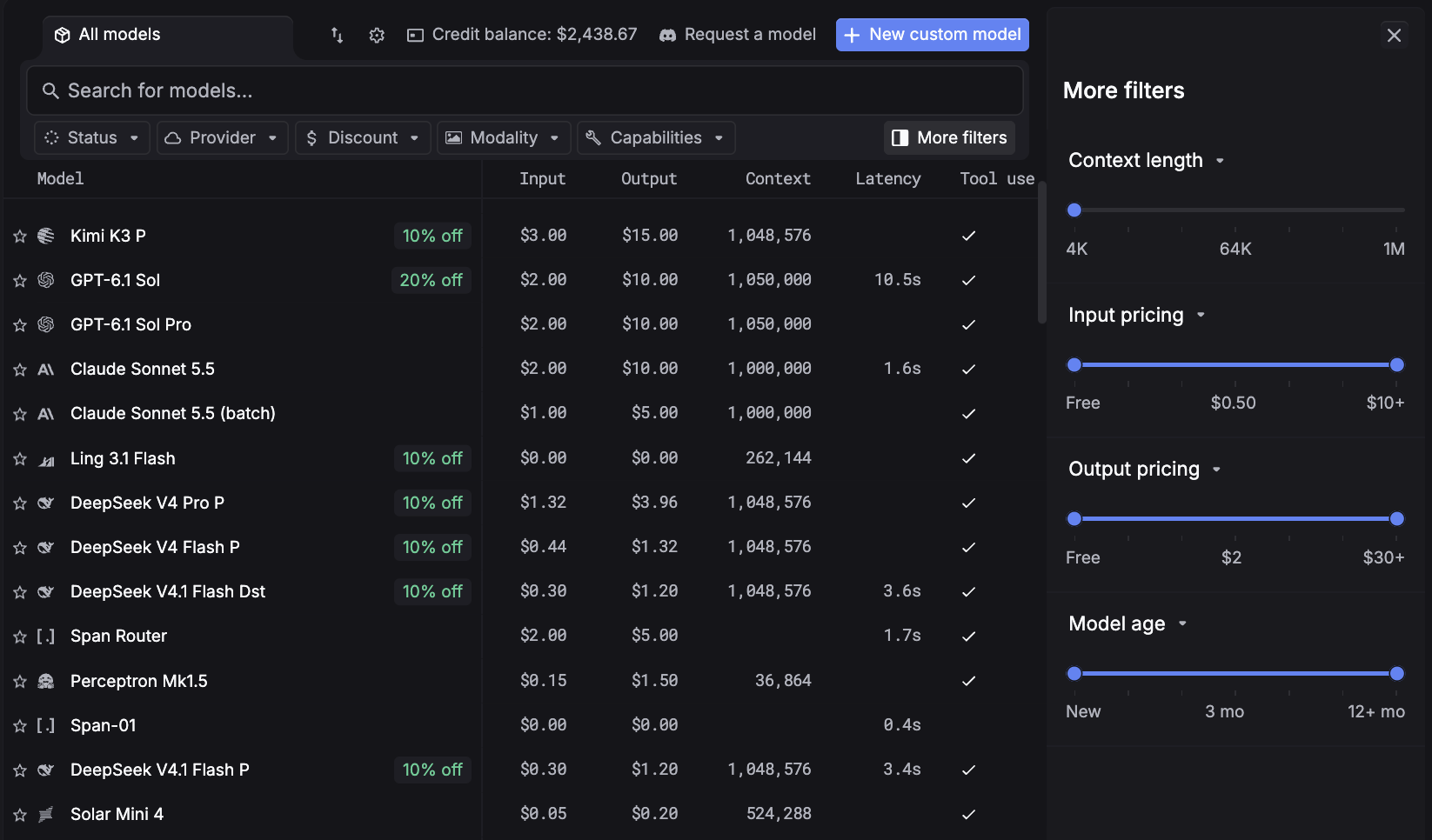
Respan runs the second half of the split as one platform rather than four. The gateway routes every call, the tracing layer records what each step did, the evaluation layer scores the output, and prompt management ships changes without a deploy.
Because those run on one data plane, a spend limit you crossed, a fallback that fired, and the trace explaining a slow answer all resolve in the same place instead of across four dashboards and four invoices. That matters most during an incident, when the score sits in one system and the record of which model served the request sits in another.
- One endpoint, 1,000+ models - Switch models by changing a word. Every request is logged as a span automatically, with latency and cost attached.
- Automatic failover - Ordered fallback, retries, and load balancing when a provider errors or rate-limits, at typically 30–40ms of added latency.
- Full trace visibility - Every LLM call, tool run, retrieval, and agent turn becomes a nested span with its own input, output, latency, and cost.
- Spend controls that block - Budgets and rate limits per key, per customer, or org-wide, enforced rather than merely alerted on.
- Evals wired to production - Build a dataset from real traffic, run an experiment against it, and deploy the same evaluator on live spans so regressions surface in real time.
- Cost attribution per customer - Attach a customer ID to a span and get spend, requests, and tokens broken down per end user.
- Enterprise compliance - SOC 2, HIPAA, GDPR, and ISO 27001.
Route, observe, and evaluate every LLM call in one place, and every metric links back to the call that produced it, so an investigation does not dead-end at a dashboard.
Covers - Run: routing, tracing, evaluation, and prompt management on one data plane.
Pricing - Free at $0 with 100k logs, 1k scores, and 5 prompts. Team is $199 a month with unlimited datasets, evaluators, and prompts.
2. LangGraph
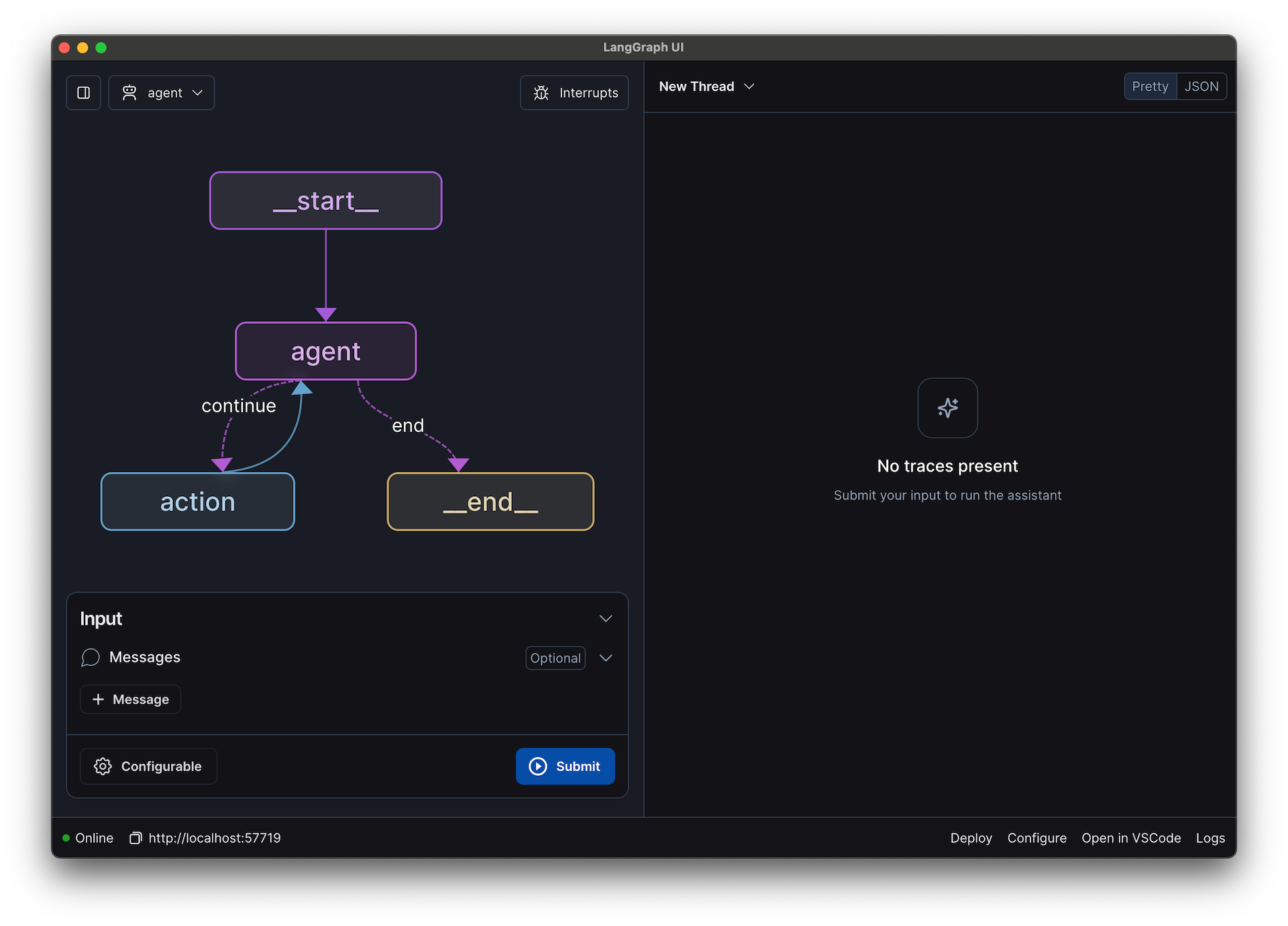
LangGraph models an agent as an explicit state graph, with nodes doing work, edges deciding what runs next, and a shared state object threaded through. That structure buys durable execution: checkpoints you can resume from, interrupts that pause a run for human approval, and time-travel replay that reruns any step from a saved state.
Though, LangGraph is a heavier commitment than might first appear. A linear chain of two model calls does not need a graph, and teams who reach for one anyway spend their first week learning state schemas instead of shipping.
The pricing detail worth knowing is where the meter actually sits, since the framework itself is free but the platform around it is not. Trace volume, deployments, and the Engine analysis loop all normalize into compute and storage units, which decouples the bill from the $39 seat price. Whether the graph earns its complexity depends largely on how much LangGraph adds over plain LangChain for the workflow you have in mind.
Covers - Build: durable state machines with checkpoints and human-in-the-loop.
Pricing - Developer is $0 per seat with 5k base traces a month, Plus is $39 per seat with 10k, and Enterprise is custom. Above the included traces, usage meters in LangChain Compute Units at $1.50 and Storage Units at $1.00. Base traces expire after 14 days unless you pay to extend them to 400, which turns retention into a line item rather than a setting.
3. LlamaIndex
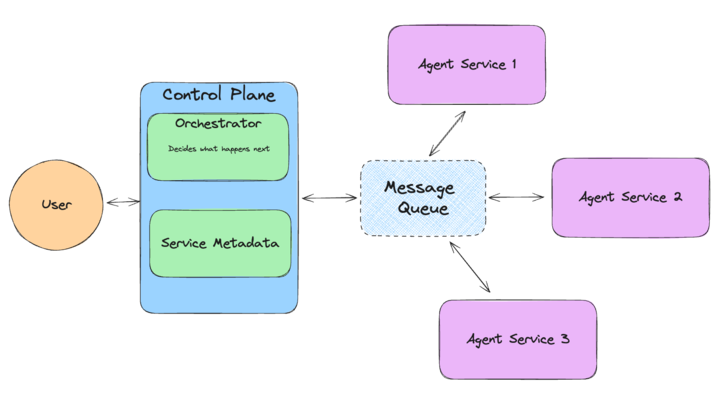
LlamaIndex came out of retrieval and still shows it. The orchestration layer is Workflows, an event-driven model where you write async Python functions and trigger them on events rather than wiring a graph, and it sits on top of the ingestion connectors, index structures, and query engines that made the project popular in the first place.
Teams whose bottleneck is coordination rather than retrieval will find it a strange fit, since the primitives that get the most attention are the ones nearest the data.
The commercial side is worth separating out carefully. LlamaIndex and Workflows are open source, while LlamaParse is the paid platform and it is not, which means the money follows document processing rather than agent steps. Teams weighing it against a general-purpose toolkit usually land on the difference between a RAG-first framework and a broad one, because that is what determines which primitives get the attention.
Covers - Build: event-driven workflows over retrieval pipelines.
Pricing - Free at $0 with 10K credits, Starter at $50 a month with 40K, Pro at $500 with 400K, and Enterprise custom, where 1,000 credits cost $1.25. The credits buy parsing, extraction, and indexing, so the bill tracks how many documents you push through rather than how complex your orchestration is.
4. CrewAI
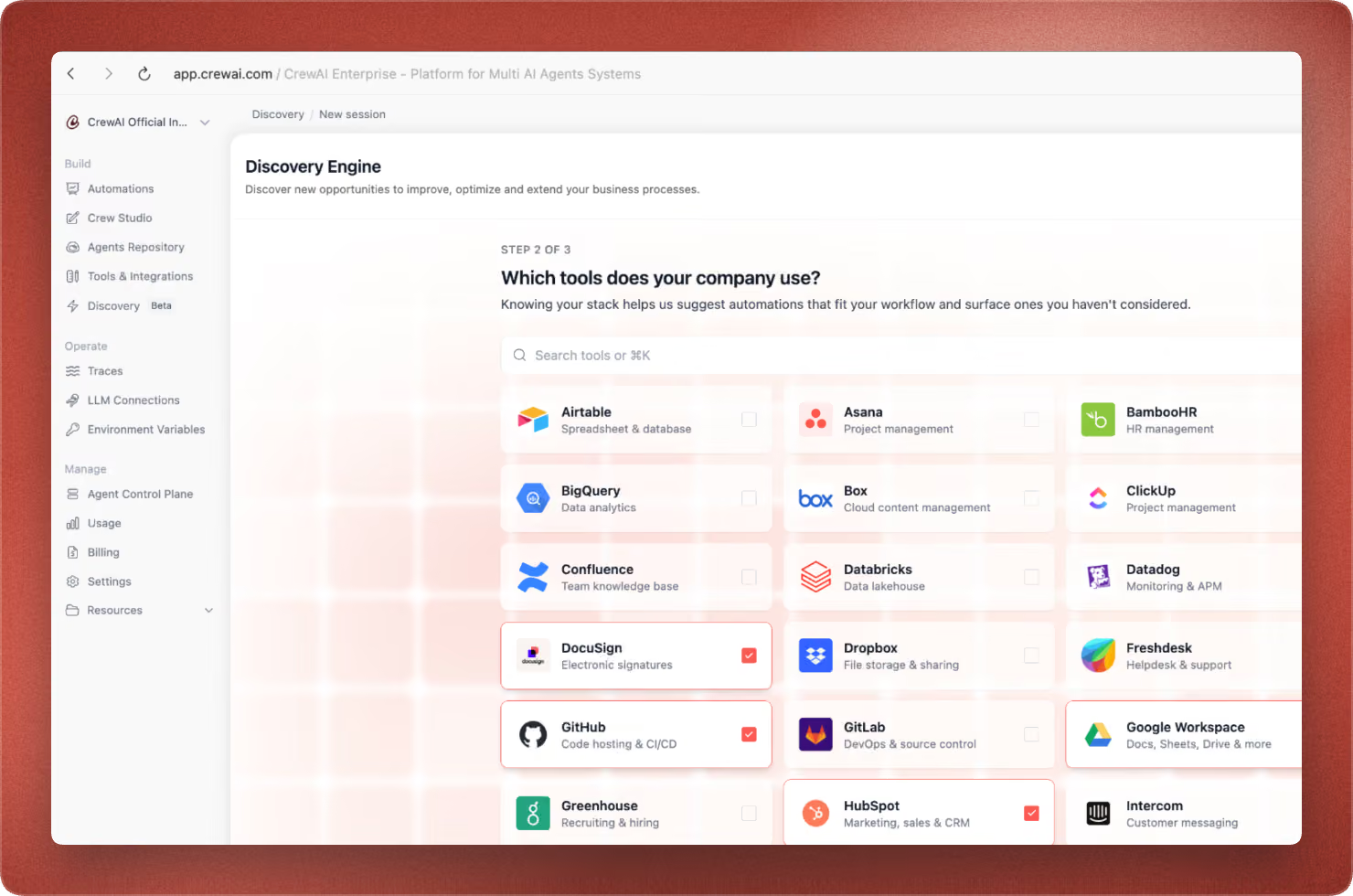
CrewAI frames multi-agent work as a crew. You give each agent a role, a goal, and a set of tools, then let them work through tasks sequentially or under a manager agent, and the mental model is intuitive enough that a working demo takes about twenty lines. That speed is the whole point, and it is why the framework shows up so often in prototypes.
The abstraction hides execution detail, though, and teams tend to feel that once a crew is in production and they need finer control over what runs when.
The managed platform, AMP, has an unusual pricing shape. One execution means one crew kickoff regardless of how many agents fan out inside it, so a ten-agent crew and a one-agent crew count identically, which is generous until you notice the free tier caps at 50 executions with no overage available. There is no self-serve step between that ceiling and a sales conversation.
Covers - Build: role-based crews with sequential or hierarchical execution.
Pricing - The framework is free to self-host. AMP has two tiers: Basic at $0 with 50 workflow executions a month and a hard cap at that number, and Enterprise at custom pricing with executions sized to the workflow and flexible overage. LLM tokens are yours on every tier.
5. Microsoft Agent Framework
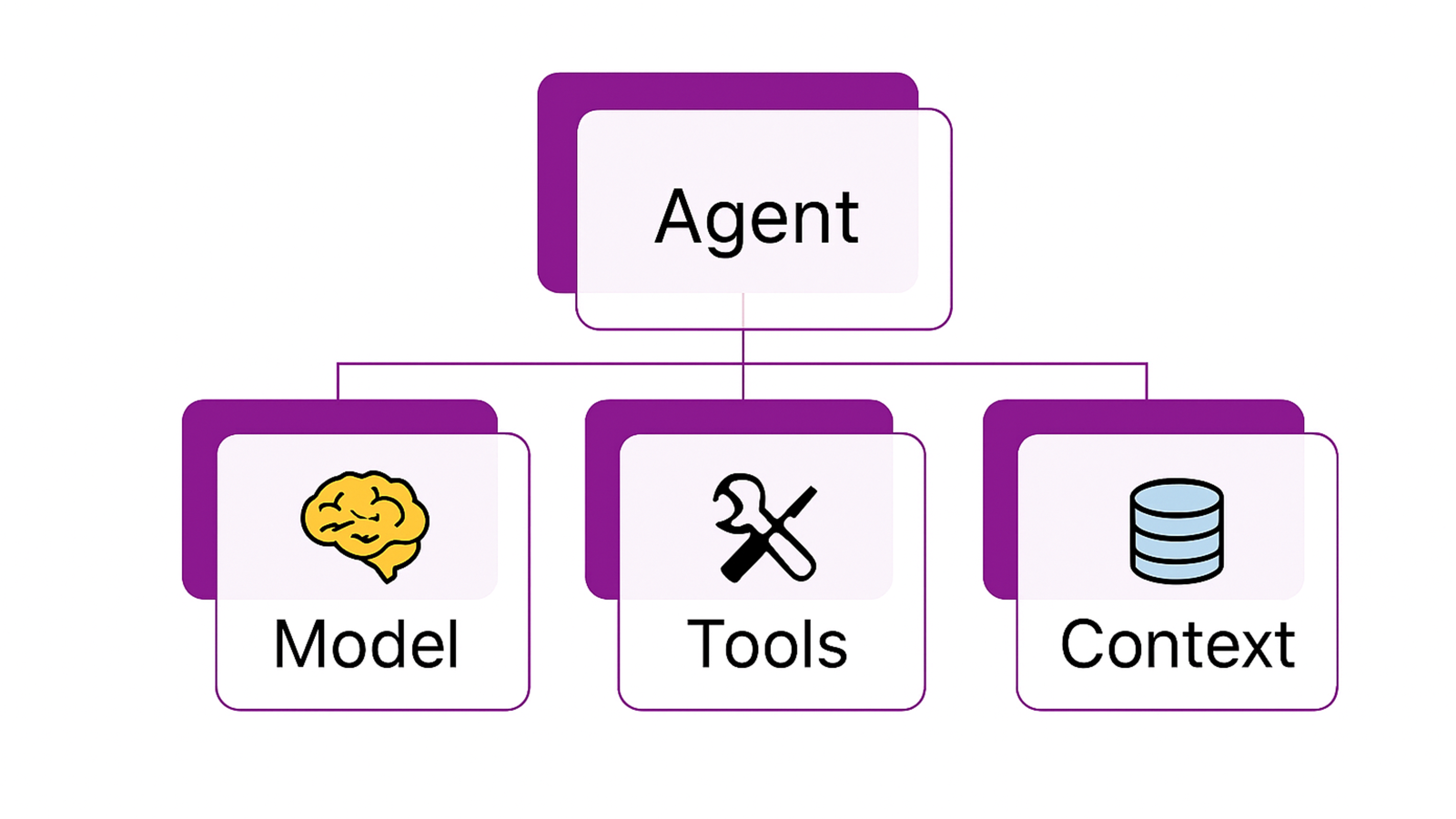
Microsoft Agent Framework reached 1.0 in April 2026 for both .NET and Python, unifying Semantic Kernel and AutoGen into one supported SDK with stable APIs. It separates agents, which are stateful execution units, from Workflows, a graph-based orchestration engine with persistent state and checkpointing, and that separation is what lets deterministic business logic and model-driven decisions coexist in the same run.
Microsoft describes it as the successor to both Semantic Kernel and AutoGen, which makes it the starting point for new multi-agent work on the Microsoft stack rather than a third option sitting alongside them.
Sequential, concurrent, group chat, handoff, and magentic coordination patterns are stable across both SDKs, which is rare in a space where Python usually leads .NET by a release or two. The framework is portable across providers, with native connectors reaching well beyond Azure, though the deepest tooling integrations for observability and evaluation run through Microsoft Foundry.
Covers - Build: agents plus a graph workflow engine, across two runtimes.
Pricing - Open source under MIT with no license cost. Running it costs whatever your models and hosting cost, and the managed Foundry integrations bill through Azure separately.
6. OpenAI Agents SDK
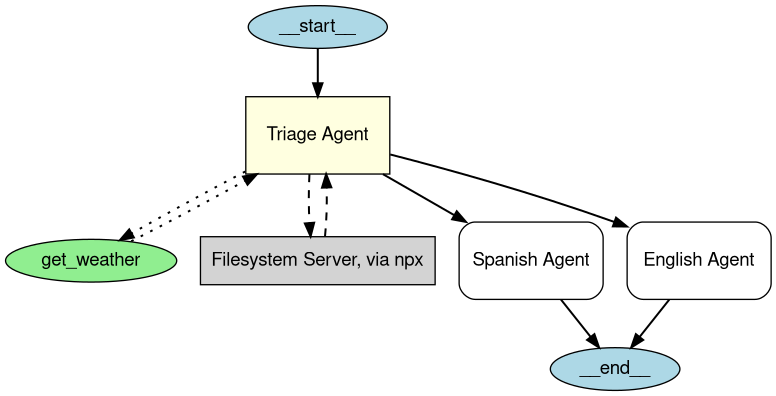
The OpenAI Agents SDK builds everything around handoffs. An agent is defined by instructions, a model, tools, and the list of other agents it can transfer control to, and when a handoff fires the receiving agent inherits the conversation so far. Guardrails run alongside as validation, sessions carry state across turns, and tracing is on by default rather than bolted on.
OpenAI Agents SDK has a clean design and the docs are unusually good, which makes it the fastest route to a working multi-agent system for teams already committed to OpenAI models.
That commitment is the tradeoff. It works with other providers, but the ergonomics assume the Responses API, and a stack that routes across Anthropic and Google as a matter of course will find itself writing adapter code. The built-in tracing is also scoped to OpenAI's own platform, so a team that traces its whole system in one place will be sending these spans somewhere else anyway.
Covers - Build: agents, handoffs, guardrails, and sessions.
Pricing - Open source and free. You pay for model usage, and a handoff-heavy design pays for the conversation history more than once.
7. Haystack
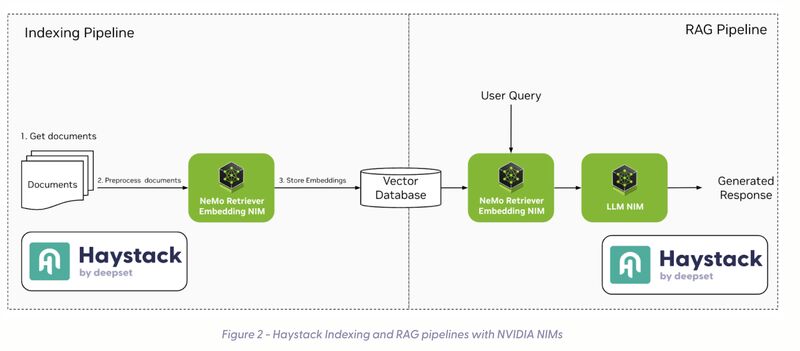
Haystack composes work out of components wired into a pipeline, which can branch through routers and loop back on itself, so a retrieval step, a reranker, a generator, and a tool call become one inspectable graph. Pipelines serialize to YAML, which puts the whole structure under version control as a file rather than as scattered Python.
The design assumes you can map the steps in advance. An agent that should decide its own arbitrary sequence of actions fits awkwardly into a pipeline, and forcing it there costs more effort than picking a graph framework would have.
For document-heavy work the component library is the draw, since retrieval, ranking, and generation all arrive as swappable parts rather than as things you assemble yourself.
Covers - Build: composable component pipelines with branching and loops.
Pricing - The framework is free and open source. deepset sells Haystack Enterprise support with pricing based on company size, plus a separate orchestration platform with a free trial, and neither publishes figures, so budgeting means a quote rather than a rate card.
8. Amazon Bedrock AgentCore
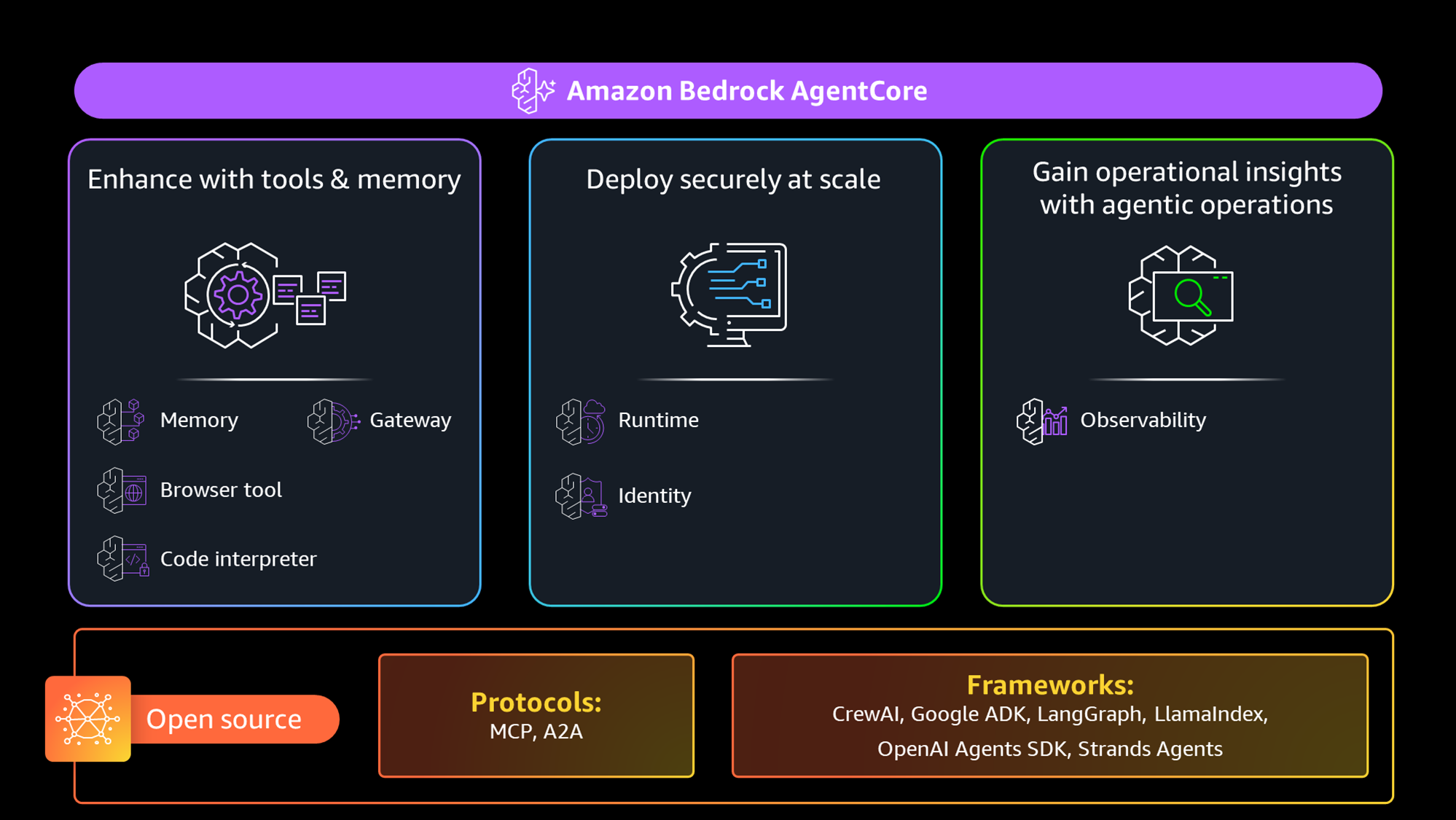
Amazon Bedrock AgentCore is a runtime rather than a framework. You bring an agent written in CrewAI, LangGraph, LlamaIndex, or anything else, and AgentCore handles session isolation, memory, tool access through its Gateway, identity, and observability into CloudWatch. Each session gets its own microVM, which makes the isolation story concrete rather than logical.
The status change matters for anyone planning AWS work. Bedrock Agents Classic closed to new customers on July 30, 2026, and its model catalog is frozen as of that date, so models released afterward only reach AgentCore. New builds on AWS start here.
The pricing model follows the step more closely than most here do, which is either elegant or a forecasting problem depending on how predictable your workloads are.
Covers - Run: managed runtime, memory, tool gateway, and identity for any framework.
Pricing - Consumption-based with no minimums. Runtime microVMs bill $0.0895 per vCPU-hour and $0.00945 per GB-hour by the second against actual consumption, so idle time waiting on a model costs nothing on the CPU line. The Instances type bills EC2 On-Demand plus a 12% management fee, and Gateway adds $0.005 per 1,000 tool invocations.
9. Portkey
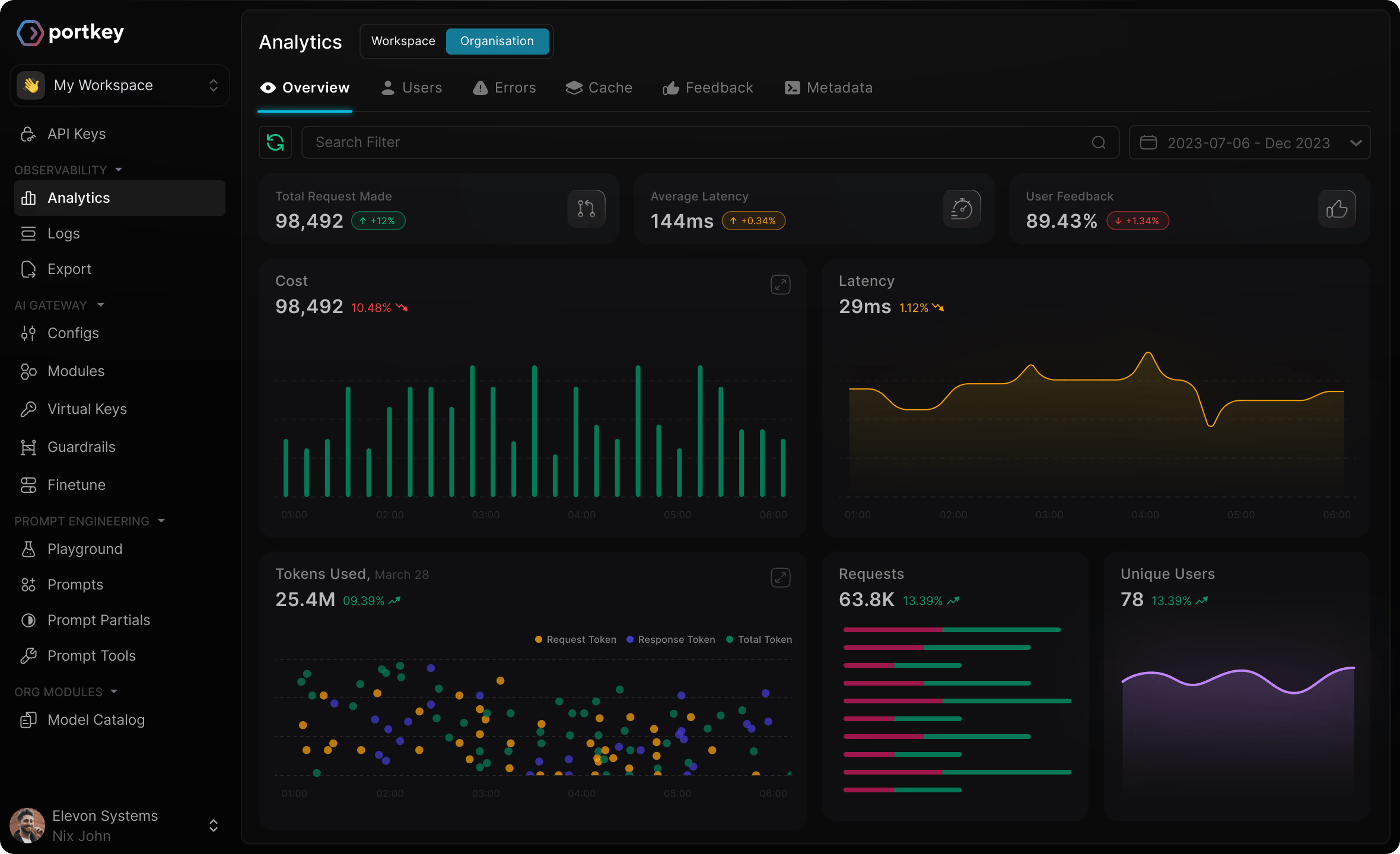
Portkey is the governance-heavy end of the gateway category, with audit logs, role-based access control, guardrails, and policy enforcement layered over a broad model catalog, alongside the routing, fallback, and semantic caching you would expect. For an organization that needs to answer who called which model with what data, that record exists by default rather than as something you build.
It is worth keeping in mind that in 2026, Palo Alto Networks acquired Portkey, and it now serves as the AI Gateway inside the Prisma AIRS platform. Evaluate it against that roadmap rather than as a standalone product.
Feature density cuts both ways with tools like Portkey. A team that wants routing and nothing else will configure past a lot of controls it does not need, and several of the ones it might eventually want sit on the Enterprise tier.
Covers - Run: routing, fallback, caching, and policy enforcement.
Pricing - Free tier, paid plans from $49 a month, enterprise custom. The tier boundaries gate governance features more than volume, so the upgrade trigger is usually a compliance requirement rather than traffic growth.
10. LiteLLM
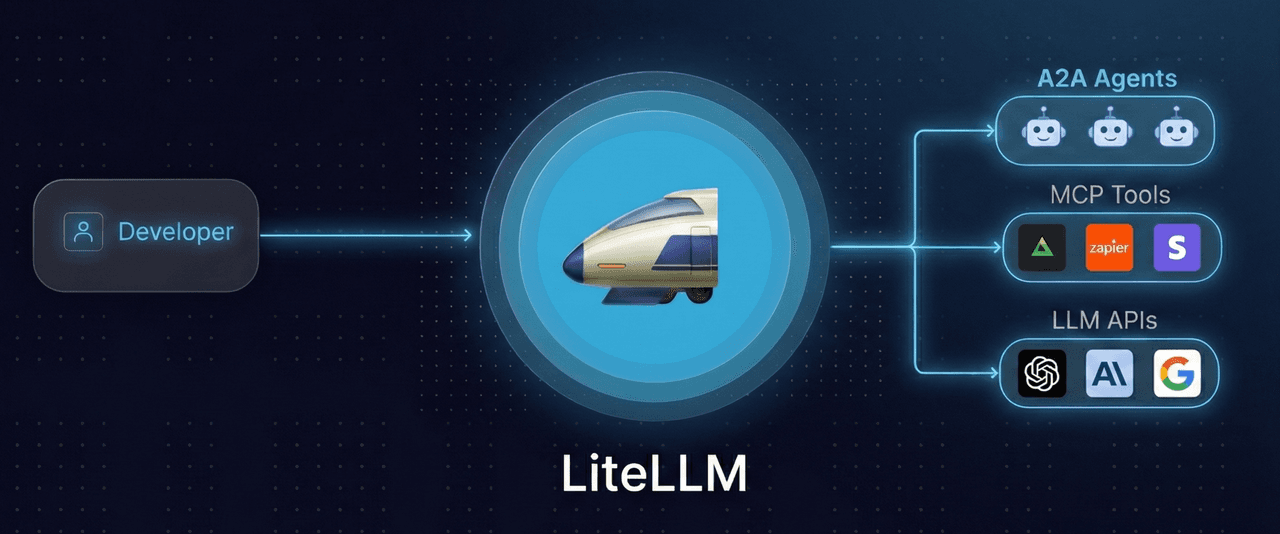
LiteLLM standardizes 100+ providers behind one OpenAI-compatible interface, usable either as a Python SDK inside your application or as a proxy server in front of it. Routing strategies cover latency, cost, and least-busy, and budgets and rate limits apply per user, team, or key.
When you adopt a tool like LiteLLM, you take on the running of it as well. That means the deployment, the Redis instance behind the cache, the upgrade path as provider APIs shift, and the on-call rotation for a component now sitting in the critical path of every model call.
Observability past request logging depends on what you wire it into, so seeing what happened inside a request generally means sending those logs somewhere that reconstructs the trace.
Covers - Run: self-hosted routing, caching, and budgets.
Pricing - Free and open source to self-host, with enterprise support at custom pricing. The cost is engineering time rather than license fees, which is the right trade at some team sizes and the wrong one at others.
LLM Orchestration Updates and Trends in 2026
Four shifts this year change how the choice should be made:
-
Frameworks consolidated by sunset - Microsoft merged AutoGen and Semantic Kernel into Microsoft Agent Framework and shipped 1.0 in April, positioning it as the successor to both. AWS retired the original Bedrock Agents into a Classic tier closed to new customers as of July 30 and froze its model catalog on that date. Two of the frameworks that defined the previous eighteen months are now things you migrate off rather than onto.
-
The run layer consolidated by acquisition - Portkey went to Palo Alto Networks in May and became a component of a security platform. Agent business logic ports across frameworks with effort, but the layer holding your traces, evals, and routing rules is the one you live inside, which makes it the harder decision to reverse.
-
Pricing moved toward the step - AgentCore bills per second of active CPU and charges nothing for I/O wait, LangSmith normalizes traces and deployments into compute and storage units, and CrewAI meters whole workflow executions. Each is an attempt to price what an orchestrated run actually consumes rather than how many people are logged in, and each produces a different answer for the same workload.
-
Step count became a budgeting input - A supervisor pattern that turns one request into six model calls is a cost decision as much as an architecture one, and it is worth knowing which of those six was expensive before the invoice arrives.
Between them, those shifts push responsibility downward. Knowing which step ran, what it cost, and whether its output was any good is a tracing problem more than a debugging one, which is why the run layer keeps absorbing work the frameworks assumed someone else would handle.
FAQ
What are LLM orchestration frameworks?
An LLM orchestration framework gives you code-level primitives for coordinating multiple model calls: prompts, tools, state, memory, retries, and the control flow that decides what runs next. LangGraph, LlamaIndex, CrewAI, Haystack, Microsoft Agent Framework, and the OpenAI Agents SDK all fit this description, and they differ mainly in the shape of the abstraction, whether that is a state graph, a crew of roles, a component pipeline, or an event-driven workflow.
What frameworks do not give you is the production layer around the code. Deployment, provider routing, spend enforcement, trace retention, and eval scoring on live traffic all sit outside the framework's scope, which is why almost every team running agents in production pairs a framework with something else. Picking between the frameworks themselves comes down to the shape of the workload, and the AI agent frameworks worth shortlisting split fairly cleanly by whether you need state, roles, or pipelines.
What are the top LLM orchestration tools for businesses?
For a business running agents in production, Respan is the tool that covers the most ground: routing across 1,000+ models with automatic failover, per-step tracing, spend limits enforced at the gateway, evaluation on live traffic, and SOC 2, HIPAA, GDPR, and ISO 27001 compliance, on one platform with a free tier that handles real volume.
Around it, the choice depends on what you are building. LangGraph suits workflows that need durable state and human approval steps. Microsoft Agent Framework fits .NET shops and Azure-aligned teams. Amazon Bedrock AgentCore fits organizations standardizing on AWS. Portkey suits enterprises whose primary requirement is policy enforcement and audit evidence. CrewAI and the OpenAI Agents SDK are the fastest paths from idea to a working prototype.
The practical sequence for most businesses is to pick one framework for the workflow logic, then put a single platform underneath it for routing, tracing, and evals, so the production layer stays consistent even if the framework choice changes later.
What is the difference between an LLM orchestration framework and a platform?
A framework is a library you write against. It defines how you express the workflow and runs inside your application process, and its concerns end where your code ends. A platform is infrastructure your calls pass through, and it owns what happens at runtime: which provider serves a request, whether a budget has been exceeded, what got recorded, and how a bad answer gets scored and traced back to the step that produced it.
The distinction matters because the two have different lifespans. Framework choices get revisited as workloads change, and porting agent logic between them is real but bounded work. The platform accumulates your traces, your datasets, your prompt versions, and your routing rules, which makes it considerably harder to leave. Weighting the platform decision more heavily than the framework decision is usually the right instinct.
How do you orchestrate multiple LLMs?
Route every call through one endpoint rather than scattering provider SDKs across your services. With a gateway like Respan's, switching models is a string change, fallback fires automatically when a provider errors or rate-limits, and each request is logged as a span with its cost and latency attached, so multi-model routing does not cost you visibility.
From there the ordering is straightforward. Decide the routing policy first, whether that is cheapest model that clears a quality bar, fastest for latency-sensitive paths, or a specific model for a specific task. Set spend limits that block rather than merely warn, since a warning does not stop a leaked key or a looping agent. Then score outputs from each model against the same evaluators so the routing decision rests on measured quality rather than on which model felt better in testing.