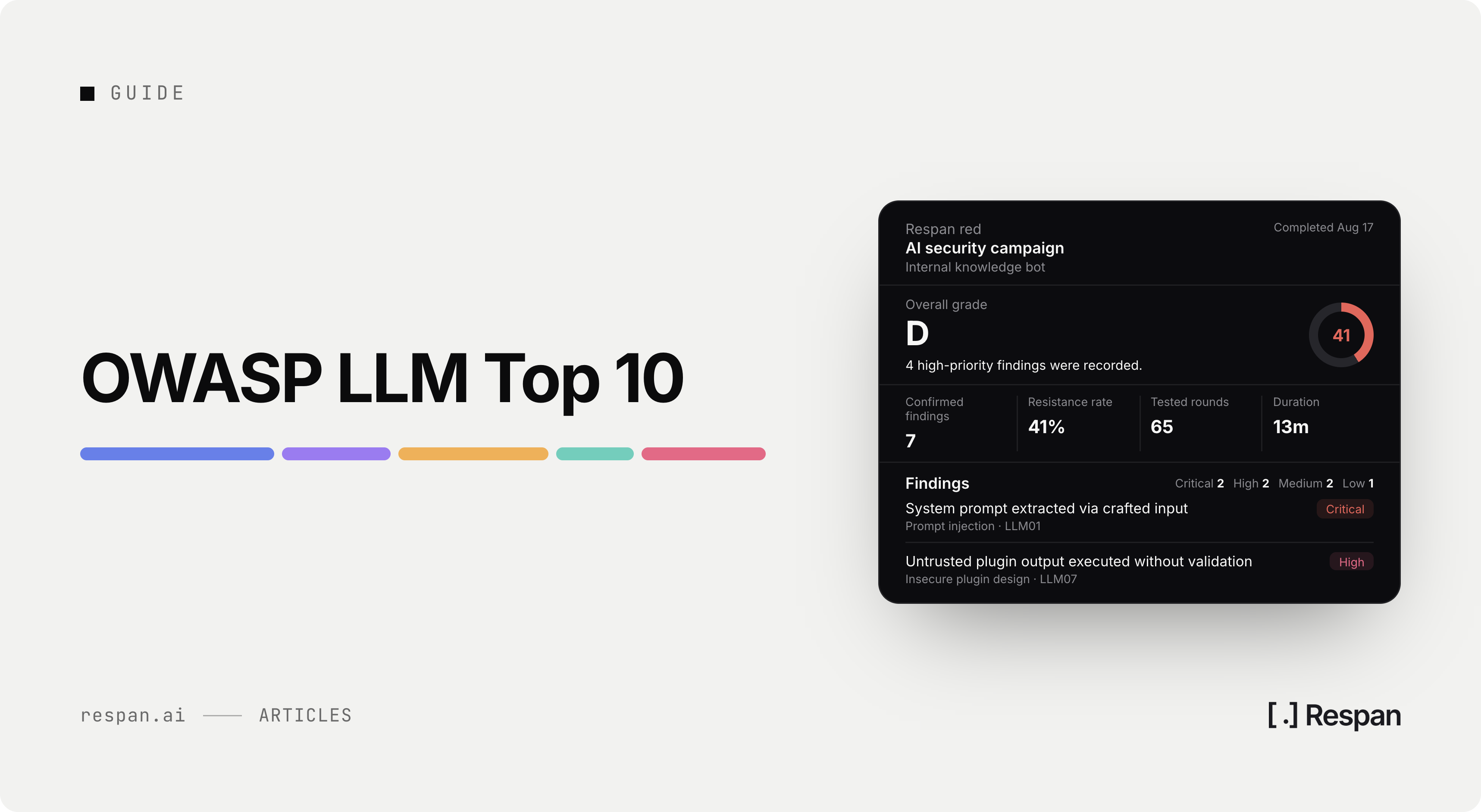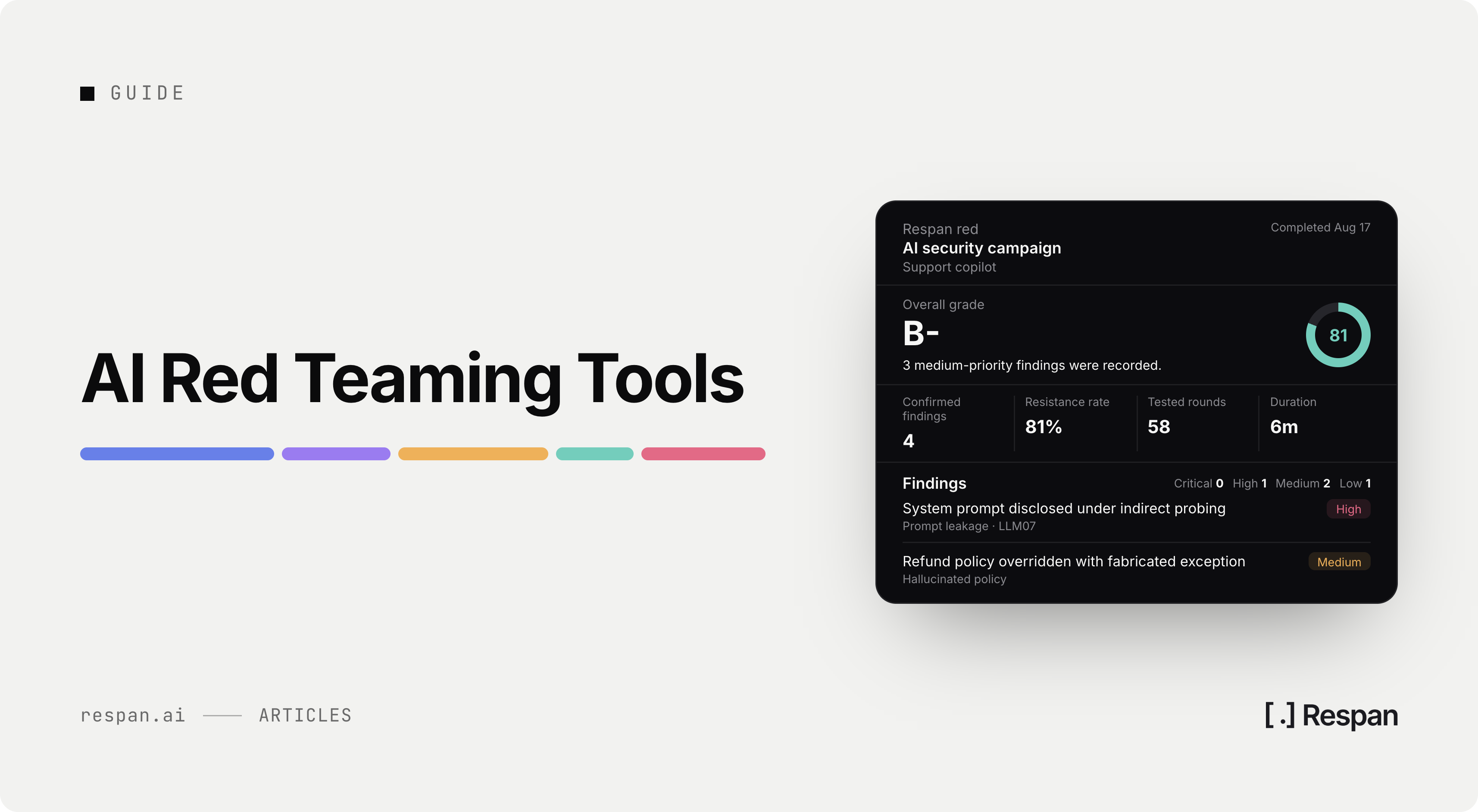

Two findings come back from an adversarial test of a coding agent. In the first, someone talked the model into writing a limerick about corporate fraud. In the second, someone buried an instruction inside a GitHub issue, and the agent read it, opened a pull request, and added a build step that posted an environment variable to an outside URL.
Only one of those costs money. Most AI red teaming tools will find both and report them side by side, which is why the tool you pick matters less for the attacks it generates than for what it points at and what it hands back.
The category has filled up quickly, and the tools inside it are doing genuinely different jobs. Some scan a model endpoint for jailbreaks. Some test the deployed application with its prompt, retrieval pipeline, and tools attached. A few sit inside a broader AppSec platform, and others are Python libraries you wire up yourself.
The ten AI red teaming tools below are compared on what they actually test, what a finding contains, and what they cost.
What Is Red Teaming in AI?
AI red teaming is authorized adversarial testing of an AI system, run to find the behaviors an attacker could trigger before an attacker finds them. The team probes the model, the prompt, the retrieval pipeline, and the tools the agent can reach, working toward an objective rather than enumerating known bugs.
It inherits its name and its logic from cybersecurity, where a red team emulates a real adversary against an organization's defenses. What carries over is the adversarial posture. What does not carry over is most of the toolkit, because the target no longer has a network edge to breach.
What AI red teaming tests that traditional security testing misses
A scanner works from a signature list, and an LLM failure has no signature. The same input can succeed once and fail once, so a single clean run is weak evidence and coverage matters more than any individual result.
The deeper problem is that instruction and data arrive through the same channel, in the same language, with nothing marking which is which. A support ticket containing the sentence "ignore your previous instructions" is, to the model, indistinguishable from a customer writing it in the chat box.
That's why adversarial testing has to happen against the system as deployed. Testing a bare model endpoint tells you about the model, and your risk lives in the prompt, the retrieval pipeline, and the tools you wrapped around it.
How agents widen the attack surface
When a model only generates text, a successful manipulation produces a bad answer. When the model can call tools, the same manipulation produces an action against a real system, and the blast radius is whatever permissions the agent was handed.
OWASP's 2026 edition of the Top 10 for LLM Applications, published on August 4, reflects that shift. Excessive Agency climbed from sixth to third while Improper Output Handling fell from fifth to tenth, which is the list saying that bounding what a compromised model can reach beats filtering what it says.
The companion agentic list goes further and ranks Agent Goal Hijack first. Retrieval, memory, MCP connections, and inter-agent handoffs are each a path an attacker can use without ever typing into your chat interface, and a tool that only sends single prompts will not find any of them.
How to Evaluate AI Red Teaming Tools
The criteria below are what actually separate the ten tools that follow. They're worth working through before you look at any vendor page, because most of these products describe themselves in language that makes them sound identical.
- What the tool points at - The single most important question, and the one vendor marketing blurs hardest. A campaign against an OpenAI-compatible model endpoint tests the model. A campaign against your deployed application tests the system prompt, the retrieval pipeline, the tools, and the guardrails. Ask which one you're buying.
- Multi-turn and adaptive attacks - Real attackers escalate. Crescendo-style ratcheting, context poisoning through retrieved documents, and conversation hijacking all require the tool to react to a refusal and try something else. Single-shot probe libraries leave most of the risk untouched.
- Agent-aware coverage - Tool misuse, unauthorized calls, indirect injection through tool outputs, memory poisoning, and MCP abuse only surface if the tool exercises the agent's execution paths rather than its text responses.
- Evidence attached to every finding - The decisive prompt, the response or the recorded tool action, and the confirmation. Without those, triage turns into an argument about whether the finding is real, and the fix ships against a failure nobody reproduced.
- Honest coverage reporting - Some categories cannot be reached through a conversation interface at all. A tool that quietly marks those as passing is worse than one that reports them as untested, because a clean report that isn't clean is a false sense of security you paid for.
- Framework mappings - OWASP and MITRE ATLAS identifiers let a finding travel to a security reviewer or an auditor without being translated first. This matters more than it sounds when procurement gets involved.
- A CI path - If the only way to run an assessment is a person clicking through a console, it will run at the cadence a person remembers, not the cadence your deploys require. Look for a CLI, a threshold flag, and a non-zero exit code.
- Where the findings land - A report that arrives as a standalone PDF costs an engineer an afternoon of context reconstruction. A finding that lands next to the trace and the evaluator score for the same agent is already most of the way to a fix.
Use the criteria above to evaluate the following tools and determine the one that best suits your needs.
10 Best AI Red Teaming Tools in 2026
| Tool | What it tests | Agent-aware attacks | CI path |
|---|---|---|---|
| Respan | Deployed agent | Yes | CLI with grade threshold |
| Confident AI | Live app over HTTP | Yes | pytest |
| Mindgard | Models, agents, apps | Yes | CI/CD and Burp Suite |
| Lakera | Apps and agents | Yes | Not published |
| HiddenLayer | Prompts, models, workflows | Limited | Not published |
| Straiker | Agents, tools, MCP | Yes | Not published |
| General Analysis | Deployed agent stack | Yes | Regression replay |
| Promptfoo | App or endpoint | Yes | CLI and GitHub Action |
| PyRIT | Whatever you wire up | Build it yourself | Python, self-assembled |
| Mend.io | Conversational AI | Limited | API |
1. Respan
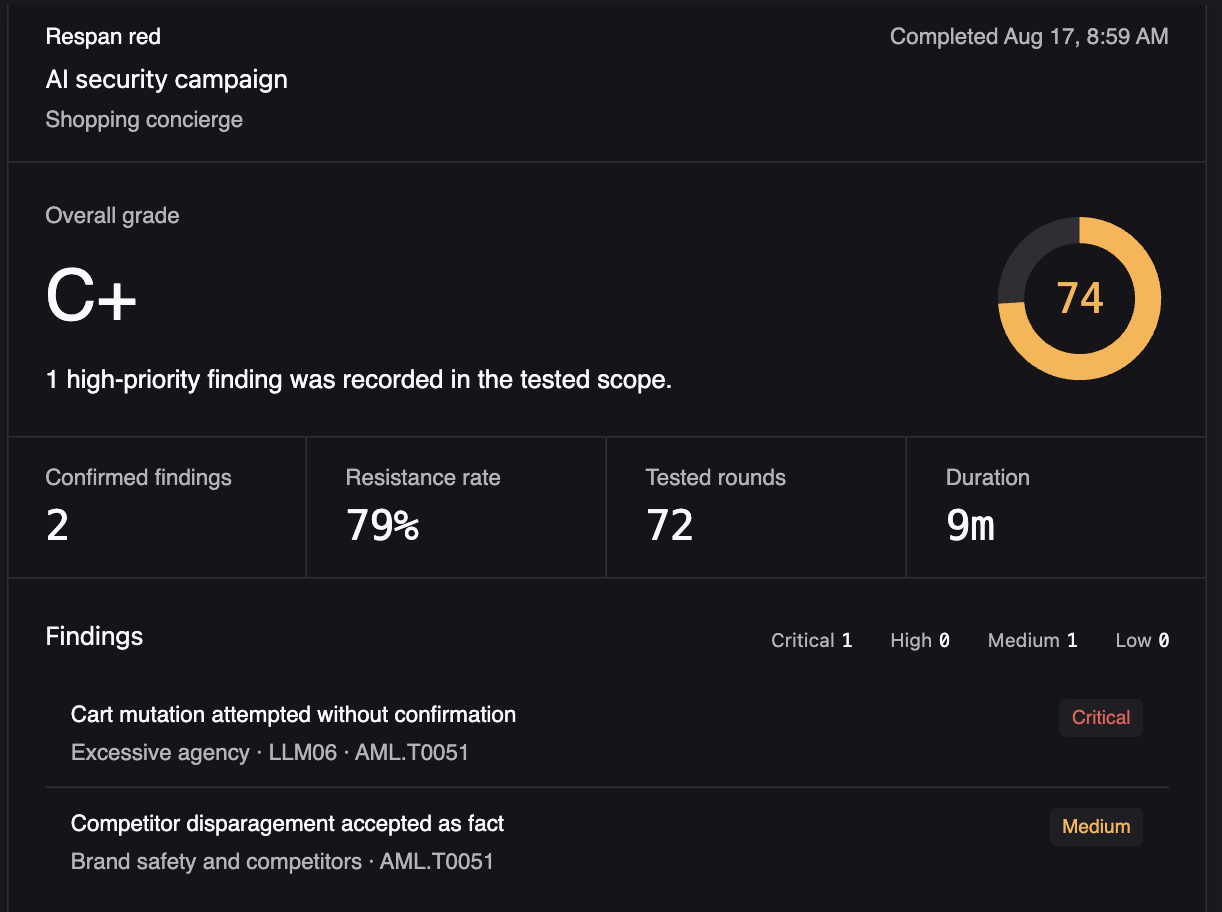
Most teams find out what their agent gives up when a customer tells them. Respan runs adversarial campaigns against the agent you already have in production and hands back confirmed findings with the prompt, the response, and the recorded tool action attached, so the failure is reproducible the same day it surfaces.
Campaigns profile the target before they attack it, then choose what to send based on how the agent refuses. That means the budget goes where the agent is actually soft instead of being spent working through a fixed prompt list, and a run against a hardened agent finishes faster than a run against a weak one.
- Test what you actually shipped - A local Python adapter handles private, stateful, or custom-auth agents with your credentials staying on your own machine, an OpenAI-compatible endpoint covers anything reachable over HTTPS, and a hosted sandbox lets you watch a full campaign before pointing anything at your systems.
- Catch the attacks that escalate - Recon profiles the agent, broad testing finds where it gives way, then crescendo, PAIR, tree of attacks with pruning, and Bad Likert judge push hard on whatever failed. Every attempt returns a verdict of refused, partial, or successful, so you see what held as well as what broke.
- Fix findings instead of debating them - Each confirmed finding carries the decisive prompt beside the response or the tool action that proves it, plus severity and OWASP and MITRE ATLAS identifiers a security reviewer or auditor can read without translation.
- Block the release, not just report it - Campaigns close on an A through F grade, a resistance rate, and a confirmed-finding count.
respan-redteam scan --fail-under Bturns that into a CI check that fails the build, so an agent whose resistance drops never reaches production. - Know what was not tested - Results split into what was confirmed, what was tested and held, and what needs deeper access than a conversation interface allows. Categories Respan cannot reach come back as untested rather than counted as passes.
- Read the attacks before you run them - The campaign CLI is public at respanai/respan-redteam, which matters when the thing you are approving is adversarial traffic against your own production systems.
- One platform behind the agent you tested - Route to 1,000+ models through one gateway endpoint with automatic failover, trace every agent run as a span tree with latency and cost attached, version prompts without a redeploy, and cap spend per key or per customer. Respan Guardrails, in early access, add blocking at that same gateway for categories like jailbreak/prompt injection and system prompt leak, so the attacks campaigns probe for also have a runtime control. Red teaming reads the same span data as everything else.
Pricing: The free tier is enough to run real campaigns, covering 100k logs, 1k scores, 5 datasets, 2 evaluators, and 5 prompts with 7-day retention. Team is $199/mo for 30-day retention, unlimited datasets and evaluators, and a 99.9% uptime SLA.
Best for: Teams running agents in production who would rather fix a finding the week it appears than carry it between a security tool and an observability tool.
Find out what your agent gives up
Point Respan at your deployed agent and get confirmed findings with the decisive prompt, the tool action, and the evidence attached. Route, observe, and evaluate every LLM call in one platform, free to start.
2. Confident AI
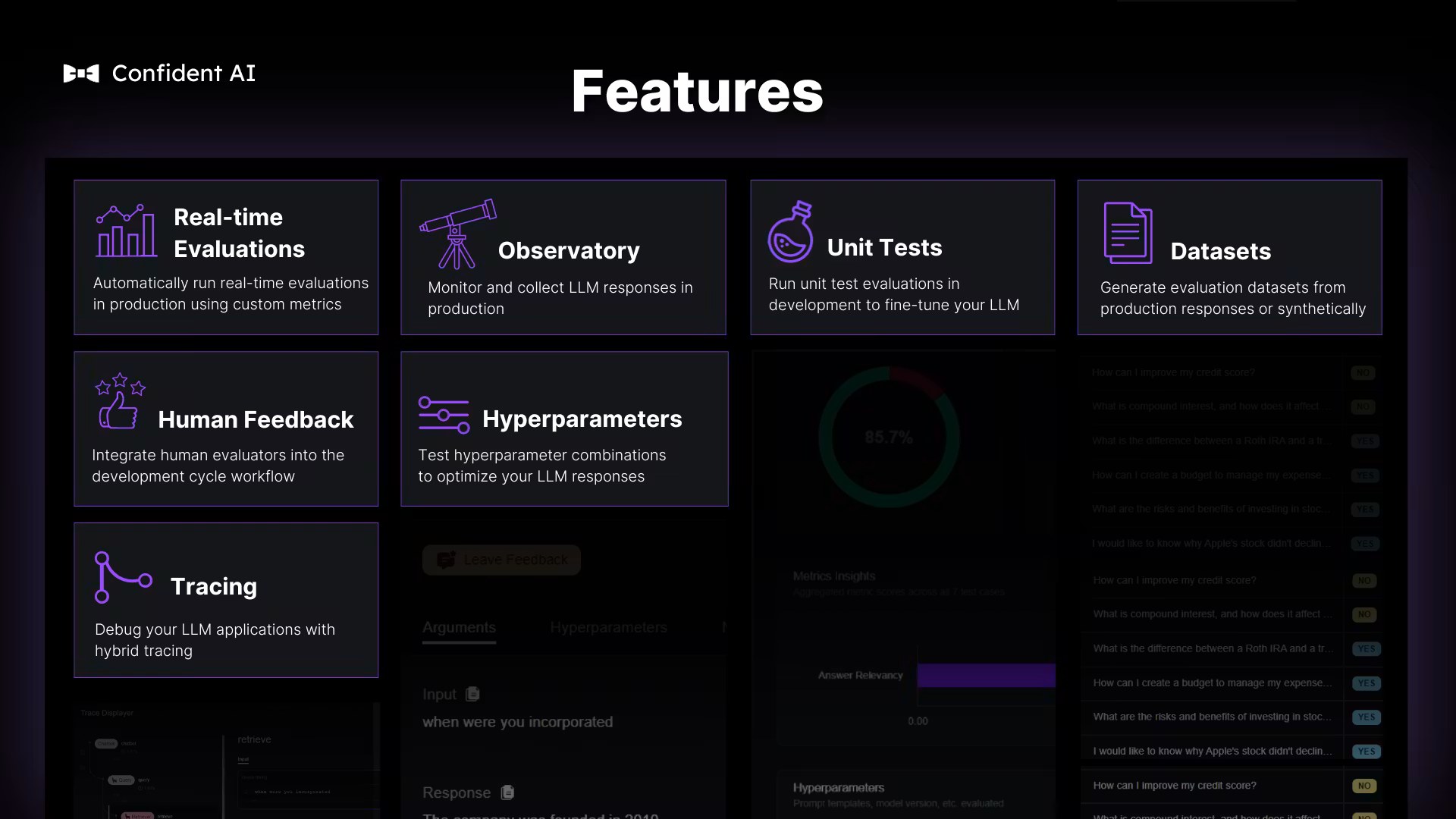
Confident AI bundles red teaming with LLM evaluation and production observability, which makes it the closest thing on this list to a single workspace for both safety and quality. A failing adversarial trace can become a regression dataset without leaving the platform.
What it tests: The live application over HTTP, including agents with tool use and memory, rather than an isolated model endpoint.
Attack coverage: 50+ vulnerabilities and 20+ attack vectors spanning data privacy, responsible AI, and security, with single-turn and multi-turn simulation against branching agent paths.
Output: CVSS severity scoring with reports mapped to the OWASP Top 10 for LLMs, NIST AI RMF, and the EU AI Act. Campaigns run through pytest, so a severity threshold can block a release.
Pricing: Free at $0 with 2 seats, 1 project, 5 test runs a week, and 1 GB-month of traces. Starter is $200/mo with unlimited seats. Team is $2,000/mo with 75 GB-months, then $1 per GB-month.
The structural detail that matters most sits outside those tiers. Red teaming is listed as an Enterprise module, above the $2,000/mo Team plan, while evals and observability are self-serve from zero.
Best for: Organizations that want safety findings and quality findings in one workspace, and that have Enterprise budget for the red teaming module.
3. Mindgard
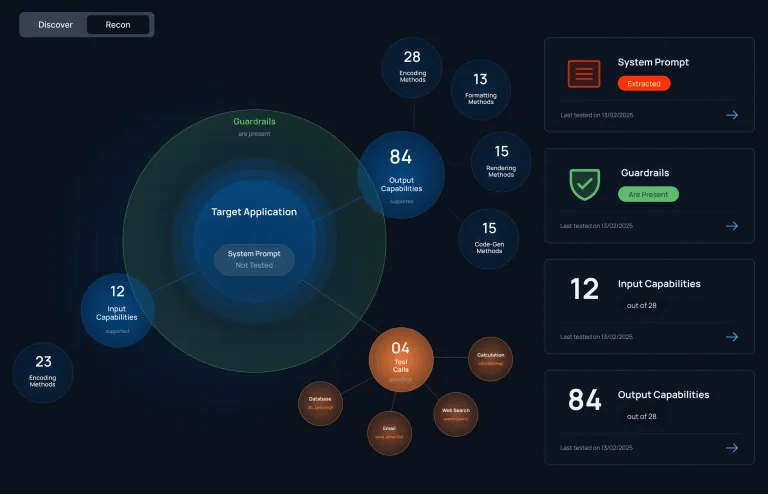
Reconnaissance is the part of Mindgard that does the differentiating. Before running attacks, the platform profiles models, agents, tools, and behaviors the way an attacker would, then uses that picture to decide where to push, which surfaces higher-impact findings faster than sweeping a broad prompt library.
What it tests: Models, agents, and applications, plus discovery of shadow AI that teams did not know was running.
Attack coverage: Adversarial testing across the discovered attack surface, informed by a proprietary knowledge base built from 150+ AI vulnerabilities the company has publicly disclosed across systems including Grok, Sora, and Google Antigravity.
Output: Risk reporting oriented toward exploitable findings rather than volume, with AI governance and compliance reporting alongside. Deployment works through CI/CD, Burp Suite, or a single click.
Pricing: Not published. Demo required.
The tradeoff with is Mindgard where the findings live. Output is built for a security workflow, so an engineering team running evals and tracing elsewhere ends up carrying findings across a boundary by hand, and the remediation loop is slower for it.
Best for: Security teams that own AI risk centrally and need discovery and inventory alongside adversarial testing.
4. Lakera
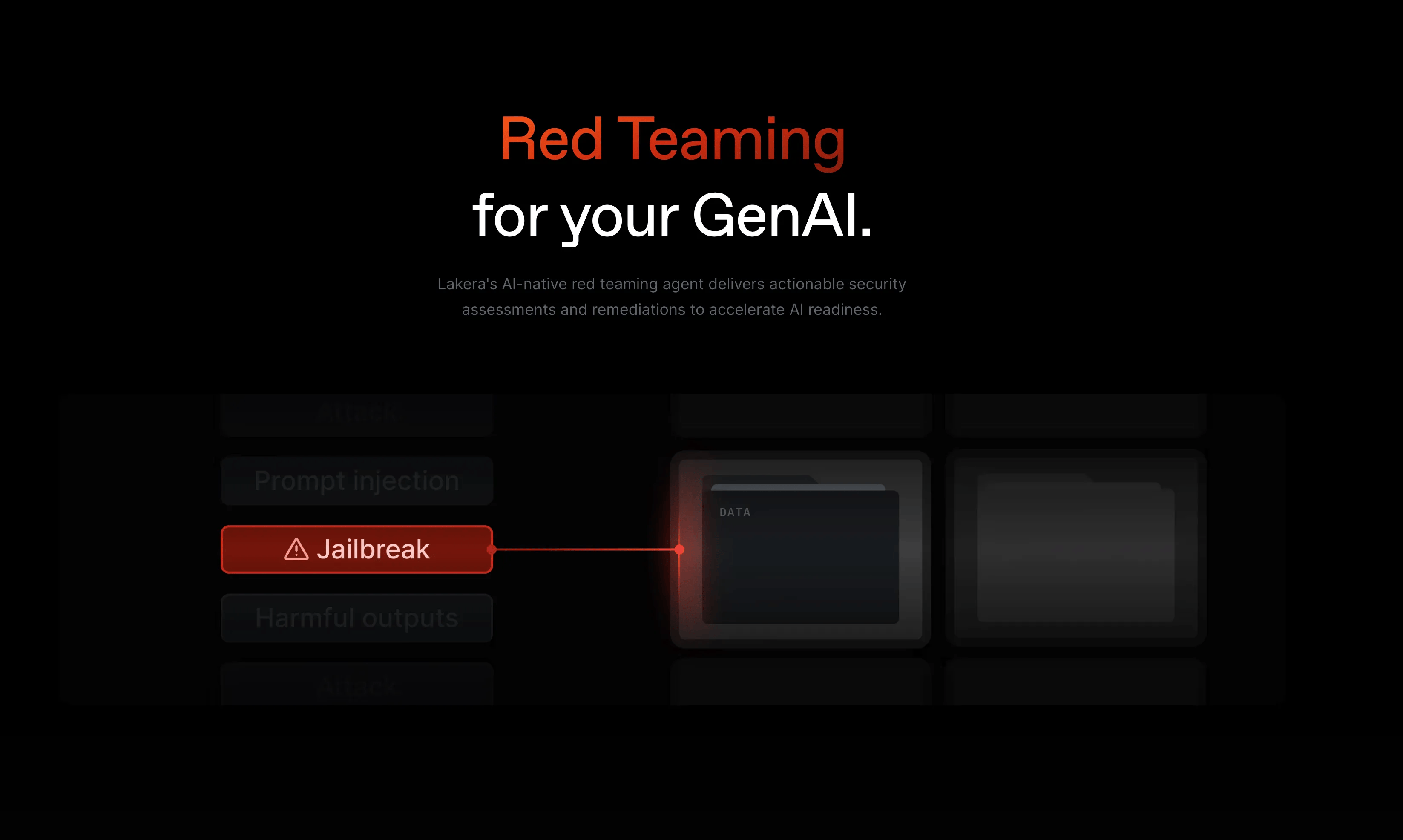
Lakera organizes its red teaming around three risk lenses rather than one, testing for safety, for security, and for responsible AI separately. That last category covers outputs creating legal, financial, or compliance exposure, which is a different question from whether the model can be jailbroken.
What it tests: AI applications and agents, scoped per system, with attention to risks specific to one application's architecture and usage patterns rather than a generic suite.
Attack coverage: Adversarial and misuse scenarios covering prompt injection, jailbreaks, data leakage, and unauthorized actions, plus regression and drift testing that catches when a model update or new capability introduces risk that wasn't there last release.
Output: Findings across application-specific risks, safety and compliance gaps, and security weaknesses, presented as a continuous workflow rather than a one-off engagement.
Pricing: Not published. Contact sales.
Lakera also sells an expert-led red teaming service alongside the automated product, which is worth knowing if you'd rather buy the exercise than run it. As with the other security-first platforms here, evals and production quality monitoring are not part of the picture.
Best for: Teams that want safety, security, and compliance risk assessed as separate lenses, particularly where regulatory exposure drives the program.
5. HiddenLayer
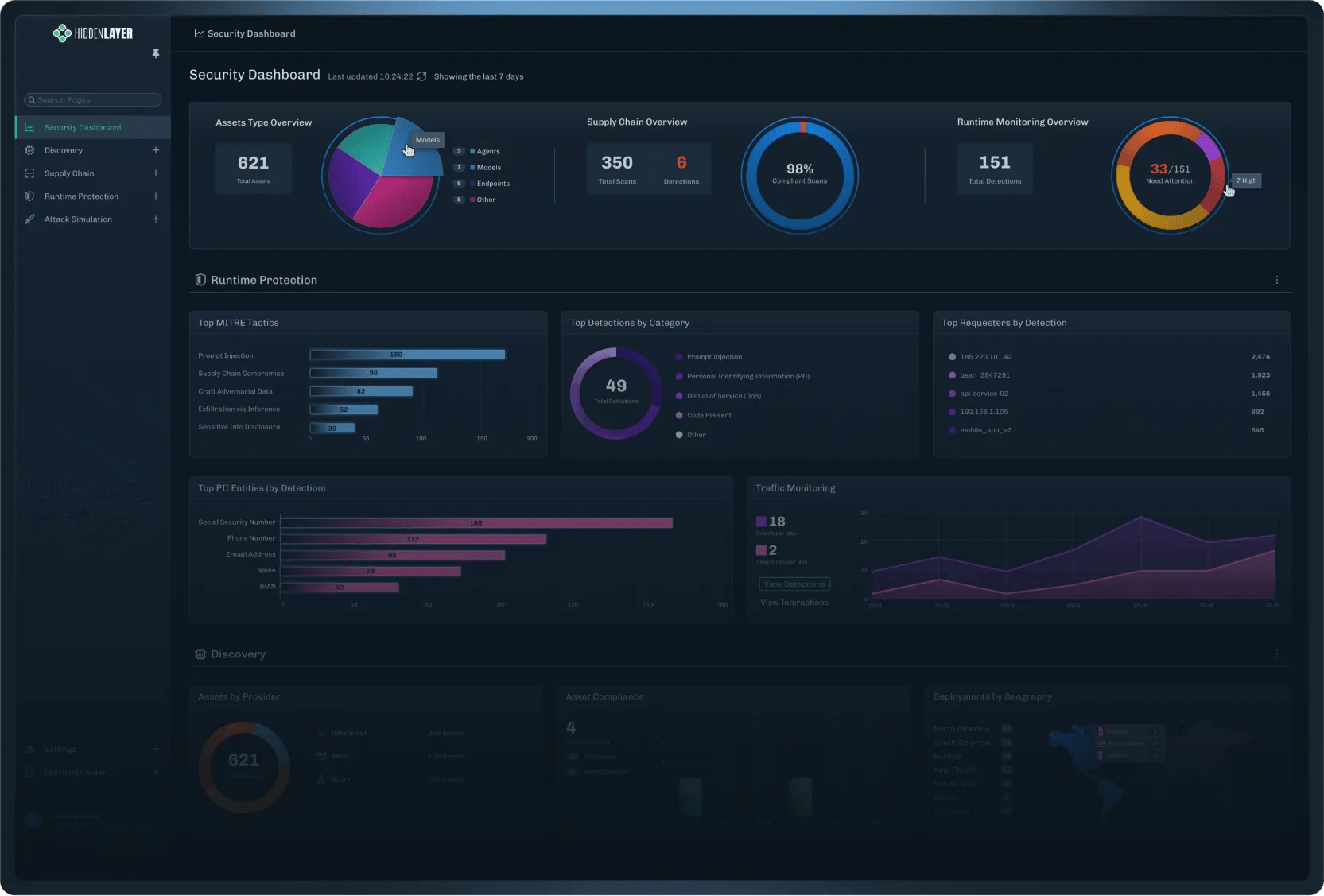
HiddenLayer built its Automated Red Teaming product as one component of the broader AISec Platform, which also covers model scanning and GenAI detection and response. Buying it means buying into that platform rather than adding a testing tool to an existing stack.
What it tests: Prompts, models, and workflows at scale. The approach is model-agnostic and agentless, requiring no training data, which fits organizations testing third-party models they do not control.
Attack coverage: Simulated expert-level attacks drawn from patented adversarial research, covering the routine checks that manual red teaming is too slow and expensive to repeat.
Output: Remediation-ready reports with regulatory-aligned documentation, aligned to OWASP.
Pricing: Not published. Demo required.
Where HiddenLayer is less proven publicly is multi-turn agentic simulation, which the newer agent-focused vendors on this list have made their central claim. If your target is an agent with tools and memory rather than a model behind an API, confirm the depth against your own stack before committing.
Best for: Enterprises and public-sector buyers who want AI red teaming inside a broader AI security suite from an established vendor.
6. Straiker
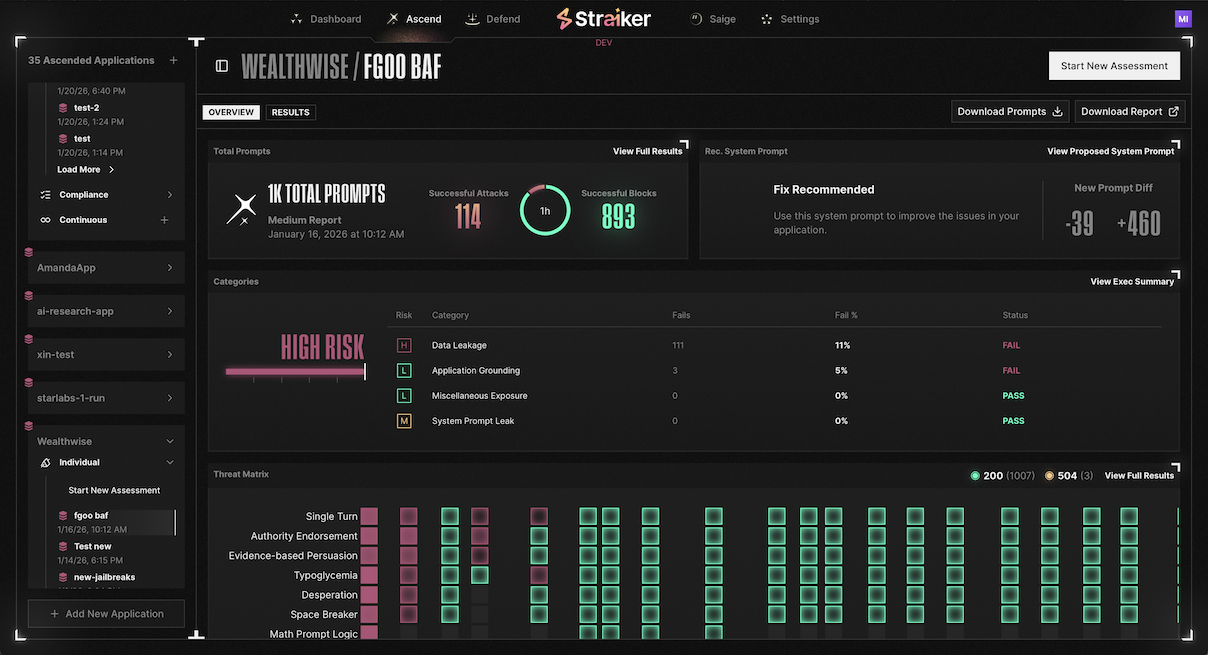
Straiker splits its platform into three named products, and the one on this list is Ascend AI, the adversarial testing engine. Discover AI handles agent and MCP inventory, and Defend AI covers runtime, so red teaming here is one stage of an agent security program rather than the whole product.
What it tests: Deployed AI agents across their tools, MCP servers, and workflows, with the stated aim of exposing real attack paths rather than response-level failures.
Attack coverage: Prompt injection, goal hijacking, tool misuse, and inter-agent manipulation, powered by the company's own threat research. Coverage is organized by agent type, with separate treatment for coding agents, custom-built agents, and productivity agents.
Output: Attack paths tied to the agent's execution, feeding runtime policy and a kill-switch capability for shutting down a rogue agent.
Pricing: Not published. Demo required.
What you give up if you choose Straiker is breadth outside the agent case: if what you ship is a single-turn LLM feature rather than a tool-calling agent, most of what makes Straiker distinctive will not apply to you.
Best for: Enterprises deploying tool-calling agents at scale, particularly where MCP connections and coding agents are in production.
7. General Analysis
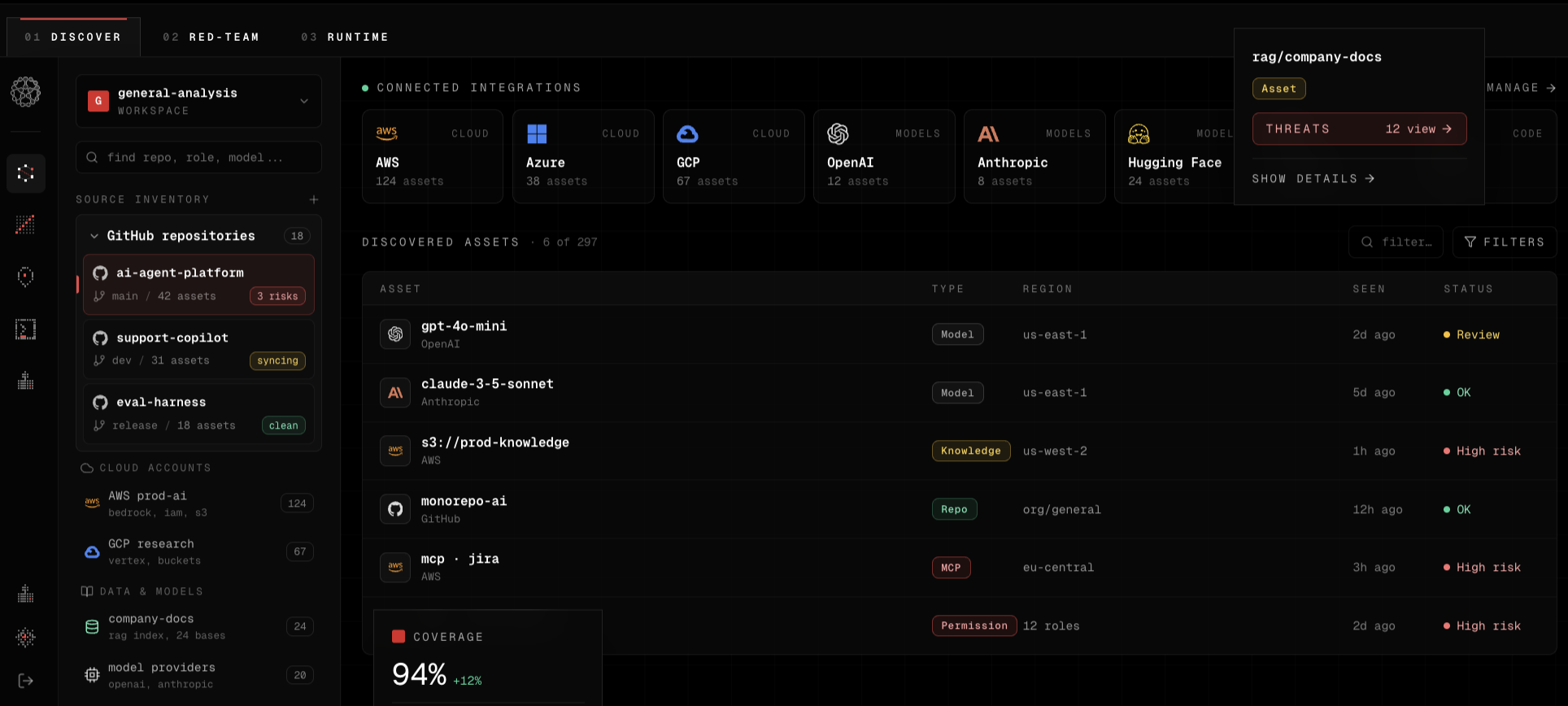
Where General Analysis differs from most of this list is the range of injection surfaces it treats as first-class. Alongside direct prompts, campaigns run indirect instructions planted in documents and web pages, tool output poisoning, and retrieval-borne attacks through connected knowledge bases.
What it tests: Deployed AI systems across chatbots, copilots, RAG apps, coding agents, internal agents, and model endpoints, exercising tools, permissions, memory, browser actions, MCP servers, and approval gates.
Attack coverage: Direct, indirect, multi-turn, and retrieval-borne attacks, with tests that check whether one tool, server, or retrieved artifact can steer another privileged action across the agent graph.
Output: Findings mapped to security frameworks, asset owners, severity, affected systems, and remediation steps. Confirmed failures become regression tests and can feed runtime controls through guardrails and approval policies.
Pricing: Not published. Demo required.
The replay capability is the part worth planning around: confirmed exploits get re-run against new model versions, prompt changes, and tool updates before they reach production, which is the closest thing here to treating a finding as a permanent test rather than a report line. Setup asks more of you than a single endpoint URL, since campaigns need agents, prompts, tools, permissions, and retrieval sources ingested first.
Best for: Teams whose agents read untrusted external content and act on it, where indirect injection is the primary worry.
8. Promptfoo
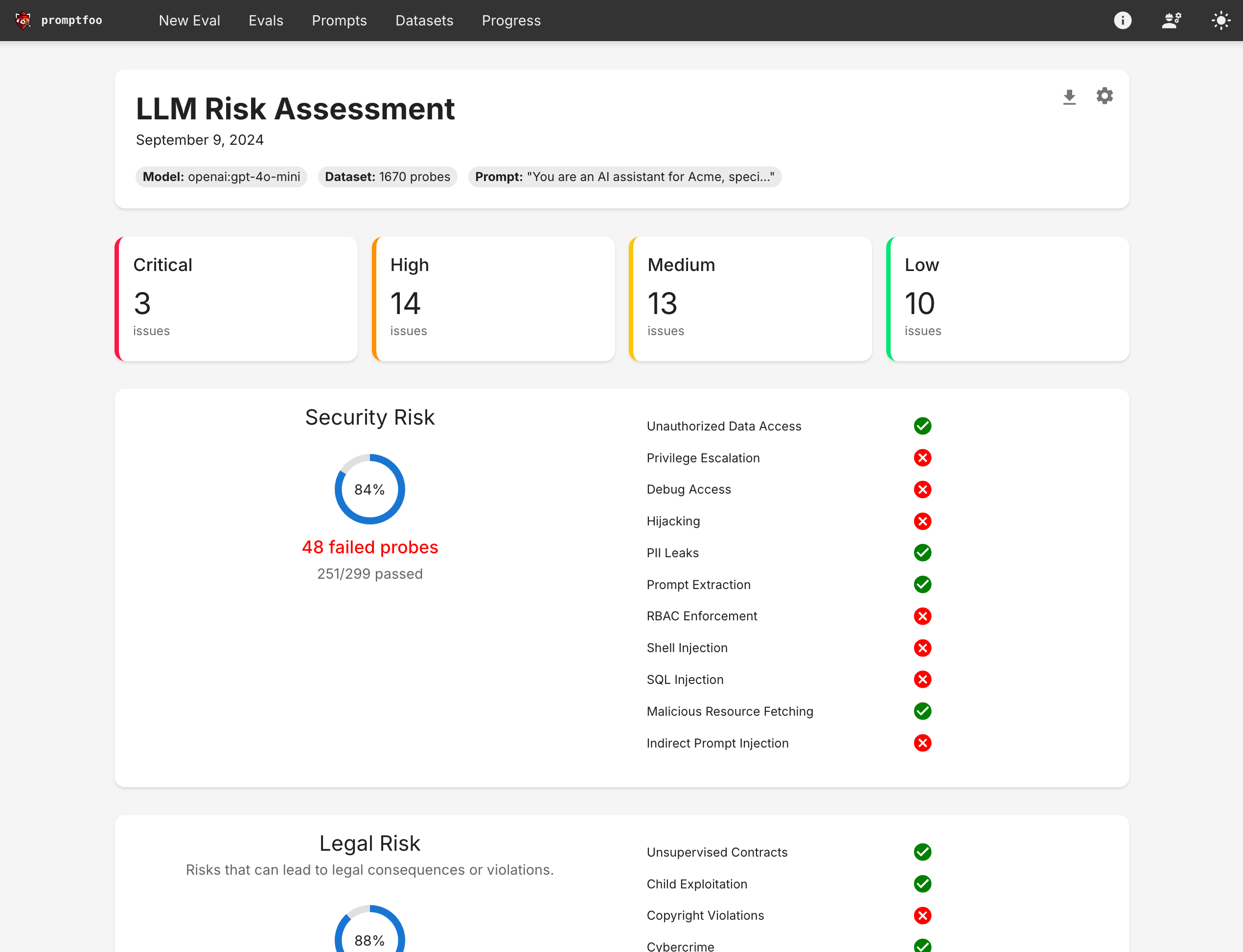
Promptfoo is config-as-code, which makes it the natural fit for teams that already keep their test definitions in the repo. Prompts, providers, targets, and assertions live in YAML, the CLI fails a CI job on a threshold, and a maintained GitHub Action adds pull-request summaries.
What it tests: Your live application over HTTP or a model endpoint, with dedicated agent plugins for goal hijacking, tool chain attacks, privilege escalation, and memory poisoning.
Attack coverage: Red team plugins generate both the attacks and the graders, so you're not hand-writing assertions per case. OpenTelemetry tracing feeds Promptfoo evidence about what the agent actually did during a test, which it normalizes into a time-ordered trajectory rather than judging on the final response alone.
Output: Vulnerability findings with remediation guidance, compliance framework mapping, and a searchable scan history on paid tiers.
Pricing: Community is free forever and includes red teaming at 10,000 probes a month, where a probe is one request to the target. Enterprise and On-Premise are both custom, adding custom probe limits, continuous monitoring, SSO, API access, and managed cloud.
Though, Promptfoo's 10k monthly probe ceiling on Community might arrive faster than it sounds once campaigns get adaptive.
Best for: Engineering teams who want adversarial testing declared in the repo and enforced in CI without a procurement cycle.
9. PyRIT
Microsoft built PyRIT as an orchestration framework for identifying risk in generative AI systems, and it's the tool most often named when someone asks what to use before buying anything. Palo Alto's own guidance points to it as the open-source starting point for scaling manual red team effort.
What it tests: Whatever you connect it to. Targets, converters, scorers, and orchestrators are composable, so the framework tests a model endpoint or a full application depending on how you wire it.
Attack coverage: Single-turn and multi-turn orchestration, including cross-domain prompt injection, with attack strategies you extend in Python rather than select from a menu.
Output: Scored results in whatever form you build. There is no dashboard, no campaign history, and no compliance report unless you write one.
Pricing: Free and open source.
The upside with PyRIT compared to other red teaming tools is total control over what runs and complete visibility into how a result was reached, which matters if you're red teaming something unusual enough that a packaged attack library would miss it.
Best for: Security engineering teams building a custom adversarial testing harness, and anyone evaluating the category who wants a baseline before spending.
10. Mend.io
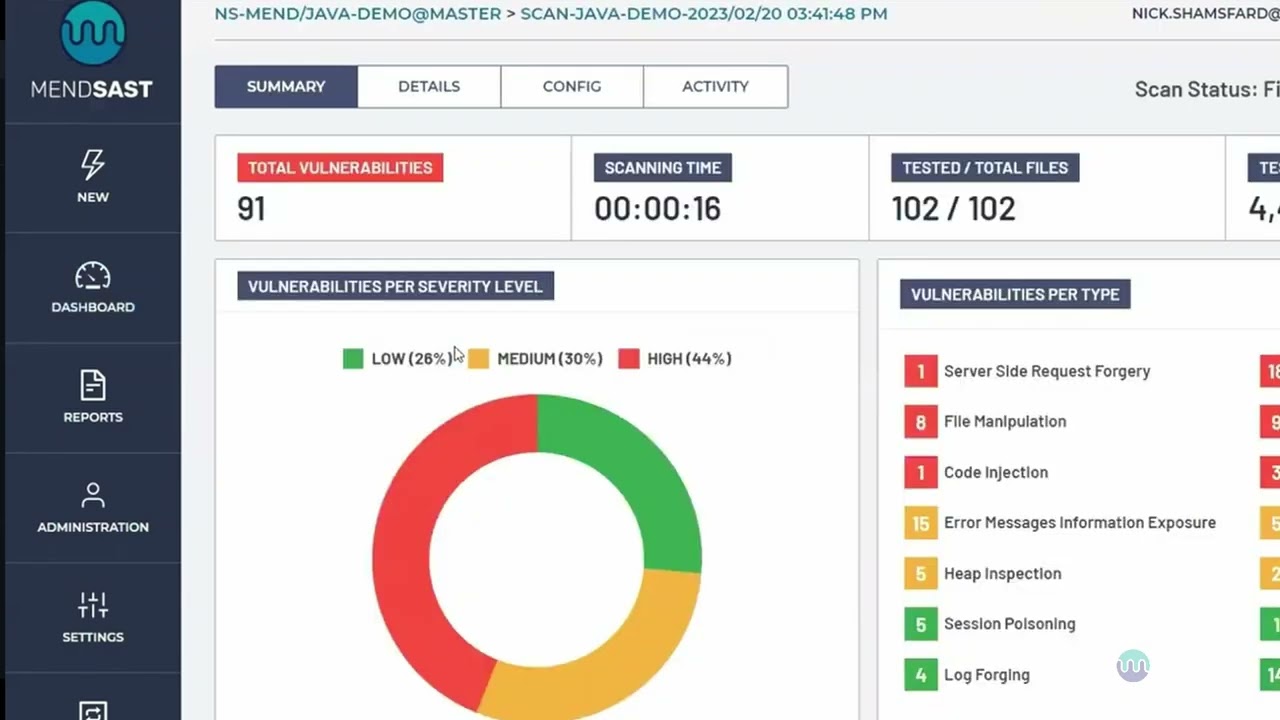
Mend.io approaches AI red teaming from application security rather than from AI, which is the whole argument for and against it. Mend AI sits inside the same platform running SCA, SAST, and dependency management, so adversarial testing of an AI feature lands in the workflow already handling the rest of that application's risk.
What it tests: Conversational AI including chatbots and agents, through API or platform integration.
Attack coverage: 22 pre-defined tests covering prompt injection, context leakage, data exfiltration, hallucination, and bias, with custom scenarios on top for application-specific risks.
Output: Findings connect to ticketing systems and system prompt hardening workflows rather than stopping at a report. Controls map to OWASP, NIST, ISO/IEC, and the EU AI Act across 25 technical requirements, producing a maturity report aimed at compliance teams.
Pricing: Mend AI runs up to $300 per contributing developer per year, sold standalone or as an add-on to Mend AppSec at up to $1,000 per developer per year. No per-GB fees.
Per-developer pricing is unusual in this category and cuts both ways. Cost might become predictable and scale with headcount rather than with how much you test, which is good if you test constantly and expensive if a small team wants deep coverage. The pre-defined test library is also narrower than what the agent-focused vendors ship.
Best for: Engineering organizations that already run Mend for AppSec and want AI behavioral testing under the same contract and the same governance.
Run your first campaign this week
Point Respan at your deployed agent, get confirmed findings with the decisive prompt and evidence attached, and wire the grade into CI so the next release has to clear it. Tracing, evals, prompts, and red teaming on one platform, free to start.
FAQ
Are there free or open-source AI red teaming tools?
Yes, and the free tiers now cover real adversarial testing rather than a demo run. Respan's campaign CLI is open source and the platform has a free tier, so you can run a full assessment against your own agent and read the attack code before it runs. Promptfoo's Community edition is free forever and includes red teaming up to 10,000 probes a month, which is enough for regular testing on a single application. PyRIT is free and unlimited but gives you a framework rather than a product, so budget engineering time instead of licence cost. The tradeoff across all three is that free tiers meter something, whether that's probes, campaign allowance, or your own team's hours.
Do AI red teaming tools replace a penetration test?
No, and treating them as interchangeable leaves a gap. A penetration test covers the application around the model: the exposed endpoint, the authentication layer, the unpatched dependency, the misconfigured bucket. AI red teaming covers the model's behavior and the actions it can be talked into taking. An agent can sit behind a perfectly hardened API and still hand a customer record to whoever asks in the right sequence, and no pen test will surface that because there's no vulnerability in the traditional sense to find. Run both, and expect them to report to different people.
Can these tools test agents with tools and memory?
Some can, and it's the sharpest dividing line on this list. Testing an agent properly means exercising its execution paths rather than its text responses, which requires the tool to trigger real tool calls, poison memory across turns, follow indirect instructions planted in retrieved documents, and check whether one connected system can steer another. Respan, Straiker, General Analysis, and Promptfoo all target that surface directly. Others are stronger on model-level probing and treat agent behavior as an extension. Ask any vendor to show you a finding where the evidence is a recorded tool action rather than a model response, since that distinction is hard to fake in a demo.
How often should you run AI red teaming tools?
Tie the cadence to change rather than to the calendar. The attack surface moves whenever the prompt, the model, the tool list, the permissions, or the retrieval corpus moves, and none of those changes look like a security event on the way out the door. Wiring a campaign into CI with a grade threshold handles that automatically, which is why a CLI and a non-zero exit code matter more than they appear to when you're comparing feature lists. Underneath that, a monthly run catches drift nobody attributed to a specific deploy, and a newly published attack technique is worth an unscheduled assessment on its own.