An agent that passed every test case last Tuesday started giving customers wrong refund amounts on Thursday. Nothing in the code changed. The model provider shipped a point release, the tone of the outputs shifted, and the final-answer assertions kept passing because the JSON schema was still valid. Nobody found out until a support ticket landed.
That gap is what AI evaluation tools for production are supposed to close, and most of them do not. The tooling in this category splits cleanly in two. One half runs before you deploy, scoring a fixed dataset in CI and handing off. The other half keeps scoring after the traffic is real, on live spans, with alerts attached.
The split matters more than feature counts do, because the failures that cost money almost never show up in the test set. They show up in the traffic. A tool that stops at the last commit before deploy leaves you assembling production quality monitoring out of something else.
Below are the ten best AI evaluation tools for production, sorted by where they actually run, what they score once they get there, and what each one costs when volume arrives.
What Is AI Evaluation?
AI evaluation is the practice of scoring the output of a model or agent against defined quality criteria, using automated scorers, human review, or both. It replaces spot-checking with measurement that repeats.
Evaluation runs in two modes. Offline evaluation scores a fixed dataset before a change ships, which is how you compare a new prompt against the old one or a cheaper model against the incumbent. Online evaluation scores production traffic as it arrives, which is how you find out that a provider update changed your refund calculations.
Offline evaluation answers whether a change is safe to ship. Online evaluation answers whether the thing you shipped is still working. Teams that only do the first one discover regressions from customers.
The scoring itself comes from three places. Deterministic code checks handle anything with a right answer, like schema validity or a required field. LLM-as-judge scoring handles subjective criteria like tone, faithfulness, or whether an answer actually addressed the question. Human review handles the cases where the automated judge and the reality disagree, and it is also how you calibrate the judge in the first place.
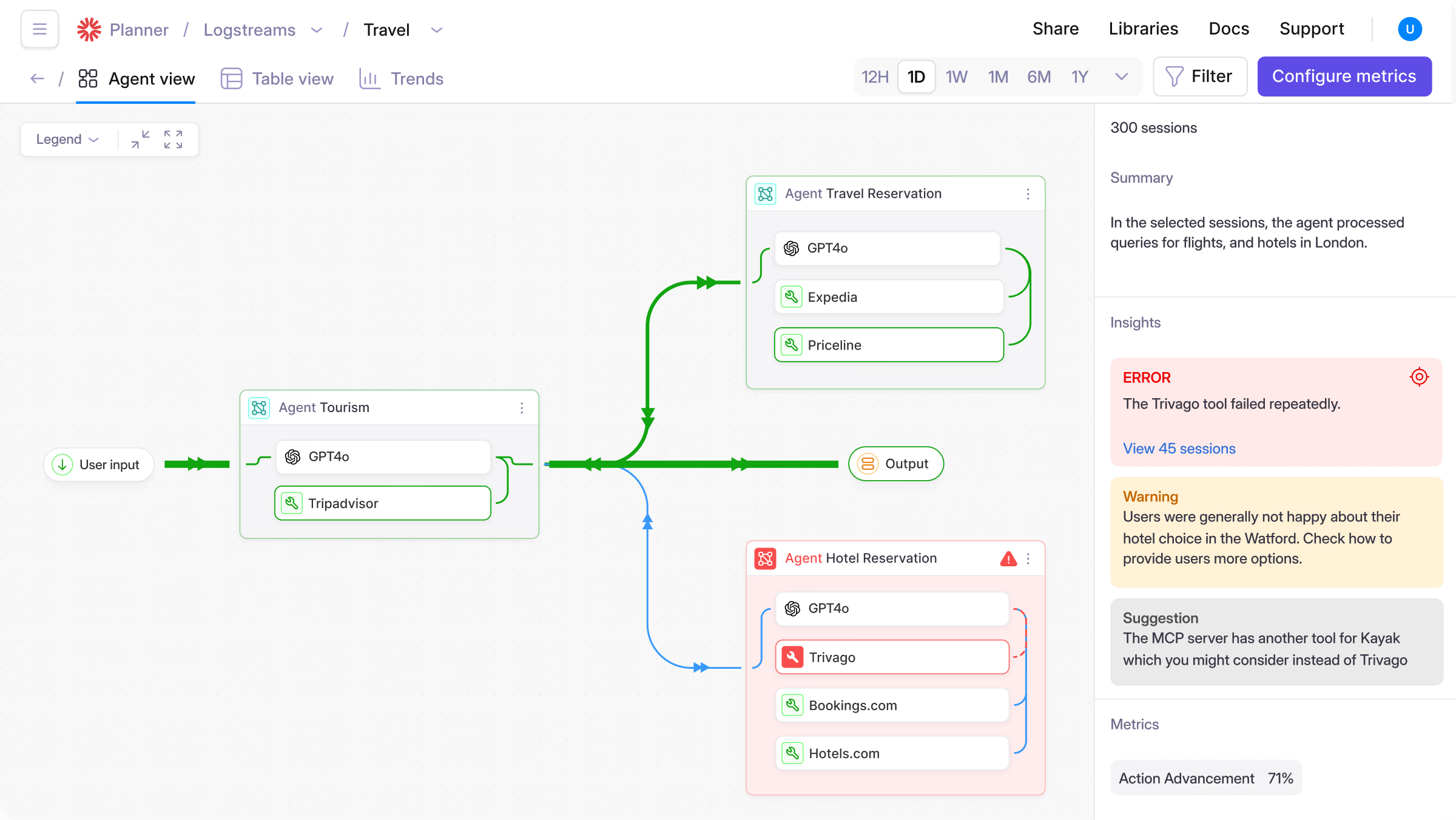
For agents, evaluation has to reach further down. A multi-step agent can reach the correct final answer through a wrong tool call, and a final-output score will reward that. Scoring individual spans is the only way to catch reasoning that went sideways and recovered by accident.
10 Best AI Evaluation Tools for Production in 2026
The roster of evaluation tools below is ordered by how much of the production loop each platform closes on its own. Tools that score live traffic, connect that score back to the trace behind it, and turn the failure into a test case rank higher than tools that stop at a CI gate.
Each entry below covers what the platform does, where it stops, and what the pricing structure means once traffic scales.
1. Respan
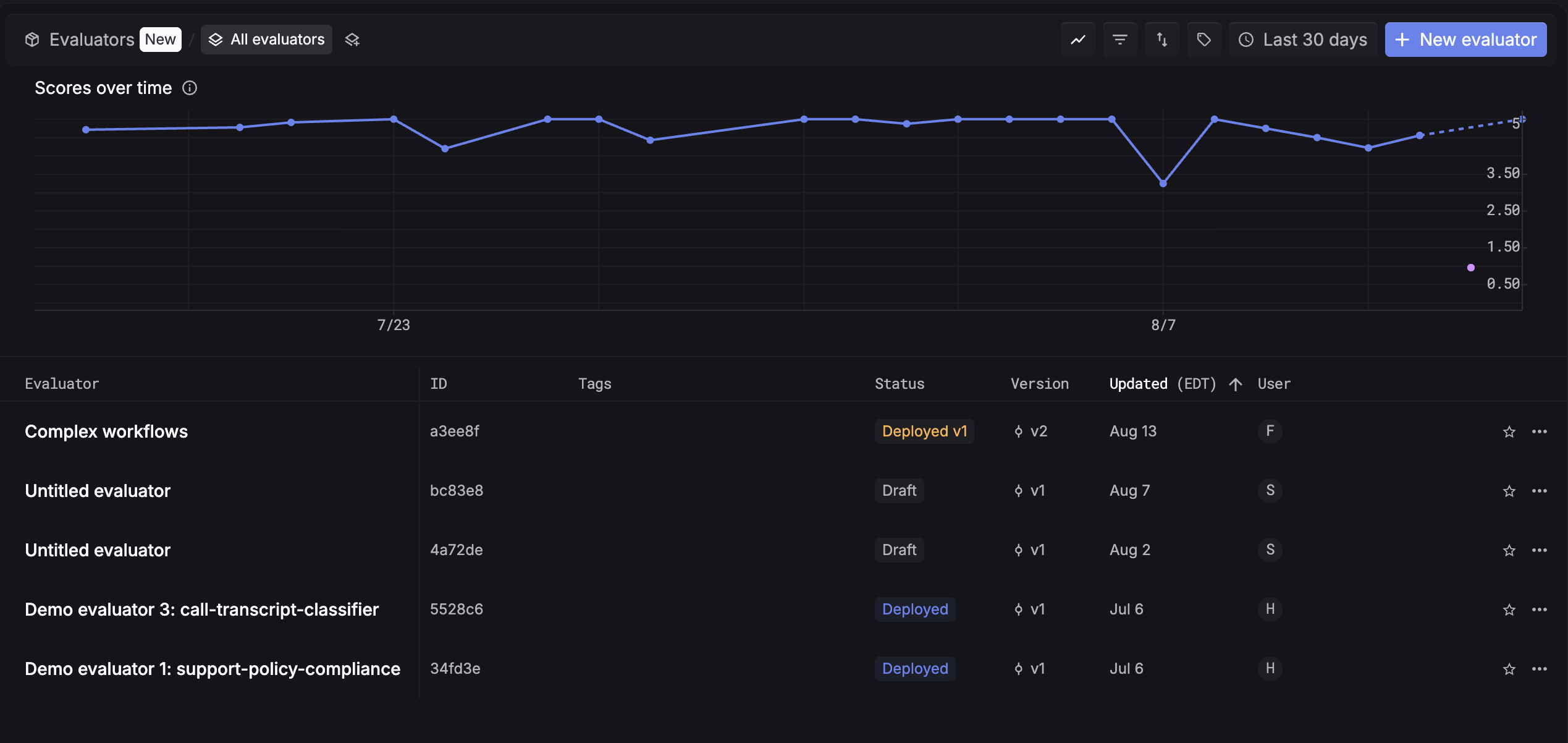
Respan scores production traffic and connects every score to the trace that produced it. Click a failing eval and land on the exact agent run behind it, with the input, the output, the tool calls, and the cost attached. From there the failing case becomes a dataset row, the fix becomes an experiment, and the score moves or it does not. That loop closes inside one platform, which is the difference between knowing quality dropped and knowing what to change.
With Respan evals, you can know what's working, what isn't, and why, and see exactly what your agents did in a fraction of the time.
Evaluation features:
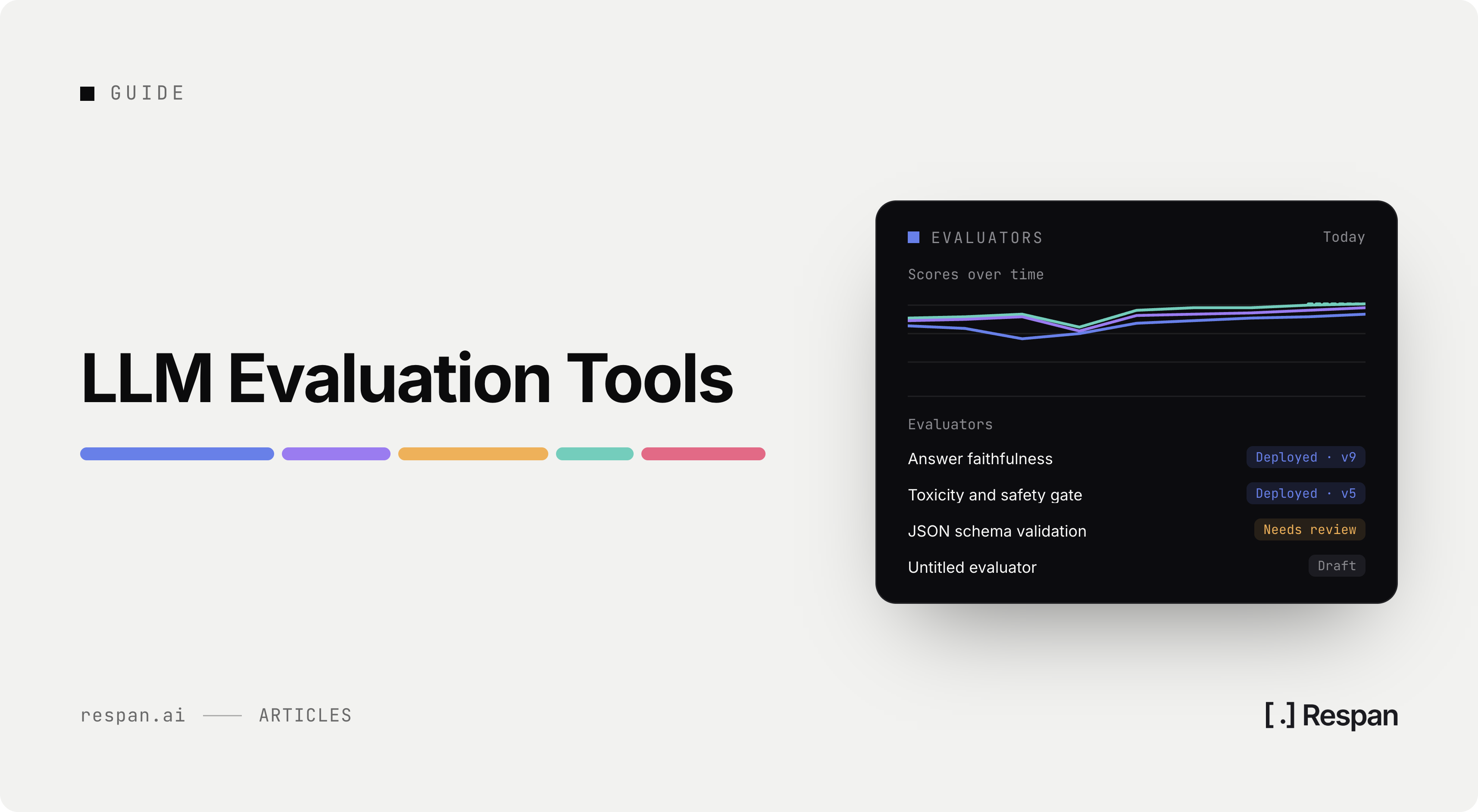
Online evals - Deploy the same evaluator on live production spans, filtered by status, customer, or thread, and sampled to control cost, so regressions surface in real time.
Composable evaluators - An LLM judge, a deterministic code check, or a human reviewer, composed into one evaluator that turns any output into a single score.
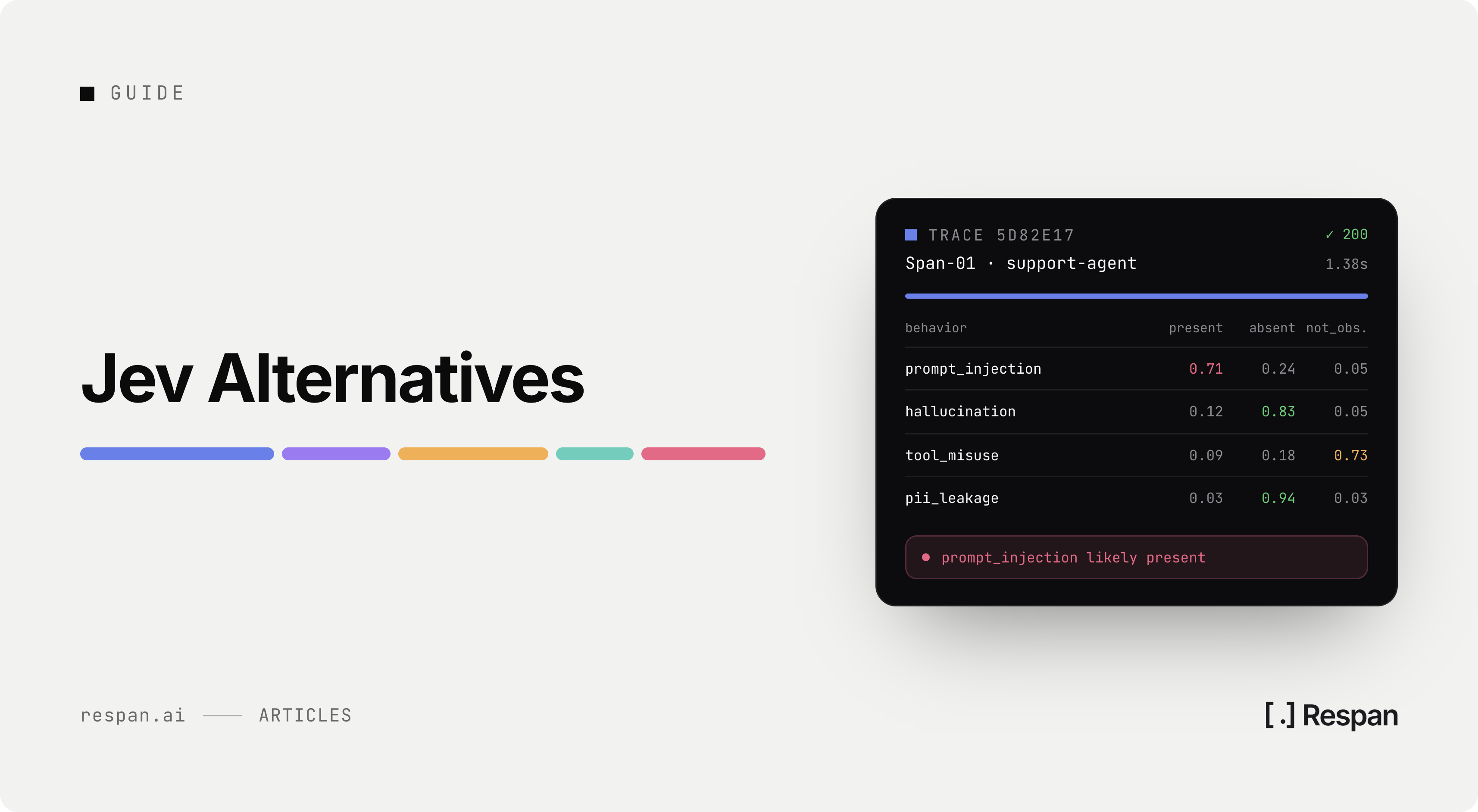
Span-01 - Respan's reasoning classifier for AI traces checks plain-English behavior definitions, like hallucinations or tool misuse, in a single forward pass and beats frontier models on Respan's Behavior Benchmark. Span-01 Lite is free.
Datasets from real traffic - Pull requests from your logs by filter and sampling rate, or upload a CSV, so every test case is one your users actually sent.
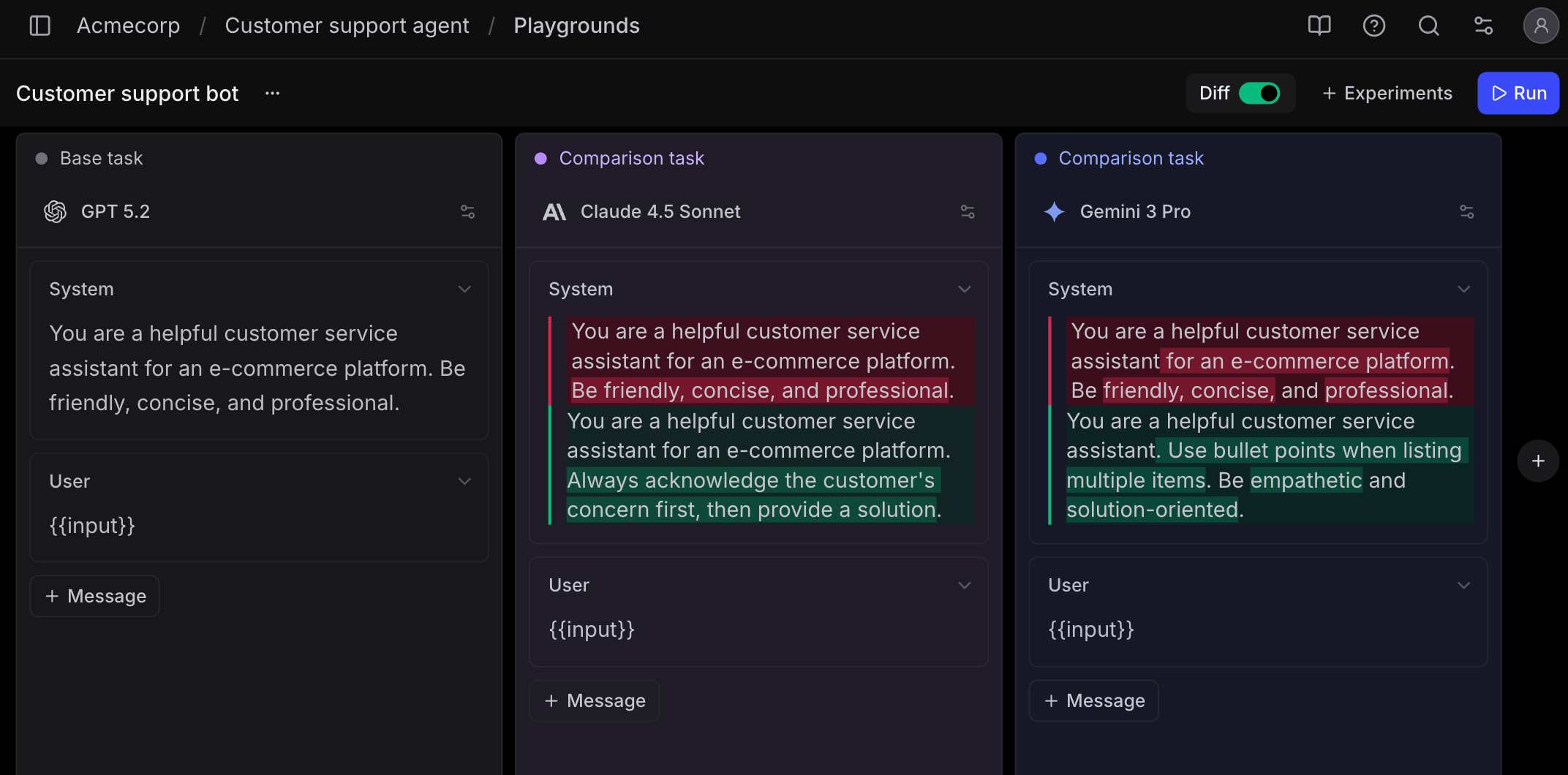
Experiments - Run a prompt version, a model, or a dataset through your evaluators at scale, with per-row and average scores, side-by-side distributions, and a click into the full trace behind any row.
Human review - Route failures to a person for scoring when automated evaluators cannot settle it.
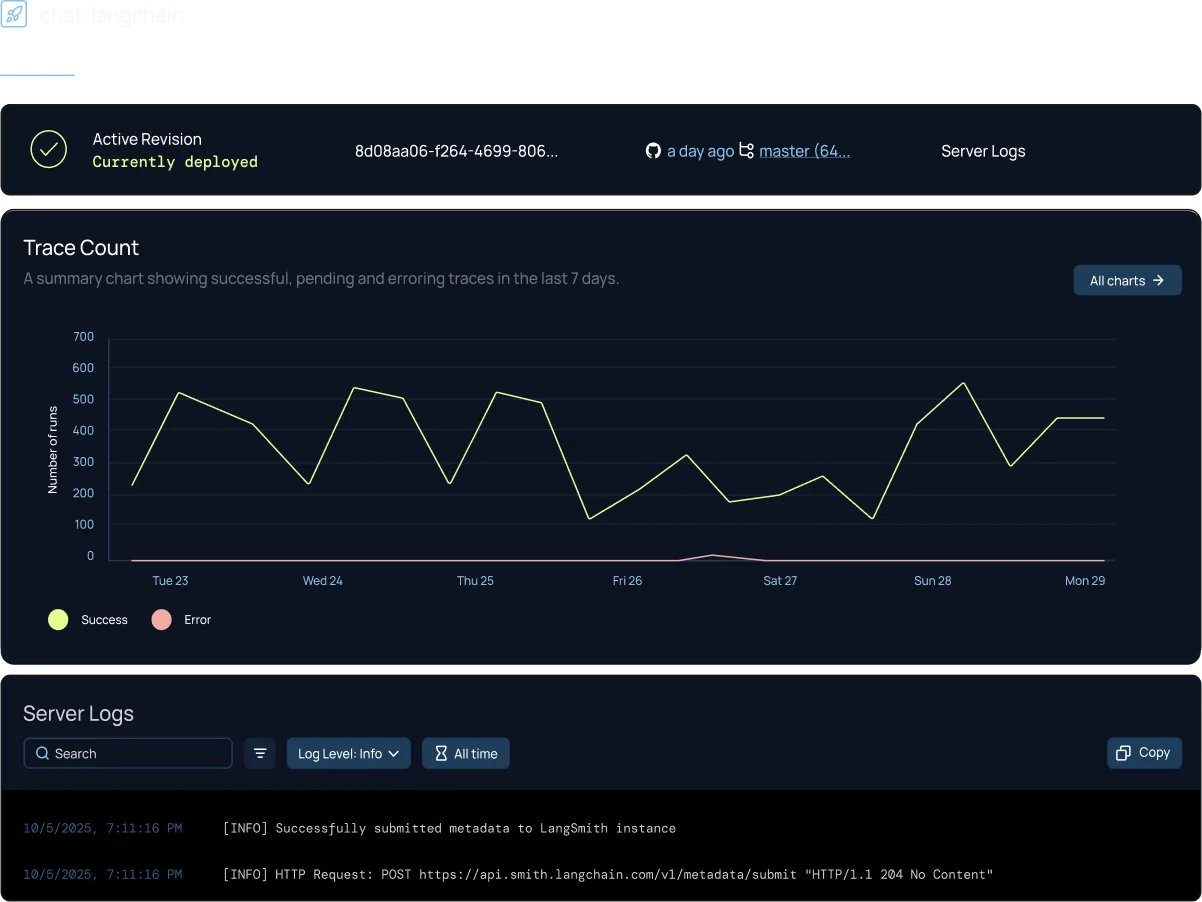
Span-level tracing - Every LLM call, tool run, retrieval, and agent turn becomes a span in one trace, nested parent to child, each with its own input, output, latency, and cost.
Red teaming - Adversarial campaigns probe for prompt injection, system-prompt leakage, secret disclosure, and goal hijacking, graded by severity, against the same connected agent you already trace.
Guardrails - Block requests in categories like prompt injection or system prompt leak at the gateway before they reach the model, running on Span-01 and free with the gateway. Currently in early access.
Prompt management - Commit and compare prompt versions and deploy instantly, with no redeploy required to change a prompt.
Gateway - One endpoint for 1,000+ models with automatic failover, retries, and load balancing, adding typically 30–40ms of added latency. Every request is logged as a span automatically.
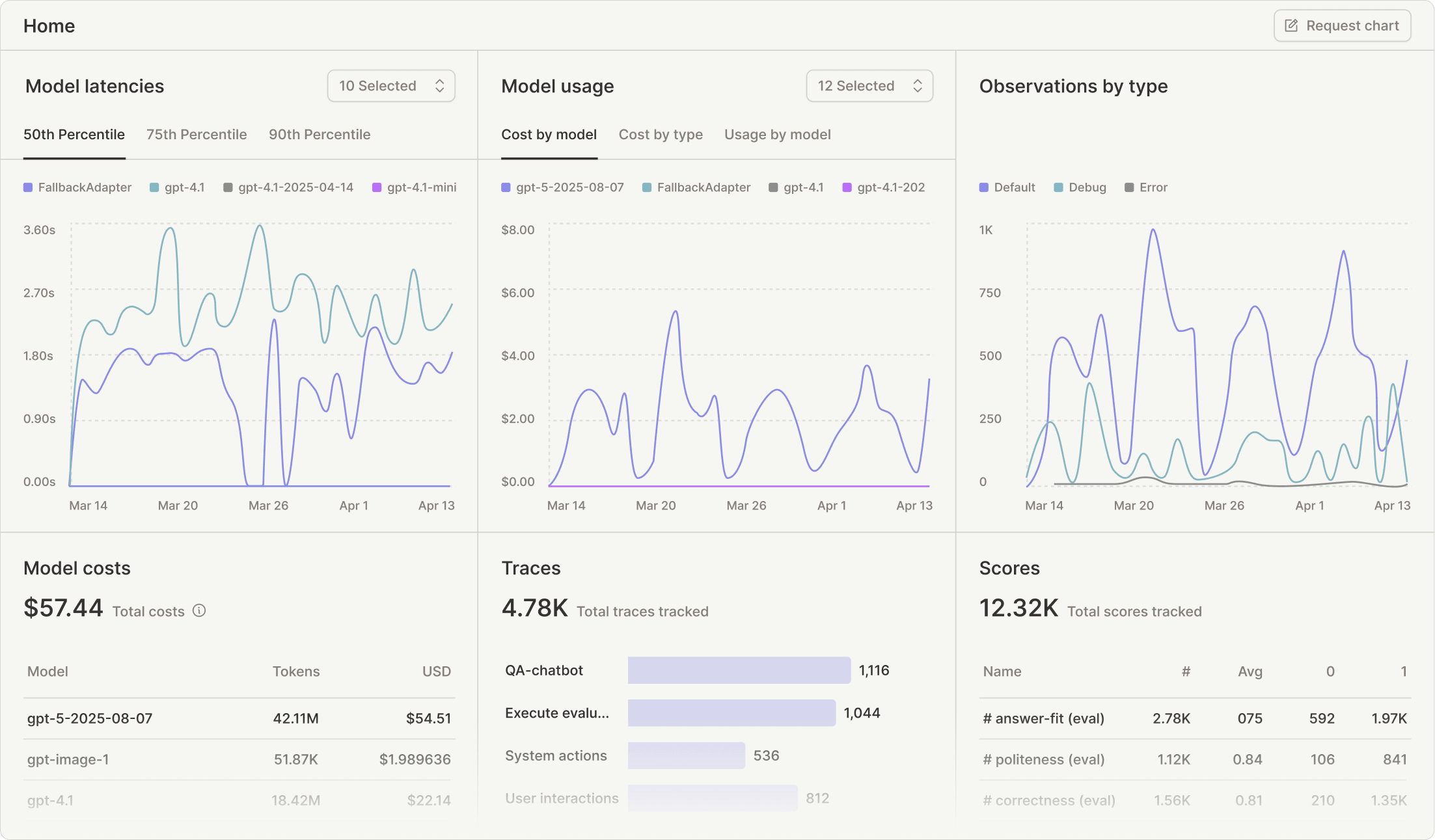
Monitors - Watch cost, errors, latency, or tokens over any window, with alerts to Slack, email, or a webhook the moment a threshold breaks.
Respan is SOC 2, HIPAA, GDPR, and ISO 27001 compliant, with a HIPAA BAA on Enterprise.
Pricing: Free includes 100k logs, 1k scores, 5 datasets, and 2 evaluators with 7-day retention, which is enough to run real online evals rather than a demo. Team is $199/mo billed yearly and lifts datasets, evaluators, and prompts to unlimited with 10k scores and 30-day retention.
Score production traffic, not just your test set
Respan runs online evals on live spans and links every score to the trace behind it. Click a failing eval and land on the exact agent run that produced it, turn that run into a dataset, and prove the fix moved the number.
Braintrust is built around the experiment. Change a prompt, run it against a dataset, and see per-scorer deltas against the baseline before the branch merges. Production logs and offline experiments share a data layer, so a failing production case becomes a test case without an export step.
Autoevals covers LLM-as-judge, heuristic, and statistical scorers out of the box, and Loop drafts custom scorers from a plain-language description of a failure mode. Though, retention is the harder constraint with Braintrust: 14 days on Starter and 30 on Pro, too short to track a quality trend across a quarter. Plus, their compliance gating is steeper than the tier names suggest. SOC 2 attestation, a BAA, audit logging, SAML SSO, and self-hosting are all Enterprise-only, so a team paying $249/mo gets a click-through DPA and nothing further.
Pricing: Starter is free with 1 GB and 10k scores, Pro is $249/mo for 5 GB and 50k scores. Billing meters scores rather than traces, so a team running five scorers per output hits the cap five times faster than a team running one, and the bill tracks evaluation depth instead of traffic.
3. Langfuse
ClickHouse acquiredLangfuse in January 2026. Both companies committed publicly to the same roadmap, the same MIT license, and continued self-hosting parity, and Langfuse Cloud kept running unchanged.
Managed LLM-as-judge evaluators run on either production traces or offline datasets, with annotation queues for human scoring and versioned datasets for experiments. What the self-hosted path costs is ClickHouse: Langfuse runs on it, and operating a ClickHouse cluster alongside Postgres and the ingestion stack at production scale is an on-call responsibility rather than a weekend setup.
Pricing: Core is $29/mo and Pro is $199/mo, both including the same 100k units, so the $170 difference buys retention and compliance paperwork rather than volume. A unit is a trace, an observation, or a score, meaning one agent request with twenty spans and three scorers meters as twenty-four.
4. LangSmith
Seats and traces are the two meters on LangSmith, and both climb faster than teams expect. Trace counts include every run inside a chain, so a RAG pipeline with retrieval, reranking, and generation bills three times per user query. There is no read-only seat, so a product manager who only reads eval results costs the same $39 as an engineer writing scorers.
With most tools like LangSmith, evaluation sits directly on the tracing layer, with online evaluators applied to production runs at a configurable sampling rate and datasets assembled from those same traces. Self-hosting requires Enterprise, and third-party pricing guides need care here: many still quote $0.50 per 1k traces, which is stale.
Pricing: Plus is $39/seat/mo with 10k base traces, then $2.50 per 1k base traces or $5.00 per 1k at extended retention. Cost scales on headcount and instrumentation granularity at once, so a chatty agent traced at span level on a ten-person team compounds both meters simultaneously.
5. Arize AX and Phoenix
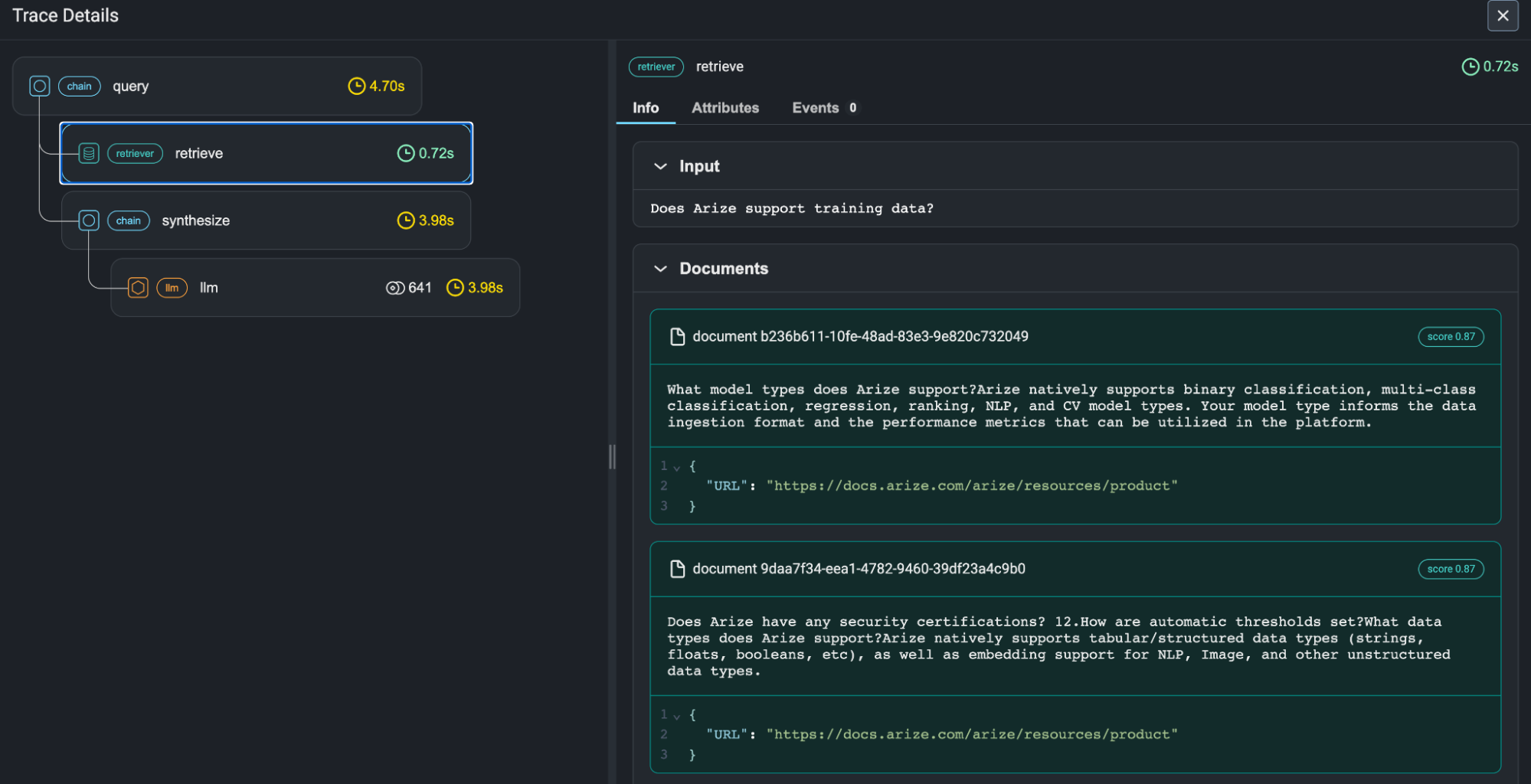
Two products ship under the Arize name and the split decides what you get. Phoenix is the open-source project under Elastic License 2.0, free and self-hostable with no caps, covering tracing, span-level evals, prompt management, and datasets. Arize AX is the managed platform, and online evaluations, drift detection, alerting, and compliance all live there.
Phoenix scores at both span and trace level and runs dataset experiments, so offline evaluation is fully available in the free build. Production scoring is not: online evaluations run on a five-minute cadence on AX only. Phoenix's documentation notes that LLM judges carry biases and need calibration, which puts several days of work ahead of the first score you can trust.
Pricing: AX Free covers 25k spans, AX Pro is $50/mo for 50k spans and 10 GB, then $10 per million spans and $3/GB. Nothing is published between Pro and Enterprise, so a SOC 2 or HIPAA requirement moves you straight from $50/mo to a sales quote.
6. Galileo
Cisco completed its acquisition of Galileo in 2026, and the platform is being folded into Splunk Observability Cloud. Cisco's stated plan is a single instrumentation layer spanning prompt optimization through production monitoring and guardrails, which redirects the roadmap for anyone evaluating Galileo as a standalone purchase.
Luna-2 is the evaluation engine, running fine-tuned 3B and 8B models in place of a frontier model as judge, with agentic metrics scoring tool selection, action advancement, and action completion across multi-step runs. Runtime guardrails require Enterprise and there is no native CI gating, meaning Free and Pro give you scores but nothing that blocks a deploy or intercepts a bad response.
Pricing: Free covers 5k traces and Pro is $100/mo for 50k, scaling with volume from there. Guardrails and self-hosting both sit behind Enterprise, so the feature the platform is bought for is the one that is not self-serve.
7. Confident AI
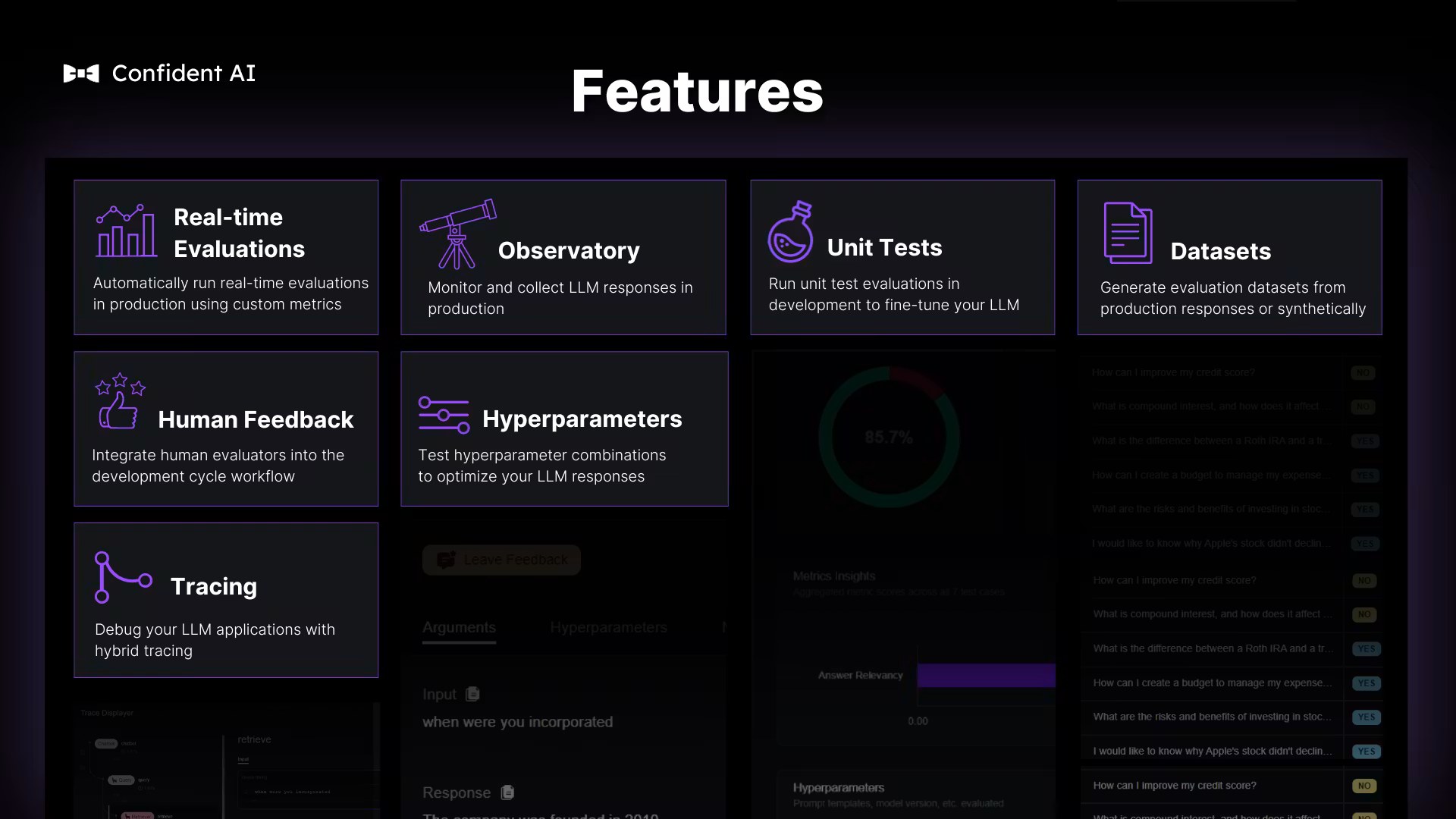
Confident AI ships 50+ metrics through DeepEval, its open-source framework, spanning faithfulness, hallucination, contextual relevance, tool selection accuracy, conversational coherence, bias, and toxicity.
Multi-turn simulation generates conversational test scenarios with tool use and branching paths, and human metric alignment compares automated scores against human annotations statistically, which is how you find out whether a judge tracks reality before optimizing against it. The workflows are built around cross-functional access, where product managers and QA run evaluation cycles through a no-code HTTP interface, which is overhead for an engineering team that wanted an SDK and a CI hook. Self-hosting requires Enterprise and the platform is otherwise cloud-only.
Pricing: Starter is $200/mo and Team is $2,000/mo, both with unlimited seats and unlimited traces, storage billed at $1/GB-month. Removing the trace meter is unusual in this category, but there is nothing between those two tiers, so outgrowing Starter is a 10x jump.
8. Maxim
Maxim runs agents through generated scenarios and personas across multi-turn text and voice conversations, scoring the full trajectory rather than a final answer. For a voice agent or a support bot where the failure mode is turn-to-turn drift, that is the matching test shape.
Online evaluation applies at session, trace, and span level, with human evaluation for cases automated scoring cannot settle and versioned prompts tested through the same evaluators. Both simulation runs and online evals are gated to Professional, so the production capability is not testable on the free tier at all.
Pricing: Professional is $29/seat/mo and Business is $49/seat/mo, layered on top of log allowances. Per-seat plus per-log means a ten-person team starts at $490/mo on Business before a single log is counted.
9. Evidently
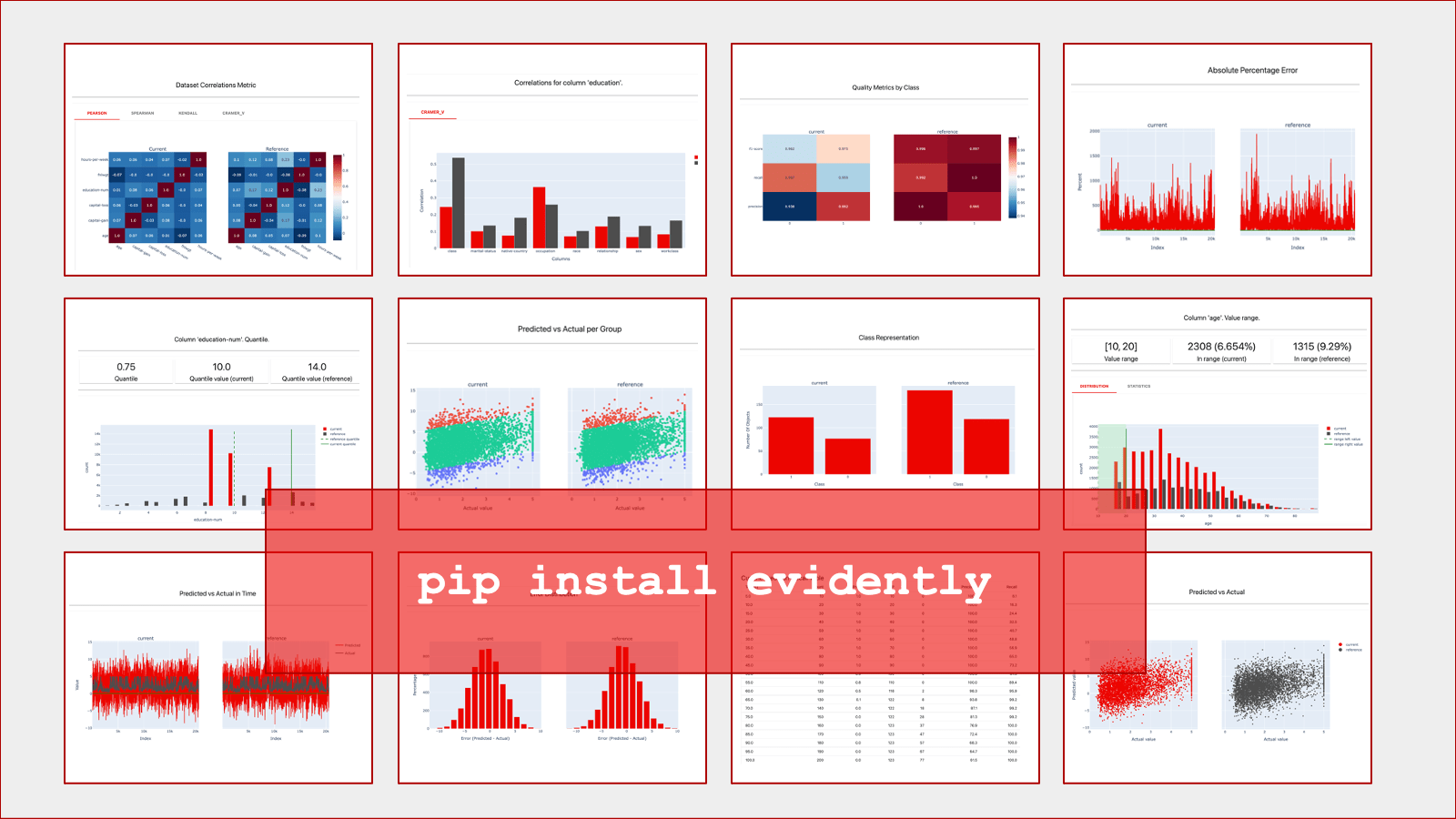
Classical ML monitoring is where Evidently started, and the framework still reflects it. The open-source library carries 100+ metrics spanning data quality, drift detection, model performance, and LLM output evaluation under Apache 2.0.
LLM-specific evaluation covers descriptors for sentiment, toxicity, and format checks alongside LLM-as-judge scoring, with declarative test conditions that run in CI and synthetic data generation for edge-case and adversarial inputs. The evaluation model is batch and dataset-oriented rather than built around the agent loop, so span-level scoring of individual tool calls and reasoning steps is not native. There is no graph visualization for tracing an execution path either. Debugging live agent behavior generally means running a second tool alongside it, which undercuts the single-dependency argument for anyone whose primary workload is agents.
Pricing: The open source framework is free, and Evidently Cloud has a free tier for getting started. Paid plans for higher volume and advanced features are not published, so budgeting requires a sales conversation, and figures circulating on aggregator sites have no vendor source behind them.
10. Fiddler
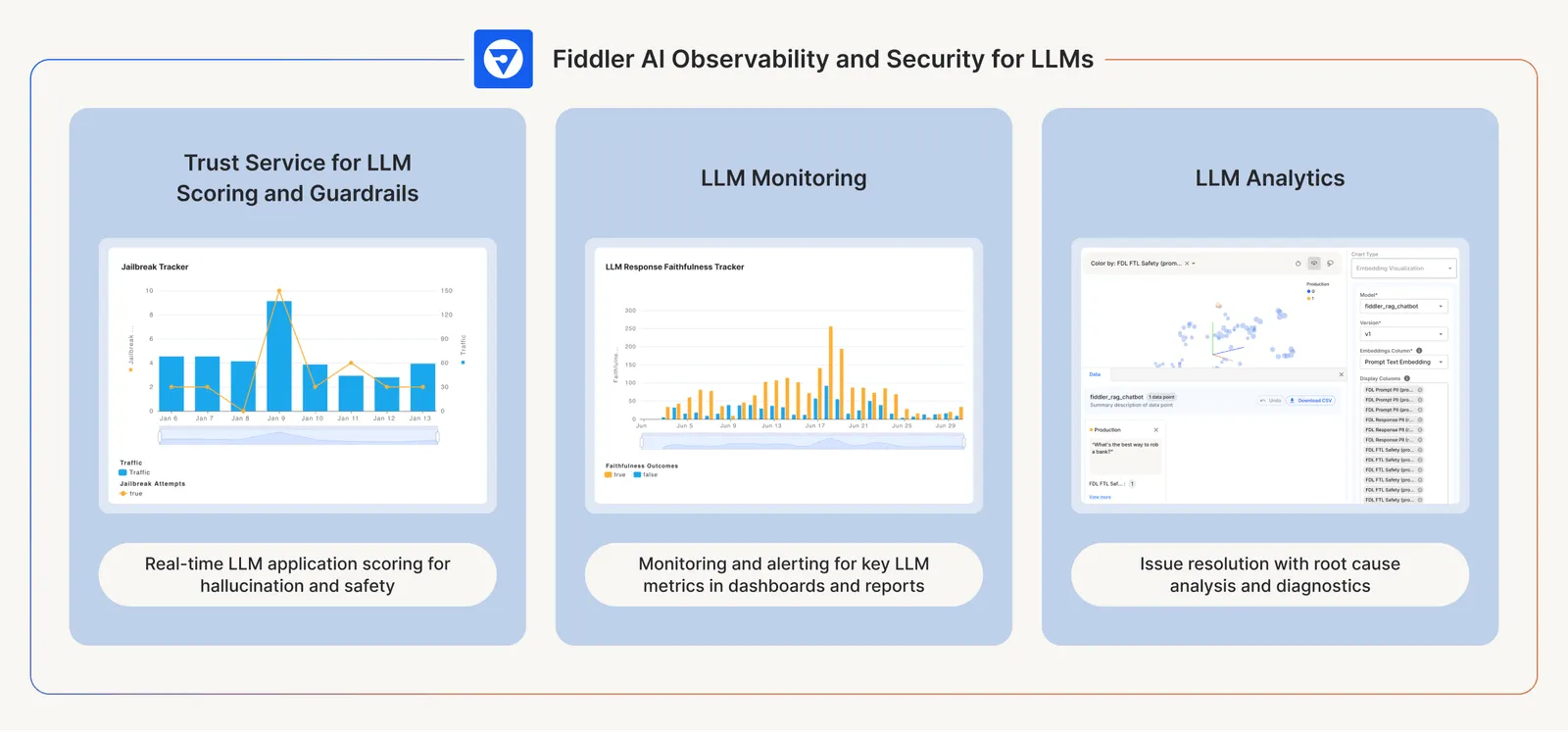
Pricing at Fiddler is per-trace, and that shapes what the platform is for. The Developer plan meters at $0.002 per trace with observability across agentic and predictive systems, custom evaluators, and SSO. At a million traces a month that is $2,000 before anything else, which rules out chatty consumer traffic and favors low-volume high-stakes workloads.
Fiddler Centor Models run evaluators and guardrails inside the customer environment with no external LLM API calls, and teams can bring their own judges alongside them for cases the built-in models do not cover. Prompt-level iteration and fast experiment loops are notably thin within Fiddler and similar tools.
Pricing: A free Guardrails tier covers basic protections only, and Developer is usage-based at $0.002 per trace with no included allowance. Cost scales linearly with volume rather than stepping between tiers, so there is no plan to grow into and no discount for staying.
Evaluate in production, not just before deploy
Respan scores live traffic with the same evaluators you run offline, and every score links back to the span that produced it. Build a dataset from the failure, test the fix against real cases, and watch the number move.
Define What Correct Means Before You Score Anything
Teams reach for a metric library before they can articulate what a good output looks like for their use case, and then optimize toward a number that does not reflect quality. Write down what failure looks like first, in plain language, for the three or four ways your system actually breaks.
A support agent might fail by inventing a policy, by resolving the wrong ticket, or by escalating something it should have handled. Those are three different scorers with three different thresholds. Faithfulness alone catches one of them.
Build the Test Set From Production Traffic
Hand-written test cases encode what you expected users to do. Production traces record what they did. The difference is where most regressions live, which is why a golden set assembled from real logs outperforms one written in a planning meeting.
Pull cases by filter and sampling rate rather than picking interesting ones by hand, or the set skews toward the failures you already know about. Include the boring successful runs too; a test set made only of known failures cannot tell you when a fix broke something that worked.
Score at the Span Level, Not Just the Final Output
A final-answer check on a multi-step agent grades the destination and ignores the route. An agent that called the wrong API, got an error, retried against the right one, and returned a correct answer passes that check while hiding a bug that will surface under load.
Span-level scoring attaches evaluators to individual steps: was this the right tool, were the arguments valid, did the retrieval return relevant context. LLM tracing is the prerequisite, since you cannot score a step you never recorded. Trace-level scoring still matters for the overall outcome, and the two answer different questions.
Choose Between Code Checks, LLM Judges, and Human Review
Deterministic code checks are fast, free, and exact, and they should handle everything with a verifiable answer. Schema validity, required fields, forbidden strings, numeric ranges, and tool-call structure all belong here. Running an LLM to check whether JSON parses is a waste of money and latency.
LLM judges handle the subjective criteria, and they need calibration before you trust them. Run the judge against a set of human-labeled examples and measure agreement. Judges carry systematic biases, including preferences for length and particular writing styles, and an uncalibrated judge will confidently score in the wrong direction.
Human review is the tiebreaker and the calibration source. Route the cases where automated scoring is low-confidence or where the stakes are high enough that a wrong score is expensive.
Gate Changes in CI, Then Keep Scoring in Production
A CI gate that fails the build when a scorer regresses stops known problems from shipping. Run the eval suite against the golden set on every pull request touching prompts, models, or agent logic, and set the threshold on the metric that maps to user harm rather than on an average.
The gate is necessary and insufficient. It only tests what the dataset contains, and production traffic drifts away from any fixed dataset the moment real users arrive. Online evals on sampled production spans catch what the gate cannot, and feeding those failures back into the dataset is what keeps the gate relevant three months later.
Sample rather than scoring everything. Scoring 100% of traffic with an LLM judge is expensive, and a well-chosen 5% sample filtered by status, customer, or thread will find a systematic regression just as fast. Behavior checks have more room, since Span-01 Lite is free and Span-01 runs at $0.02 per 1M input tokens, 700x less than GPT-6 Luna on Respan's benchmark.
What Changes When You Evaluate an Agent
Agents fail in shapes single-turn systems do not have. Reasoning and action can diverge, an error in step three can cascade through everything downstream, and a stuck loop can burn tokens for minutes without producing a wrong answer that any output check would catch.
Trajectory scoring is the addition: was the path efficient, were the steps logically consistent with each other, did the agent recover gracefully when a tool failed, and did it correctly report that it could not complete a task rather than fabricating a result. Task abandonment honesty is easy to skip and expensive to lack.
Multi-turn systems add another layer again, where coherence and context retention across turns matter more than any single response. Agent evaluation covers the failure modes and the span schema in more depth.
AI Response Quality Evaluation Metrics
Metrics fall into groups by what they measure and what kind of system they apply to. Every production system needs the task-agnostic group. The rest depends on architecture, and running metrics that do not apply to your use case adds cost without adding signal.
Task-agnostic metrics
Hallucination rate - Whether the output contains fabricated claims not grounded in the provided context or in fact.
Format validity - Whether the output matches the expected structure, such as a JSON schema or a valid tool-call shape. Deterministic and cheap.
Instruction adherence - Whether the response did what the prompt actually asked, including constraints on length, format, and scope.
Answer relevance - Whether the response addresses the question asked rather than an adjacent one.
Refusal correctness - Whether the system declined when it should have and answered when it should not have declined.
RAG metrics
Faithfulness - Whether every claim in the answer is supported by the retrieved context.
Context precision - What proportion of retrieved chunks were actually relevant to the query.
Context recall - Whether retrieval surfaced the chunks needed to answer correctly.
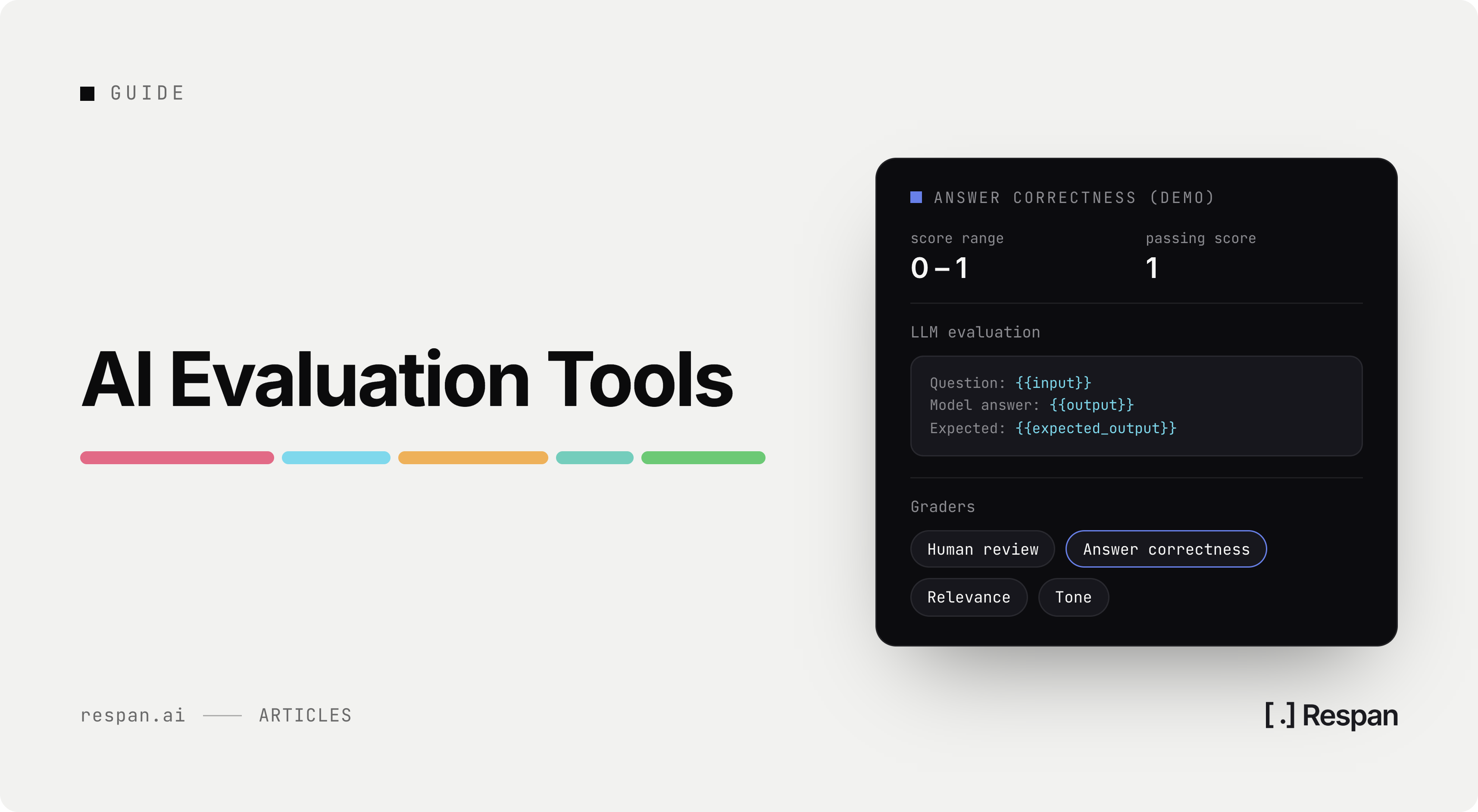
Answer correctness - Whether the final response matches ground truth, measured against a labeled set.
See RAG evaluation for how to instrument these against a production pipeline.
Agent and tool-use metrics
Tool selection accuracy - Whether the agent chose the correct tool for the step.
Parameter validity - Whether the arguments passed to a tool were well-formed and semantically correct.
Task completion rate - Whether the agent finished what it was asked to do, scored binary or against a rubric.
Trajectory efficiency - Whether the path taken was reasonable, or whether the agent looped, backtracked, or took redundant steps.
Error recovery - Whether the agent handled a tool failure gracefully instead of cascading or halting.
Reasoning coherence - Whether intermediate steps are logically consistent with each other and with the final output.
Multi-turn and conversational metrics
Conversational coherence - Whether responses stay consistent across turns without contradicting earlier statements.
Context retention - Whether the system carries relevant information forward rather than losing it mid-conversation.
Turn-level relevance - Whether each individual response fits where the conversation actually is.
Goal completion - Whether the conversation resolved the user's underlying need, not just the last message.
Safety and security metrics
Toxicity and bias - Whether outputs contain harmful, discriminatory, or policy-violating content.
PII and PHI leakage - Whether sensitive data appears in outputs or in logged traces.
Prompt injection resistance - Whether adversarial inputs can override system instructions.
Jailbreak susceptibility - Whether the system can be pushed outside its intended behavior through crafted prompts.
Operational metrics
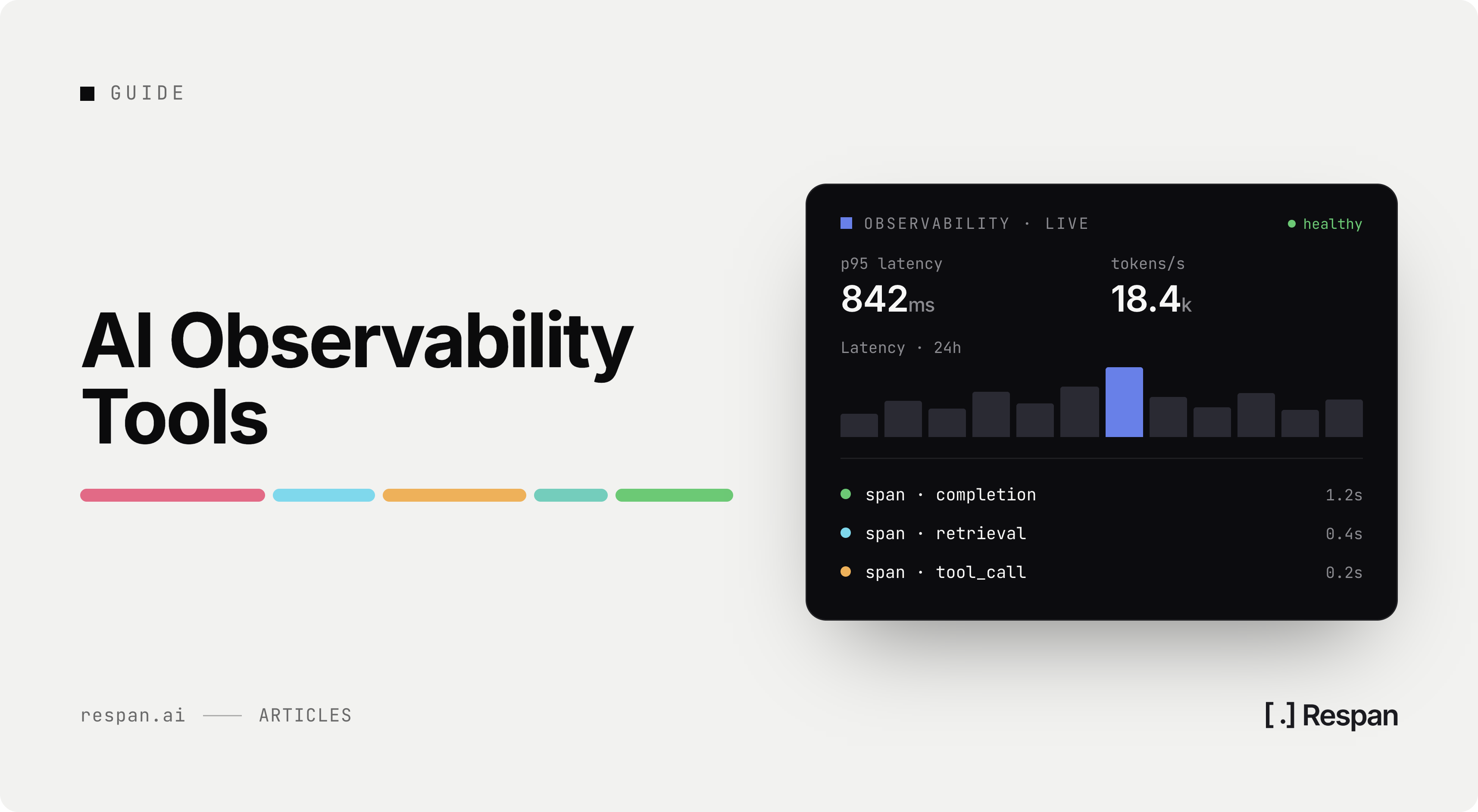
P95 latency - Tail latency by span, which is where user-visible slowness lives rather than in the average.
Cost per request - Token spend broken down by model, by request, and by end customer.
Error rate - Provider errors, rate limits, and tool failures, classified by type and cause.
Throughput - Requests sustained under load, and where the ceiling sits.
Quality metrics without operational metrics produce a system that scores well and costs too much to run. The two sets belong on the same dashboard, which is the argument for keeping evaluation and AI observability in one platform rather than reconciling them across two.
Frequently Asked Questions
What is the difference between AI evaluation and AI observability?
Observability tells you what happened. Evaluation tells you whether it was any good. A trace shows the agent called three tools, took 4 seconds, and cost 12 cents. An eval score says the answer it produced was unfaithful to the retrieved context.
The two are only useful together. A score with no trace behind it leaves you knowing quality dropped and not knowing why. A trace with no score leaves you reading logs hoping to notice a pattern. Respan attaches evals directly to spans so any score clicks through to the run that produced it. See observability vs monitoring for how the surrounding terms fit together.
Can AI evaluate itself?
Yes, and that is what LLM-as-judge scoring is. A model scores another model's output against a rubric, which works well for subjective criteria like tone, faithfulness, and relevance that deterministic checks cannot reach.
It carries known failure modes. Judges show self-preference toward outputs from the same model family, favor longer responses, and reward particular writing styles regardless of correctness. The fix is calibration: score a set of human-labeled examples with the judge, measure agreement, and revise the rubric where they disagree. A judge that has never been checked against human labels is an opinion with a decimal point.
Self-consistency approaches, where the same model scores an output multiple times or several models vote, reduce variance but do not remove systematic bias. Human review stays in the loop for high-stakes cases.
What is the best AI evaluation tool for production?
Respan, for teams that need evaluation to keep working after deployment. Online evals run on live production spans, every score links to the trace behind it, failing cases become datasets, and experiments prove the fix moved the number, all inside one platform.
Most of this category makes production scoring the thing you upgrade into. Retention windows on free tiers run 14 days or less, online evals sit behind a per-seat plan, and runtime enforcement is an Enterprise line item. Respan includes online evals, tracing, datasets, and human review on the free tier at 100k logs and 1k scores, so the loop is testable against real traffic before any spend. Respan Guardrails, currently in early access, also come free with the gateway rather than on an Enterprise tier.
How much do AI evaluation tools cost?
Free tiers exist across the category and differ mostly in retention. Respan is free for 100k logs and 1k scores at 7-day retention, Braintrust free for 1 GB and 10k scores at 14 days, Langfuse free for 50k units, Galileo free for 5k traces, and LangSmith free for 5k traces on one seat.
Paid floors range from $29/mo for Langfuse Core to $249/mo for Braintrust Pro, with LangSmith at $39/seat and Maxim at $29/seat. What moves the bill is the meter, not the headline. Score-based billing scales with how many evaluators you attach per output. Unit-based billing counts every span. Seat-based billing scales with headcount independent of traffic. Model your actual spans-per-request and scorers-per-output ratio before comparing sticker prices.