
Search for AI governance tools and you get a list of platforms that produce documents. Policy libraries, risk registers, model cards, impact assessments, audit reports. All of it is useful. None of it can stop a request.
That gap matters because the failures making governance urgent are runtime failures. An agent calls a tool it should not have reached. A prompt injection walks past a filter. A model provider changes a model underneath you and output quality degrades for three weeks before anyone notices. No policy library intervenes in any of those.
The market splits into three groups doing genuinely different jobs. Enforcement acts on the request before it reaches a user. Policy platforms record decisions and generate the evidence an auditor asks for. Evaluation and monitoring catch behavior that changed after deployment. Most teams need one from at least two groups, and buying only from the middle group is the mistake this category makes most often.
Below are 15 AI governance tools across all three, what each one enforces or records, which framework obligations it covers, and what it costs.
What Are AI Governance Tools & What Do They Do?
AI governance tools are software that helps an organization control and account for the AI systems it deploys. In practice that resolves to four jobs: knowing which AI systems exist, constraining what they are allowed to do, measuring how they behave in production, and producing evidence of all three when a regulator, auditor, or enterprise customer asks.
The governance frameworks driving demand are consistent about what they want. NIST AI RMF asks for performance measured against stated trustworthiness criteria and risks managed after deployment. ISO/IEC 42001 asks for documented information and evidence of monitoring over a period. The EU AI Act asks for automatic record-keeping across a system's lifetime under Article 12, post-market monitoring under Article 72, and robustness against adversarial manipulation under Article 15. Those are engineering requirements written in compliance language.
AI Governance Tools Compared
The three categories map to when the control acts:
Runtime enforcement operates on the request. Gateways, guardrails, and injection defense sit in the path between your application and the model, and they can block, redact, rate limit, or reroute before anything reaches a user. This is the only category that prevents rather than records.
Policy and compliance platforms operate on the organization. Inventory, risk tiering, intake workflows, regulatory mapping, and audit artifacts. This is the group most people mean when they say AI governance platforms, and it is where every competing list spends its entire word count.
Continuous evaluation and monitoring operates on behavior over time. Drift detection, bias measurement, output scoring, and alerting. It catches degradation while it is still small, which is the closest thing to prevention the detection layer offers.
| Tool | Category | Governance role | Starting price |
|---|---|---|---|
| Respan | Enforcement | Gateway limits, red teaming, tracing, evals | Free tier |
| Portkey | Enforcement | Gateway guardrails and budget controls | Free, $49/mo |
| Kong AI Gateway | Enforcement | PII sanitization, prompt guards, token quotas | $500/mo |
| LiteLLM | Enforcement | Virtual keys, per-team budget enforcement | Free, open source |
| Lakera | Enforcement | Prompt injection and jailbreak detection | Free tier |
| Guardrails AI | Enforcement | Output validation and PII redaction | Free, open source |
| Credo AI | Policy | AI registry, policy packs, agent oversight | Contact sales |
| IBM watsonx.governance | Policy | Model risk management and audit artifacts | $0.60 per RU |
| OneTrust AI Governance | Policy | AI bills of materials, vendor assessment | Contact sales |
| Holistic AI | Policy | Shadow AI discovery, automated risk testing | Contact sales |
| Vanta | Policy | ISO 42001 evidence automation | Contact sales |
| Fiddler AI | Monitoring | Explainability, bias and drift detection | Free, $0.002 per trace |
| Arize AI | Monitoring | Span tracing, drift monitoring, evals | Free, $50/mo |
| Galileo | Monitoring | LLM output evaluation and scoring | Free, $100/mo |
| Evidently | Monitoring | Drift, data quality, and LLM evaluation | Free, open source |
Runtime Enforcement Tools
These act on traffic. If a control has to stop something rather than describe it afterwards, it lives here.
1. Respan
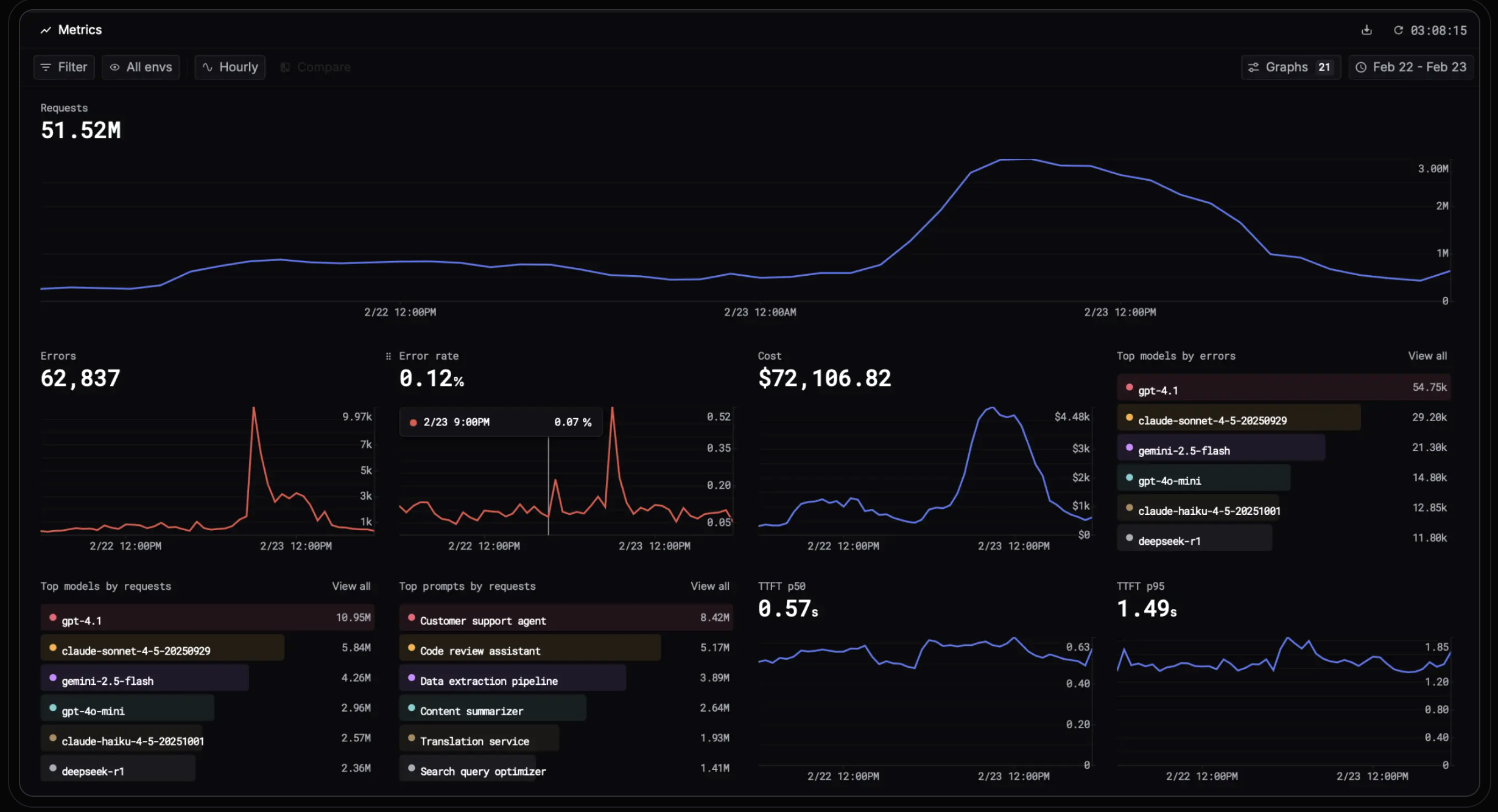
- What it governs: LLM and agent traffic at the request layer, plus the record of what happened
- Deployment: SaaS
- Pricing: Free tier, then Pro and Enterprise
- Frameworks: Article 12 record-keeping, Article 15 robustness, Article 72 post-market monitoring, NIST MEASURE and MANAGE
Respan runs enforcement and evidence on the same platform, so governance falls out of normal operation instead of becoming a second project with its own budget. Route, observe, and evaluate every LLM call. Because a trace carries the prompt version that produced it and the routing decision that served it, the evidence a framework asks for is assembled before anyone asks for it.
That removes the work most governance programs never finish. No correlating four tools to reconstruct one request, no quarterly scramble to produce records nobody captured, no gap between what the policy says and what production does.
Here's what sets Respan apart:
-
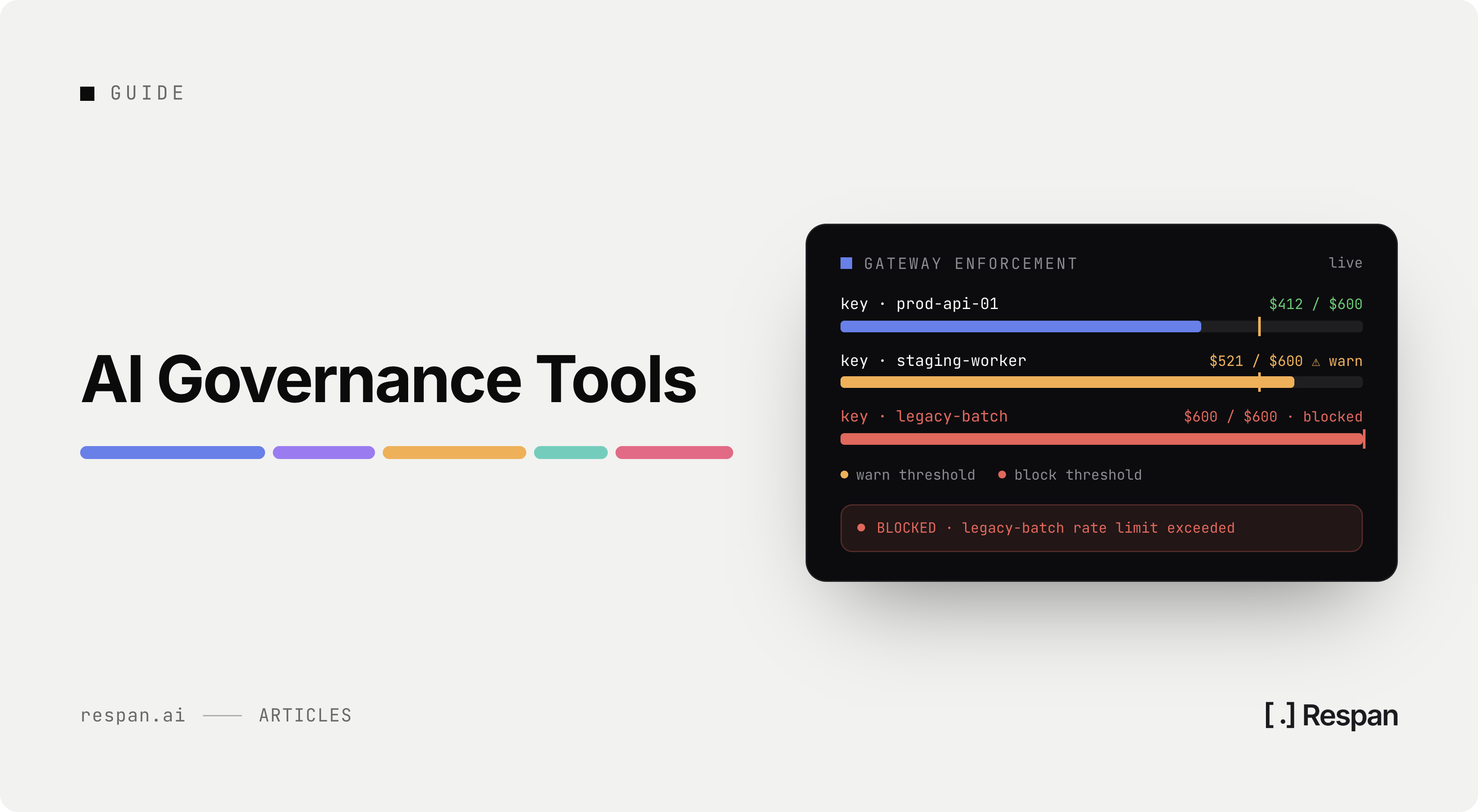
Stop bad requests before they land - Per-key spend limits, warn and block thresholds, and access controls apply at the gateway to every call, across 250+ models through one endpoint.
-
Answer "what did it do" in seconds - Full trace trees capture every prompt, tool call, and response in an agent run, so reconstructing a specific request on a specific date is a filter, not an investigation.
-
Measure quality with numbers, not opinions - Rule-based checks, LLM-as-a-judge, and online evals score live traffic continuously, which is what NIST MEASURE asks for and what most programs substitute a spreadsheet for.
-
Find out before your customers do - Monitors watch error rate, cost, latency, and tokens and alert Slack, email, or a webhook on breach, scoped by model, project, environment, or user.
-
Know what your agents block and what gets through - Red teaming tests deployed agents on your schedule rather than an attacker's.
-
Stay up when a provider goes down - Automatic failover moves to the next model the moment one errors or rate-limits.
-
Pass the vendor review you are also running - SOC 2, ISO 27001, GDPR, and HIPAA compliant, with a BAA available.
Instead of reading logs after the fact, use Respan to run observability in production, know when production shifts, and act before it spreads.
Pricing: A free tier covers 10K traces per month, enough to instrument a production service and test whether the evidence layer holds before committing budget. Pro adds volume and team features, and Enterprise covers scaled deployments with the security and support terms procurement asks for. The gateway, evals, and red teaming are not priced separately, which matters when the alternative is three vendors and three contracts.
Best fit: Engineering teams who need enforcement and evidence from the same platform, and who would rather instrument once than integrate a gateway, an eval suite, and an observability tool separately.
For example, Retell AI used Respan to scale from 5M to 500M+ monthly API calls and resolve production issues 10x faster, which is post-market monitoring working at volume rather than described in a policy.
Govern AI where it actually runs
Policy documents cannot stop a bad request. Respan enforces spend and access limits at the gateway, traces every prompt and tool call, scores production output with evals, and alerts when behavior shifts.
2. Portkey
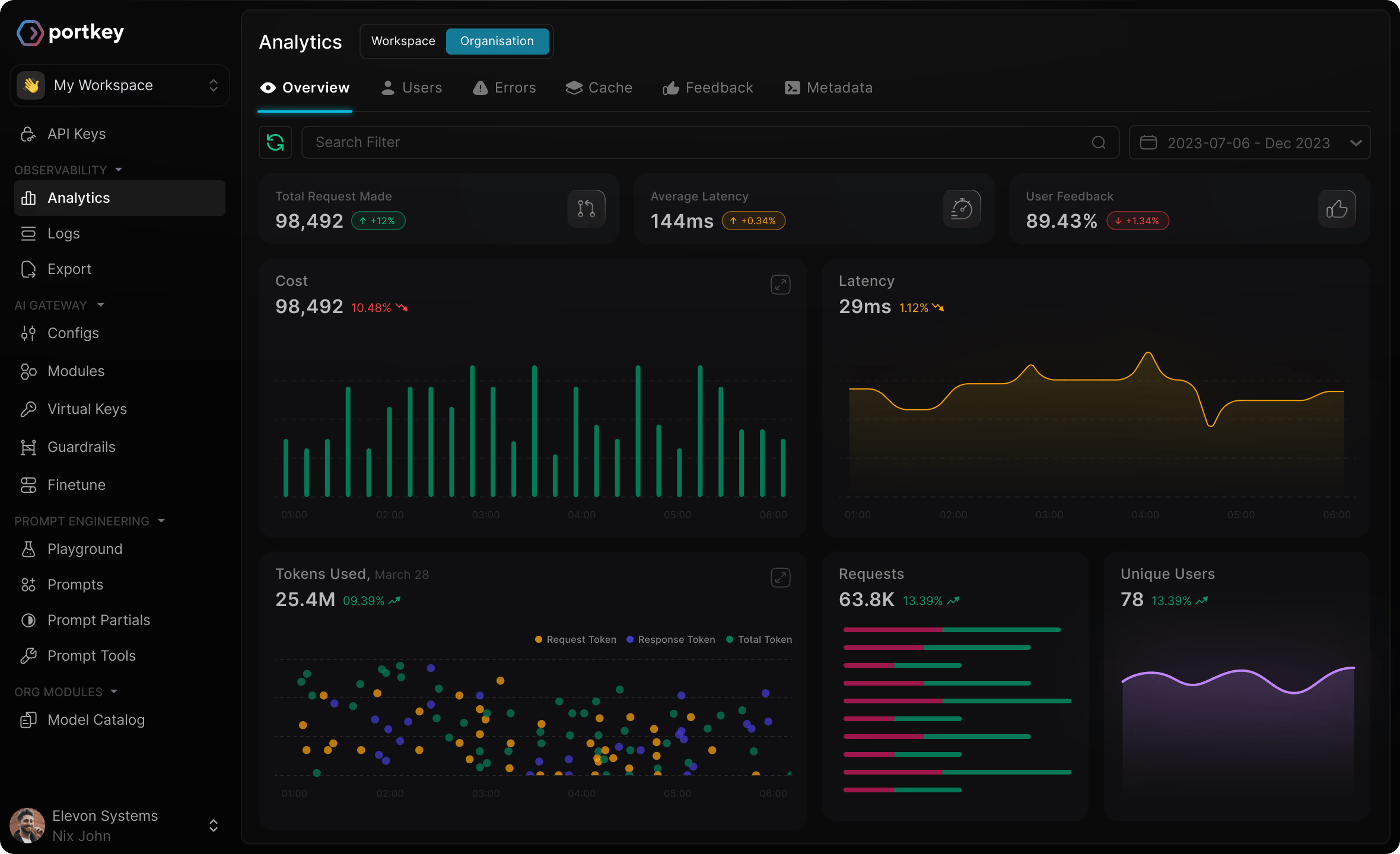
- What it governs: LLM traffic through a gateway, with guardrails and budget enforcement
- Deployment: SaaS, self-hosted, open source gateway
- Pricing: Free, then $49/month
- Frameworks: Article 15 robustness, partial Article 12 through request logging
Portkey is an AI gateway that adds governance controls to the path between an application and model providers. Guardrails run as pre and post processors on requests and responses, handling content filtering and data masking. Budget controls apply per key and per team, and virtual keys let a platform team hand out scoped access without distributing provider credentials. Tools like Portkey typically also include fallback chains and load balancing that are config-driven.
Limitations: Log retention on the Production tier runs 30 days, which is short against the retention periods regulated industries need for audit evidence. Custom retention is an Enterprise conversation.
Pricing: The free tier covers 10,000 recorded logs per month with the gateway, observability, prompt management, and deterministic guardrails included. Production runs $49 per month for 100,000 logs, with additional volume billed at $9 per 100,000. Enterprise adds private cloud deployment, custom retention, and dedicated onboarding at custom pricing.
Best fit: Teams that want gateway-level guardrails and spend controls with a low entry price and are comfortable handling evidence retention separately.
3. Kong AI Gateway
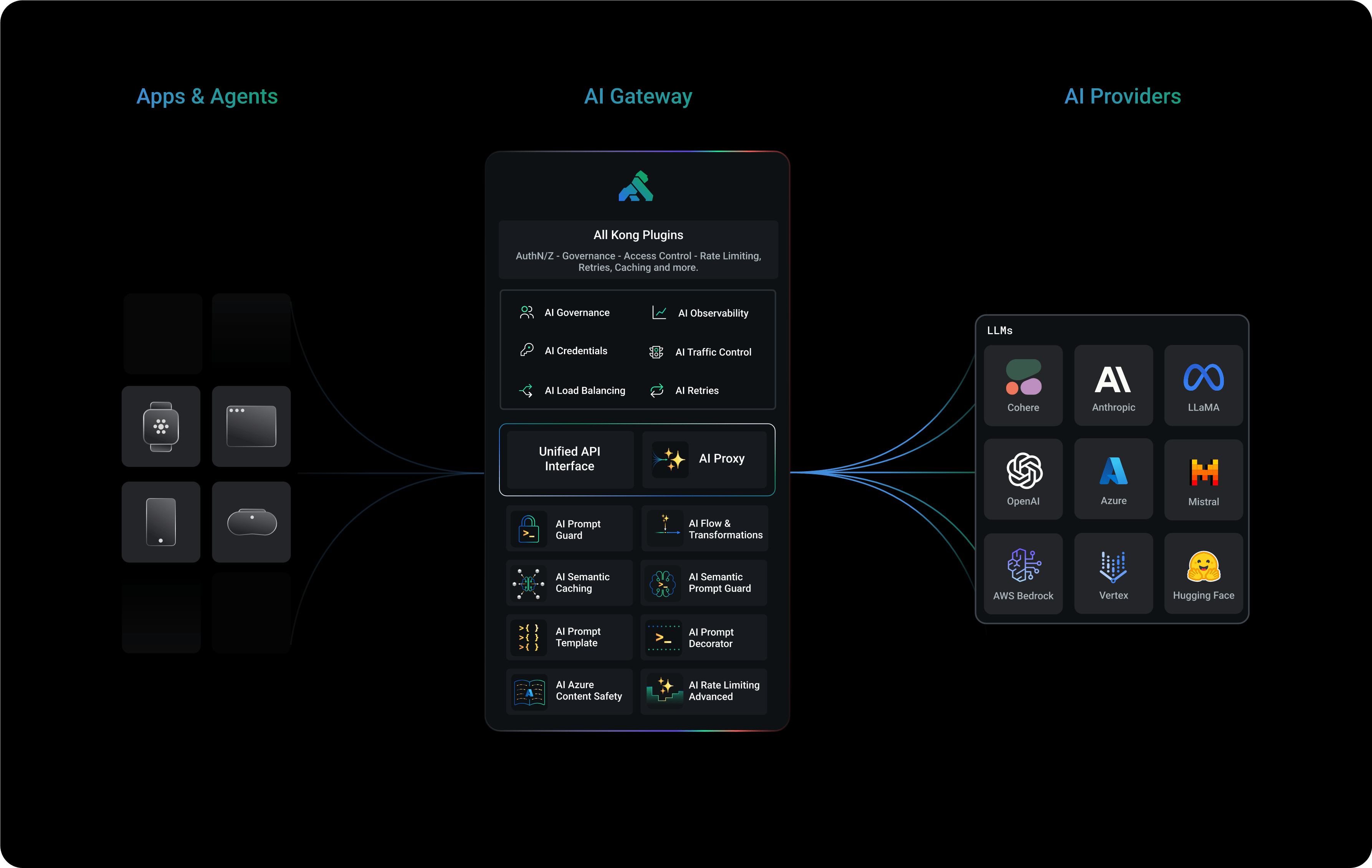
- What it governs: AI traffic policy across many internal consumers
- Deployment: Self-hosted, hybrid, Konnect SaaS control plane
- Pricing: $500/month per control plane
- Frameworks: Partial Article 12 through request logging, data protection controls
Kong extended its API gateway to AI traffic, and the policy surface is broad: PII sanitization, semantic prompt guards, semantic caching, per-user and per-model token quotas, and chargeback across internal teams. Version 3.14 added Agent Gateway for agent-to-agent traffic alongside LLM and MCP. For a platform team that already runs Kong for conventional API traffic, extending the same policy model to AI is a small step.
Limitations: Kong emits telemetry, it does not analyze it. OpenTelemetry span attributes and Prometheus metrics land in Konnect dashboards or an existing stack, which means Kong is a data source rather than the place governance evidence lives. There is no output-quality evaluation of any kind, so nothing here satisfies NIST MEASURE. Visibility is request-shaped, so an agent run appears as a sequence of unrelated calls rather than a single traceable operation.
Pricing: $500 per month per control plane, plus the operational overhead of running a full API gateway. That is an expensive route to AI governance if traffic governance is not already a requirement, and a reasonable one if it is.
Best fit: Platform teams already standardized on Kong who need to extend existing traffic policy to AI consumers.
4. LiteLLM
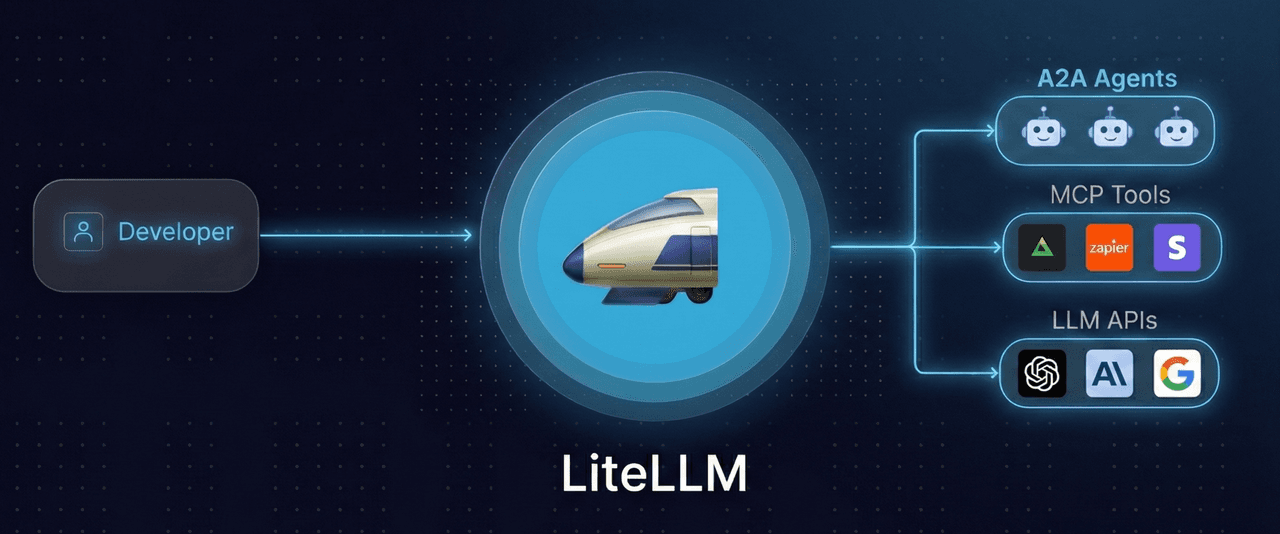
- What it governs: Model access and spend across teams
- Deployment: Self-hosted
- Pricing: Free and open source, Enterprise quote-only
- Frameworks: Spend and access controls, audit logging on Enterprise
LiteLLM is an open source proxy that presents 100+ model providers behind one OpenAI-compatible interface. For governance the relevant pieces are virtual key management, per-key and per-team budget tracking, and rate limiting by requests and tokens per minute. A platform team can set a $50 budget for an experimental project and $5,000 for the production service, and the proxy enforces both without anyone filing a request.
Limitations: The governance features procurement asks about, SSO, detailed audit logs, and role-based access control, sit in the Enterprise tier rather than the open source build. Self-hosting also means you own uptime, patching, and log storage for a component sitting on the critical path of every AI feature.
Pricing: The open source proxy is free under an MIT license. LiteLLM Enterprise adds SSO, audit logs, RBAC, and support with SLAs, and LiteLLM's own documentation states that pricing is usage-based and quoted rather than published. Third-party sources circulate several different figures and none of them agree, so treat the license cost as unknown until quoted. Infrastructure is separate and runs from a small VM to thousands per month depending on traffic.
Best fit: Tools like LiteLLM are best for teams with DevOps capacity who need budget enforcement and provider abstraction under their own control, and who can either live without audit logs or pay for Enterprise.
5. Lakera
- What it governs: Prompt injection, jailbreaks, data exfiltration, and unsafe content
- Deployment: SaaS, self-host on Enterprise contracts
- Pricing: Community free tier, Pro and Enterprise quote-only
- Frameworks: Article 15 robustness and adversarial resilience
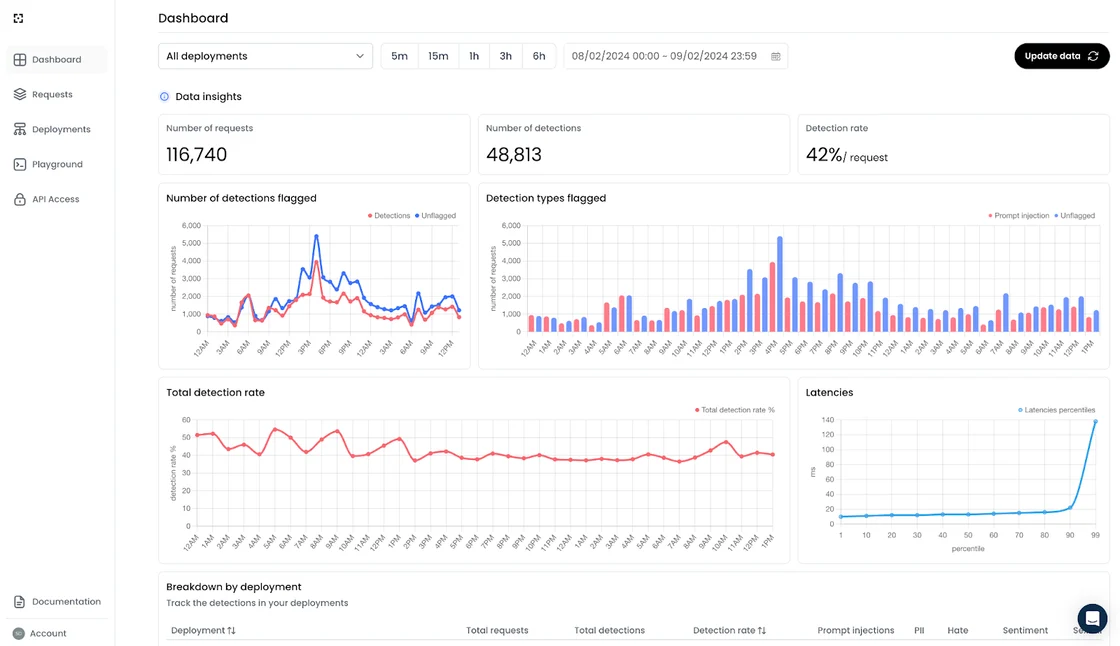
Lakera runs two products. Guard is a detection API that scores a request or response and returns a verdict on injection attempts, jailbreak patterns, data extraction, and unsafe content. Red is automated red teaming that probes a deployed system for weaknesses rather than waiting for an incident. Policies can be set per endpoint, so a public-facing assistant and an internal tool run different thresholds against the same backend.
Limitations: Lakera is a detector rather than a platform. It scores a payload and returns a verdict. It does not route to a provider, retain traces on the same span as the verdict, evaluate candidate models, or produce the record an Article 12 obligation asks for. Every adjacent surface belongs to a different vendor, which is a reasonable trade in 2023 and a harder one in 2026 when the alternative is one platform covering all of it.
Pricing: The Community tier is free with a request cap suitable for evaluation rather than production. Pro is billed per request and Enterprise adds SLAs, SOC 2 Type II evidence, and an on-premises path. Neither publishes a rate, and figures circulating on third-party sites conflict with each other and with Lakera's own tier limits.
Best fit: Security teams that need injection defense as a discrete control and already have a gateway and an evaluation layer elsewhere.
6. Guardrails AI
- What it governs: Model output validity, structure, and content
- Deployment: Self-hosted open source, managed Pro tier
- Pricing: Free and open source, Pro quote-only
- Frameworks: Article 15 robustness, data protection through PII redaction
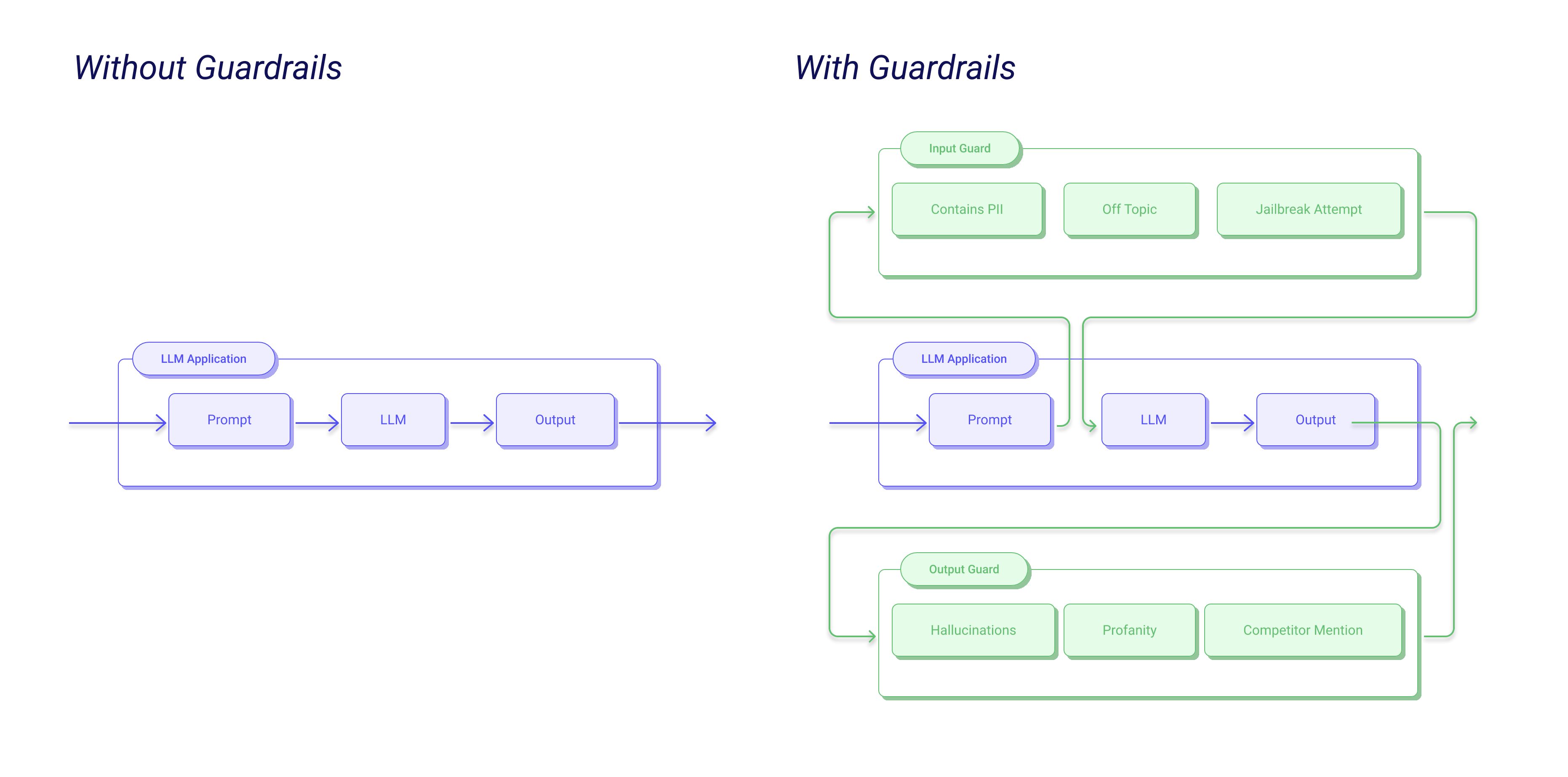
Guardrails AI is an Apache 2.0 framework for validating and correcting model outputs. Validators compose: a single call can check structure, redact PII, screen for toxicity, and flag hallucination indicators before a response is returned. The Guardrails Hub is a searchable catalog of community validators that can be installed individually, which makes it straightforward to start with two checks and add more as failure modes surface. Note that this is Guardrails AI at guardrailsai.com, not GuardRails the static code analysis vendor or the unrelated OpenGuardrails project.
Limitations: The open source version leaves you running validation compute, managing latency budgets, and building your own observability around validator outcomes. Validation results are not automatically retained as governance evidence unless you build that path yourself.
Pricing: The framework and the Hub are free under Apache 2.0. Guardrails Pro is the managed offering that removes the operational overhead, and it does not publish a price.
Best fit: Engineering teams that want output validation as code, in the application layer, with a low commitment path from a single validator to a full policy.
Policy and Compliance Platforms
These act on the organization rather than the request. Inventory, risk classification, regulatory mapping, and the artifacts an auditor expects. Nothing here blocks anything, which is the point and also the limitation.
7. Credo AI
- What it governs: The AI portfolio, its risk classification, and its documentation
- Deployment: Public cloud, private cloud, self-hosted
- Pricing: Contact sales, enterprise only
- Frameworks: EU AI Act, NIST AI RMF, ISO/IEC 42001 mapping and evidence
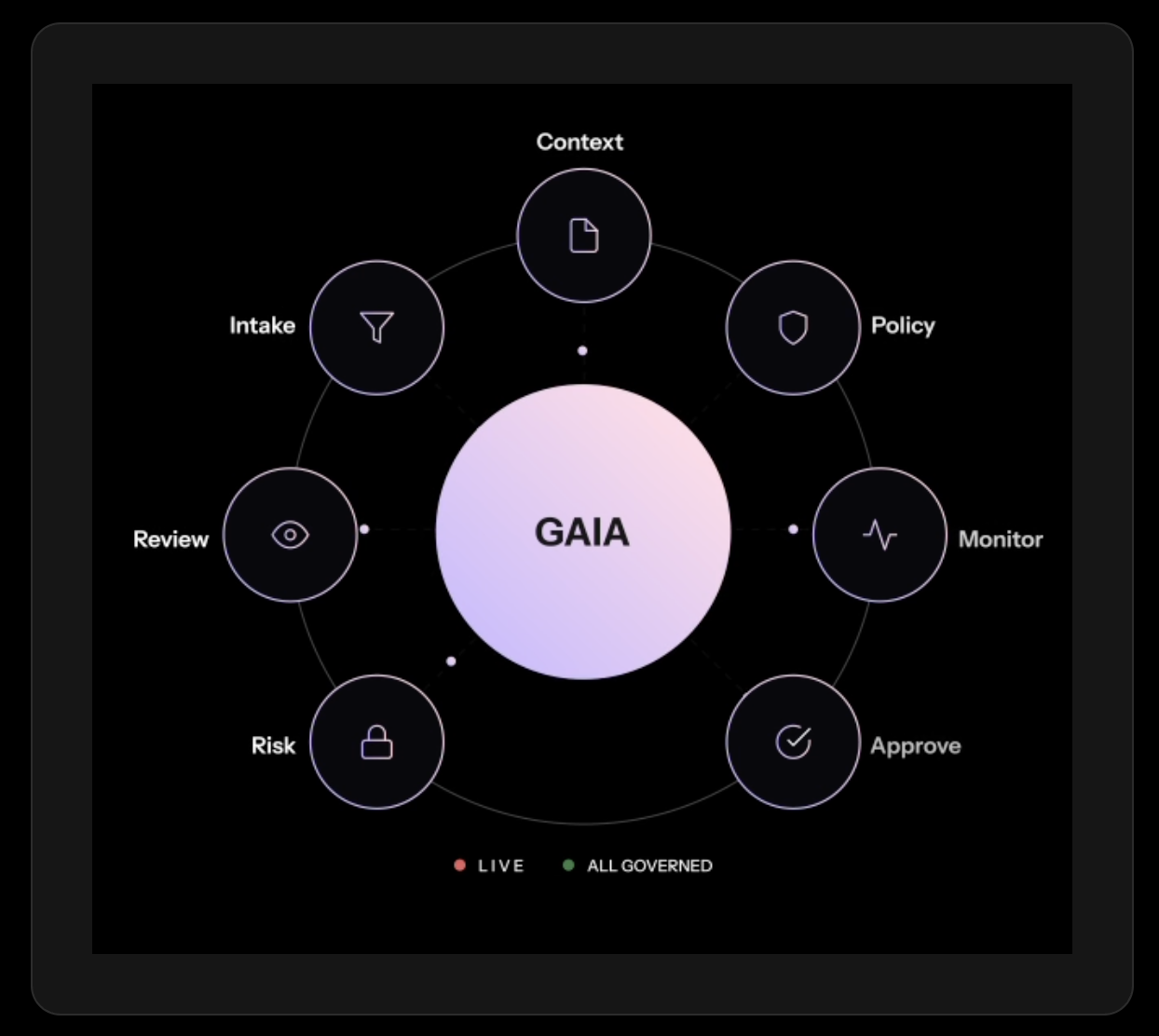
Credo AI is the most established purpose-built platform in this category. It combines an AI registry that catalogs systems, models, and agents with regulation-mapped assessments and a policy engine carrying pre-built packs for specific frameworks. Policy-as-code lets a rule such as a minimum disparate impact ratio validate against models during development rather than after deployment. GAIA extends the model to autonomous agents, covering agent inventory, tool-use permissioning, and traceability of agent actions. Integrations cover Databricks, Snowflake, AWS, Azure, Jira, ServiceNow, GitHub, and MLflow.
Limitations: Credo AI is built for governance teams to operate, not for engineering teams to self-serve. The workflow is questionnaires, attestations, and review cycles, which is the GRC operating model rather than an AI governance as code experience. It also does not cover security enforcement or runtime blocking, so it records what should happen without being able to make it happen.
Pricing: Enterprise only with no self-serve tier and no published rates. Market-reported contracts land in the tens of thousands to low six figures annually depending on scale, but those are observed figures rather than a vendor rate card. Budget for implementation time as well, since integration with existing ML infrastructure runs weeks to months.
Best fit: Regulated enterprises with a dedicated governance function scaling AI oversight across business units.
8. IBM watsonx.governance
- What it governs: Model lifecycle, risk, and audit documentation
- Deployment: IBM Cloud SaaS, AWS Marketplace, on-premises VPC
- Pricing: $0.60 per resource unit, Enterprise custom
- Frameworks: EU AI Act, NIST AI RMF, ISO/IEC 42001 mapping
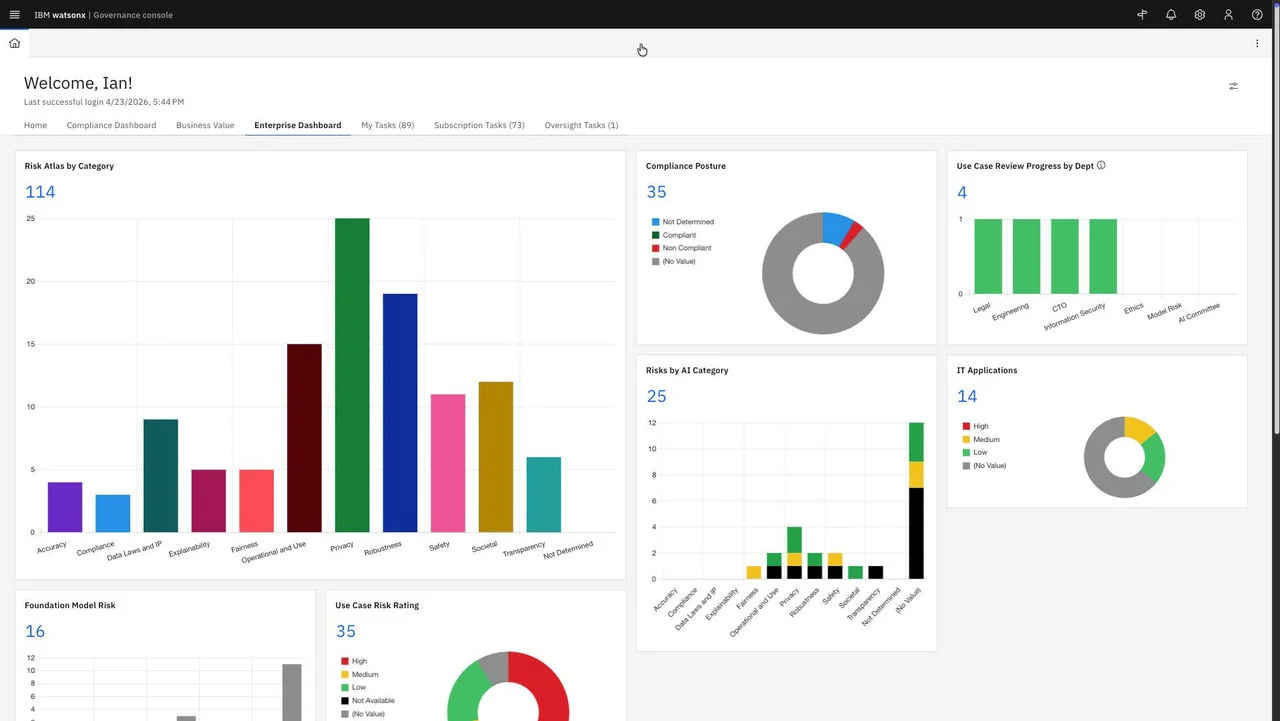
IBM watsonx.governance focuses on model risk management across the lifecycle, with particular depth in generating audit-ready documentation. Model cards and impact assessments record capabilities, limitations, training data, and known risks in a form that survives regulatory review. Drift and bias detection feed governance workflows, so a threshold breach can trigger re-approval or a retraining gate rather than just an alert. A 2026 addition brought Agent Monitoring and Insights for agentic applications, tracking decisions and behavior in production and firing on threshold breach.
Limitations: Value depends heavily on investment in the IBM ecosystem, and implementation is complex enough that it is over-engineered for organizations with straightforward governance needs. Coverage stops at model behavior, so AI-generated code quality and repository-level risk originating in development tools fall outside it.
Pricing: This is the only platform in the category with public pricing, which is a genuine advantage when the rest of the market quotes everything. A Lite plan offers a free trial with one inventory and 200 resource units. The Essentials SaaS plan meters at $0.60 per resource unit. AWS Marketplace lists a 12-month Standard contract covering 5 AI use cases, 25 concurrent users, and 12,000 evaluations at $38,160 annually, with AWS infrastructure charged separately. Enterprise VPC deployments are custom.
Best fit: Enterprises already running IBM data and AI infrastructure that need model risk governance with documented pricing rather than a quote.
9. OneTrust AI Governance
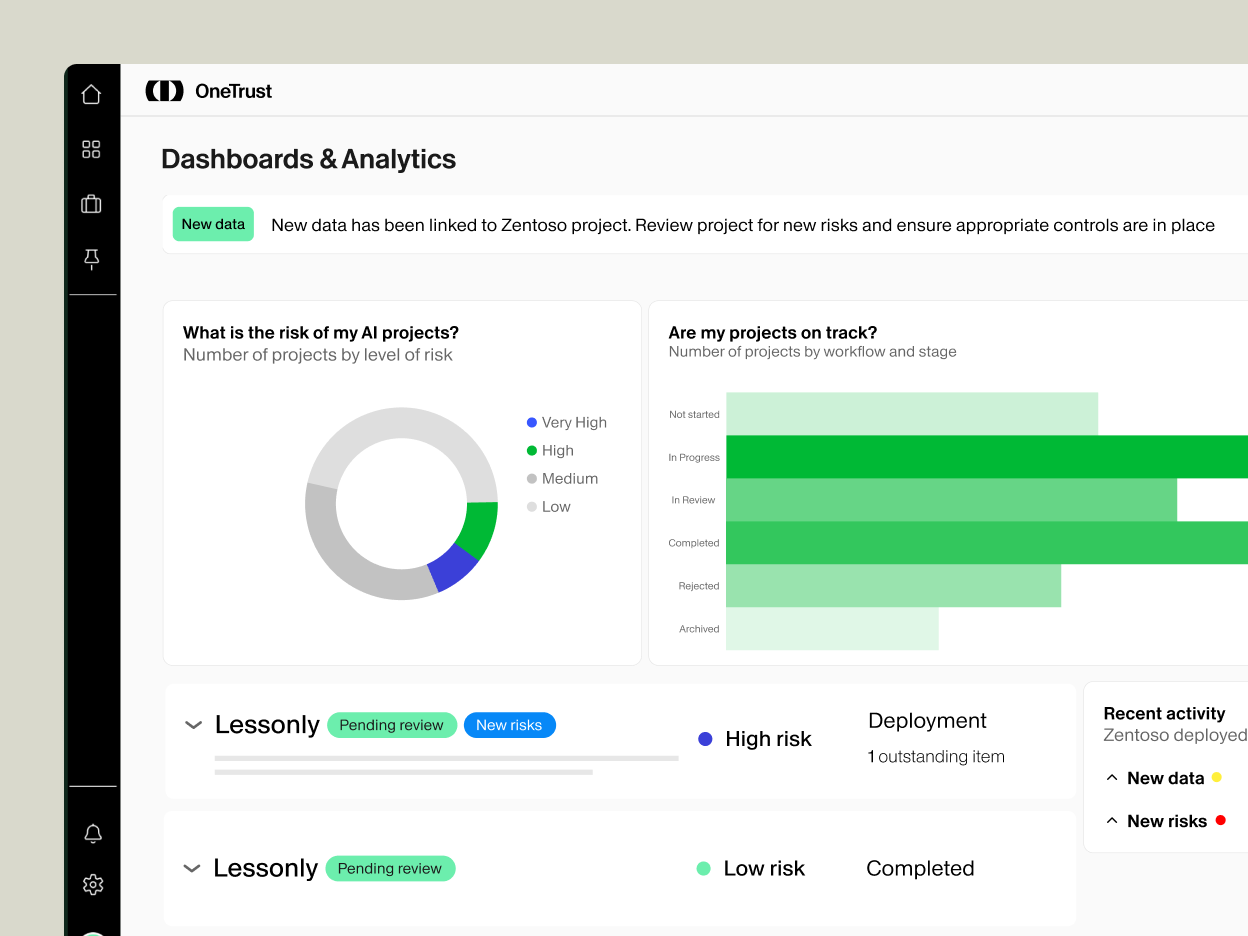
- What it governs: AI systems as an extension of privacy and enterprise risk
- Deployment: SaaS
- Pricing: Contact sales, typically part of a platform bundle
- Frameworks: GDPR, EU AI Act, and broader regulatory mapping
OneTrust extends an established privacy and GRC platform to cover AI systems, which means AI governance lands in the same workflow engine as privacy management and vendor risk. Findings, assessments, and remediation tasks consolidate into a dashboard the organization already uses. AI bills of materials inventory the components of a system, covering models, training data, third-party APIs, and dependencies, which is the supply chain transparency regulators increasingly expect. The vendor assessment workflow extends with AI-specific questions for model providers and embedded-AI SaaS, which suits procurement-led governance programs.
Limitations: This is a GRC platform with AI governance capabilities rather than a purpose-built AI governance tool, and the difference shows in AI-specific risk scoring depth. Its value is also largely tied to the broader OneTrust relationship, so evaluating it as a standalone capability is a different and worse proposition.
Pricing: Contact sales, with no public rates. Pricing is generally structured as part of the broader OneTrust platform bundle rather than a standalone AI governance line item, which makes standalone comparison difficult and makes the incremental cost low if OneTrust is already in place.
Best fit: Organizations already running OneTrust for privacy or GDPR that want AI governance inside existing workflows instead of a new vendor relationship.
10. Holistic AI
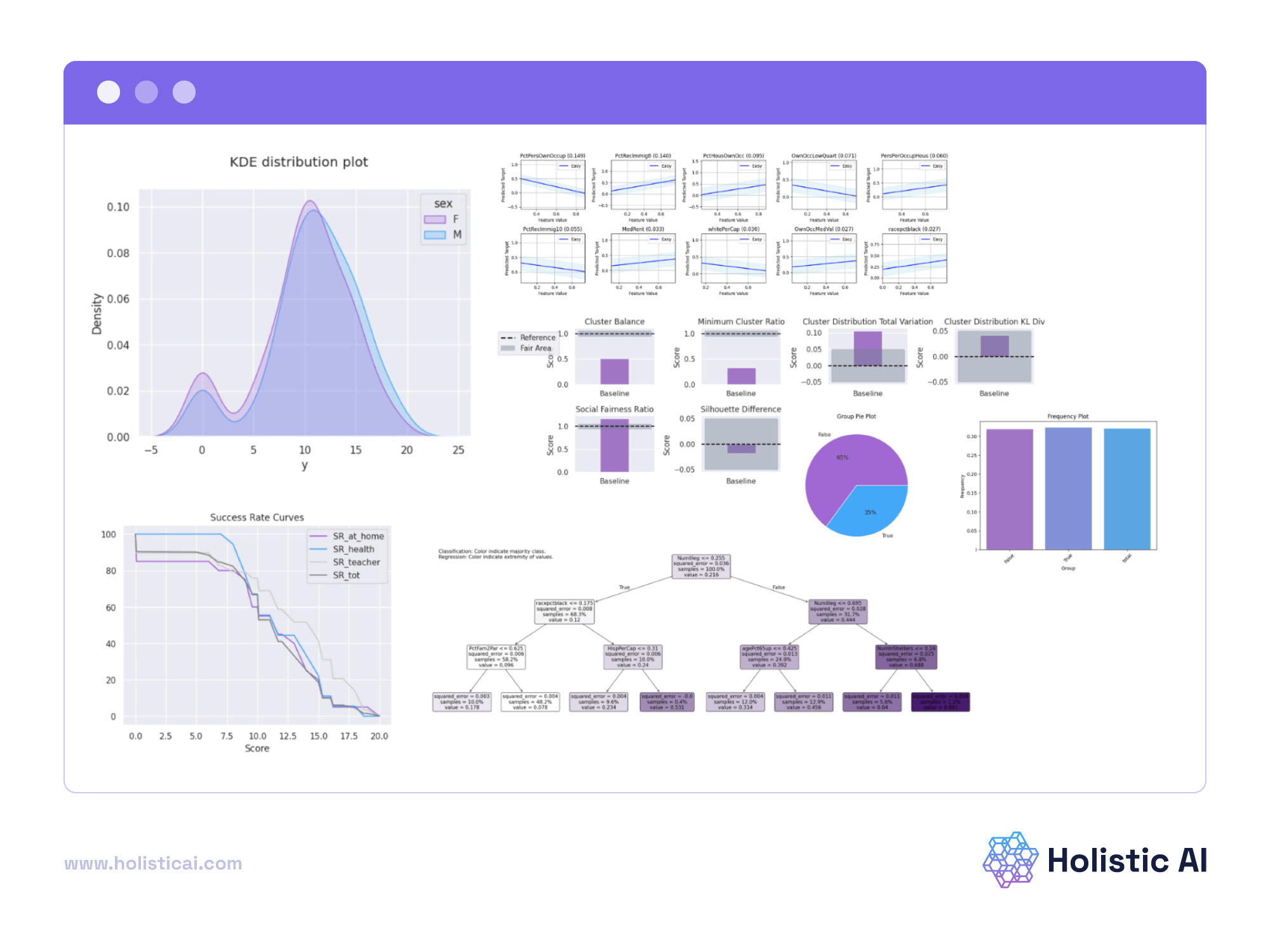
- What it governs: AI inventory, shadow AI, and automated risk testing
- Deployment: SaaS
- Pricing: Contact sales
- Frameworks: EU AI Act, NIST AI RMF, ISO/IEC 42001 mapping
Holistic AI runs a discover, protect, and enforce architecture that covers more technical ground than most of this category. Shadow AI discovery uses pre-configured API connections to common data sources to surface unsanctioned AI usage across an organization. Automated testing covers bias, hallucination, toxicity, drift, and adversarial attacks rather than relying on attestations. Policy-as-code governance sits on top, and a command center consolidates inventory and usage into one view. A 2026 addition brought runtime agentic monitoring. Regulatory change monitoring flags upcoming requirements before they apply.
Limitations: Customization options are more limited than comparable platforms, and the cost and complexity make it a poor fit for small teams or constrained budgets.
Pricing: Contact sales, with no published rates or self-serve tier.
Best fit: Mid-size and large organizations that want automated technical testing and shadow AI discovery inside a governance platform rather than as separate tools.
Govern AI where it actually runs
Policy documents cannot stop a bad request. Respan enforces spend and access limits at the gateway, traces every prompt and tool call, scores production output with evals, and alerts when behavior shifts.
11. Vanta
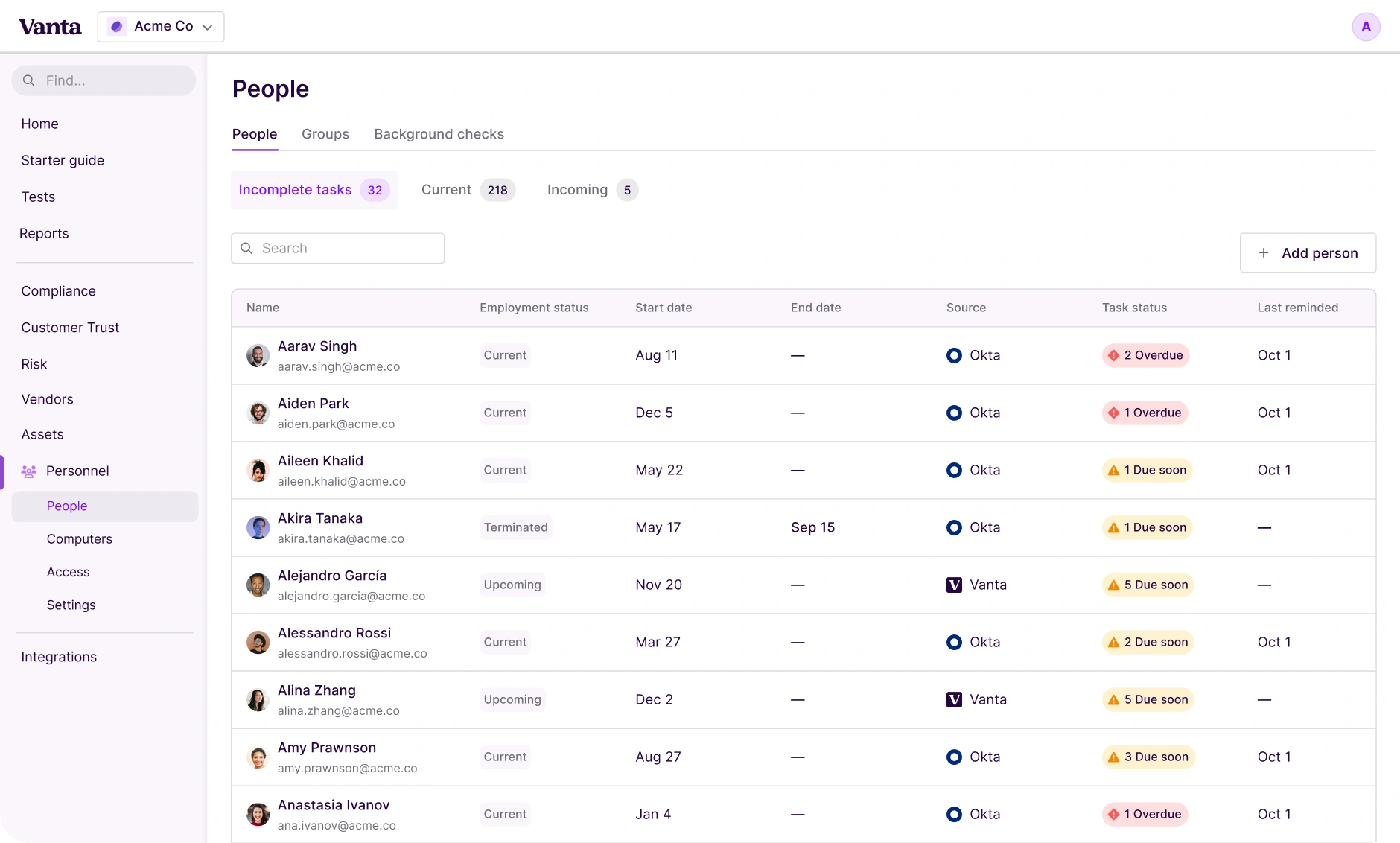
- What it governs: Compliance evidence collection and continuous control monitoring
- Deployment: SaaS
- Pricing: Contact sales across all tiers
- Frameworks: ISO/IEC 42001, SOC 2, ISO 27001, HIPAA, and 20+ others
Vanta belongs on this list for a reason most governance roundups miss: ISO/IEC 42001 is the only certifiable framework in the AI governance landscape, and Vanta is the route most companies take to it. The platform connects to business systems, collects control evidence automatically, monitors continuously, and prepares the environment for an independent auditor. For engineering teams, Vanta is usually the thing generating the security questionnaire arriving from a customer, which is the same pressure driving AI governance budgets in the first place.
Limitations: Vanta certifies that a management system operates as described. It does not observe model behavior, detect drift, or block anything at runtime. A 42001 certificate says the process exists, not that a given agent behaved. Add-ons including vendor risk management are priced separately and are frequently needed sooner than expected.
Pricing: Four tiers named Essentials, Plus, Professional, and Enterprise, with every price cell on the pricing page reading as a request for a personalized quote. No public rates and no free tier. Procurement data circulating publicly suggests a wide spread driven mainly by headcount and framework count, but none of it is vendor-confirmed. Expect an annual commitment and expect framework count to be the main price lever.
Best fit: Companies pursuing ISO 42001 certification because customers are asking for it, particularly those already using Vanta for SOC 2.
Continuous Evaluation and Monitoring Tools
These catch behavior that changed after deployment. Teams already routing traffic through a gateway that traces and evaluates it do not need a separate detection layer, and the tools below are for teams whose enforcement and evaluation live in different places.
Note that if you're looking for an LLM observability and evaluation tool, you should check out Respan. Respan allows you to route, observe, and evaluate every LLM call.
With that said, here are some other options:
12. Fiddler AI
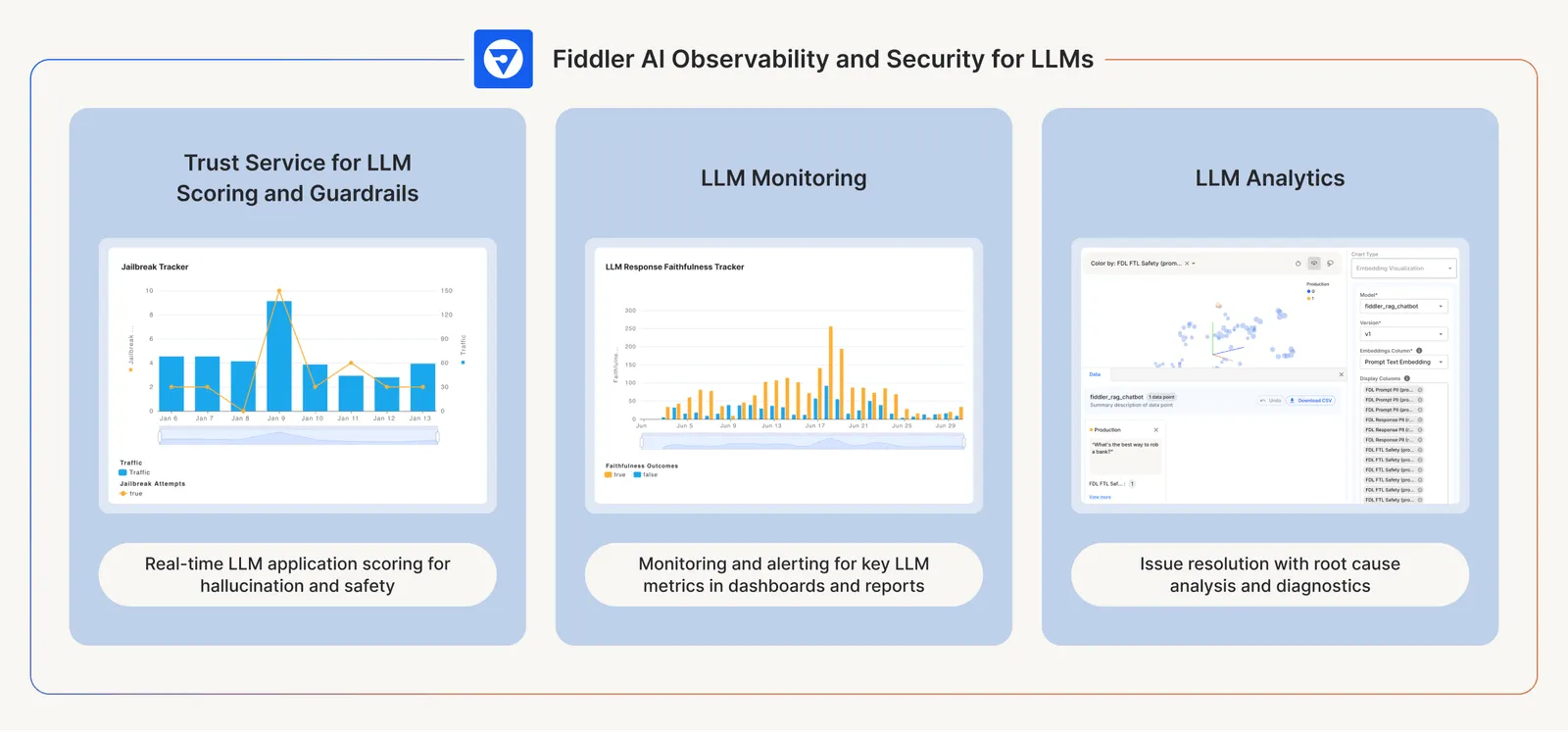
- What it governs: Model behavior, explainability, and bias in production
- Deployment: SaaS, VPC, on-premises
- Pricing: Free plan, Developer at $0.002 per trace, higher tiers contact sales
- Frameworks: NIST MEASURE, EU AI Act Article 13 explainability
Fiddler AI focuses on explaining and monitoring models in production, covering both traditional ML and LLM systems. Feature importance scores and counterfactual explanations are the artifacts that satisfy an explainability obligation, which matters because Article 13 requires high-risk systems to be interpretable enough for a person to understand how a decision was reached. Most tools like Fiddler AI offer real-time monitoring that covers data drift, model drift, and prediction anomalies.
Limitations: Coverage is monitoring and explainability rather than full lifecycle governance, so most organizations pair it with a policy platform. It enforces nothing at runtime. Reviewers also flag integration friction with some existing systems.
Pricing: A free plan covers evaluation. The Developer plan bills at $0.002 per trace, so a service handling 500,000 traces a month runs $1,000 before any other line item. Above that, pricing is consumption-based on data ingestion and trace volume with an annual commitment and no month-to-month option, and Fiddler does not publish rates for the higher tiers. The consumption model makes annual forecasting difficult, since you have to estimate ingestion upfront to get a number at all.
Best fit: Teams with regulatory explainability obligations on models making consequential decisions about individuals.
13. Arize AI
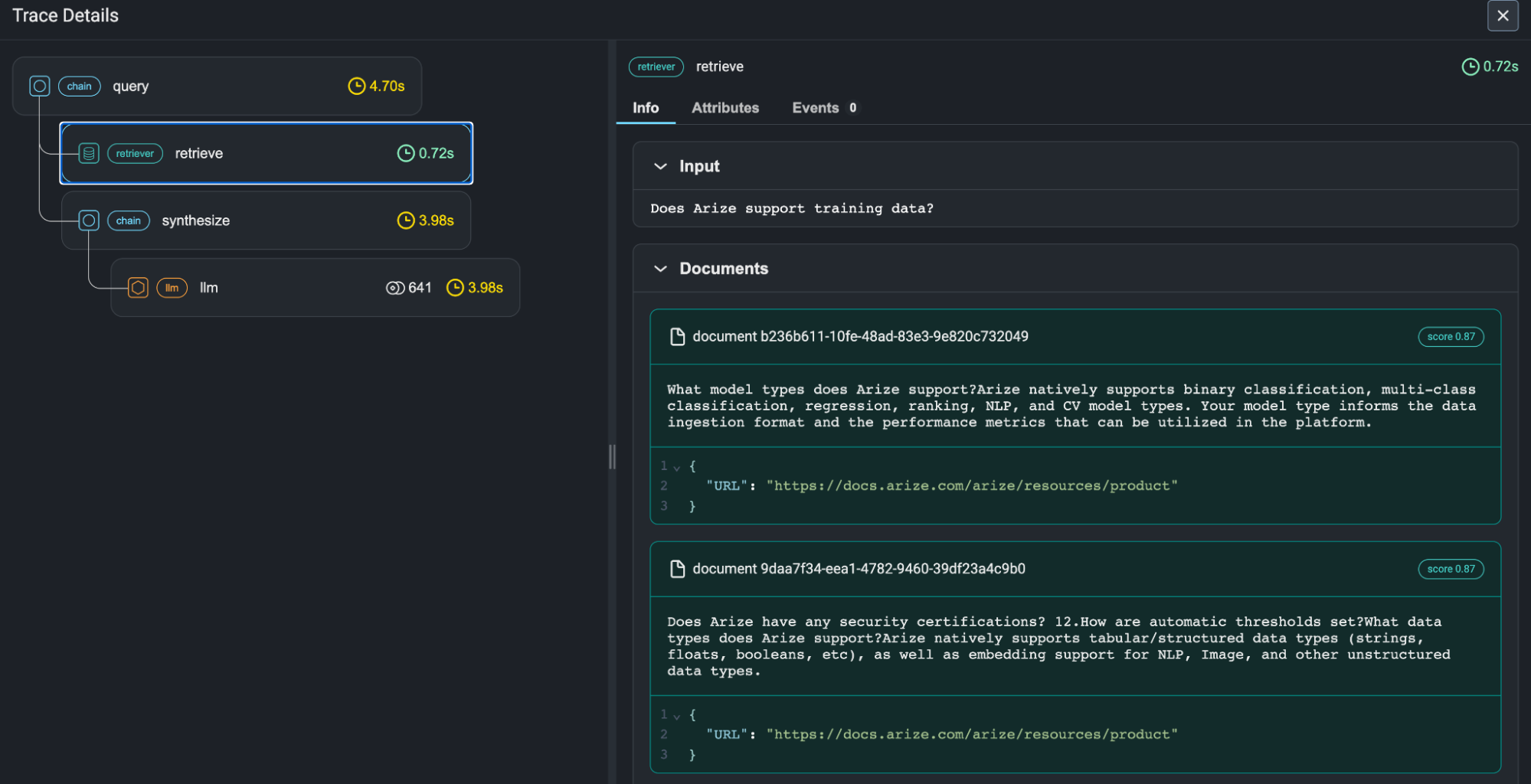
- What it governs: Agent and model behavior through span-level tracing and drift detection
- Deployment: SaaS, self-hosted through Phoenix
- Pricing: Free tier, then $50/month
- Frameworks: NIST MEASURE, partial Article 12 through span retention
Arize captures AI systems as spans, the individual steps recorded across an agent run, and monitors them for drift and degradation. Agent tracing, multi-agent graphs, token tracking, custom metrics, and evaluations are included from the free tier. Phoenix, the open source component, runs self-hosted with no caps on spans, ingestion, projects, or retention, which is the option for organizations that cannot let trace data leave a jurisdiction. For governance specifically, the retained span record and the drift monitors are what map onto framework obligations rather than the debugging workflows the product is usually sold on.
Limitations: Billing runs on two axes, spans and ingestion volume, which compounds quickly and makes budget forecasting harder than a single-dimension model. Retention caps at 30 days until Enterprise, which is short for retrospective evaluation and well short of what regulated retention periods require.
Pricing: AX Free is $0 with 25,000 spans, 1 GB of ingestion, and 15 days of retention. AX Pro is $50 per month with 50,000 spans, 10 GB, and 30 days, with additional spans at $0.0008 each and extra ingestion at $3 per GB. Enterprise is custom and covers configurable retention, SaaS or self-hosted deployment, uptime SLA, SOC 2, and HIPAA. Phoenix open source is free.
Best fit: Teams that want span-level monitoring with a genuine open source path and can work within the retention limits below Enterprise.
14. Galileo
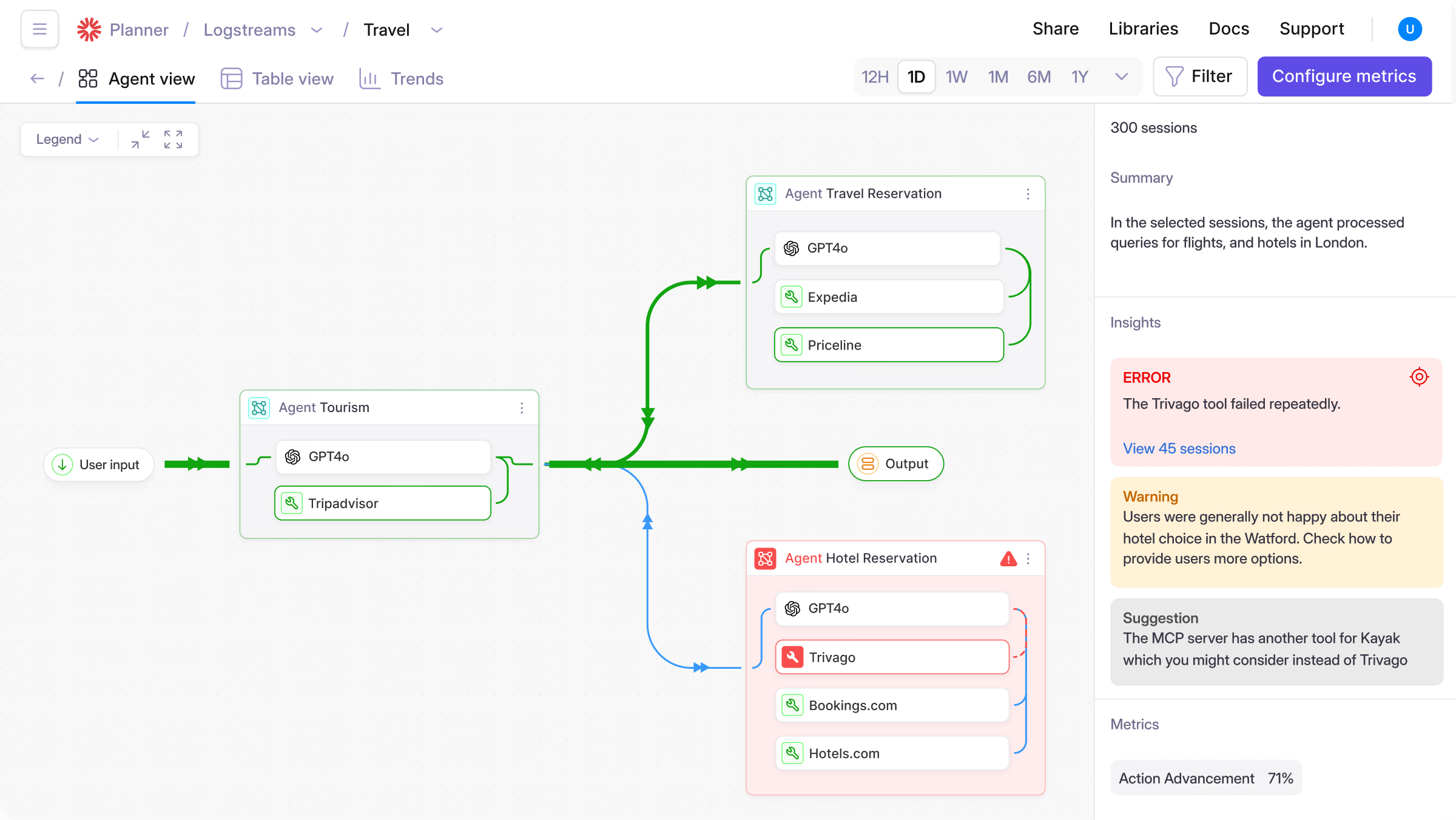
- What it governs: LLM output quality measured against defined criteria
- Deployment: SaaS, VPC, on-premises on Enterprise
- Pricing: Free tier, then $100/month
- Frameworks: NIST MEASURE
Galileo evaluates LLM outputs at the call level, scoring how a model performs against defined criteria in production rather than on a fixed test set. That distinction is the one NIST MEASURE actually asks about, since a system passing the cases you thought of tells you little about behavior once real traffic arrives. Traces, analytics, and role-based access control come in above the free tier. Note that this is Galileo the LLM evaluation platform, not Galileo AI the text-to-UI design tool.
Limitations: Runtime guardrails sit behind Enterprise pricing, which matters if you came to Galileo specifically for blocking rather than scoring, because the entry tiers measure without intervening. Enterprise has no public number, so a team with a fixed budget or a long procurement cycle hits a wall at exactly the point the product becomes preventative.
Pricing: The free plan covers 5,000 traces per month without role-based access control. Pro is $100 per month billed annually and covers 50,000 traces with standard RBAC, advanced analytics, and dedicated Slack support, scaling with trace volume above that. Enterprise is custom and adds unlimited traces, real-time guardrails, enterprise RBAC and SSO, deployment options, and 24/7 support.
Best fit: Teams that need production output scoring above what a free tier covers and are not depending on runtime blocking below Enterprise.
15. Evidently
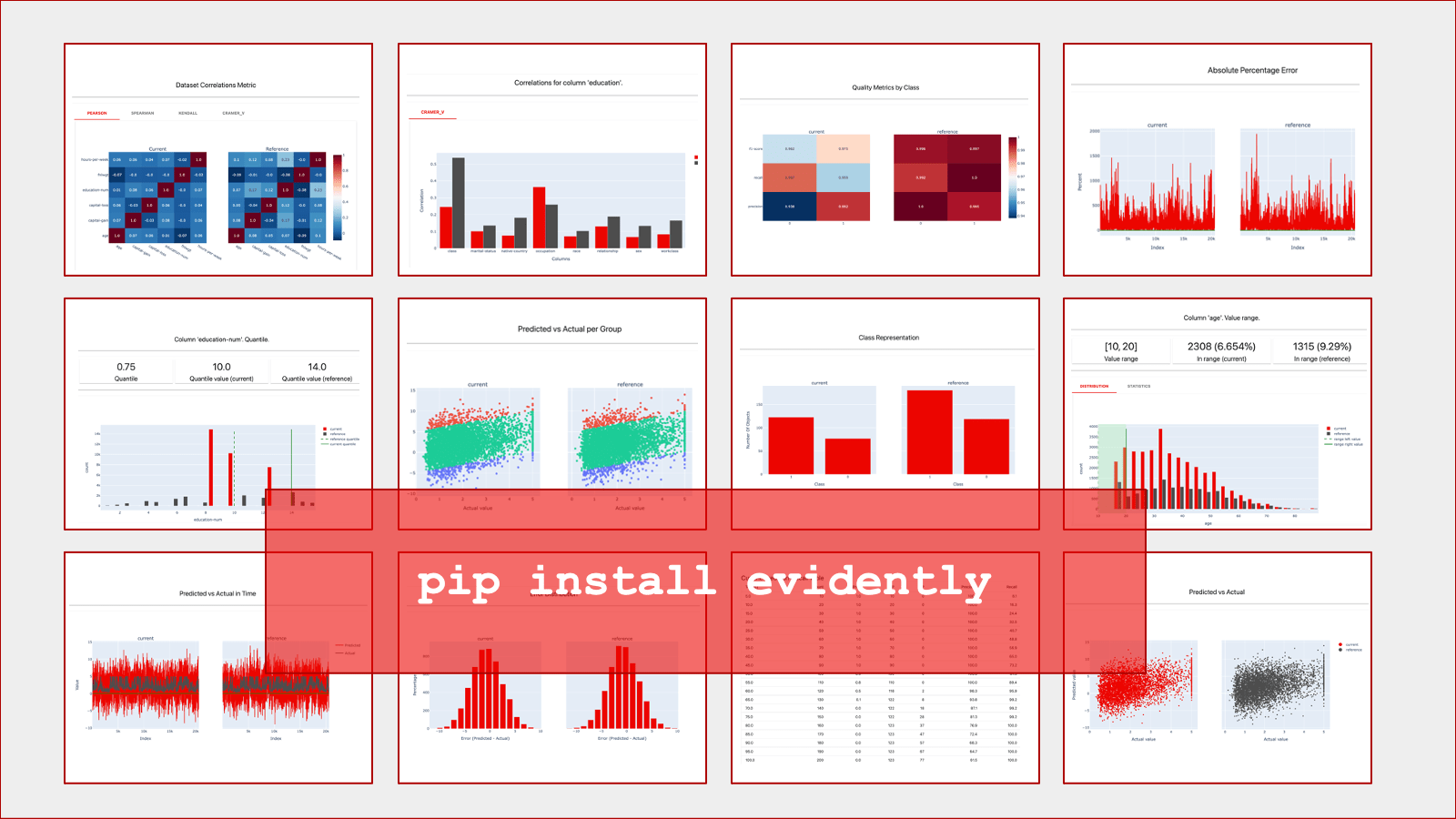
- What it governs: Data quality, drift, and LLM output quality
- Deployment: Self-hosted open source, managed cloud
- Pricing: Free and open source, cloud free tier
- Frameworks: NIST MEASURE, drift detection under Article 72 post-market monitoring
Evidently is an open source evaluation and monitoring framework with more than 100 built-in metrics covering quality, safety, and accuracy across both traditional ML and LLM systems. Drift detection, data quality checks, and continuous testing run against production data, and the framework generates reports that can serve as monitoring evidence. Synthetic data generation and adversarial testing extend it toward pre-deployment validation. The open source foundation and large community make it the low-commitment entry point in this category.
Limitations: Advanced capabilities including synthetic data generation and adversarial testing sit in higher-tier plans, and those tiers are priced high enough to matter for small teams. The framework also requires integration into existing pipelines rather than working as a drop-in, so there is engineering cost before there is governance value.
Pricing: The open source framework is free. Evidently Cloud offers a free tier for getting started, with paid plans for higher volume and advanced features that are not published. Figures circulating on aggregator sites have no vendor source behind them.
Best fit: Teams with existing ML pipelines that want drift and quality monitoring they can run themselves before committing to a commercial contract.
Stop guessing why your LLM app broke
See what your agents actually did in one place. Respan traces every prompt, tool call, and response, tracks cost and latency, and runs evals so you can go from a bad output to the exact step that caused it.
Frequently Asked Questions
Do MLOps or GRC platforms count as AI governance tools?
No, though both get sold that way. MLOps platforms handle deployment pipelines, model registries, and infrastructure, which ships models without assessing their risk or enforcing policy on their behavior. GRC platforms manage enterprise risk broadly and treat AI as one more category, which misses model-specific concerns like drift, bias, and prompt injection entirely. The overlap is real enough that teams assume existing tooling covers AI governance, and it usually does not at the specificity regulators now expect.
What is the difference between AI governance and AI observability?
Observability answers what a system did and why, for the engineer debugging it. Governance answers whether the organization can control that system and prove how it behaved, for an auditor, regulator, or customer. The overlap is substantial, since the trace an engineer opens at 2am is also the record an auditor asks for, which is why several tools appear in both categories. The distinction is scope: observability is about one system's behavior, governance is about the whole portfolio and the evidence trail around it.
Do AI governance tools help with EU AI Act compliance?
For the documentation obligations, yes. Policy platforms map systems to requirements, identify gaps, and generate model cards, impact assessments, and approval records. For the technical obligations they mostly do not, because Article 12 record-keeping, Article 15 robustness, and Article 72 post-market monitoring are satisfied by instrumentation rather than documentation. A policy platform records that you monitor. It does not monitor. Note also that the Digital Omnibus on AI, in force since 27 July 2026, deferred the standalone high-risk obligations to 2 December 2027, though the Article 50 transparency duties still apply from 2 August 2026.
Do you need a tool from each category?
Most organizations need at least two. The common combination is a policy platform for inventory and audit artifacts alongside something that acts on production traffic, because a governance program with no runtime control produces evidence of intentions rather than behavior. Whether you need a third depends on whether your enforcement layer already evaluates and traces. Respan runs enforcement, evaluation, and tracing on one platform, so the detection category is already covered. A gateway without evals is not, and that combination needs a monitoring tool alongside it.
How much do AI governance tools cost?
Enforcement and monitoring tools mostly publish prices and start low, from free open source options through $49 to $100 per month for entry commercial tiers, scaling with request or trace volume. Policy platforms almost universally quote, and market-observed contracts run from the tens of thousands into six figures annually depending on scale and framework count. IBM watsonx.governance is the exception with published metering at $0.60 per resource unit. Budget for implementation separately, since integration with existing infrastructure runs weeks to months on the enterprise platforms and is frequently the larger line item in year one.