Blog
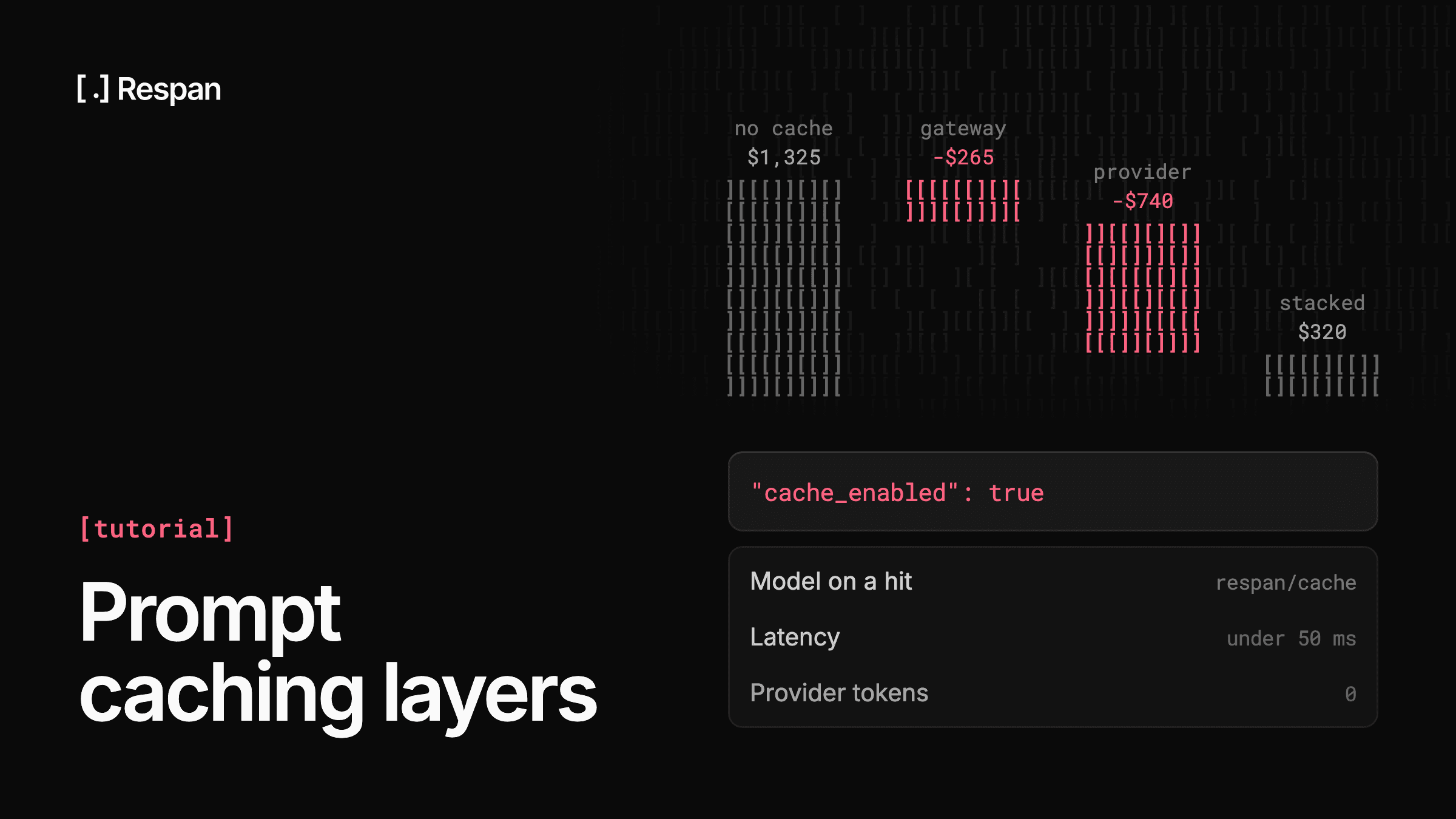
What Is Prompt Caching? How It Works & Cuts LLM Costs (2026)
Prompt caching reuses a model's work on a repeated prompt prefix, cutting input costs. See how it works, what each provider charges, and how to keep hits high.
Frank Chen · November 9, 2026
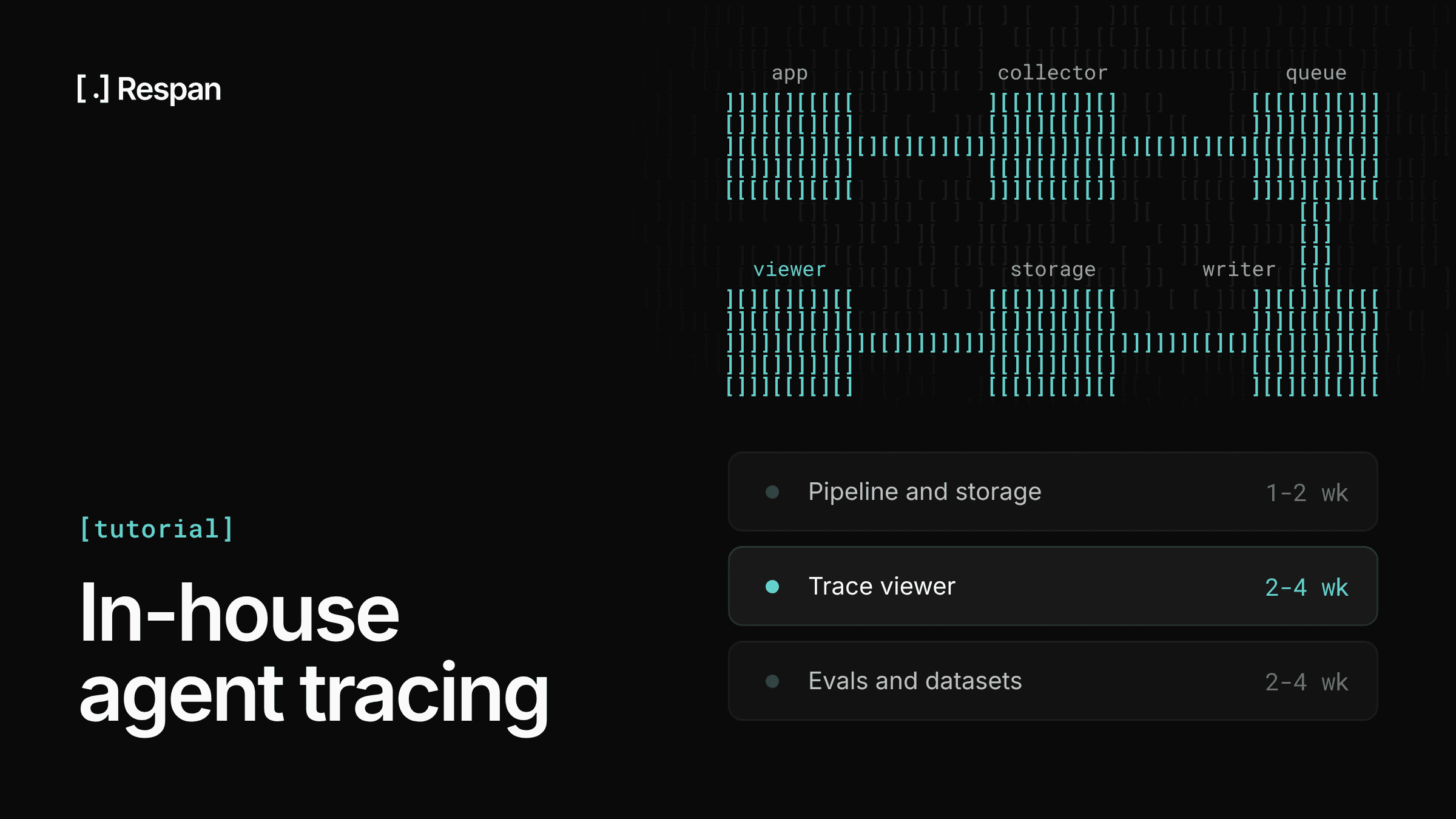
How to Build an In-House Agent Tracing System
Build an in-house agent tracing system with OpenTelemetry, ClickHouse, and object storage: data model, pipeline, trace viewer, evals, and build vs. buy.
Respan · October 16, 2026
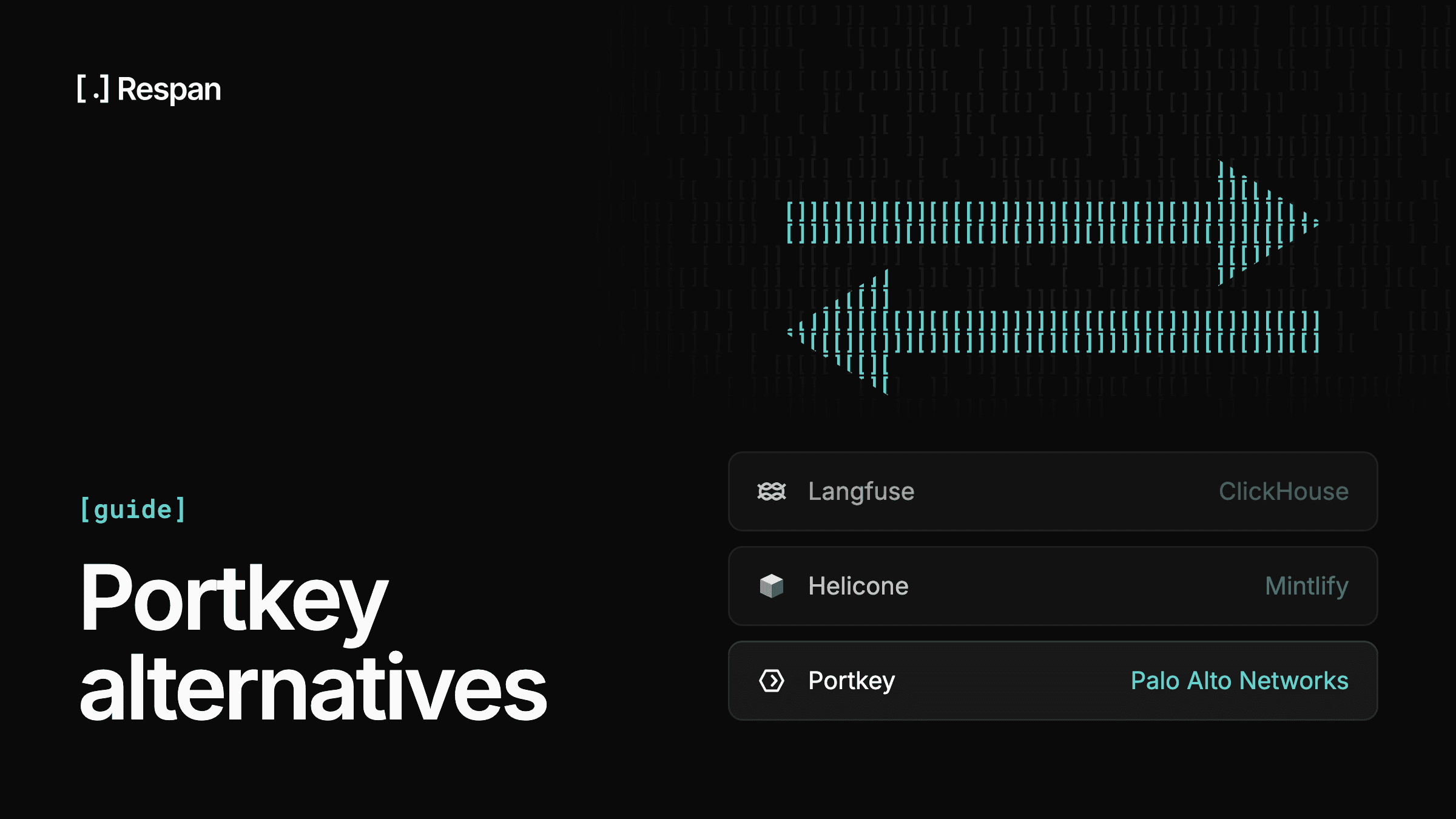
10 Best Portkey Alternatives Compared on Price (2026)
Compare 10 Portkey alternatives on price, fees, and switching effort, including Respan at up to 55% off per token with a 0% fee.
Dylan Cable · August 12, 2026
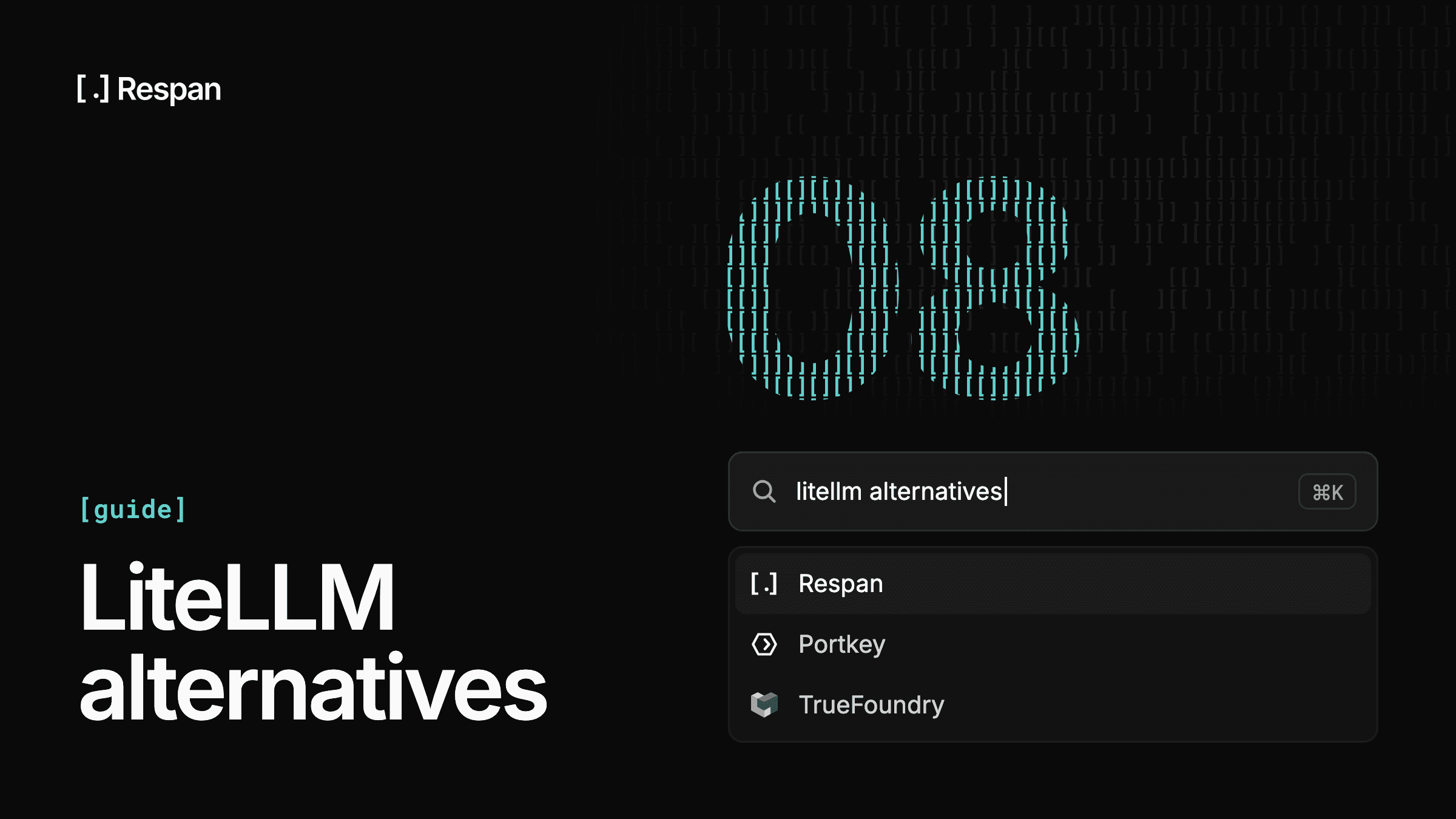
8 Best LiteLLM Alternatives in 2026 (Post-Breach)
Compare 8 LiteLLM alternatives for 2026, with real self-hosting costs, tier pricing, and what the March supply chain attack changed for gateway security.
Dylan Cable · August 11, 2026
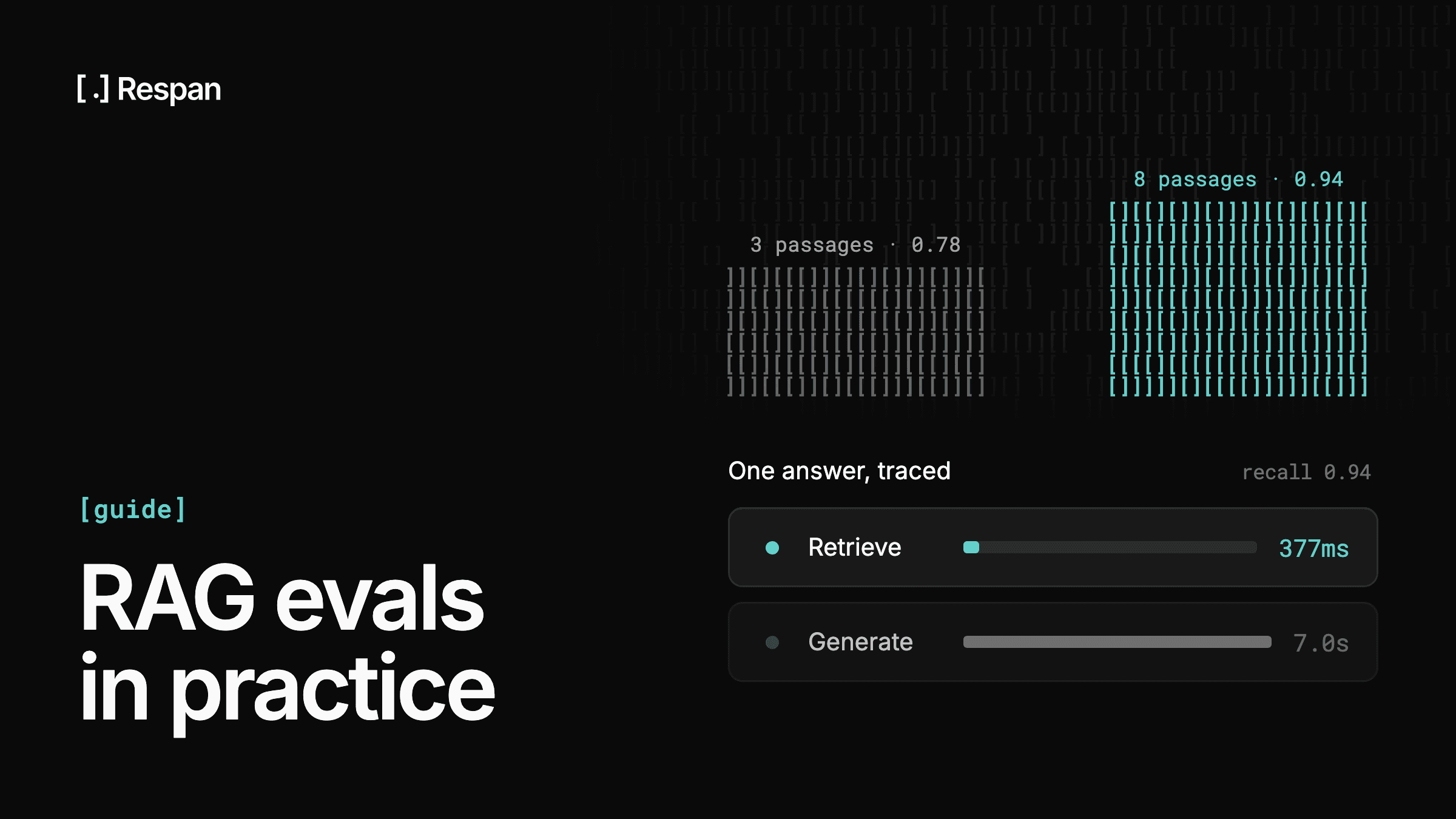
RAG Evals in Practice: Personal Course Tutor
I built a RAG tutor that answers only from my course PDFs. Here are the per-step evals that made it trustworthy, and what they caught.
Amy Kodama · July 23, 2026
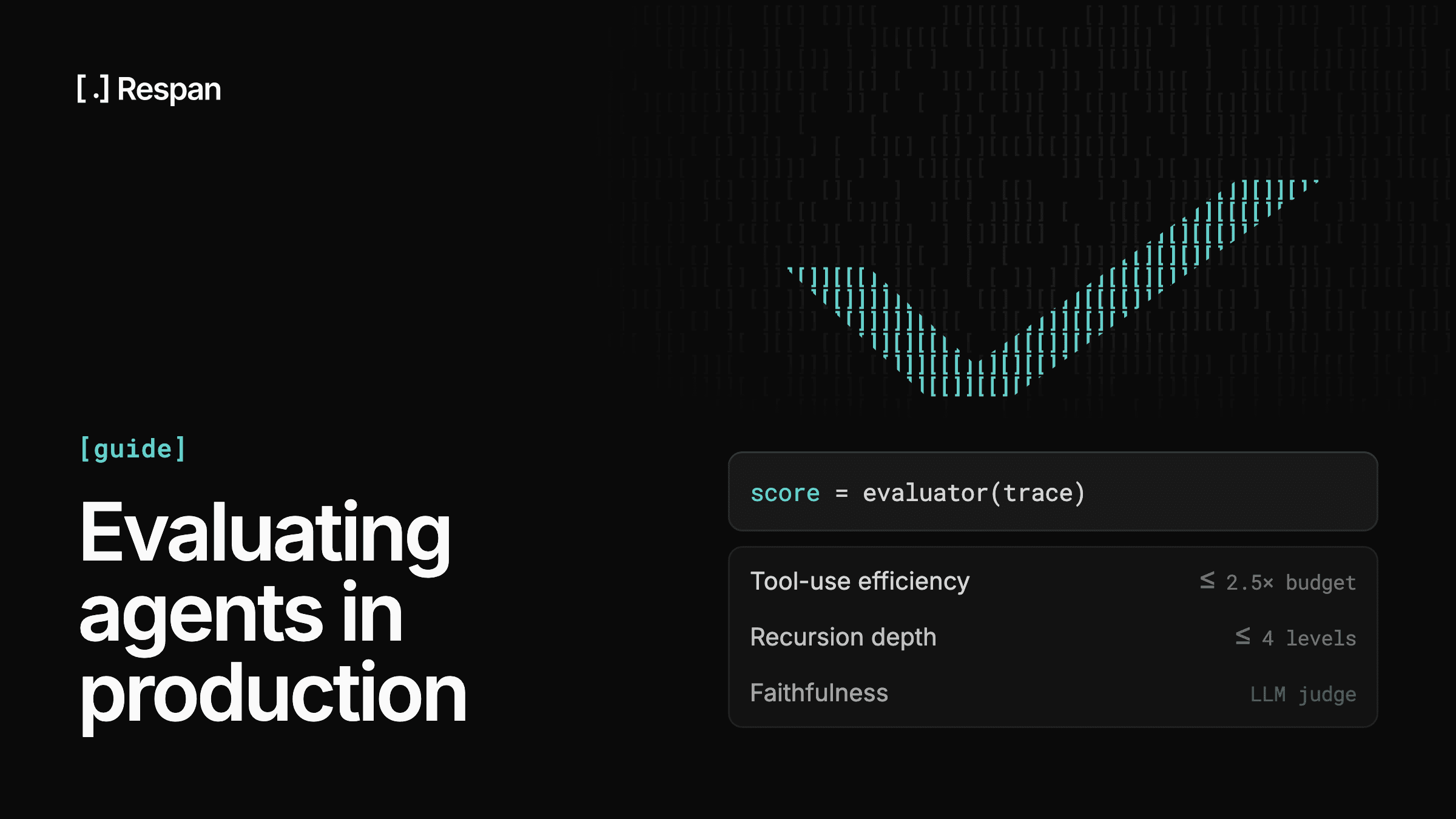
How to Evaluate AI Agents in Production (Not Just Benchmarks)
Every 'AI agent evaluation' article is benchmark-focused. Production agent evaluation is different. Five eval criteria that catch the failures benchmarks miss, with the methodology to wire them into live traffic.
Frank Chen · May 21, 2026
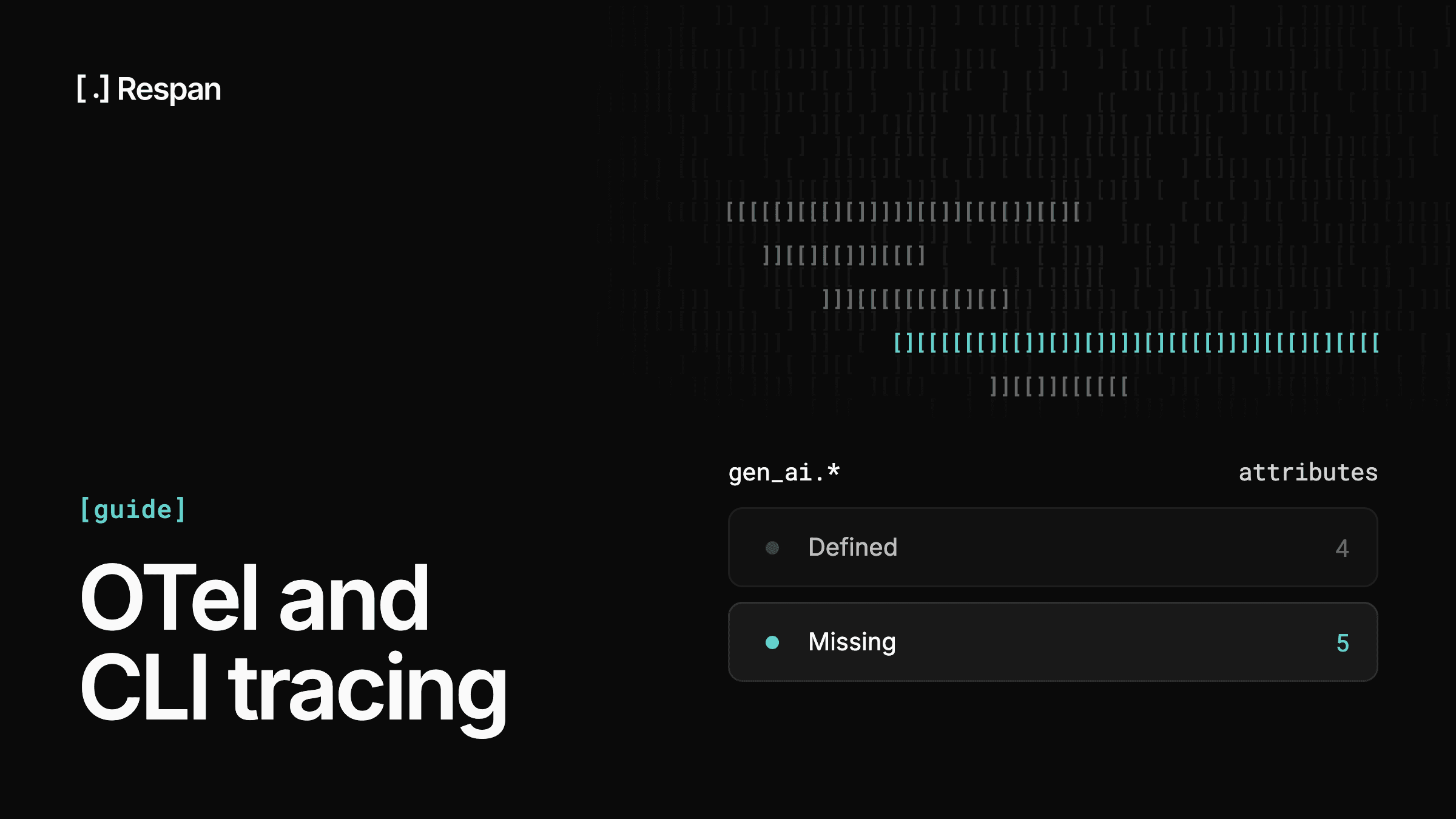
The mess of OTel semantic conventions and why tracing CLI tools is still painful
An honest look at the state of OpenTelemetry semantic conventions for LLM applications, the specific challenges of tracing CLI-based AI tools, and practical workarounds that actually work in production.
Hendrix Liu · April 10, 2026
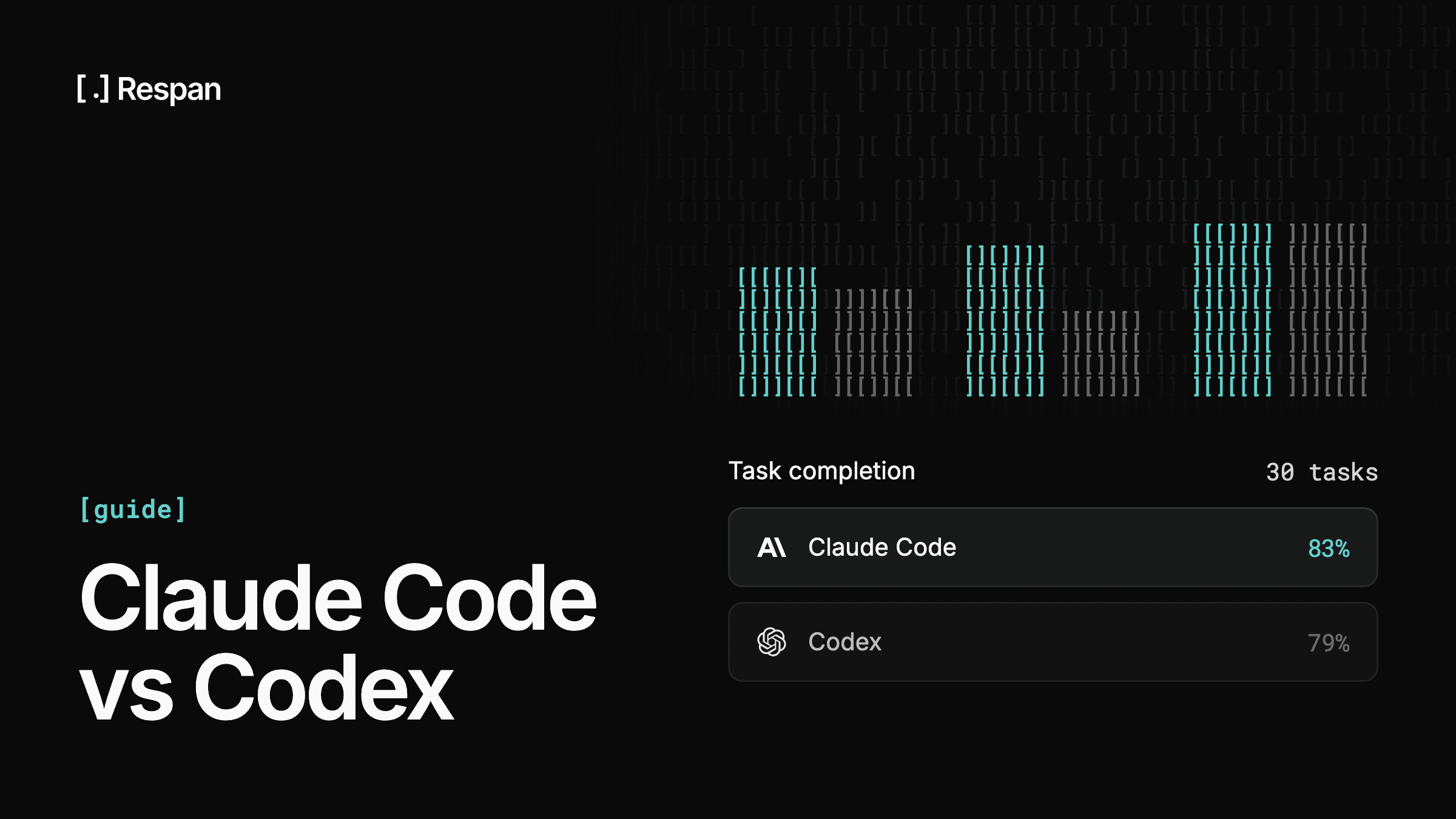
Tracing Claude Code and Codex: How Each Agent Plans and Recovers
Respan traced Claude Code and Codex CLI across 30 tasks to see how each agent plans, calls tools, recovers from errors, and spends tokens.
Frank Chen · April 9, 2026
Your LLM Judge Has Opinions. They're Not About Quality.
A deep dive into the systematic biases in LLM-as-a-judge evaluation, including self-preference, verbosity, authority, agreeableness, and position bias, and how to design experiments that produce conclusions you can actually trust.
Frank Chen · April 8, 2026
The 25 ways your LLM app is failing (and why you can't see most of them)
A catalog of 25 LLM failure modes in production: loud failures you can catch, silent failures that hide in plain sight, and slow failures that only reveal themselves in hindsight.
Frank Chen · April 7, 2026
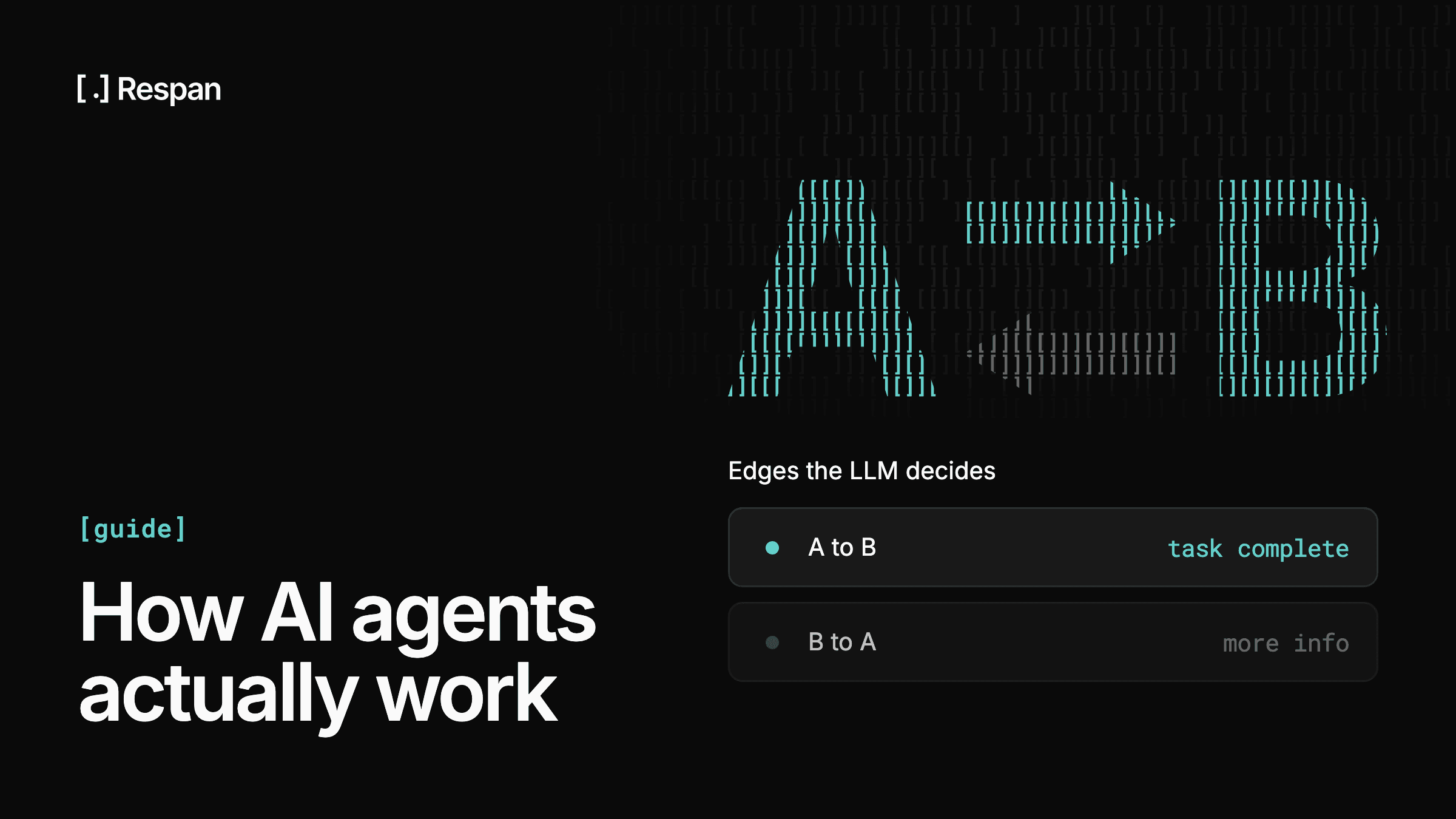
How AI agents actually work: a mental model for builders
Learn the mental model behind AI agents, from graph theory to finite state machines to LLM-driven transitions. A practical framework for designing, debugging, and communicating agent architecture.
Frank Chen · March 9, 2026
10 Best Helicone Alternatives in 2026 (Post-Mintlify Acquisition)
Helicone alternatives need to replace both the observability layer and the gateway. Compare 10 platforms on what each covers and what it costs.
Dylan Cable · March 4, 2026
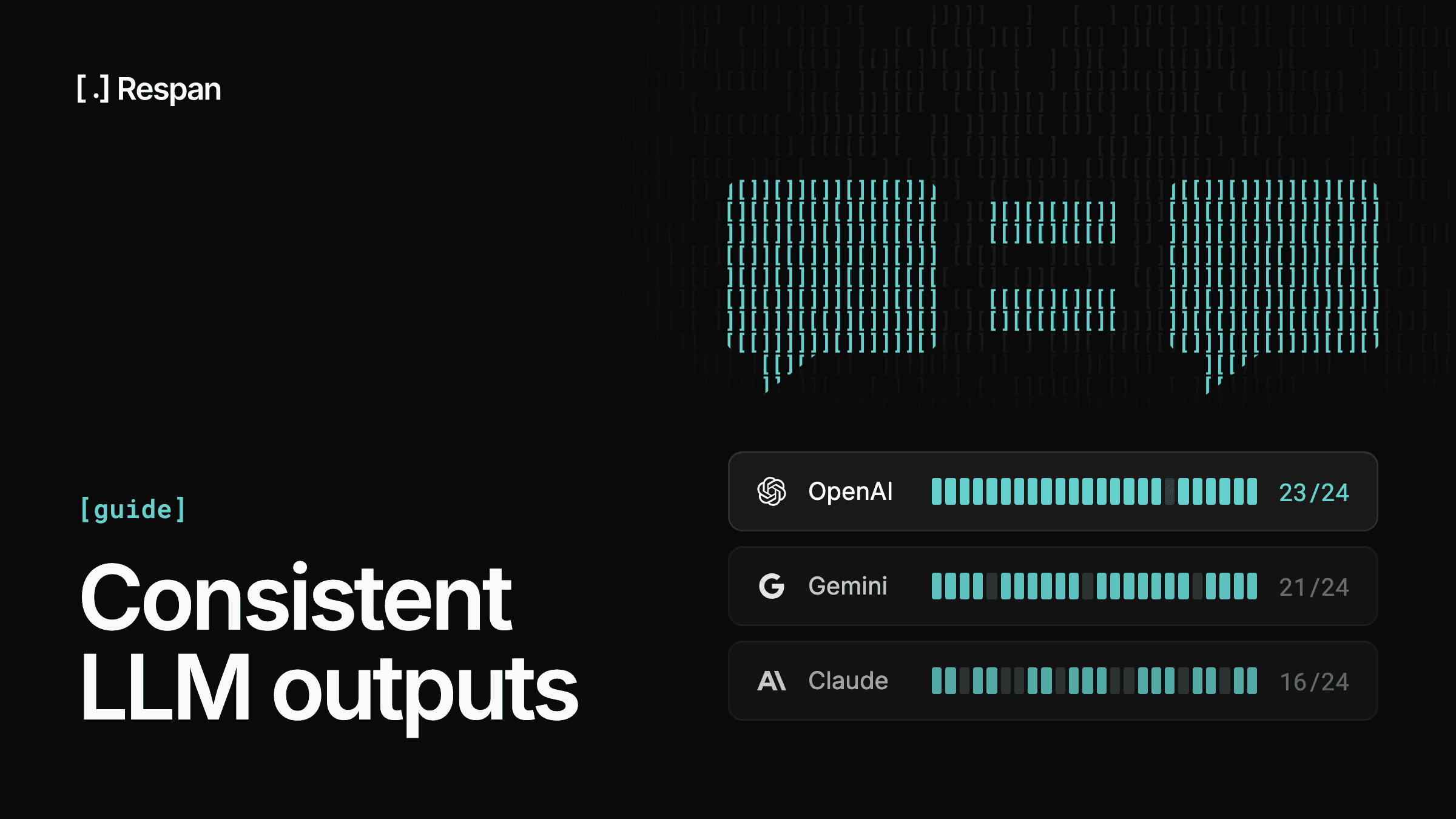
How to get consistent and reproducible LLM outputs (OpenAI, Gemini, Claude, vLLM...)
A practical guide to achieving reproducible LLM outputs across OpenAI, Gemini, Claude, and vLLM, covering sampling, batching, numeric drift, and batch invariance.
Frank Chen · February 19, 2026
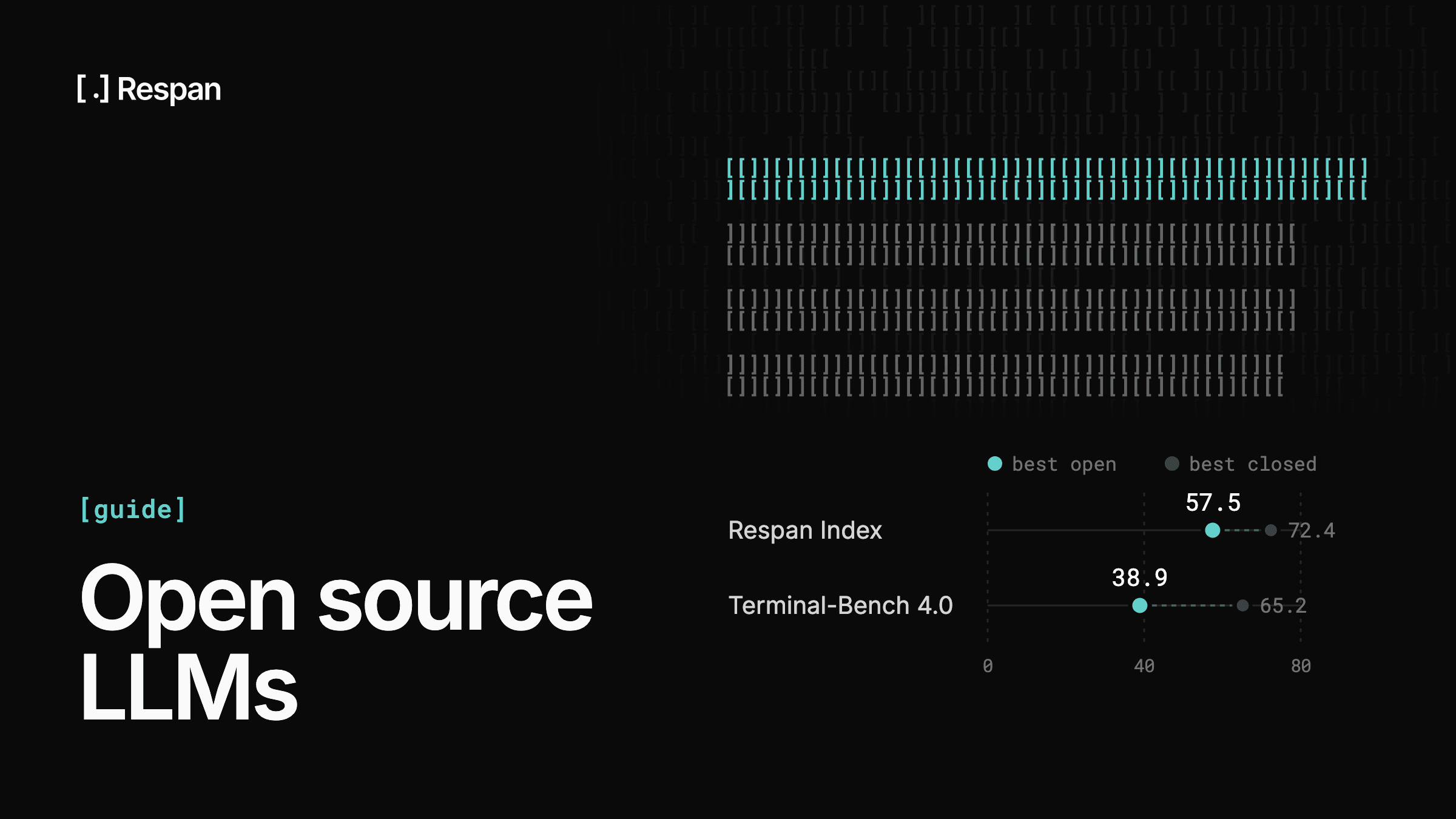
10 Best Open Source LLMs in 2026, by Benchmark and License
The 10 best open source LLMs of 2026, from DeepSeek V4.1 Flash and Step 5 Preview to Qwen3.8-27B and gpt-oss, compared by benchmark, license, size, and price.
Hendrix Liu · February 16, 2026
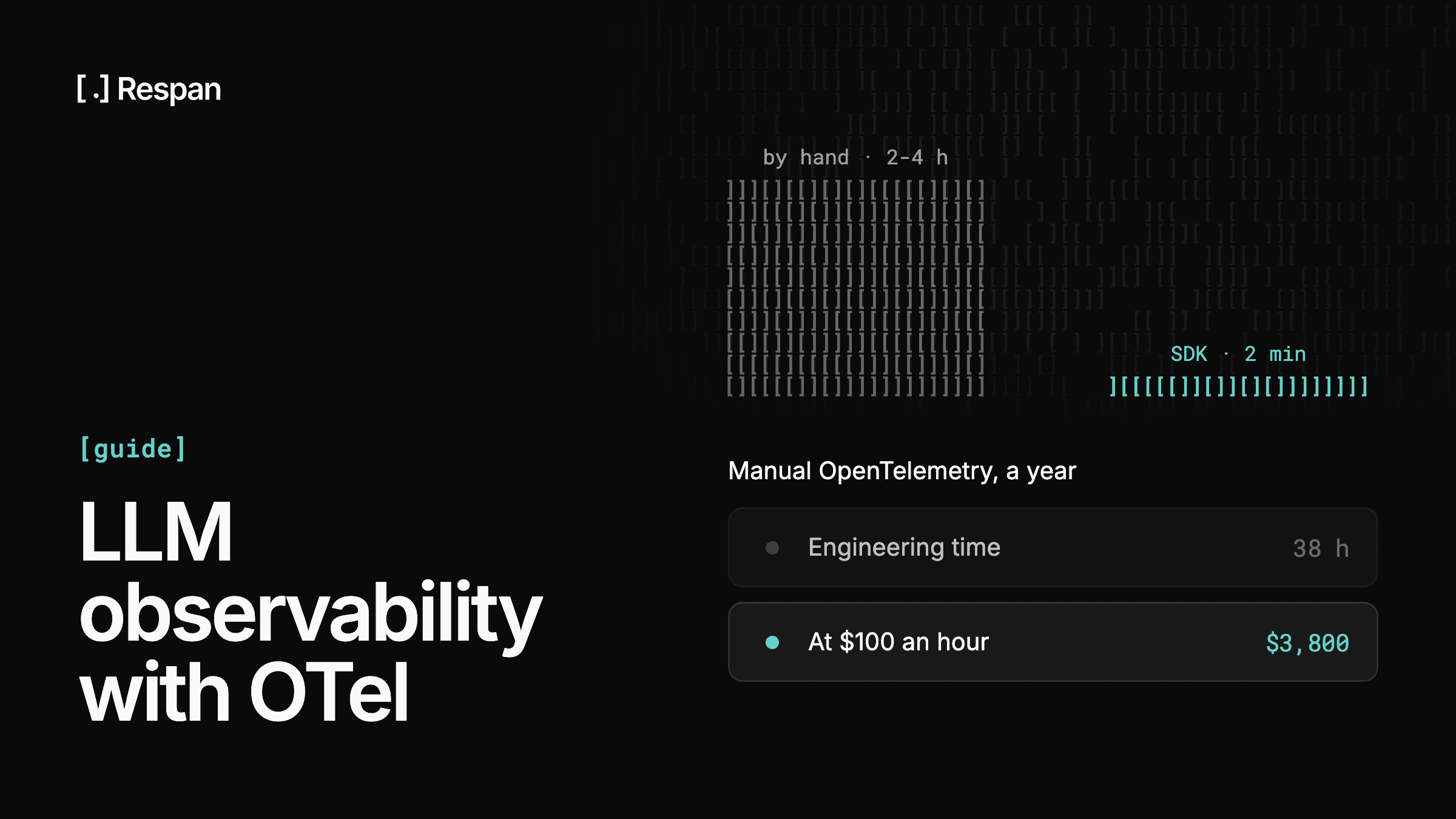
How to Set Up OpenTelemetry for LLM Apps
Learn how to set up OpenTelemetry for LLM observability across Haystack, Vercel AI SDK, and LiteLLM. Compare manual OTel setup vs automated tracing with Keywords AI for production AI applications.
Frank Chen · January 26, 2026