Helicone did two jobs at once. It logged every LLM call, and it routed them. One base URL change bought request logging, cost tracking, caching, rate limiting, and provider fallback without touching application code.
That bundle is what makes it awkward to replace. Most tools that surface on a Helicone alternatives list are observability platforms. They trace calls, score outputs, and version prompts. They do not route traffic, cache responses, or fail over when a provider goes down. Swap Helicone for one of them and the observability half lands cleanly while the gateway half becomes an engineering problem nobody scoped.
The question stopped being hypothetical in March 2026, when Mintlify acquired Helicone and feature development on the platform ended.
This covers what Helicone does, where it stands now, what it costs, and ten platforms that replace it, measured on what each one actually covers.
What is Helicone?
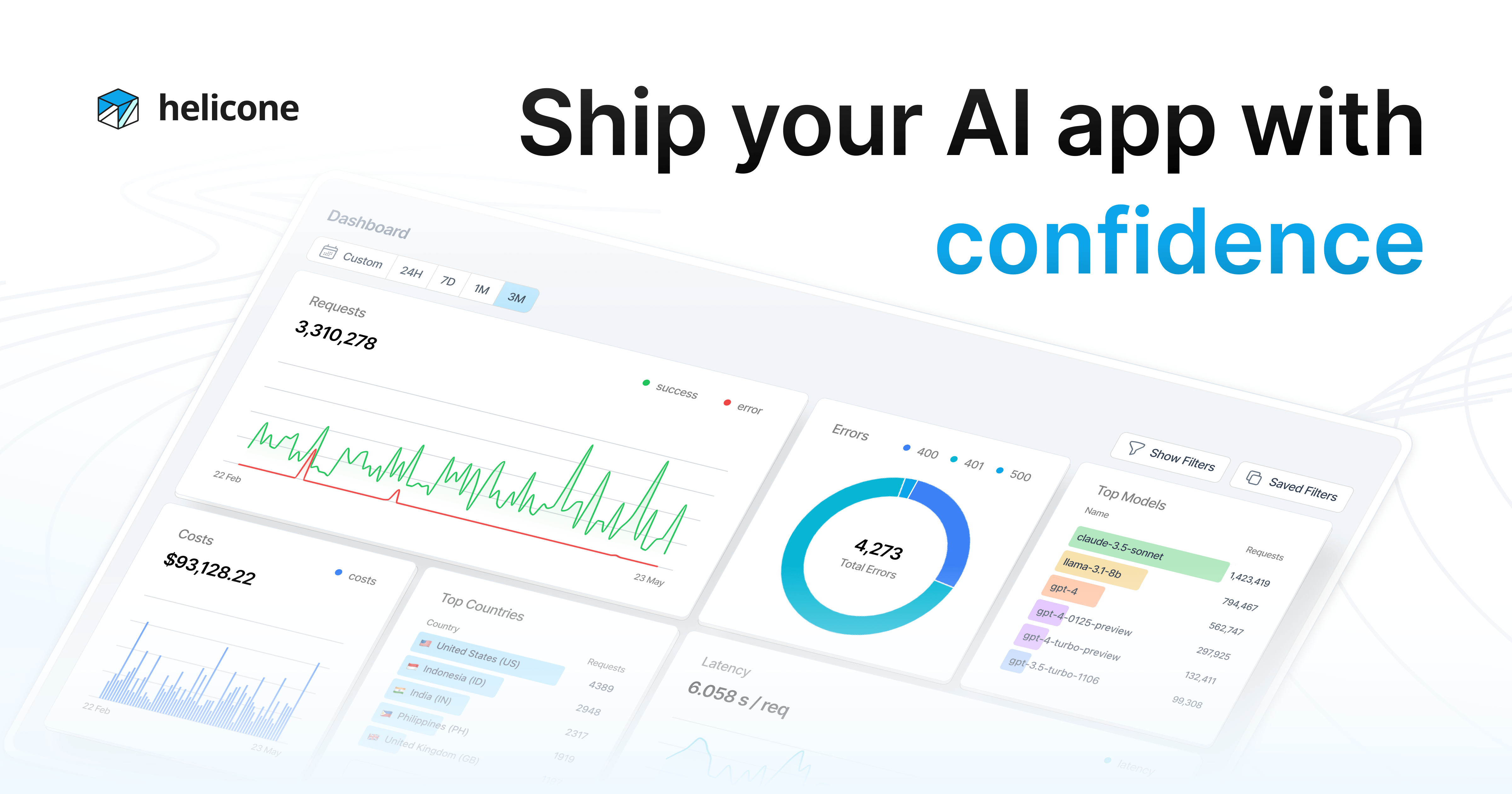
Helicone is an open-source AI observability platform and AI gateway. It runs as a proxy between an application and model providers. Point the base URL at Helicone, or add an auth header, and traffic starts flowing through their infrastructure.
The observability side captures requests and responses, token counts, per-call cost, latency, and errors. Sessions group related calls so a multi-step agent run reads as one flow instead of scattered rows. Custom properties attach arbitrary metadata to requests, which is the mechanism behind per-user and per-feature cost attribution. Paid plans add HQL, a query language for pulling logs directly, plus alerts and scheduled reports.
The LLM gateway side runs on the same proxy. It exposes an OpenAI-compatible endpoint across 100+ models, caches responses, enforces rate limits, and falls back automatically when a provider errors or throttles.
The coupling is the whole design. Observability depends on the proxy, so nothing gets logged unless traffic passes through Helicone. That bought the one-line setup engineers liked, and it put a third party in the production request path.
What's happening with Helicone
Mintlify acquired Helicone on March 3, 2026. Founders Justin Torre and Cole Gottdank joined Mintlify in San Francisco, and the platform moved into maintenance mode. Security updates, bug fixes, and new model support keep shipping. Feature development and roadmap work ended. The team said it would help customers migrate.
Maintenance mode means different things depending on how Helicone was deployed. Self-hosted instances keep running regardless of what happens to the hosted product, and the code does not stop working the day the roadmap freezes. Teams on Helicone Cloud are betting on someone else's infrastructure staying available and, more pressing, on the gateway staying current with new providers and models. Provider coverage is the part of a gateway that decays fastest once nobody is shipping to it.
There is a wider pattern worth pricing into the decision. ClickHouse acquired Langfuse in January 2026, Mintlify acquired Helicone in March, and Palo Alto Networks closed its acquisition of Portkey in May. Three tools that would have appeared on any 2026 shortlist changed hands inside five months. Independence is not a feature anyone lists on a comparison table, and it is the variable that determined whether a platform was still being built on a year later.
Last updated: July 2026.
What Helicone offered
Here's what Helicone's platform covered:
| Category | Features |
|---|---|
| AI Gateway | Unified API for 100+ models, provider-agnostic routing, automatic fallback chains |
| Logging & Observability | Request logging, cost/latency/token tracking, custom properties, real-time dashboards |
| Sessions & Traces | Session grouping, multi-step agent workflow visualization, debugging |
| Caching | Edge-based caching on Cloudflare, cache buckets, configurable TTL |
| Rate Limiting | Built-in usage controls and abuse protection |
| Prompt Management | Prompt versioning, deploy without code changes, playground |
| Evaluations | LLM-as-judge, custom Python evaluators, experiment comparisons |
| Datasets | Build datasets from production requests, export for fine-tuning |
| Reliability | Automatic failover, health checks, load balancing |
| Security | SOC 2, GDPR, HIPAA (Team+), SAML SSO (Enterprise) |
Most of that shipped on every plan. What changed with price was how much traffic could be logged, how long it was kept, and whether compliance came with it.
Helicone pricing
Helicone runs four plans. Every tier, including the paid ones, includes the same 10,000 requests and 1 GB of storage before usage-based billing starts, so the monthly fee is a floor rather than a total.
-
Hobby, free - 10,000 requests per month, 1 GB storage, 1 seat, 1 organization, 7-day retention, 10 logs per minute, no API access.
-
Pro, $79 per month - Unlimited seats, alerts, reports, HQL, 1-month retention, 1,000 logs per minute, 10 API calls per minute.
-
Team, $799 per month - 5 organizations, SOC 2 Type II and HIPAA, dedicated Slack channel, 3-month retention, 15,000 logs per minute, 60 API calls per minute.
-
Enterprise, custom - SAML SSO, on-prem deployment, custom MSA, unlimited retention, 30,000 logs per minute, 1,000 API calls per minute, bulk cloud discounts.
Teams shopping for a replacement usually hit one of two walls first: the $799 step for compliance available cheaper elsewhere, or a retention window shorter than their own incident review cycle.
The 10 best Helicone alternatives compared
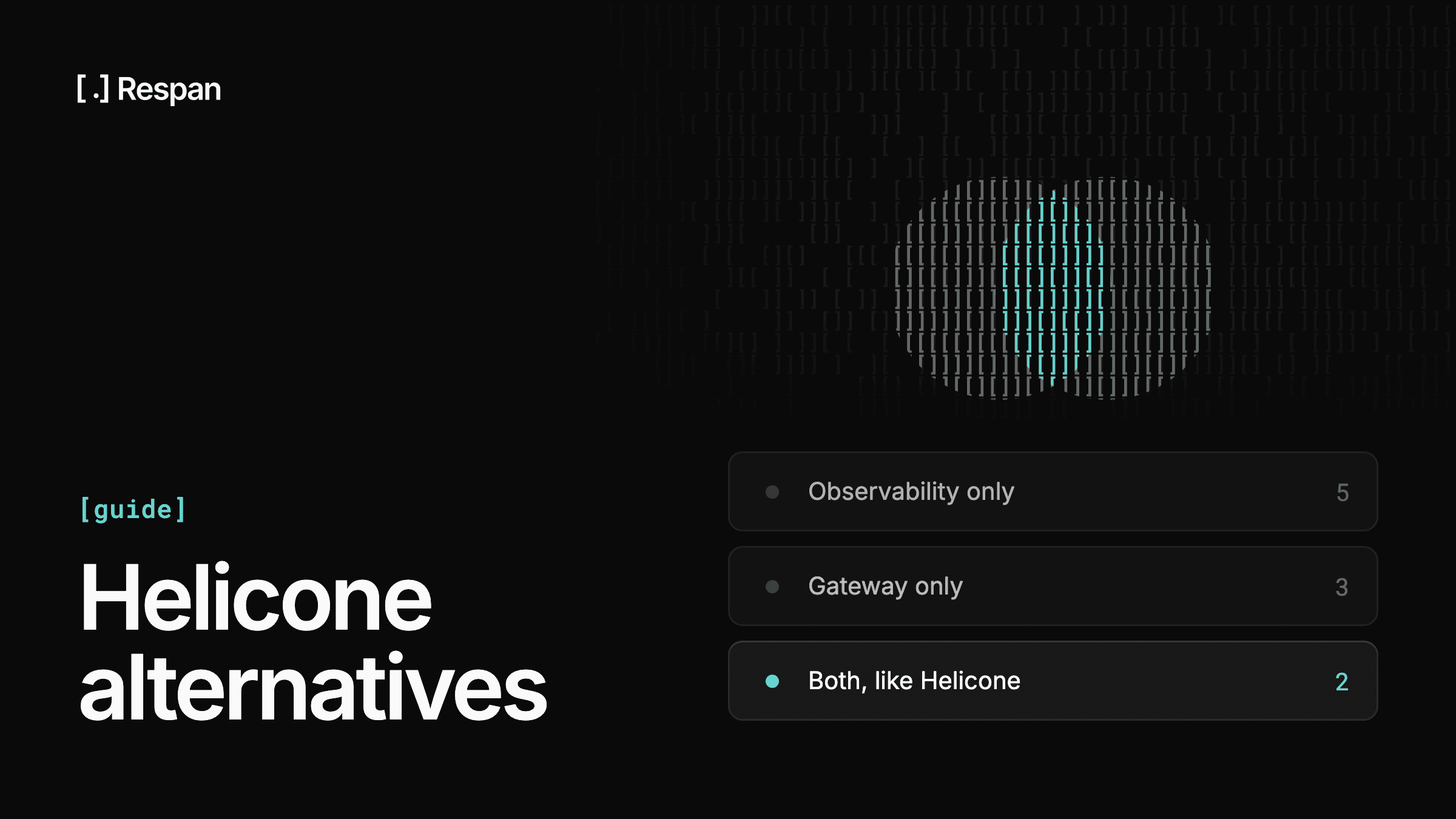
Helicone did routing and logging in the same hop. Five of the tools below replace only the logging half, three replace only the routing half, and two cover both. Picking from the first group means budgeting for a gateway alongside it.
| Tool | Replaces | Gateway | Observability | Evals | Pricing from |
|---|---|---|---|---|---|
| Respan | Both halves | Yes | Yes | Yes | Free tier |
| Langfuse | Observability | No | Yes | Yes | Free, then $29/mo |
| LangSmith | Observability | No | Yes | Yes | Free, then $39/seat |
| Portkey | Both halves | Yes | Yes | Limited | $49/mo |
| Braintrust | Evals | Optional | Yes | Yes | Free, then $249/mo |
| Arize | Observability | No | Yes | Yes | Free, then $50/mo |
| LiteLLM | Gateway | Yes | Basic | No | Open source, sales-led |
| OpenRouter | Gateway | Yes | Basic | No | 5.5% fee |
| Vercel AI Gateway | Gateway | Yes | Basic | No | $5 credit, then usage |
| Confident AI | Evals and observability | No | Yes | Yes | $200/mo |
1. Respan
- Category: Unified LLM engineering platform
- Replaces: Both halves of Helicone
- Pricing: Free tier, paid plans scale with usage
- Best for: Teams that want gateway, observability, evals, and prompt optimization in one place
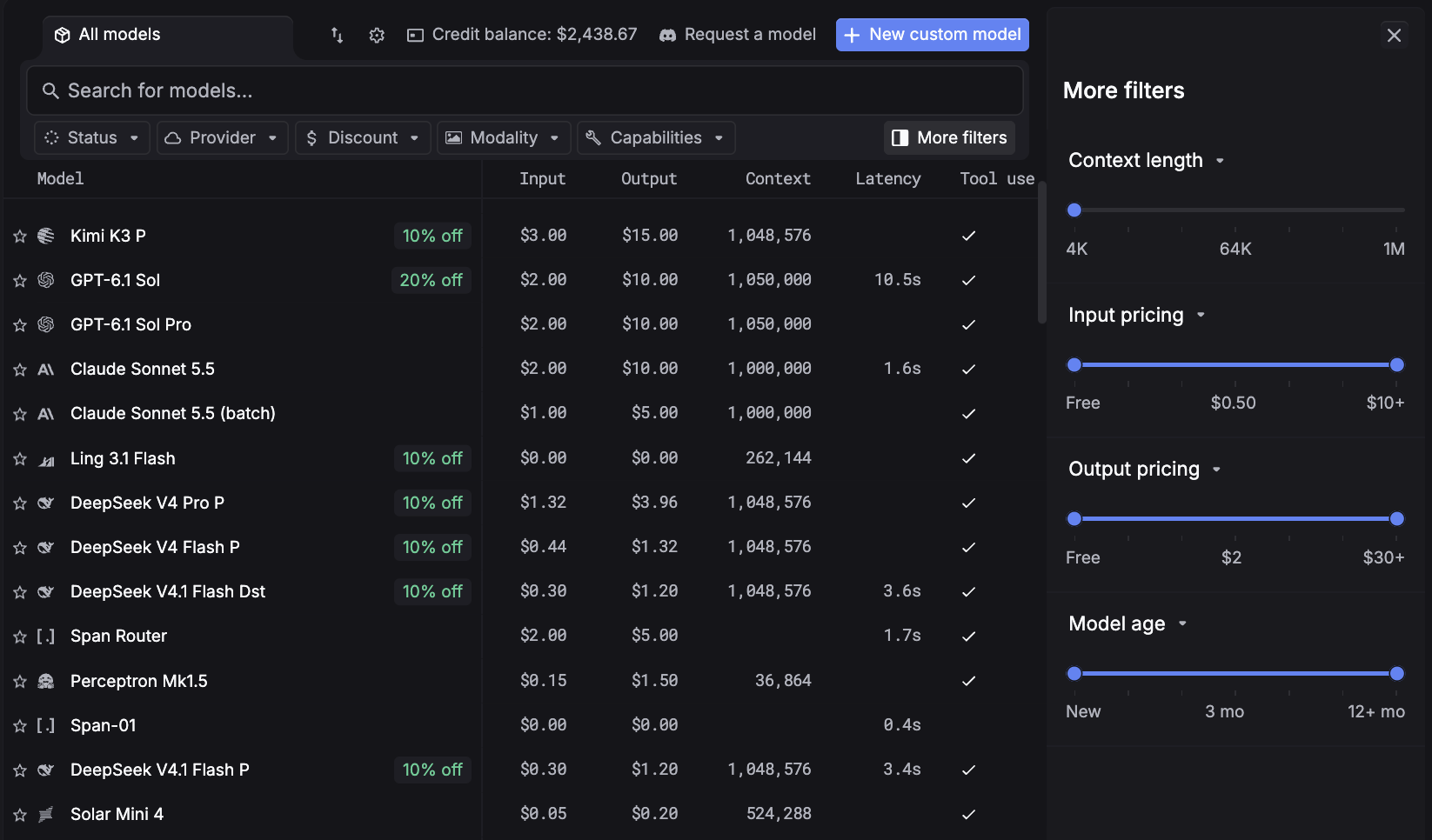
Respan routes, observes, and evaluates every LLM call from one platform. For a team leaving Helicone that matters because both halves come from the same place, so nothing quietly falls out of the stack during the swap.
Respan's gateway is one endpoint reaching 1,000+ models across every major provider, with model switching as a one-word change. Fallback chains move to the next model once retries on the current one are exhausted, so a provider outage stops being an incident. Caching serves exact repeat calls instantly and cuts their cost to nothing. Spend limits work per key or per customer, with warnings on approach and hard blocks before spend runs away.
Teams that self-hosted Helicone can keep the gateway on their own infrastructure. Respan's open-source gateway is a single Rust binary under MIT or Apache-2.0, and any OpenAI, Anthropic, or Gemini SDK can call any model through it, with routing, fallbacks, and MCP as plugins. It is still pre-alpha, and turning on the Respan plugin sends every request into the platform as a trace.
Observability goes past what proxy logs can show. Full trace trees cover every prompt, tool call, and response, so a failed agent run reads step by step instead of being inferred from the last LLM call. Dashboards, saved views, and monitors with alerts catch production shifts while they are still small. Instead of reading logs after the fact, Respan runs observability and monitoring in production, flags when behavior changes, and lets teams act before it spreads.
Evaluations score outputs against a defined bar rather than vibes, using rule-based checks, LLM-as-a-judge, online evals on live traffic, and automations. Prompt optimization, red teaming, Guardrails that block prompt injection and unsafe requests at the gateway, and MCP access to Respan data from AI coding tools round out the platform. On compliance, Respan holds SOC 2, HIPAA with BAA, GDPR, and ISO 27001, which is the exact tier gate that pushed Helicone teams toward $799 a month.
Scale is not theoretical. Respan is the platform behind 80 trillion+ tokens. Retell AI scaled from 5M to 500M+ monthly API calls and credits Respan's debugging layer with resolving production issues 10x faster. Mem0 built a 99.99% reliable memory layer on it.
Every Helicone capability has a direct counterpart:
| Helicone | Respan |
|---|---|
| AI Gateway (100+ models) | Unified gateway, 1,000+ models, OpenAI SDK compatible |
| One-line integration | Base URL swap or two-line SDK setup |
| Request logging | Full capture with per-request cost, latency, and token detail |
| Cost tracking | Per-request, per-user, and per-feature cost attribution |
| Session tracking | Distributed tracing with full trace trees across tool calls |
| Edge caching | Response caching on repeat calls |
| Rate limiting | Per-key and per-customer spend limits and budgets |
| Prompt versioning | Version-controlled prompts with A/B testing and one-click deploy |
| LLM-as-judge evals | LLM-as-a-judge, rule-based checks, online evals, automations |
| Datasets | Testsets built from production logs |
| Automatic fallback | Fallback chains with health checks and load balancing |
| Open-source self-host | Open-source gateway (MIT or Apache-2.0) |
| SOC 2 / HIPAA | SOC 2, HIPAA with BAA, GDPR, ISO 27001 |
Because the gateway works the way Helicone's proxy did, the migration is an endpoint and a key:
# Before (Helicone)
import requests
response = requests.post(
    "https://oai.helicone.ai/v1/chat/completions",
    headers={
        "Content-Type": "application/json",
        "Helicone-Auth": "Bearer <HELICONE_KEY>",
    },
    json={"model": "gpt-4o-mini", "messages": [{"role": "user", "content": "Hello"}]},
)

# After (Respan)
import requests
response = requests.post(
    "https://api.respan.ai/api/chat/completions",
    headers={
        "Content-Type": "application/json",
        "Authorization": "Bearer <RESPAN_API_KEY>",
    },
    json={"model": "gpt-4o-mini", "messages": [{"role": "user", "content": "Hello"}]},
)
For agent workflows, the tracing SDK adds @workflow and @task decorators to existing functions and everything underneath gets traced automatically.
2. Langfuse
- Category: Open-source LLM observability
- Replaces: Observability half only
- Pricing: Free Hobby tier, then $29/month
- Best for: Teams that want open-source tracing and will run routing separately
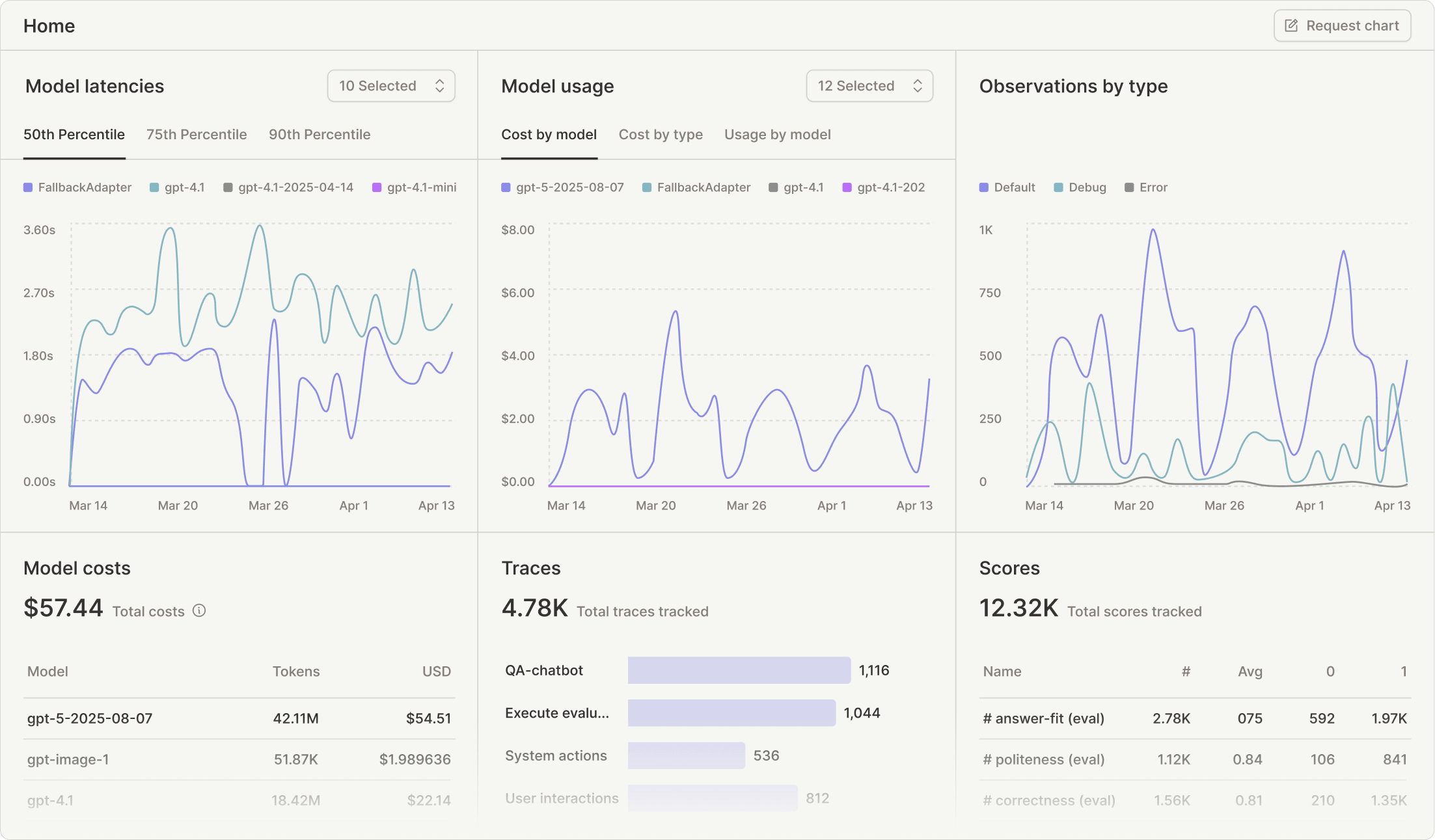
Langfuse covers tracing, prompt management, evaluations, datasets, and metrics. Integration is SDK-based rather than proxy-based, with Python and JavaScript SDKs, OpenTelemetry ingestion for other languages, and proxy-based logging available through LiteLLM. Traces render as nested graphs, so a multi-step agent run reads as a tree rather than a flat log. Evaluation covers LLM-as-judge evaluators, custom scores, human annotation queues, and dataset experiments run from either the SDK or the UI.
Day to day the interface is built around trace search and custom dashboards. Monitors and alerts are capped by tier at 2, 20, 50, and 100 across the four plans.
It has no gateway. No routing, caching, rate limiting, or fallback, so a team that used Helicone's proxy for any of those still needs a separate gateway alongside it. Ingestion throughput is also tiered, starting at 1,000 requests per minute on Hobby.
Hobby is free with 50,000 units per month, 30 days of data access, and 2 users. Core is $29/month for 100,000 units, 90-day access, and unlimited users. Pro is $199/month and adds 3-year retention, SOC 2 and ISO 27001 reports, and a HIPAA-ready region. Enterprise is $2,499/month. Overage is $8 per 100,000 units on every paid tier and drops with volume, and a Teams add-on at $300/month covers enterprise SSO, fine-grained RBAC, and a dedicated Slack channel. Self-hosting the MIT-licensed core is free.
3. LangSmith
- Category: Observability and evaluation, LangChain-native
- Replaces: Observability half only
- Pricing: Free Developer tier, then $39 per seat per month
- Best for: Teams whose production stack runs on LangChain or LangGraph
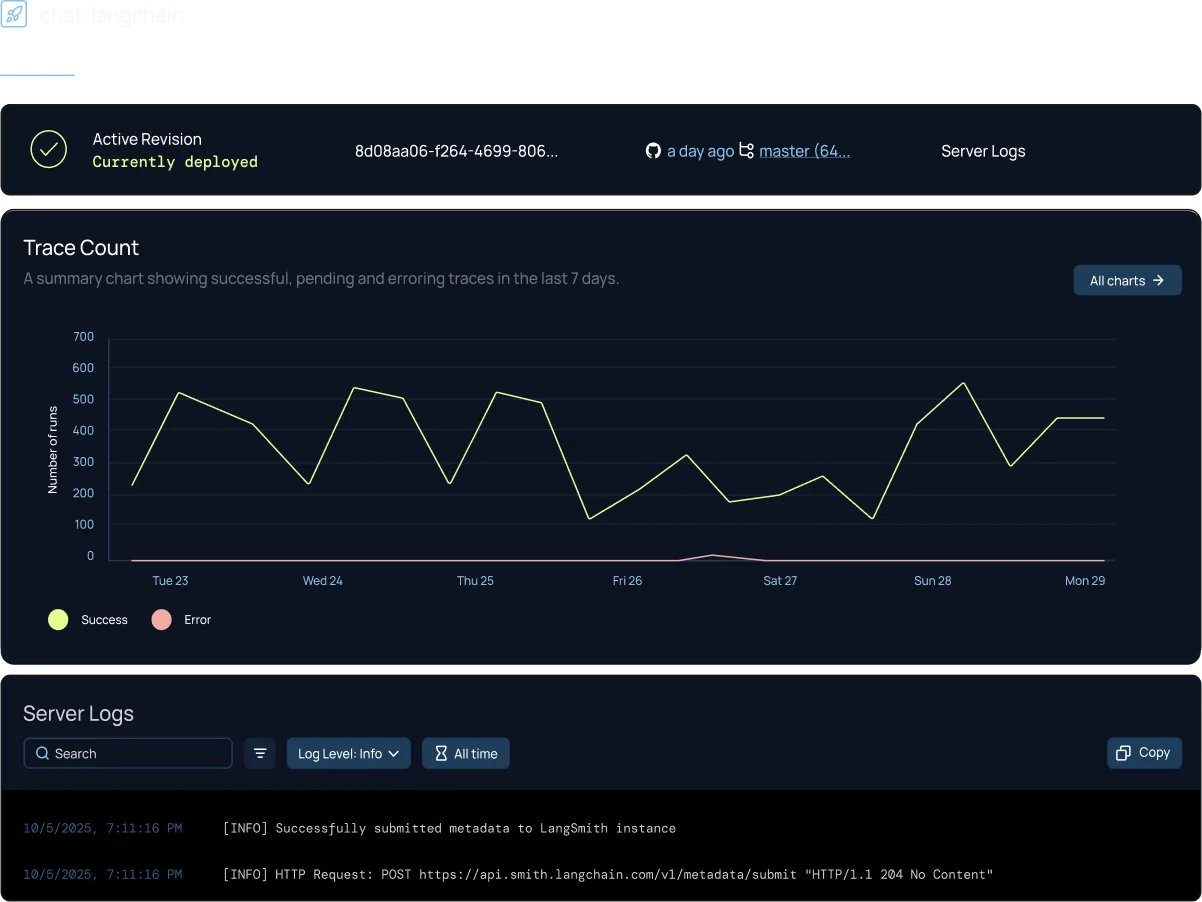
LangSmith is LangChain's observability and evaluation platform. Tracing maps directly onto LangChain and LangGraph abstractions, so debugging a graph-based agent shows the same structure the code has. Beyond tracing it covers online and offline evals, dataset collection, annotation queues, and Prompt Hub. Newer additions include Engine, which clusters traces into issues and proposes fixes on a six-hour schedule, and Sandboxes for running agent-generated code.
Outside the LangChain ecosystem the payoff drops. Integration is SDK-only with no proxy path, and there is no gateway, caching, or rate limiting. Self-hosting is Enterprise-only.
Pricing has two dimensions and recently changed shape. Developer is free for one seat with 5,000 base traces per month. Plus is $39 per seat per month with 10,000 base traces and unlimited seats. Enterprise is custom. Everything past the included allowance is pay-as-you-go on two meters: LangChain Compute Units at $1.50 each and LangChain Storage Units at $1.00 each. Base traces retain for 14 days and extended traces for 180. Per-seat pricing means a ten-person team starts at $390/month before a single trace overage, which is the opposite of the unlimited-seat model Helicone teams were on.
4. Portkey
- Category: AI gateway and control plane
- Replaces: Gateway half, plus observability
- Pricing: $49/month
- Best for: Teams whose main Helicone dependency was routing, caching, and failover
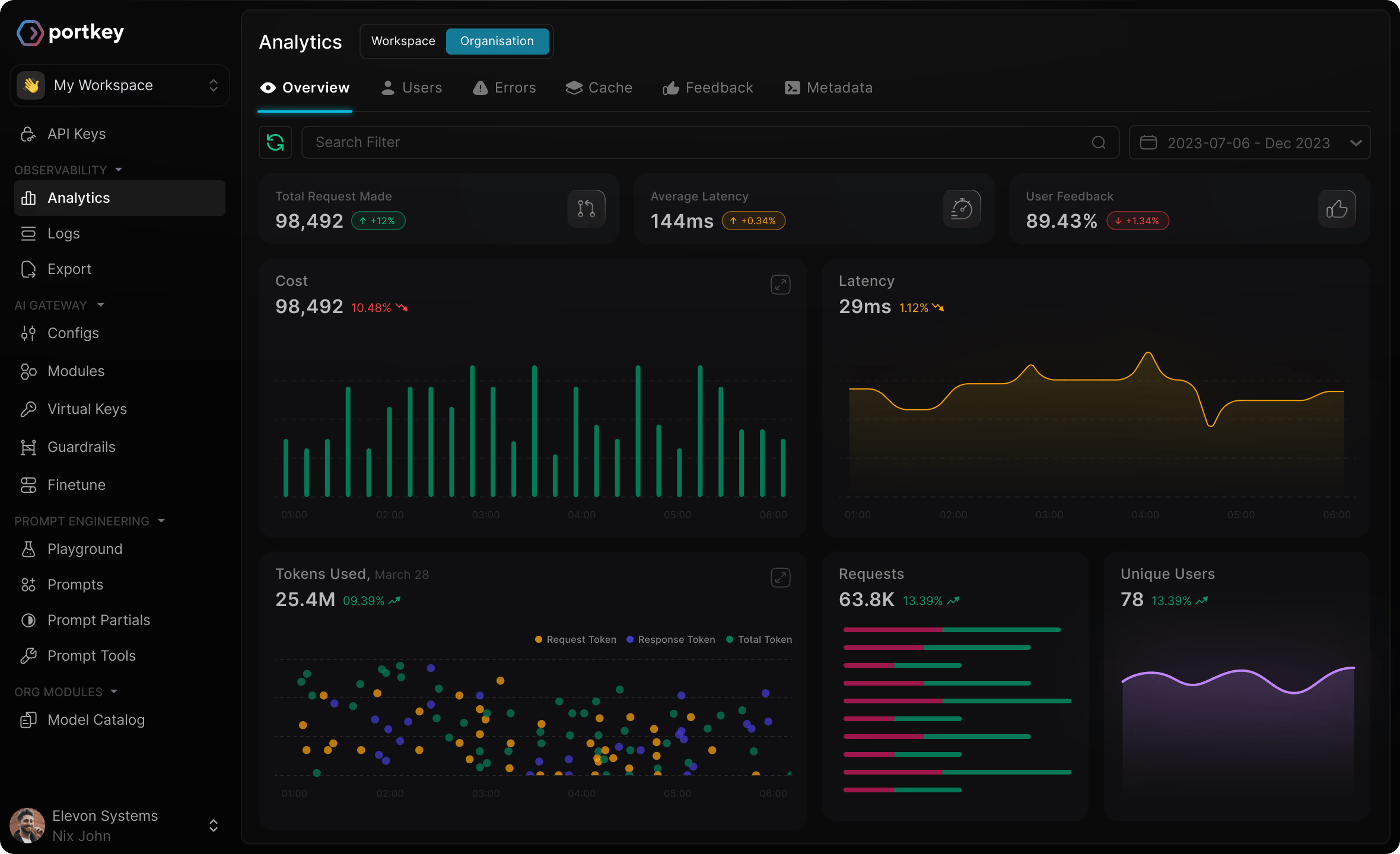
Portkey is architecturally the closest thing to Helicone on this list. It routes across 1,600+ models behind a unified API with automatic fallbacks, retries, load balancing, and semantic caching, plus observability with request logs, cost tracking, and performance analytics. Guardrails, virtual keys, and access controls handle governance. Integration is a two-line change, so the migration shape matches what Helicone teams already know.
In March 2026 Portkey open-sourced the entire gateway, including governance, observability, authentication, and cost controls, along with an MCP Gateway for governing agent tool access. Self-hosting is a real option rather than an enterprise upsell.
With tools like Portkey, evaluation is the thin part. There is no full experiment framework or LLM-as-judge suite, so teams needing systematic quality measurement pair it with something else.
Pricing starts at $49/month, with a free tier covering 10,000 recorded logs and enterprise pricing negotiated on volume, retention, deployment model, and support.
One thing to weigh: Palo Alto Networks acquired Portkey on May 29, 2026, and Portkey now serves as the AI Gateway for Prisma AIRS. For a team migrating specifically because an acquisition froze their last tool, buying into a second recently acquired product is a judgment call rather than an obvious one.
5. Braintrust
- Category: Evaluation and experimentation platform
- Replaces: Evals, with observability alongside
- Pricing: Free tier, then $249/month
- Best for: Teams whose hardest problem is proving a prompt change did not make things worse
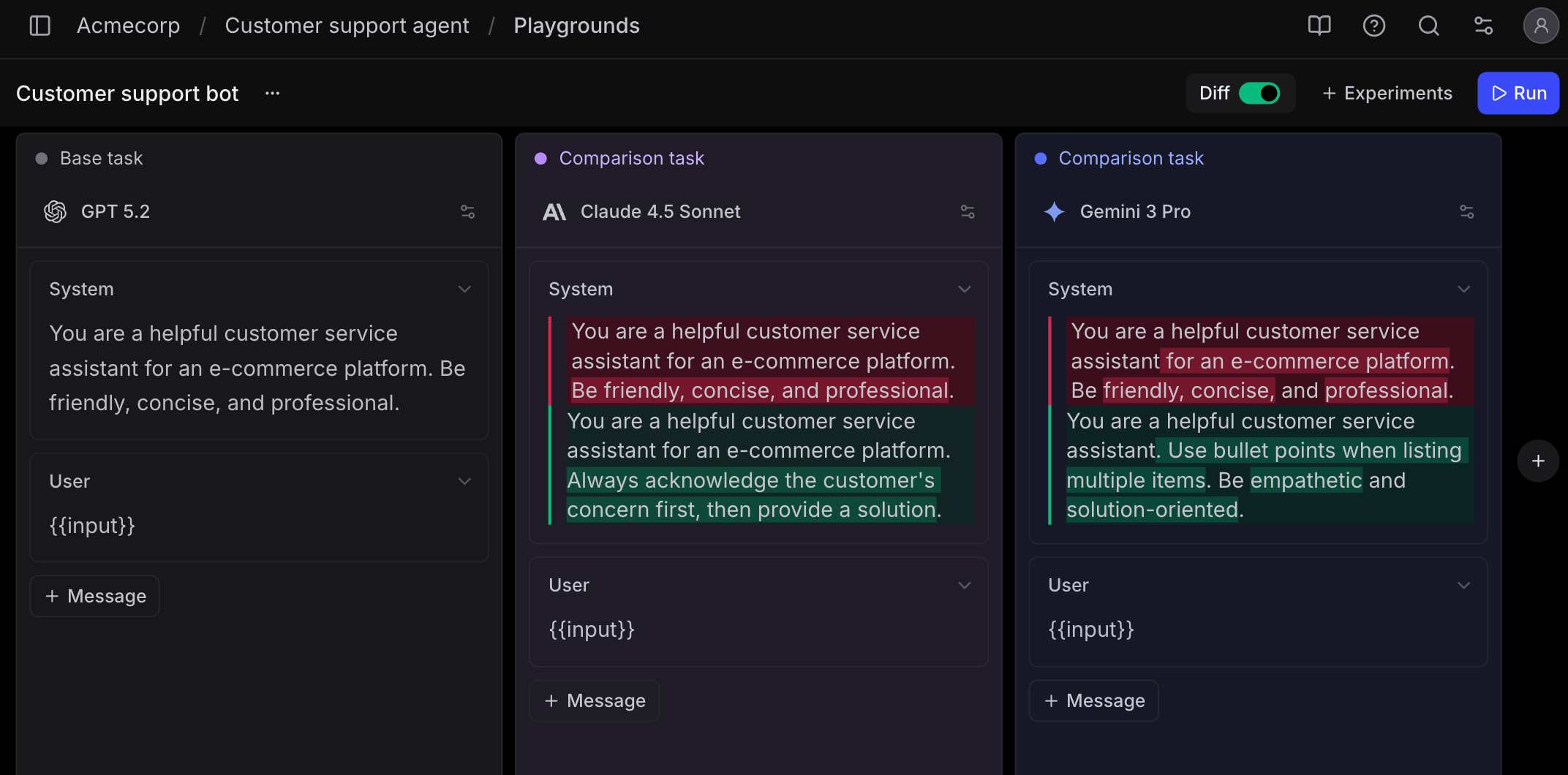
Braintrust is built around evaluation. Production traces convert to test cases in one click, scorers can be written in Python or TypeScript or run as LLM-as-judge, and a GitHub Action runs evals on every pull request with quality gates that block merges on regression. Dataset versioning tracks which cases came from production and which were synthetic. Agent simulation tests multi-step workflows end to end. A Playground lets prompt variations be compared side by side against real cases with live scores.
Tracing is SDK-based and covers the full application flow rather than only LLM calls, so retrieval steps and tool invocations are visible. An optional AI gateway provides caching and unified provider access, but it is separate from observability rather than required for it.
The free tier includes 1 GB of processed data, 10,000 scores, 14-day retention, and unlimited users. Pro is $249/month for 5 GB, 50,000 scores, and 30-day retention. Enterprise is custom. Billing tracks processed data rather than request count, so cost follows how deeply an application is instrumented.
6. Arize
- Category: Agent observability and evaluation platform
- Replaces: Observability half only
- Pricing: Free tier, then $50/month
- Best for: Teams that want OpenTelemetry-native tracing with evaluation in the same platform
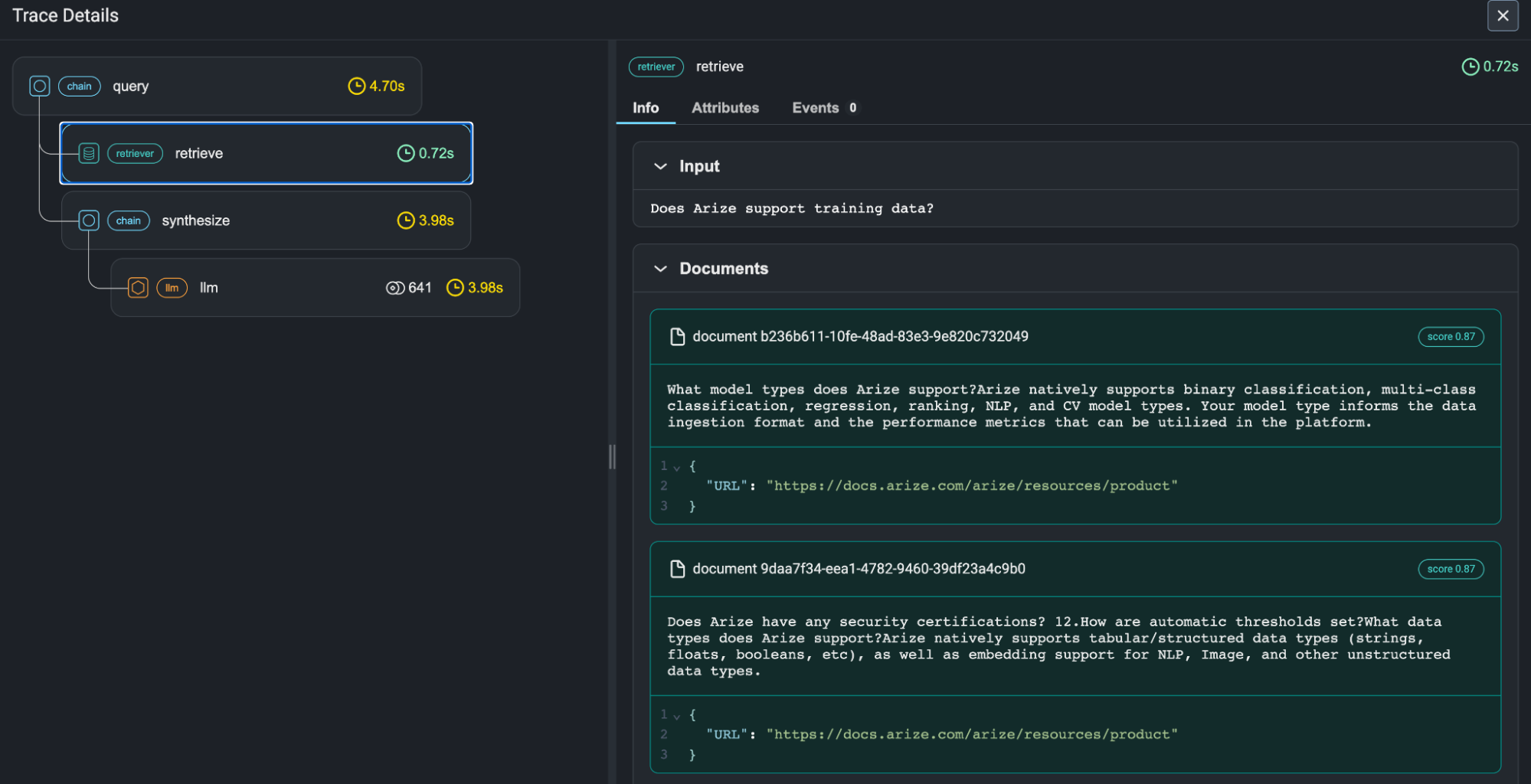
Arize sells Arize AX, a managed platform for tracing, evaluating, and improving agents, alongside Phoenix, its open-source local-first project. Instrumentation runs on OpenInference, the OpenTelemetry semantic conventions Arize created for GenAI, so traces land in a standard format rather than a proprietary one and the same instrumentation covers 40+ models and frameworks.
However, Arize does not offer an LLM gateway, as it focuses solely on observability and evals. Self-hosting AX is Enterprise-only, and Phoenix is the free self-host path but a narrower product. Custom code evaluators, agent-as-a-judge, and HIPAA are Enterprise-gated, and the free tier carries no SOC 2.
AX Free covers 25,000 spans per month, 1 GB of ingestion, and 15-day retention, with unlimited users, evals, and experiments. AX Pro is $50/month for 50,000 spans, 10 GB, and 30-day retention. Enterprise is custom on volume, retention, and deployment, adding SSO, audit logs, and self-hosting. Startup pricing is available on application, and Phoenix is free to run locally. Because billing meters spans and ingestion rather than seats, cost tracks instrumentation depth rather than team size.
7. LiteLLM
- Category: Open-source LLM proxy and SDK
- Replaces: Gateway half only
- Pricing: Open source and free, enterprise is sales-led
- Best for: Teams that want Helicone's proxy behavior with no vendor in the request path
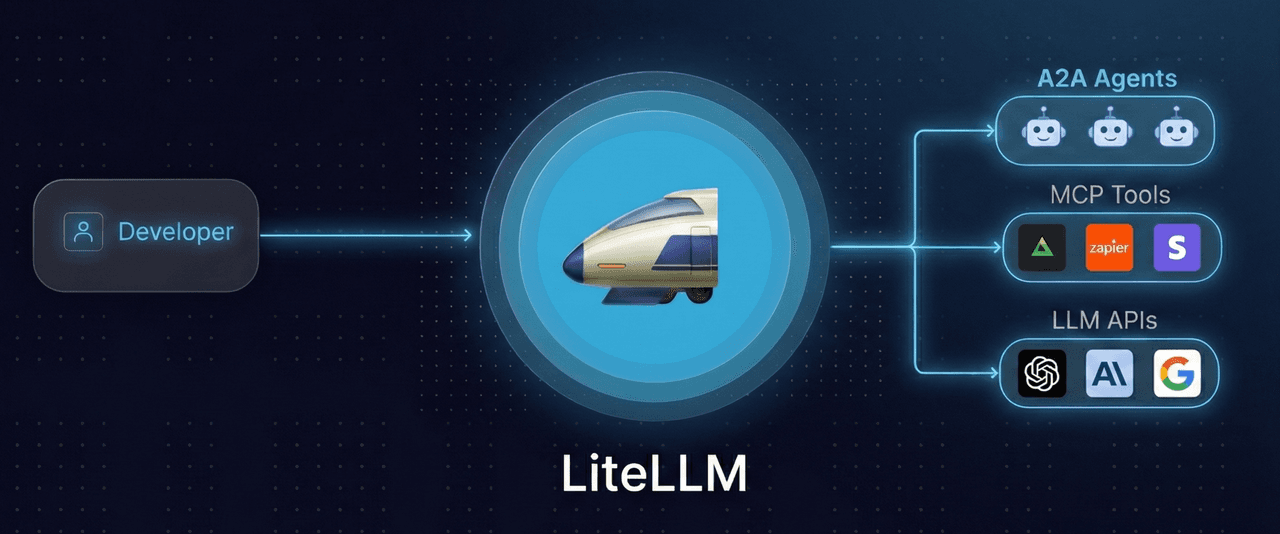
LiteLLM is the closest open-source LLM to what Helicone's gateway did. It normalizes 100+ providers behind the OpenAI format, handles fallbacks, retries, load balancing, caching, budgets, and rate limits, and runs either as a Python SDK or as a self-hosted proxy server. Because it is self-hosted, no third party sits in the production request path, which addresses the structural complaint about proxy-based tooling directly.
Observability within tools like LiteLLM is basic by design. LiteLLM emits logs and callbacks to other platforms, including Langfuse, rather than providing a full tracing UI. There is no evaluation layer, no prompt management to speak of, and no dashboards worth replacing Helicone's with.
The open-source project is free. Enterprise features and support are sales-led with no published pricing. The real cost is operational: running the proxy, scaling it, and keeping it available is now an internal responsibility rather than a vendor's.
8. OpenRouter
- Category: Unified model routing API
- Replaces: Gateway half only
- Pricing: 5.5% fee on credits
- Best for: Teams that want provider access and failover without running infrastructure
OpenRouter is a single OpenAI-compatible endpoint reaching hundreds of models across dozens of providers, with automatic failover between upstream providers and routing based on price, latency, or availability. Credentials consolidate to one key, which removes a category of secrets management work that Helicone teams handled through virtual keys.
OpenRouter's tradeoff is scope. Analytics cover spend and usage rather than trace-level debugging. There is no tracing UI, no evaluation tooling, no prompt management, and no self-hosting. A team using OpenRouter as the gateway needs a separate observability platform, which is the stitched-stack problem Helicone existed to avoid.
Pricing is a 5.5% fee on credits, with model usage billed at provider rates. There is no monthly floor, which makes it cheap at low volume and proportional at high volume.
9. Vercel AI Gateway
- Category: Managed AI gateway
- Replaces: Gateway half only
- Pricing: $5/month gateway credit per account, then pay-as-you-go
- Best for: Teams already deployed on Vercel and building with the AI SDK
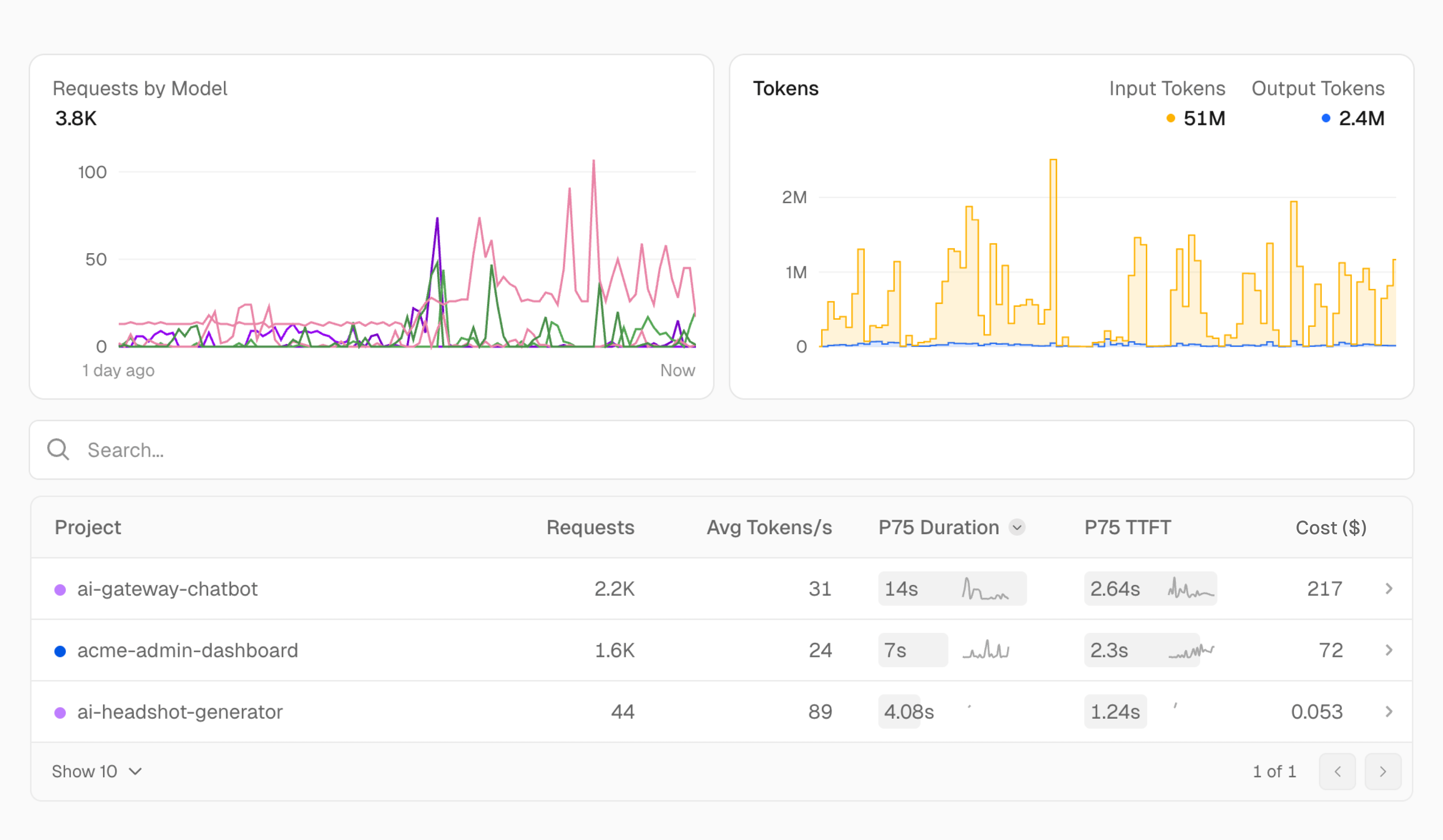
Vercel AI Gateway provides a single endpoint across providers with automatic failover, spend visibility, and caching, integrated tightly with the AI SDK and the rest of the Vercel platform. For teams whose applications already run there, it removes a vendor from the stack rather than adding one, and provider keys can be brought in or billed through Vercel.
Vercel's coverage stops at the gateway. There is no tracing UI, no evaluation framework, no prompt management, and no self-hosting. It also assumes a Vercel-shaped deployment, so the fit narrows quickly outside that ecosystem.
Each account gets $5/month in gateway credit, after which usage is billed pay-as-you-go at provider rates. Platform compute is billed separately, so the gateway line item is only part of the bill.
10. Confident AI
- Category: Evaluation-first observability platform
- Replaces: Evals and observability
- Pricing: From $200/month
- Best for: Teams standardizing quality measurement across several product teams
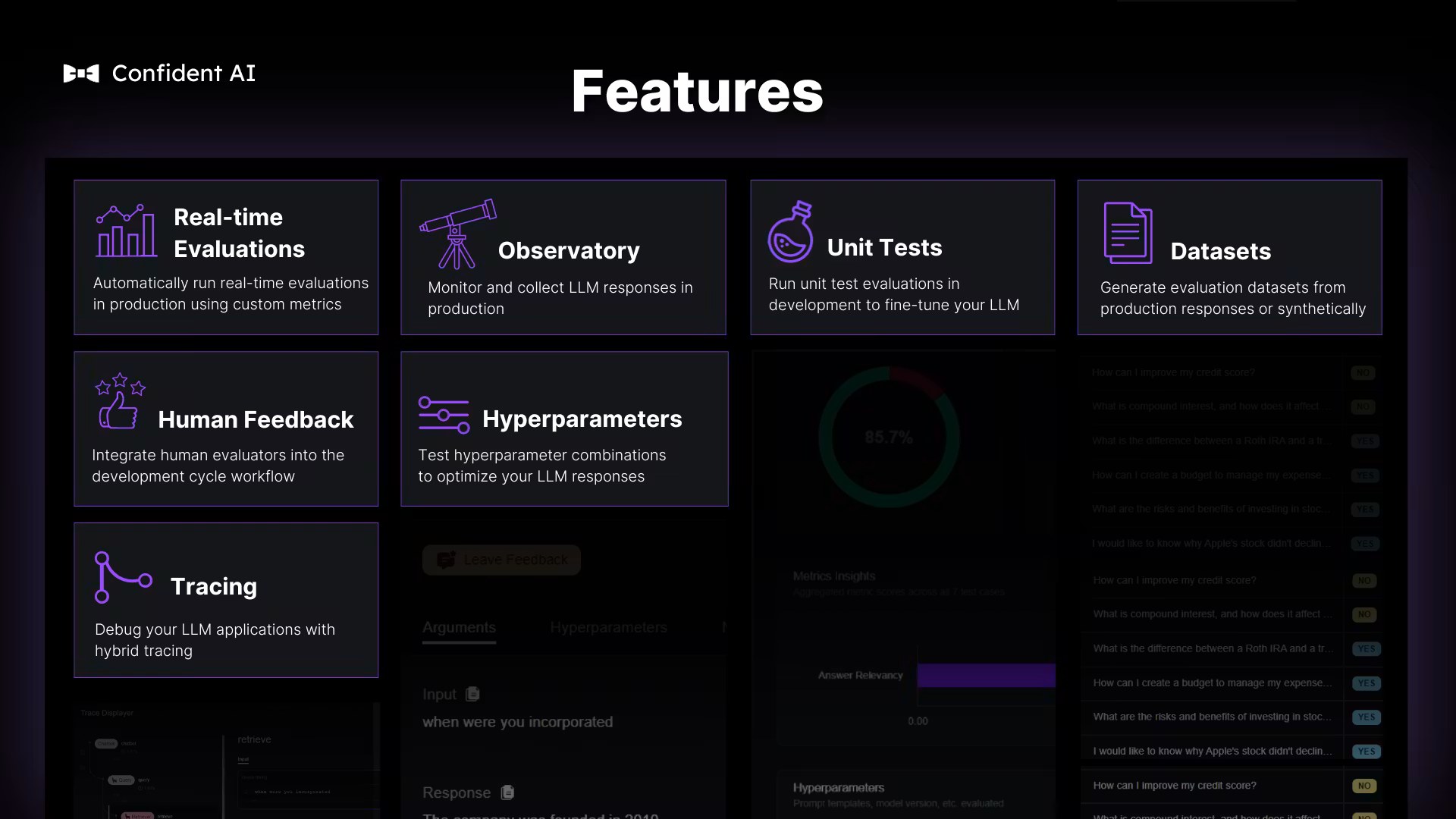
Confident AI is the hosted platform built by the team behind DeepEval, the open-source evaluation framework. The metric library carries 50+ research-backed scorers spanning faithfulness, hallucination, relevance, bias, toxicity, tool selection accuracy, and conversational coherence, and the same metrics run in CI and against live production traces.
Confident AI does not include an LLM gateway, or routing, caching, rate limiting, and failover, so the Helicone proxy still needs replacing separately.
Pricing starts at $200/month for the Starter plan, with Enterprise priced on request. DeepEval itself is Apache 2.0 and free to run locally, which makes it possible to evaluate the metric library before paying for the platform around it.
Frequently asked questions
Is Helicone shutting down?
No. Helicone is in maintenance mode following the Mintlify acquisition, not shutting down. Security patches, bug fixes, and new model support continue shipping, and the hosted service remains live. What stopped is feature development and roadmap work. Self-hosted deployments are unaffected and will keep running regardless of what happens to the hosted product.
Is Helicone still free to use?
Yes. The Hobby plan is still free with 10,000 requests per month, 1 GB of storage, one seat, and 7-day retention. The open-source project is also still available to self-host. Paid plans remain at $79/month for Pro and $799/month for Team.
What is the best open-source Helicone alternative?
It depends which half needs replacing. For the gateway, Respan's open-source gateway is a single binary under MIT or Apache-2.0 that runs on your own infrastructure, currently pre-alpha, and LiteLLM is another open-source proxy that removes any third party from the request path. For observability, Langfuse is MIT-licensed with free self-hosting, and Phoenix, Arize's open-source project, is local-first and OpenTelemetry-native. Respan's gateway can also send its traces to Respan's hosted platform, which isn't open source but keeps routing and observability on one record. Replacing both halves with open-source components means running two systems and wiring them together.
Which Helicone alternatives replace the AI gateway?
Respan (hosted, or self-hosted through its open-source gateway), Portkey, LiteLLM, OpenRouter, and Vercel AI Gateway all provide routing across providers with failover. Of those, Respan and Portkey also provide observability in the same platform. Langfuse, LangSmith, Braintrust, Arize, and Confident AI do not include a gateway, so teams choosing one of them need a separate routing layer.
How hard is it to migrate off Helicone?
That depends on whether Helicone was used as a proxy or through async logging. Proxy users can move to another gateway by changing an endpoint and an API key, which is the same shape as the original integration. Teams moving to an SDK-based observability platform have more work, since instrumentation has to be added to application code rather than intercepted at the network layer. Historical logs are the other consideration: retention on Helicone's paid tiers runs one to three months, so exporting anything worth keeping should happen before a plan lapses.
How much does Helicone cost?
Helicone has four plans. Hobby is free with 10,000 requests per month and 7-day retention. Pro is $79/month with unlimited seats, alerts, HQL, and 1-month retention. Team is $799/month and adds five organizations, SOC 2 and HIPAA compliance, a dedicated Slack channel, and 3-month retention. Enterprise is custom with SAML SSO, on-prem deployment, and unlimited retention. Every tier includes the same 10,000 requests and 1 GB of storage before usage-based charges begin.