Google ships two model families that share a research lineage and very little else about how you use them. Gemma 4 arrived in April 2026 as the first Gemma release under Apache 2.0, Gemini 4 Argon reached the Gemini API in October as Google's new flagship, and Google announced Gemini 4 Carbon as its next frontier model a few weeks later.
The choice between them decides where your model runs, who sees your prompts, what you pay per token, and whether you can tune the weights at all. Those are architecture decisions, and they get expensive to reverse once an agent is in production.
For teams building agents, the more useful question is which steps belong on which model. Gemma handles cheap, high-volume steps well, Gemini handles the hard ones, and the real work is proving where the line sits for your traffic.
Below is how Gemma vs Gemini compares in 2026, and which Google model to build on.
TL;DR: Gemma vs Gemini
Gemma is Google's family of open-weight models, which you download and run on your own hardware or any host, under Apache 2.0 as of Gemma 4. Gemini is Google's proprietary family, accessed through an API rather than as downloadable weights, with larger context windows and a deeper set of built-in tools.
Choose Gemma for cost, data control, and fine-tuning, choose Gemini for frontier capability and 1M-token context, and route between both when an agent has steps of each kind.
| Gemma | Gemini | |
|---|---|---|
| Model type | Open weights | Proprietary, API access |
| License | Apache 2.0 (Gemma 4) | Google API terms |
| Where it runs | Your hardware or any host | Google's cloud |
| Context window | 128K to 256K tokens | Up to 1M tokens |
| Price per 1M tokens | Free weights, pay to serve | $0.25 to $2 input today |
| Fine-tuning | LoRA, QLoRA, full | Preview, older models only |
| Best for | High-volume, private workloads | Hard reasoning, long context |
Running both doesn't have to mean two integrations, since Respan routes Gemma and Gemini through one API and scores each on your own production data before you move traffic between them.
Gemma Models in 2026
Google's open-weight line is on its fourth generation, and the current release spans phones to single GPUs. Gemma 4 launched on April 2, 2026, in five sizes:
- E2B and E4B - Effective 2B and 4B parameter models built for phones and laptops, with a 128K context window and text, image, video, and audio input.
- 12B - A unified model with a 256K context window that keeps audio input alongside text, image, and video.
- 26B A4B - A mixture-of-experts model with 26B total parameters and 4B active per token, a 256K context window, and text, image, and video input.
- 31B - The dense flagship of the family, with the same context window and input types as the 26B A4B.
Every size supports function calling out of the box, and the training data for all of them stops at January 2025. The 26B A4B lands within a few points of the 31B on Google's knowledge and coding benchmarks while activating only 4B parameters per token, which is the tradeoff behind the Gemma 4 26B A4B vs Gemma 4 31B comparison.
Gemini Models in 2026
Gemini covers more tiers than Gemma, and the lineup turns over faster. Through the Gemini API, the models teams build on today are:
- Gemini 4 Argon - Google's flagship, available in the API since October 13, 2026, with a 1M-token context window and a March 2026 knowledge cutoff.
- Gemini 3.8 Flash - Released September 2, 2026, aimed at software engineering and agentic work, with 1M input tokens.
- Gemini 3.6 Flash, 3.5 Flash-Lite, and 3.1 Flash-Lite - Lower-cost options priced for high-volume traffic.
Google announced Gemini 4 Carbon on October 28, but it isn't something you can build on yet, since access starts with a group of cyber defenders and Google hasn't dated the developer rollout. When it does open up, Carbon is set to launch at Argon's introductory $2 input and $10 output per 1M tokens before moving to $4 and $20.
Model-by-model detail, including which tier fits which task, is in the breakdown of the best Gemini model for 2026. For the Gemma vs Gemini decision, the relevant split is Argon for the hardest work and the Flash tiers for steps that need to be fast and cheap.
Gemma vs Gemini: Side-by-Side Comparison
Gemma and Gemini win in different places, and the split follows one line. Gemini has the higher capability ceiling, while Gemma gives you control over cost, data, and the weights themselves.
Performance and Benchmarks
Google benchmarks the two families on different tests, so a clean head-to-head score doesn't exist. The Gemma 4 model card reports academic and coding benchmarks, while the Gemini 4 Argon model card leads with science, math, and agentic evaluations.
Gemma: Google reports the 31B at 85.2% on MMLU Pro, 84.3% on GPQA Diamond, and 80.0% on LiveCodeBench v6, with the 26B A4B a few points behind on each.
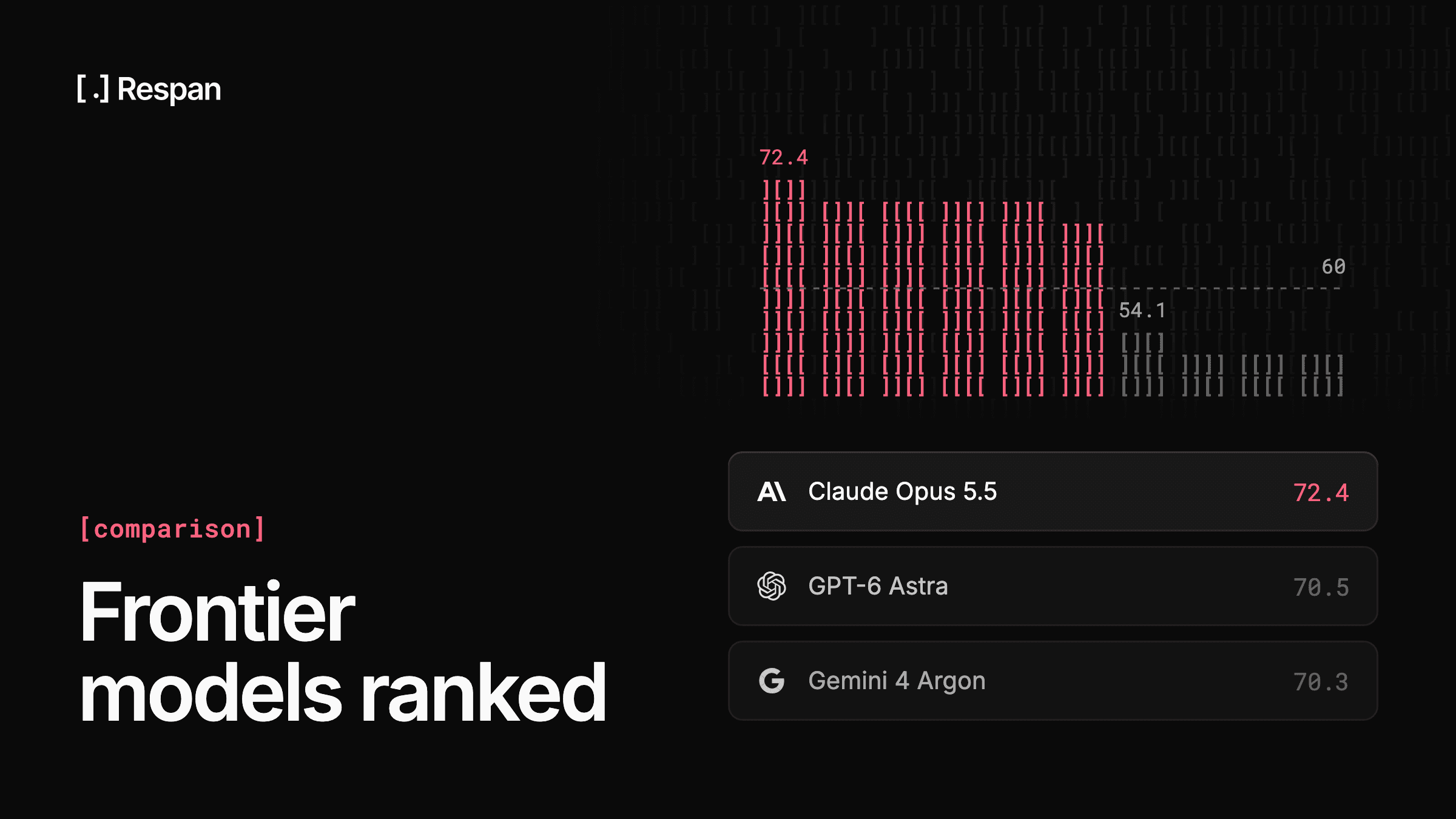
Gemini: Argon's model card puts it at 88.8% on LABBench 2 and 57.6% on Terminal-Bench Science, and Google positions it as a frontier model by benchmarking Gemini 4 Argon against GPT-6 Astra and Claude Opus 5.5 rather than against Gemma. Carbon raises that ceiling further, scoring 59 on version 5.0 of the Artificial Analysis Intelligence Index against Argon's 50, though it isn't in the API yet.
Winner: Gemini, on capability tier. Since no published benchmark covers both, the gap on your own tasks is worth measuring rather than assuming, and it will vary by step.
Pricing and Cost
Gemma's weights cost nothing, so its price is whatever it costs to serve them. Gemini bills per token, and two of its tiers are scheduled to double in price over the next few months.
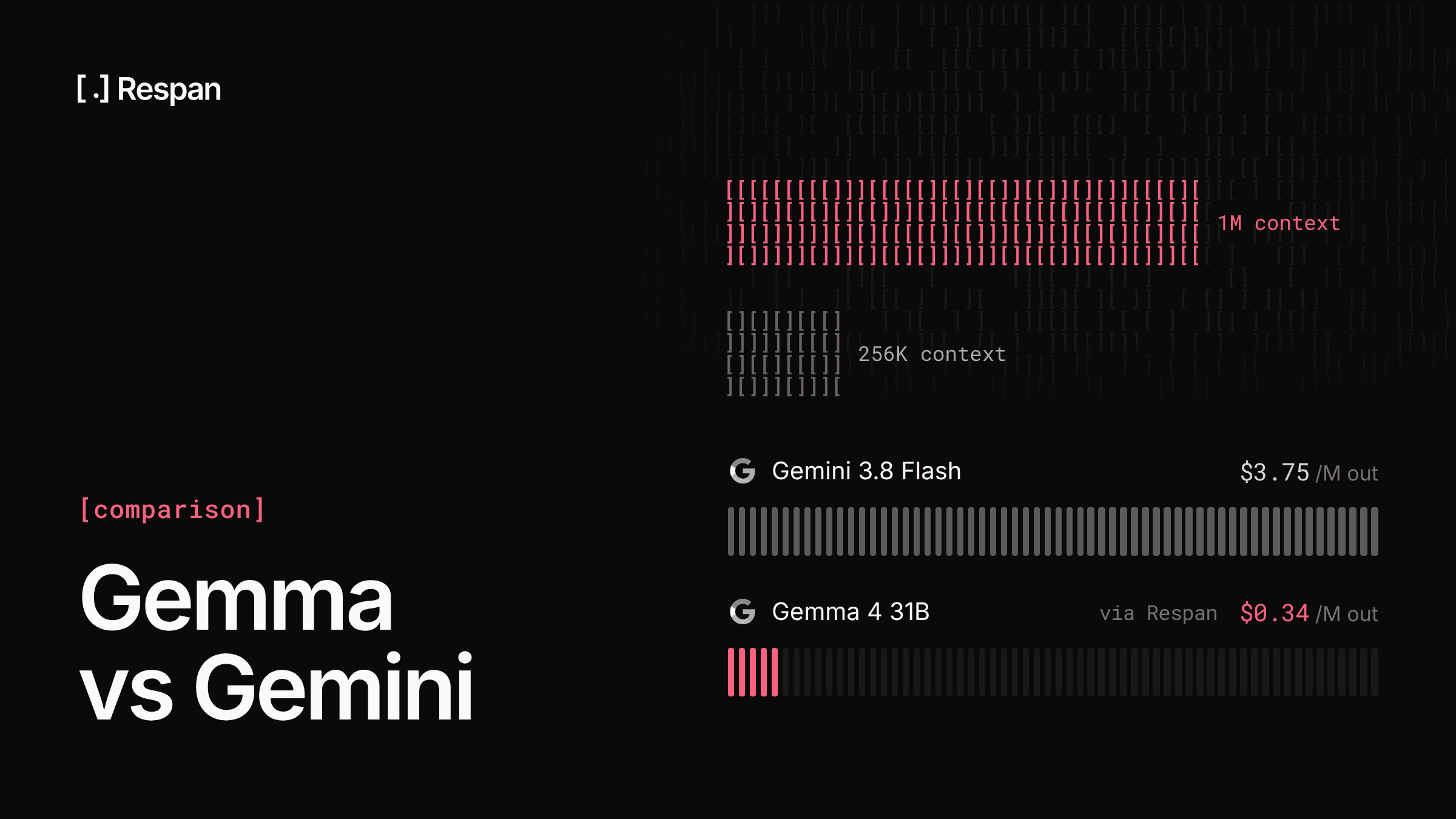
Gemma: Google serves Gemma 4 31B and 26B A4B through the Gemini API on the free tier only, with no paid tier, according to the Gemini API pricing page. For production traffic, Gemma 4 31B through Respan starts at $0.09 input and $0.34 output per 1M tokens, and running it yourself trades the per-token bill for GPU cost.
Gemini: On the paid tier, Argon costs $2 input and $10 output per 1M tokens through November 30, 2026, then $4 and $20. Gemini 3.8 Flash costs $0.75 and $3.75 through December 31, then $1.50 and $7.50, while Gemini 3.1 Flash-Lite sits at $0.25 and $1.50.
Winner: Gemma. Even against Gemini 3.1 Flash-Lite, hosted Gemma 4 31B runs at roughly a third of the input price and under a quarter of the output price.
Context Window and Multimodality
Gemini's context window is about four times Gemma's 256K, and that gap shapes how you build long-running agents.
Gemma: E2B and E4B take 128K tokens, and the 12B, 26B A4B, and 31B take 256K. Text, image, and video input work across the family, while audio input is limited to E2B, E4B, and 12B.
Gemini: Argon and 3.8 Flash both work with a 1M-token context window, and Argon accepts text, image, video, audio, and PDF input with up to 65,536 output tokens by default.
Winner: Gemini. A 1M-token window holds a large codebase or a long agent history that would need chunking or summarization to fit into Gemma.
Tool Calling and Agent Workflows
Both families support function calling, so the difference is in what surrounds it.
Gemma: Function calling is built into every Gemma 4 size, and the same model card puts the 31B at 76.9% on Tau2, an agentic tool-use benchmark. Served through the Gemini API, Gemma supports system instructions and function calling, though Google lists Search grounding as unavailable and thinking is an on or off switch.
Gemini: Argon pairs function calling with structured output, code execution, Google Search grounding, URL context, and file search, plus computer use in preview and three thinking levels. Those built-in tools mean less agent infrastructure for you to build and maintain.
Winner: Gemini, for agents that lean on hosted tools. Gemma is a reasonable fit for agents whose tools are your own functions.
Deployment and Hardware
Gemma runs anywhere you can load the weights, which is a large part of why teams consider it.
Gemma: Google's memory requirements put the 31B at about 17.5 GB at 4-bit precision and 69.9 GB at 16-bit, for weights alone before the KV cache, while the E2B fits in under 3 GB at 4-bit. Gemma 4 runs through Ollama, LM Studio, llama.cpp, MLX, and Hugging Face Transformers, the same tooling used for other open source LLMs.
Gemini: Gemini is served from Google's infrastructure through the Gemini API and Google Cloud, so there's no hardware for you to manage, but there are no downloadable weights either.
Winner: Gemma. Offline and on-device deployments need open weights, and Gemma is the Google family that ships them.
Licensing and Data Control
Gemma 4 changed the licensing picture for Google's open models, and the data question follows from where each model runs.
Gemma: Gemma 4 is the first Gemma release under Apache 2.0, while earlier versions remain under the custom Gemma Terms of Use. Run it on your own hardware and prompts never leave your infrastructure. Through Google's free-tier API the trade is different, since Google uses free-tier content to improve its products.
Gemini: Gemini is governed by Google's API terms. On the free tier, Google uses your content to improve its products, and on the paid tier it doesn't. Argon has no free tier at all.
Winner: Gemma, because it's the only option where data control doesn't depend on which billing tier you're on.
Fine-Tuning and Customization
Tuning is the clearest split in the comparison.
Gemma: Google documents LoRA, QLoRA, and full fine-tuning for Gemma through Hugging Face Transformers, Keras, and Unsloth, which makes Gemma a practical base if fine-tuning is part of how you optimize AI models for a narrow task.
Gemini: According to Google's release notes, supervised fine-tuning is in preview for Gemini 3.1 Flash-Lite and 3.5 Flash in two regions, us-central1 and europe-west4, with reinforcement learning fine-tuning in preview for 3.5 Flash. The notes list no tuning for Argon or 3.8 Flash, and tuned models are served from Google's endpoints.
Winner: Gemma.
Which to Use: Gemma or Gemini?
The right pick usually depends on the step an agent is running, so it helps to sort the work before choosing a model:
- When to use Gemma - Classification, extraction, routing decisions, and short summaries at high volume, plus anything that has to stay on your hardware or needs a fine-tuned model.
- When to use Gemini - Long-context work over large documents or codebases, multi-step reasoning, and agent steps that lean on Search grounding or code execution.
- When to use both - Agents that mix routine and hard steps. Sending the routine steps to Gemma and the hard ones to Gemini can cut the bill on high-volume traffic without lowering the ceiling where it matters.
The catch with using both is proving that Gemma holds quality on the steps you move to it, since no published benchmark answers that for your prompts.
How to Route Gemma and Gemini Through One API
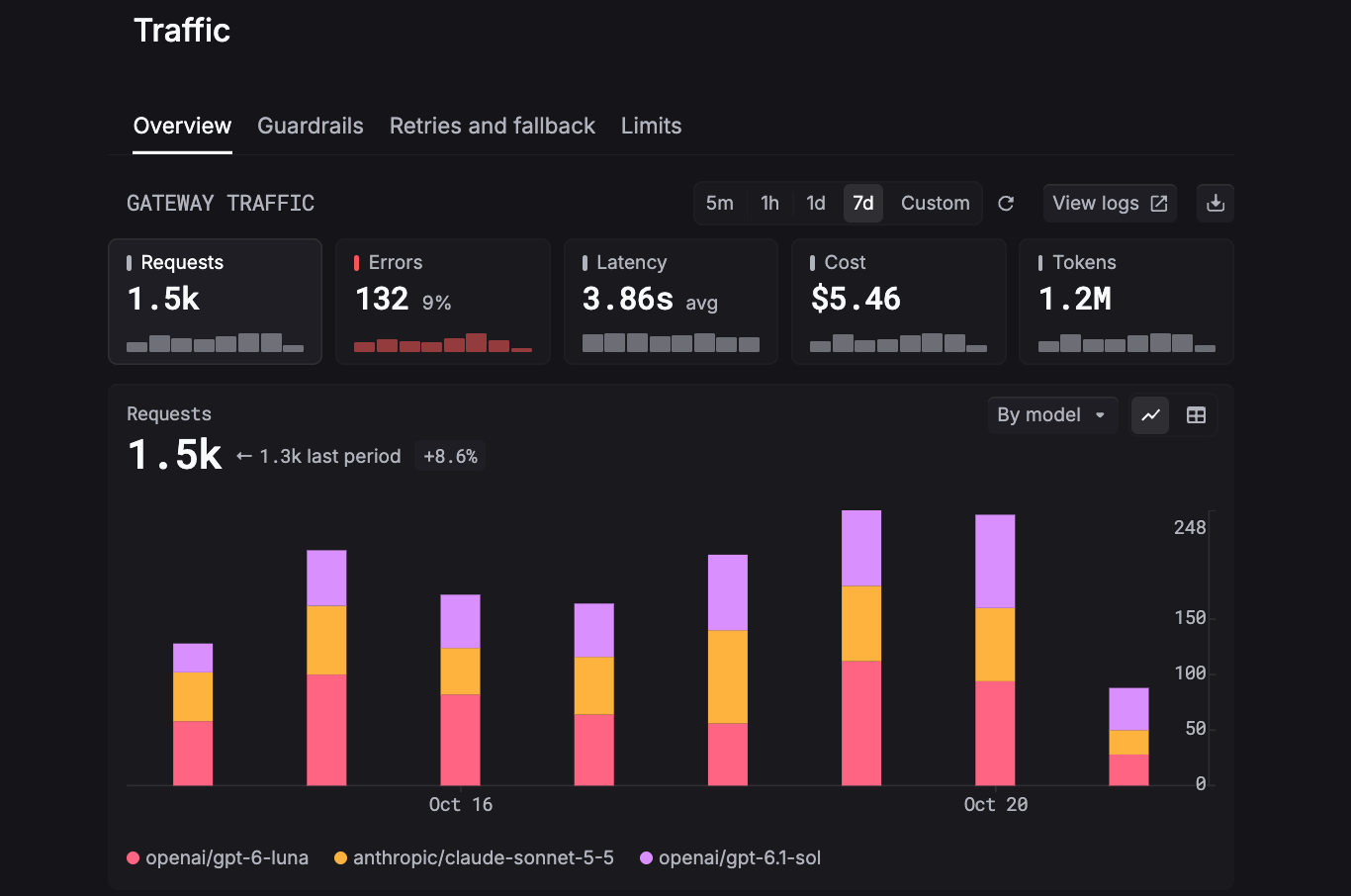
Running Gemma and Gemini side by side usually means two integrations, two sets of logs, and no shared view of what each model costs or how its output scores. Respan is the AI router with built-in observability and automated evals, so you can route, observe, and evaluate every LLM call to either family in one place.
Gemma and Gemini both sit in Respan's catalog of 1,000+ models behind the same AI gateway, so moving a step from Gemini to Gemma is a one-word model change instead of a new integration.
- One API for both families - Call Gemma 4 and current Gemini models through the same OpenAI-compatible endpoint.
- Your own Gemma servers too - Add a self-hosted Gemma endpoint as a custom provider, and its calls get the same logs, cost, and latency views as hosted Gemini traffic.
- Fallback across families - Define a fallback chain once, such as Gemini first and Gemma next, and when a provider errors or rate-limits, traffic moves to the next model automatically.
- Cost per request - See spend by model, by request, and by end customer, and set hard limits so a Gemini-heavy step can't run up the bill.
- Evals before you shift traffic - Build a dataset from real production requests, run Gemma and Gemini through the same automated evals, and compare scores before moving a step.
- Online evals on live traffic - Score production output continuously, so a quality drop after a switch shows up in a score before it shows up in user complaints.
- Full traces - Every LLM call, tool call, and agent turn lands in one trace with latency and cost, so a bad answer leads straight to the step and model that produced it.
Instead of reading logs after the fact, use Respan to run observability in production, know when production shifts, and act before it spreads.
Frequently Asked Questions
What Is the Difference Between Gemma and Gemini?
Gemma is Google's open-weight model family, which you can download, run on your own hardware, and fine-tune, under Apache 2.0 as of Gemma 4. Gemini is Google's proprietary family, served through Google's API with context windows up to 1M tokens and more built-in tools. Respan lets you route both through one API and evaluate them on the same production data.
Does Google Gemini Use Gemma?
No. Google describes Gemma as built from the same research and technology used to create the Gemini models, so the lineage runs from Gemini to Gemma. Gemma is a separate set of smaller, openly released models, and Gemini doesn't run on top of it.
What Is Google Gemma?
Gemma is Google's family of lightweight open-weight models. The current generation, Gemma 4, comes in five sizes from E2B to 31B, supports text, image, and video input across the family, and is licensed under Apache 2.0.
Is Gemma Free to Use?
The Gemma 4 weights are free under Apache 2.0, including for commercial use, but serving them isn't. Google's Gemini API offers Gemma only on its free tier, where Google uses your content to improve its products. For production you pay either for your own GPUs or for a hosted rate, and Respan routes Gemma 4 31B starting at $0.09 input per 1M tokens, with a free plan for testing it against Gemini first.