An agent fails in production. The response came back with a 200 and normal latency. The activity log shows the model, the token count, and the cost, which is everything OpenRouter records and none of what you need. It cannot tell you which of the six tool calls returned garbage, whether a fallback fired, or whether the output was worse than last week's.
That gap is why most teams start evaluating OpenRouter alternatives, and the 5.5% fee is rarely the trigger. OpenRouter is very good at the job it was built for. One key, one balance, 500+ models behind an OpenAI-compatible endpoint, and a migration that costs you a base URL change. For getting a prototype in front of users, almost nothing beats it.
The problem arrives later, in three shapes. Requests transit a third party, which a compliance review will eventually ask about. Routing decisions leave no trace behind them, which makes debugging a multi-step agent guesswork. And the credit system has edges that only show up at scale, including a platform fee with a floor, an expiry window on unused balance, and a refund policy measured in hours.
This list covers 12 OpenRouter alternatives that hold up in production: what each one routes to, where it runs, what it hands back after a request resolves, and what it costs.
What Is OpenRouter?
OpenRouter is a hosted LLM gateway that puts models from many providers behind a single OpenAI-compatible API and a single prepaid balance. You send a request naming a model, OpenRouter picks a provider for it, and the cost is deducted from your credits. Any existing OpenAI SDK code works against it with a changed base URL and key.
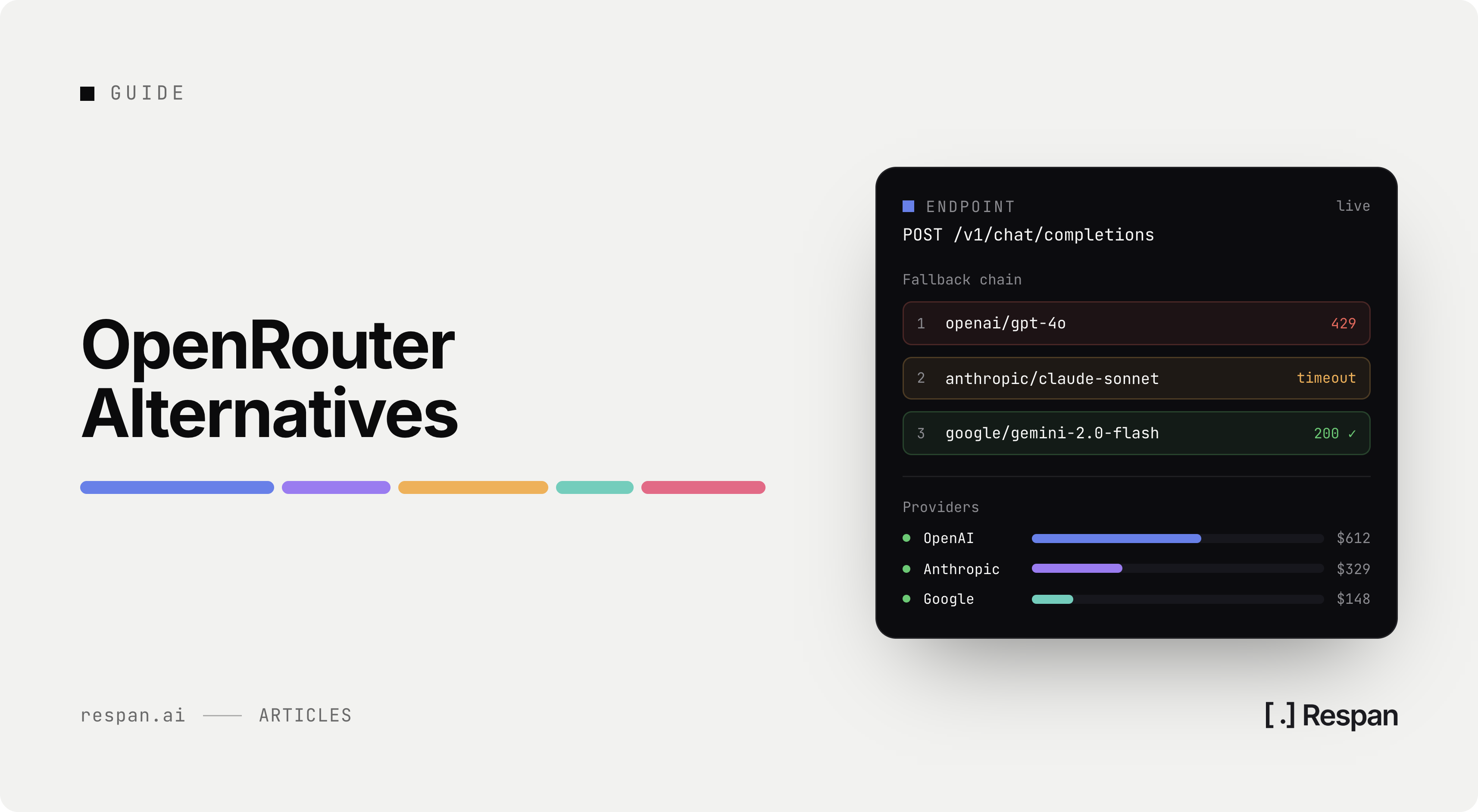
It does not host models. It sits between your application and the inference providers, normalizing request formats, handling provider selection, and falling back to the next provider automatically when one returns an error. Model variants change routing behavior: :free for zero-cost variants, :nitro to sort providers by throughput, :floor to sort by price, :exacto for tool-calling reliability.
Prompts and completions are not logged by default, even on errors. Opting into logging earns a 1% discount on usage. That default is better than most of the industry, though the requests still transit OpenRouter's infrastructure either way.
OpenRouter Pricing in 2026
OpenRouter does not mark up inference. You pay the provider's list rate, and the business runs on a platform fee at the point you buy credits.
Platform fee - 5.5% on credit purchases with an $0.80 minimum, or a flat 5% on crypto payments.
Credit purchases - Minimum $5 and maximum $25,000 per transaction, with auto-recharge available below a threshold you set.
Credit expiry - OpenRouter reserves the right to expire unused credits 365 days after purchase.
Refunds - Available within 24 hours of the transaction. After that, unused credits are non-refundable, and the platform fees never are.
BYOK - Pay-as-you-go includes $25,000 per month of list-price inference with no fee, then 5% of what the same call would have cost on OpenRouter. Enterprise raises the allowance to $200,000.
Enterprise - Negotiated fee discounts, SSO and SAML, managed policy enforcement, contractual SLAs, invoicing, and optional dedicated rate limits.
The $0.80 floor is the part that surprises people. On a $5 top-up it is a 16% effective fee, so small frequent purchases cost several times the headline rate. The BYOK structure changed too: the allowance is now measured in dollars of list-price inference rather than request count, which most comparison articles still get wrong.
OpenRouter Acquired by Stripe
Bloomberg reported on August 16, 2026 that Stripe has agreed to acquire OpenRouter for more than $7 billion, after the Wall Street Journal reported talks a month earlier. Neither company has confirmed it, and Stripe told TechCrunch it does not comment on speculation. OpenRouter raised a $113 million Series B in May 2026 at a reported $1.3 billion valuation, so the reported price is more than five times that figure.
Pricing, rate limits, and the model catalog are unchanged for now, and a deal of this size takes months to close. What it changes is the multi-year question. A payments company owning the routing layer points the roadmap somewhere different than an independent aggregator, and OpenRouter's CEO has described the company as Stripe for AI, which reads differently now than it did in May. Teams evaluating gateways this quarter are weighing that alongside the fee structure.
How Many Models Does OpenRouter Offer?
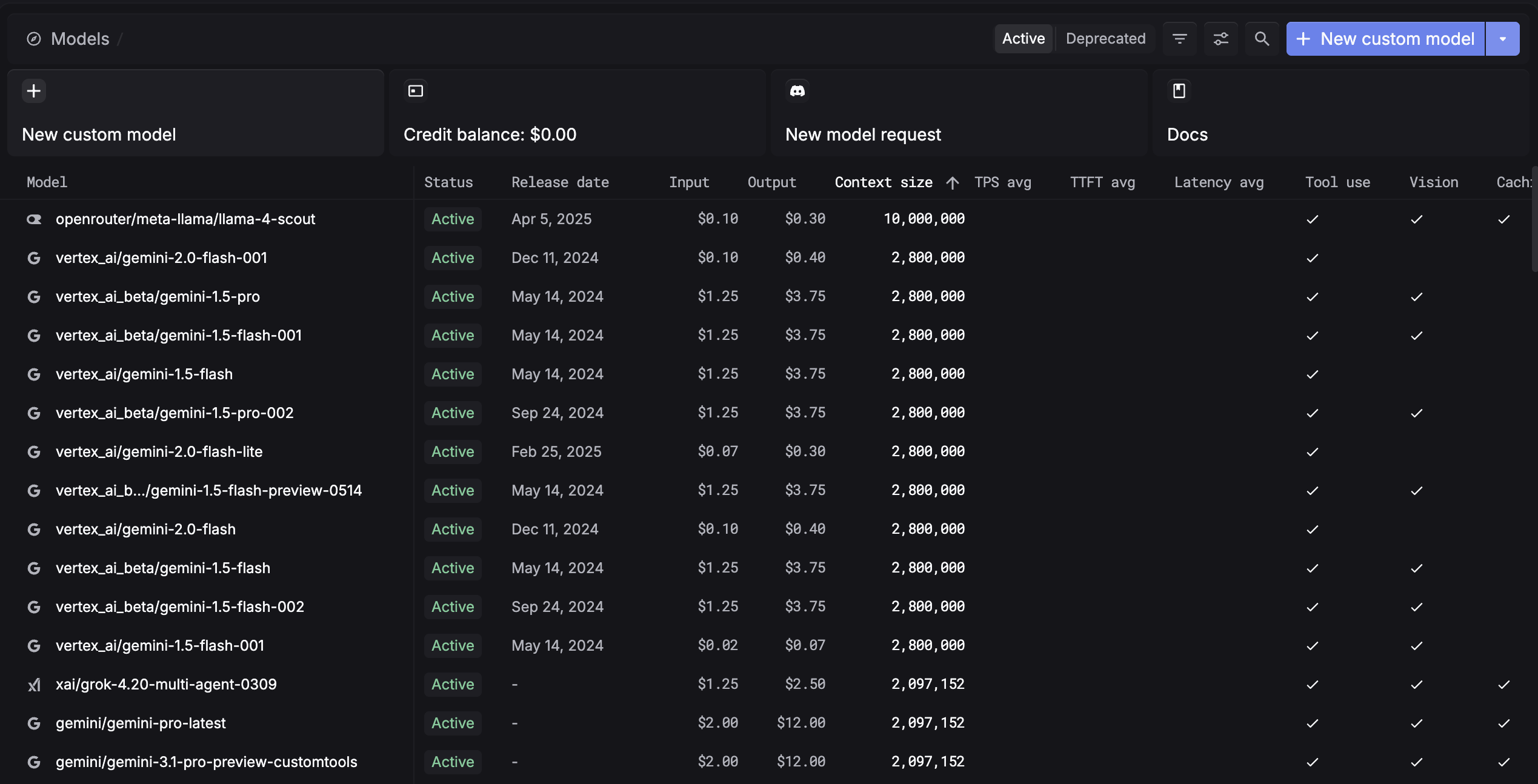
OpenRouter's pricing page lists 500+ models across 80+ providers on pay-as-you-go and Enterprise. The free tier is much narrower at 25+ free models from 4 providers.
Catalog size is the easiest thing to compare and close to the least useful. Most gateways below reach hundreds of models through an OpenAI-compatible endpoint, and the ones that do not are bring-your-own-provider by design, which makes the count meaningless rather than low. What separates these tools is where they run and what they record.
Why Teams Look for OpenRouter Alternatives
Almost nobody leaves OpenRouter because a model was missing. Here are five common reasons why teams look into OpenRouter alternatives:
The third-party hop - Every request goes through OpenRouter's infrastructure before it reaches a provider. There is no self-hosted build and no VPC deployment, so a data residency requirement or an internal policy that model traffic stays inside your network has no configuration that satisfies it.
No trace behind the routing decision - Activity logs record the model, tokens, and cost per request. An agent that chains retrieval, three tool calls, and a summarization step produces one line per model call and no way to see which step went wrong or whether the answer degraded.
Free tier ceilings - Free models are capped at 50 requests per day, rising to 1,000 per day permanently once you have purchased $10 in credits at any point. Useful for prototyping, not for anything with users.
Cost structure at volume - The fee lands on top-ups rather than usage, so it is invisible in per-request math and shows up in accounting. Spend attribution across a single shared balance is difficult without instrumenting it yourself.
The pattern underneath all five is the same. OpenRouter optimizes for breadth and speed of adoption, and the teams that outgrow it are the ones that need control over where traffic runs and evidence of what happened inside it.
Top 12 OpenRouter Alternatives for LLM Apps
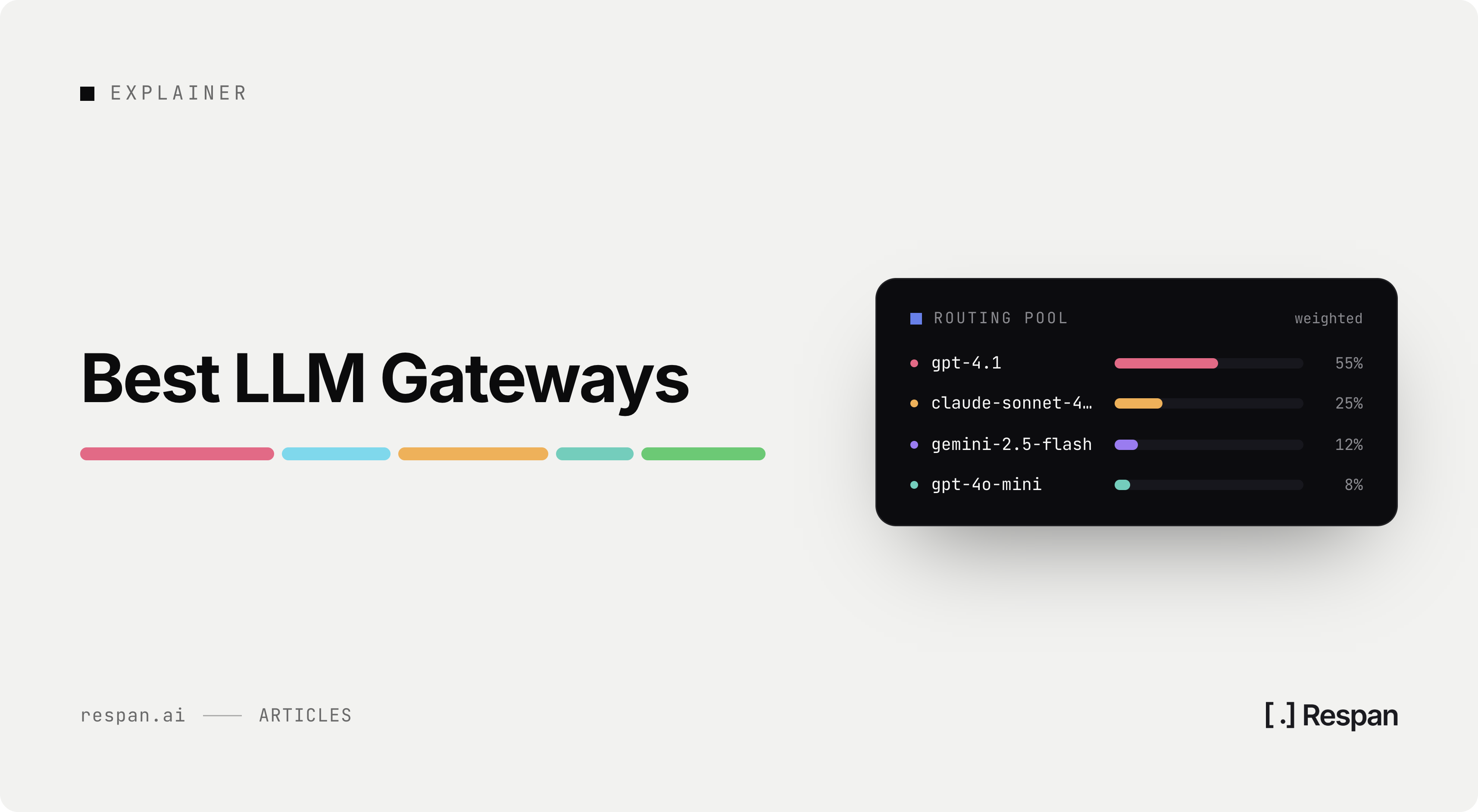
The list runs from platforms that replace what OpenRouter does and add a measurement layer, through self-hosted gateways, to API-management platforms that govern model traffic alongside everything else. Routing logic varies more than the catalogs do, and the best LLM routers differ on how they pick a model in the first place.
Leaving a hosted aggregator usually means assembling what it replaced: a router, somewhere to send logs, an eval harness, and a place to keep prompts. Respan is one platform that owns all four, so a metric always ties back to the run behind it. With Respan, you can route, observe, and evaluate every LLM call, all in one platform.
Point your client at a single OpenAI-compatible endpoint and every request is logged automatically, whether it goes through the unified router or a provider's native passthrough URL. Because the routing layer and the measurement layer are the same product, a fallback that fired and the eval score for the output it produced sit against the same request ID instead of being reconciled across two vendors.
Here's what sets Respan's gateway apart from other OpenRouter alternatives:
Stay up when a provider fails - Ordered model fallback turns an upstream error into the next model in your list, with load balancing across keys and automatic retries with backoff.
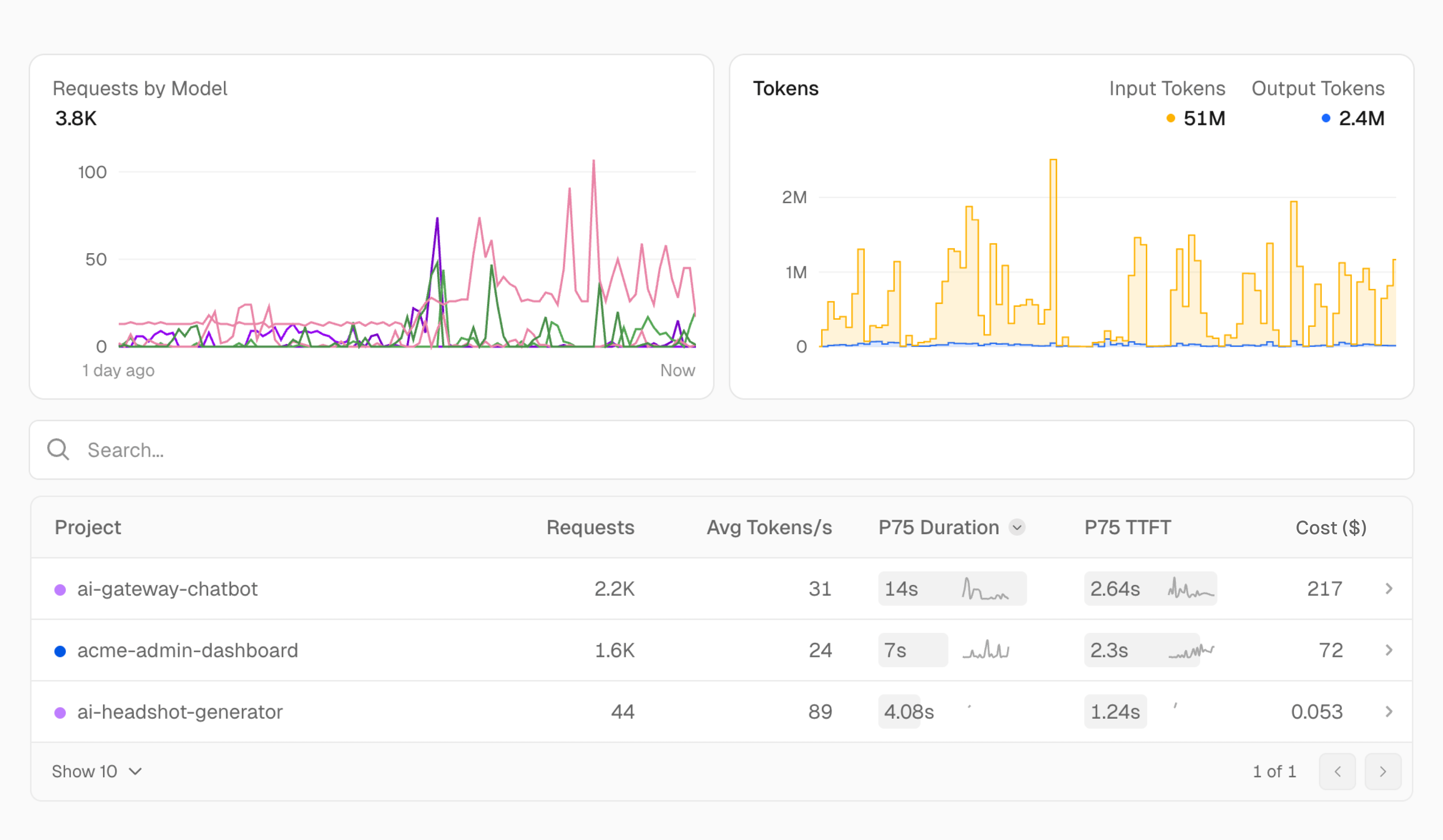
See exactly what your agent did - Every prompt, tool call, retrieval, and response renders as one trace tree with latency on each span, so a bad output resolves to the step that caused it.
Know whether a change helped - Rule-based checks and LLM-as-a-judge evaluators score live production traffic, so a prompt edit is measured rather than argued about.
Know where every dollar goes - Requests, tokens, errors, latency, and cost break down by model, user, and API key, with soft warnings or hard caps per key before the invoice arrives.
Debug by tenant or feature - Tag requests with a customer identifier and metadata, then break down latency, errors, and eval scores by any of them.
Ship prompts without a deploy - Versioned prompts referenced by ID, with one-click deployment and release management.
Test what your agents block - Red teaming probes deployed agents on your schedule rather than an attacker's.
Screen requests before any provider sees them - Respan Guardrails, in early access, block requests in categories like prompt injection or system prompt leak inside the gateway, so a blocked request never leaves for a model provider.
Pass the review you are also running - SOC 2, ISO 27001, GDPR, and HIPAA with a BAA available.
Gateway overhead is typically 30–40ms, low enough that the measurement layer is not a latency argument. Retell AI runs over 1M hourly LLM calls through Respan and scaled from 5M to 500M+ monthly API calls, with their CTO crediting the debugging layer with resolving production issues 10x faster.
Model access & deployment: 1,000+ models through one OpenAI-compatible endpoint, cloud-hosted on Free and Team, with SAML SSO on Enterprise.
Pricing: Free covers 100k logs, 412 requests per minute of gateway throughput, and 7-day retention. Team is $199 per month billed yearly, raising throughput to 8,400 requests per minute with 30-day retention and overages at $8 per 100k logs.
Limitations: Log and score caps are real on the free tier, and retention windows, custom throughput, and the 99.99% uptime SLA are gated to Enterprise.
One endpoint, and a record of what happened behind it
Use Respan to route to 1,000+ models through a single OpenAI-compatible endpoint with ordered fallback and per-key spend caps. Every call comes back as a trace tree showing the model attempted, whether a fallback fired, cost, and eval scores, so a bad output leads to the exact step that caused it.
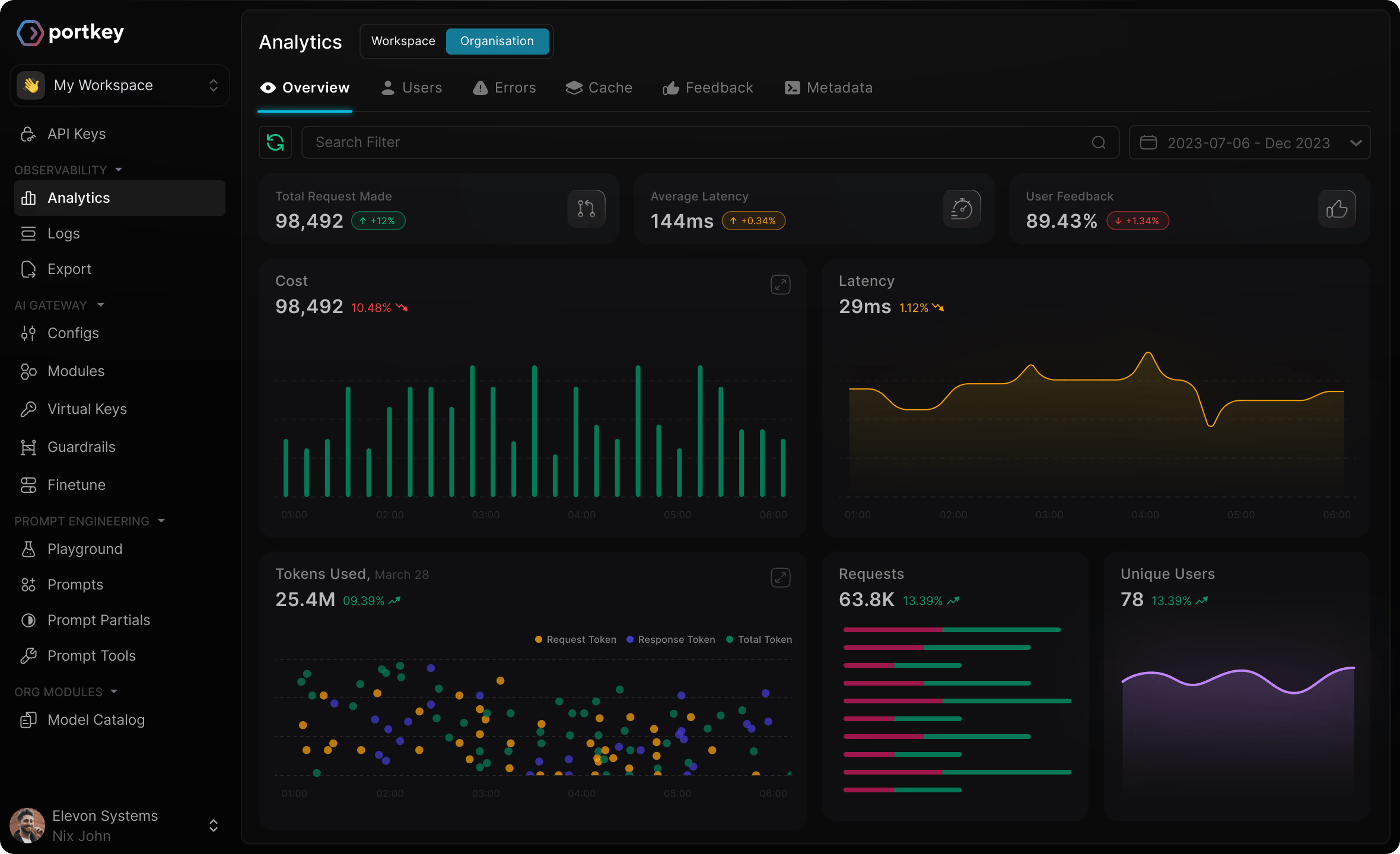
Portkey is a managed gateway with a control plane on top of the routing layer. Automatic fallbacks, load balancing, retries, request timeouts, circuit breakers, and both simple and semantic caching are configured in a Config object rather than in application code. Virtual keys carry their own budgets and rate limits, and guardrails including PII redaction run before a request reaches a provider.
It is worth noting that in 2026, Palo Alto Networks acquired Portkey, and the gateway became the AI layer inside Prisma AIRS. That points the roadmap at enterprise runtime security, which is worth factoring into a multi-year decision. Teams weighing that shift often end up comparing Portkey alternatives alongside this list.
Model access & deployment: 250+ models through a unified API, available as managed cloud, self-hosted from the open-source gateway, or VPC on Enterprise.
Pricing: Developer is free at 10k recorded logs per month, which Portkey's own pricing page says is not suitable for production. Production is $49 per month for 100k logs with overages at $9 per additional 100k requests.
Limitations: Metering runs on recorded logs rather than requests, so exceeding the allowance does not break routing but stops recording observability data during your busiest periods. Retention is 30 days below Enterprise.
3. LiteLLM
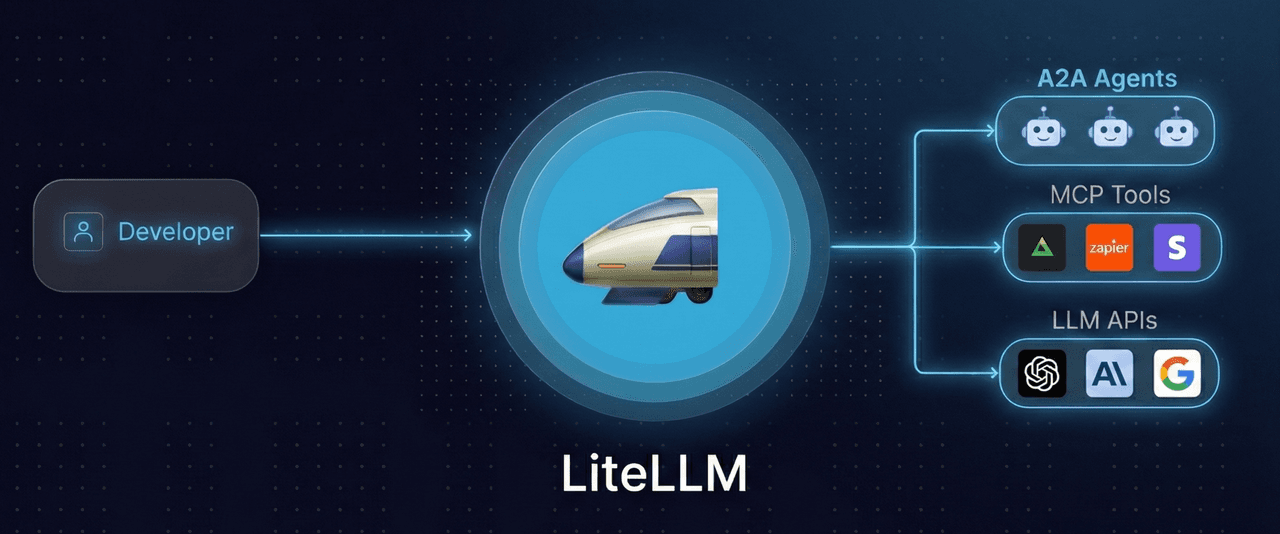
Self-hosting is the direct answer to the third-party hop, and LiteLLM is the most established way to do it. The open-source proxy normalizes calls to more than 100 providers into OpenAI format, and because you run it, keys and traffic never leave your infrastructure. Routing, load balancing, per-key budgets, and spend tracking are all in the open-source build.
A March 2026 compromise of specific PyPI packages pushed the project onto an isolated CI/CD pipeline. Pin to a patched release and rotate any exposed secrets before deploying. The broader lesson from that incident is covered in our writeup on LiteLLM alternatives and gateway supply-chain risk.
Model access & deployment: 100+ providers through an OpenAI-compatible proxy you deploy and operate yourself.
Pricing: The open-source gateway carries no license fee, so the bill is infrastructure plus provider costs. Enterprise is quoted by annual request capacity and deployment architecture rather than published.
Limitations: The proxy needs a database, a cache layer, and someone on call when it sits on the critical path. Observability stops at request logging, and SSO, audit logs, and JWT authorization are Enterprise-only.
4. Cloudflare AI Gateway
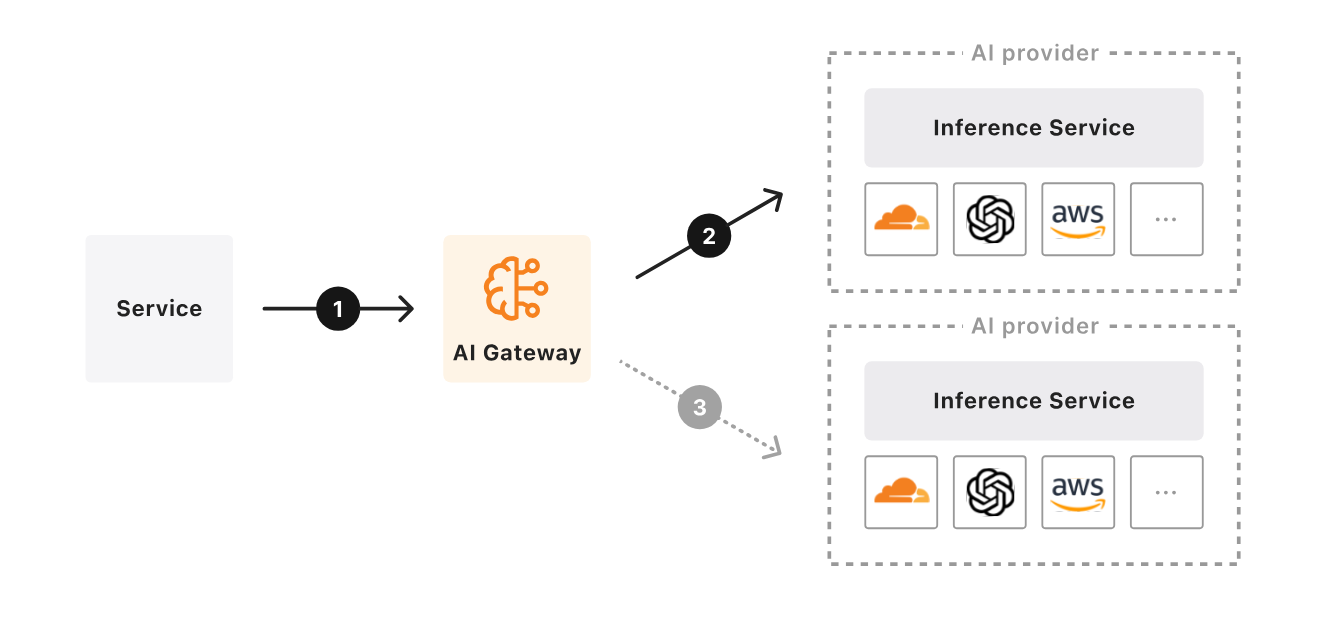
Cloudflare AI Gateway runs on Cloudflare's edge network, so the control plane sits close to your users rather than in a single region. Integration is a base URL change and a default gateway is created on your first request. It exposes a universal endpoint alongside OpenAI-compatible, OpenAI Responses-compatible, and Anthropic-compatible paths, so existing SDKs keep working. Caching, rate limiting, analytics, and logging come with it.
Moving from one managed gateway to another does not solve deployment independence. There is no self-hosted build and no VPC option, and the product is most useful to teams already inside the Cloudflare ecosystem.
Model access & deployment: 20+ providers behind one endpoint using your own provider keys, managed only.
Pricing: Core features carry no per-call fee beyond your existing Cloudflare plan. Storage is the meter: persistent log limits scale from Workers Free to Workers Paid at $5 per month, and Logpush bills separately.
Limitations: Once the persistent log ceiling is reached, new logs stop being saved until old ones are deleted. Observability is request-level rather than trace-level.
5. Bifrost
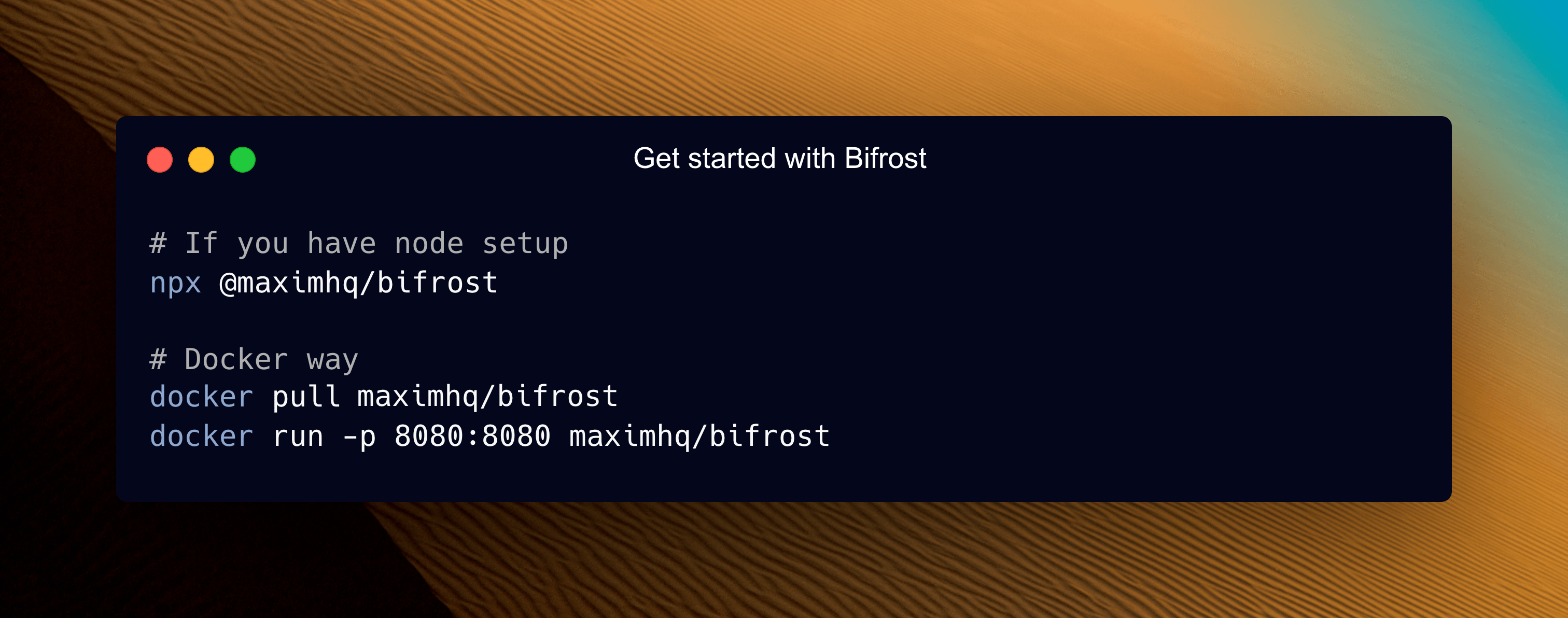
Bifrost is a gateway written in Go by Maxim AI and published under Apache 2.0, designed for infrastructure you control. Adoption is a base URL change against an existing OpenAI, Anthropic, or Google GenAI client. The open-source build covers routing, automatic fallback across providers and models, weighted load balancing across keys, semantic caching, virtual keys with per-consumer budgets, MCP support, and native Prometheus and OpenTelemetry export.
Nothing in the open-source build is gated behind a paid tier, governance included, which is unusual in this category.
Model access & deployment: 1,000+ models across 20+ providers, self-hosted by default, with in-VPC, on-prem, and air-gapped deployments on Enterprise.
Pricing: The open-source gateway is free. Enterprise is custom priced through Maxim AI and buys private networking, SAML SSO, adaptive load balancing, clustering, and an SLA, with a 14-day trial available.
Limitations: Observability is exported rather than resident, so the gateway answers no quality questions on its own and evaluation lives in Maxim's separate platform, priced per seat from $29 per month.
6. TrueFoundry
TrueFoundry pairs a gateway with a model deployment platform, so one product routes to hosted provider APIs and to models you run yourself on your own GPUs. Routing covers failover, retries, and load balancing, with virtual keys, budgets, and cost caps for governance, plus SSO, RBAC, and audit logs. An MCP gateway handles agent and tool workloads.
The platform is considerably broader than a gateway, which cuts both ways. Teams that want routing and nothing else are buying a model registry, fine-tuning orchestration, and GPU scheduling they will not use.
Model access & deployment: 250+ models through one OpenAI-compatible API, deployable as SaaS, into your own cloud account, or on-prem.
Pricing: The free Developer tier covers roughly 50,000 requests per month. Governance lives at Pro, $499 per month for up to 1M requests, unlocking RBAC on models and per-team budget controls.
Limitations: Compute for self-hosted models bills through your cloud provider, so the platform fee is never the whole number. Onboarding leans toward sales at the tiers where governance lives.
7. LLM API
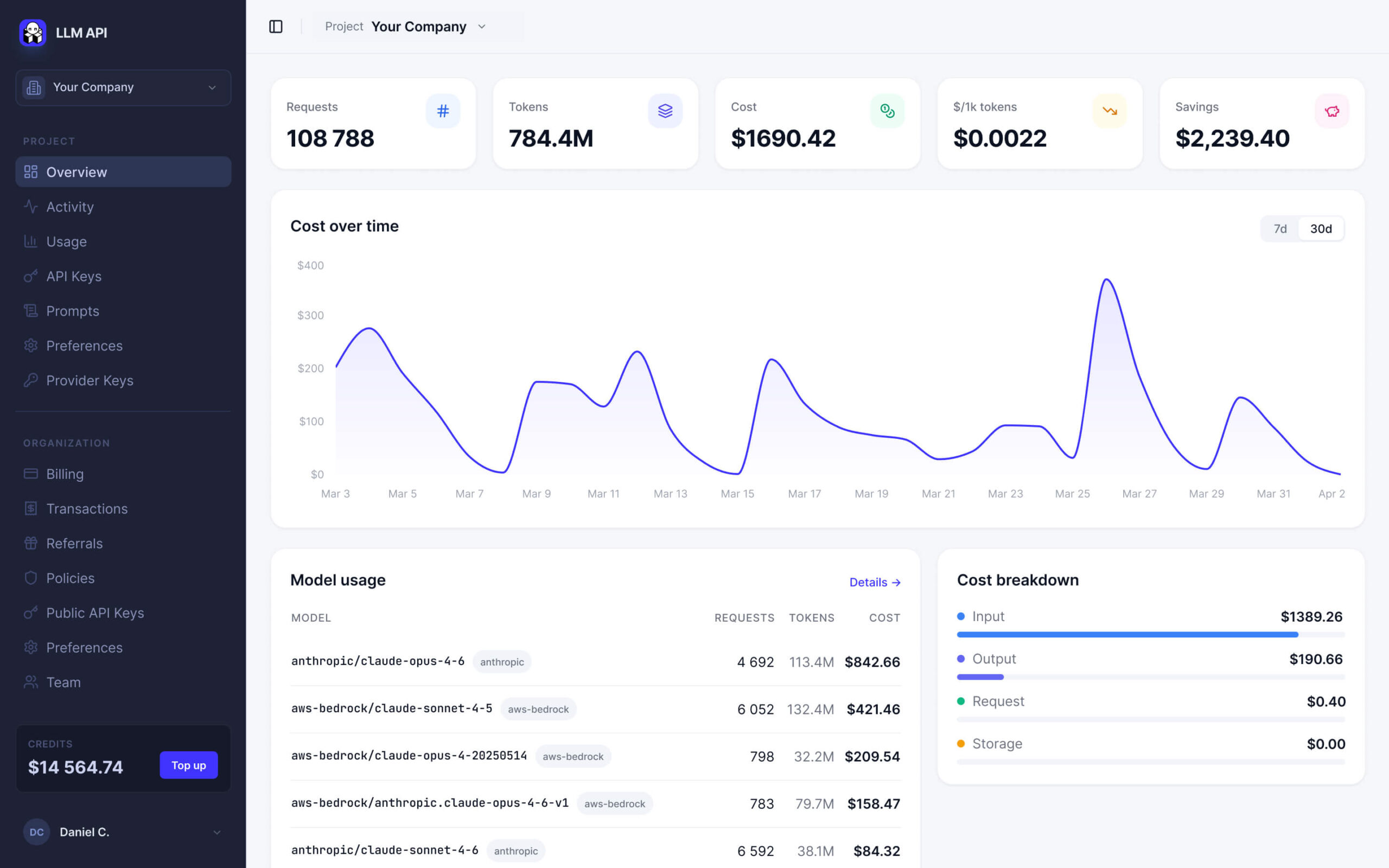
Where most gateways add a fee, LLM API subtracts one. Usage tiers convert into automatic discounts on token rates: 10% on Build, 15% on Ship, and 20% on Scale, with enterprise commitments reaching up to 50% off open-source models and up to 30% off Claude and OpenAI. Tier is set by your trailing 30 days of usage and re-evaluated each cycle, so there is no contract or negotiation. Credits never expire.
The platform ships the same surface on every plan: rule-based routing with automatic fallback, per-key IAM rules, per-team budgets, prompt management, and an eval workspace called EvalLab. Zero data retention is on by default rather than an opt-in.
Model access & deployment: 400+ models through a drop-in OpenAI-compatible endpoint, with BYOK, VPC, and on-prem deployment plus regional data placement.
Pricing: Tiers are defined by monthly usage ceilings, from Build at up to $1,000 per month through Scale at up to $100,000, with the discount applied automatically on top-up.
Limitations: The 99.99% uptime figure is a marketing claim rather than a published SLA below enterprise terms, and a discount ladder keyed to trailing usage makes forecasting harder than a flat percentage.
8. Vercel AI Gateway
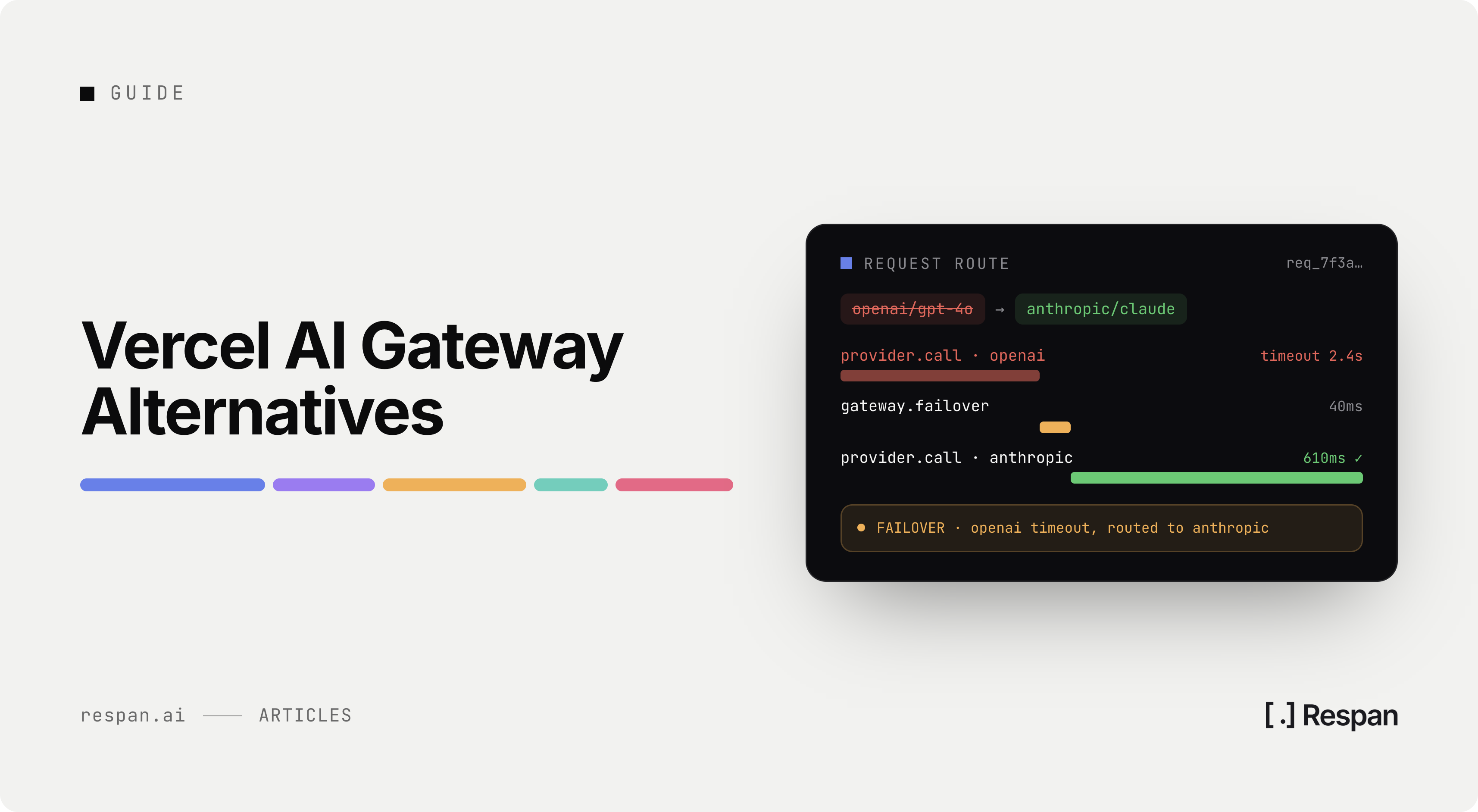
Passing tokens through at list price with no markup, including on bring-your-own-key, makes Vercel AI Gateway the cheapest headline number in this comparison. It handles automatic retries, managed fallback, load balancing, and spend monitoring, and it is tightly integrated with the Vercel AI SDK. For a Next.js team adding an AI feature, the setup cost is close to zero.
The coupling is the catch. It is a managed service operated by Vercel with no self-hosted build and no VPC option, so once backend services live on AWS or your own hardware, the gateway is the component that cannot follow. We cover the full picture in our roundup of Vercel AI Gateway alternatives.
Model access & deployment: Hundreds of models across providers including OpenAI, Anthropic, Google, Mistral, and xAI, managed only.
Pricing: No markup on provider list rates. Surcharges apply for Custom Reporting at $0.075 per 1,000 writes and $5 per 1,000 reporting queries, and for provider allowlisting or zero data retention at $0.10 per 1,000 requests each.
Limitations: The free tier covers a subset of the catalog with lower per-model rate limits, and buying credits ends the monthly free credit. Observability returns cost and token counts rather than traces.
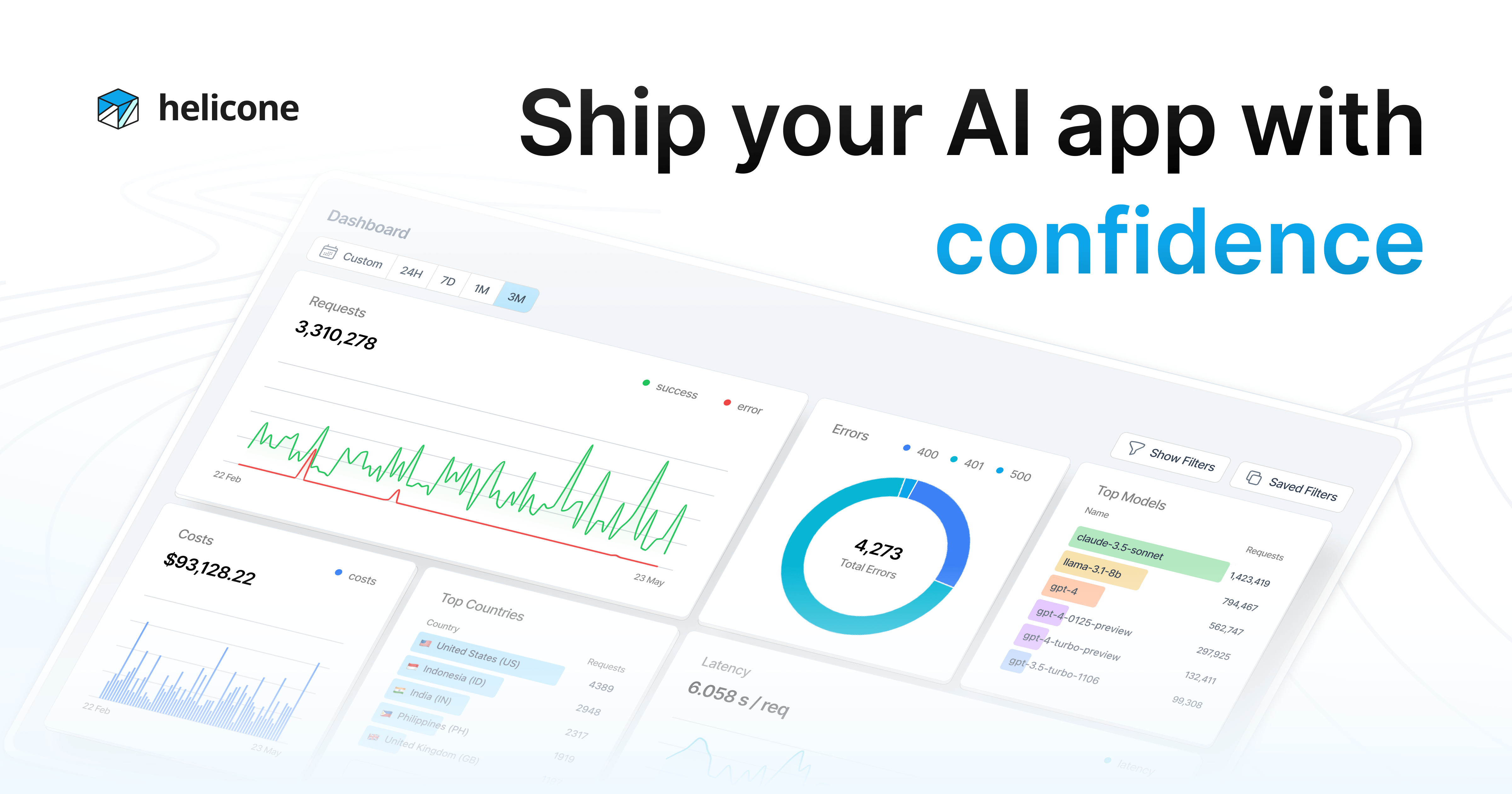
9. Helicone
Integration is a base URL change, after which request logs, token counts, cost tracking, and latency metrics appear on a dashboard. For years that made Helicone the fastest path from zero to visibility on LLM spend, and the proxy design still is.
Like Portkey, it is worth noting that in 2026, Helicone was acquired. Unlike Portkey, the platform is in maintenance mode: security patches, bug fixes, and new model support continue, while active feature development has ended. Adopting infrastructure with a stopped roadmap on the critical path is a hard argument to make, which is why most evaluations now start with Helicone alternatives instead.
Model access & deployment: Provider-agnostic through a proxy, self-hostable from the open-source build or run as managed cloud.
Pricing: A free Hobby tier covers prototyping, with paid cloud tiers billed on request volume above it and a custom Enterprise tier above those.
Limitations: Proxy instrumentation is request-shaped, so it sees calls passing through it rather than the reasoning and tool steps between them. Agent chains are largely invisible.
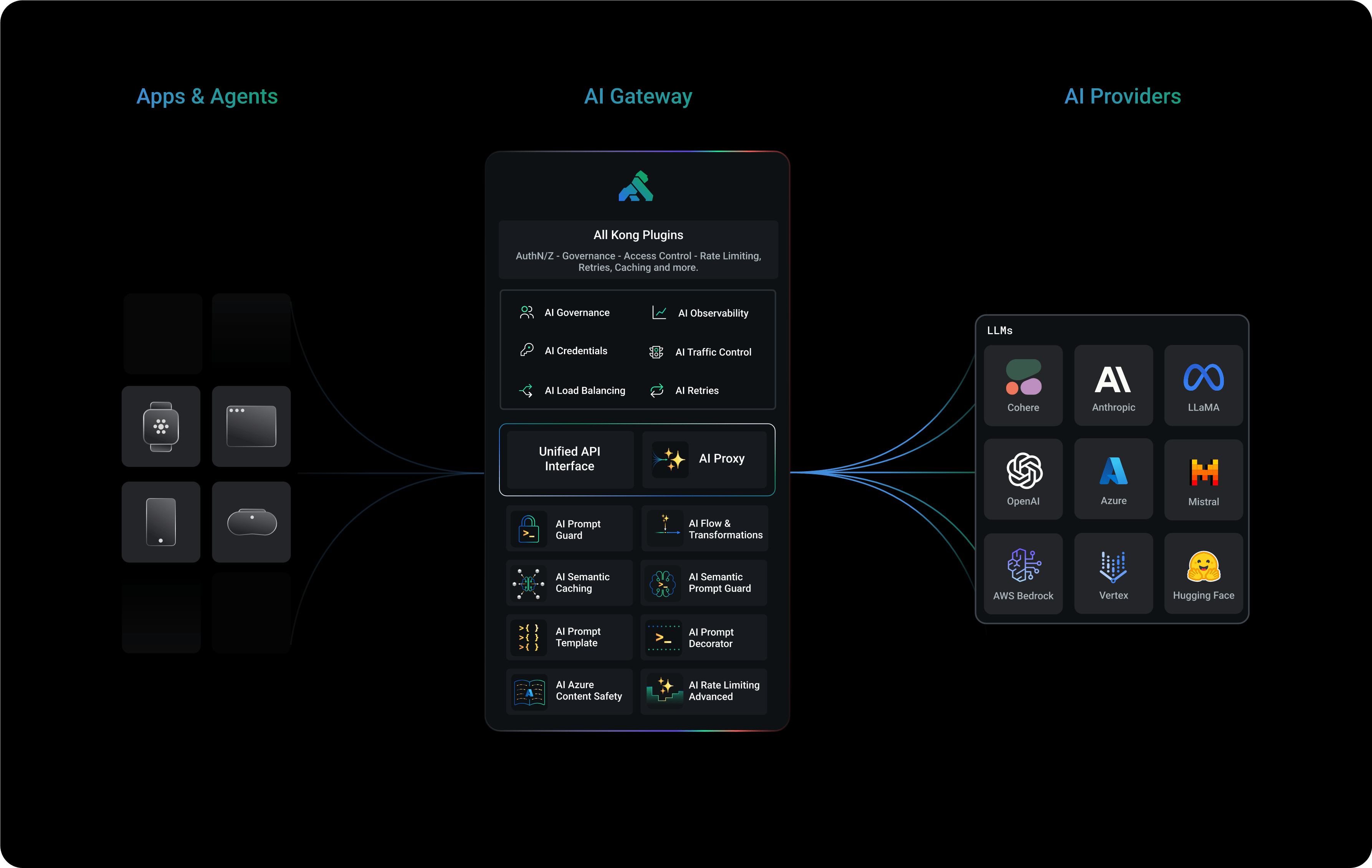
10. Kong AI Gateway
Kong added AI routing to its existing API gateway rather than building a separate product, so model traffic runs through the same plugin architecture, policies, and control plane as the rest of your APIs. AI Proxy plugins normalize provider APIs, and the surrounding platform brings authentication, rate limiting, and audit that predate anyone's LLM workload. Semantic routing can send a request to a cheaper model based on the content of the prompt.
For an organization already running Kong, this is governance you do not have to build twice.
Model access & deployment: Provider-agnostic through AI Proxy plugins, deployable self-hosted, hybrid, or as dedicated cloud.
Pricing: $500 per month per control plane, which rewards consolidation since one control plane covering APIs and model traffic costs what one covering APIs alone costs.
Limitations: The AI capabilities sit on a general-purpose HTTP proxy, so the primitives are request-shaped rather than token-shaped. AI Gateway capabilities also meter per unique model routed, so a multi-model strategy adds line items.
11. Merge
Merge Gateway inverts OpenRouter's fee structure by charging on usage rather than on top-ups. Routing, fallback, spend policies, and observability sit behind one endpoint, with budget controls settable at the account, team, or per-customer level. The distinctive piece is a configurable router: you define routing logic by weighting the benchmarks that matter to you, including your own eval scores, and every routing decision comes back with an explanation.
Spend policies scoped per customer tier are unusual in this category and directly useful for anyone shipping AI features to their own customers.
Model access & deployment: OpenAI, Anthropic, Google, Cohere, Mistral, Grok, and AWS Bedrock through a single managed endpoint, with an OpenAI SDK shim for zero-install setup.
Pricing: LLM cost plus a 5% fee, with $10 in monthly credits on Pro that expire at month end and do not roll over.
Limitations: The provider list is narrower than every hosted aggregator here, and there is no self-hosted or VPC build, so the third-party hop remains.
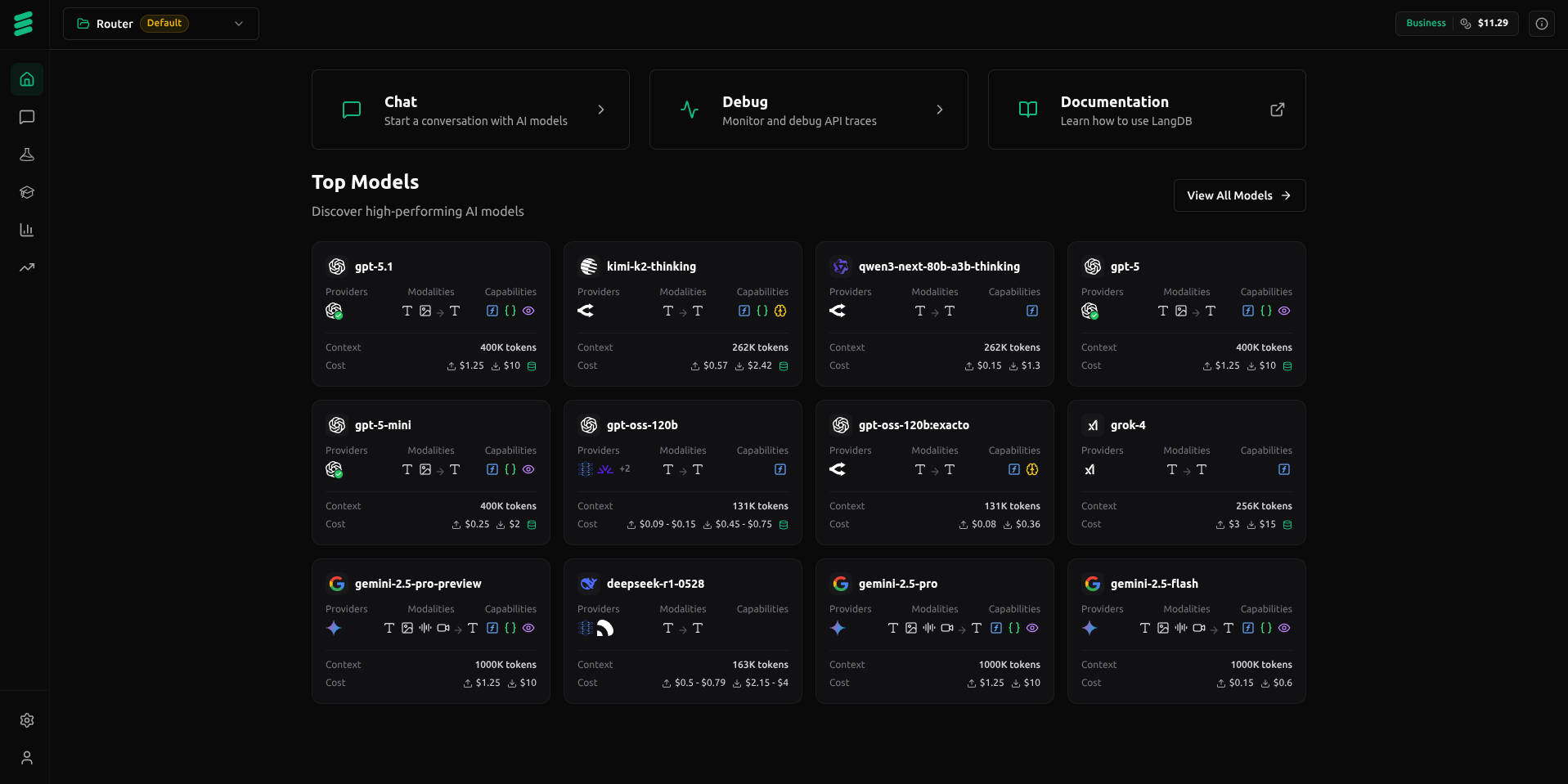
12. LangDB
Built entirely in Rust, LangDB is the performance argument in this roster. Integration is framework-agnostic with no pip or npm install, and the analytics layer covers real-time LLM performance and usage. The observability stack is open-sourced as vLLora, so the tracing side runs locally against LangChain, Google ADK, OpenAI, and other frameworks without adopting the hosted product.
The positioning is mid-shift. The site's title tag still reads as an enterprise AI gateway while the page itself now leads on agent debugging and observability, which suggests the product is moving toward the measurement layer.
Model access & deployment: 250+ models through a unified API, with the gateway and observability stack both available as open source.
Pricing: Not published anywhere on the site, and there is no pricing page to check.
Limitations: No published pricing means no way to model cost before a sales conversation, which rules it out of most self-serve evaluations. The community is small next to LiteLLM or Bifrost.
Reach every model, and know what happened
Respan runs the gateway, tracing, evals, and spend caps on one data plane. When something breaks, you read one trace instead of reconciling two vendors.
OpenRouter's pricing page lists a free tier, though it is narrow. It covers 25+ free model variants from 4 providers and caps you at 50 requests per day. Purchasing $10 in credits at any point raises that ceiling to 1,000 requests per day permanently, even if your balance later drops to zero. Paid usage carries no subscription and no minimum spend, so the only cost is the token rate plus the platform fee on credit purchases. For anything with real users, the free tier is a prototyping surface rather than a production plan, which is why free-tier ceilings are one of the more common reasons teams start comparing gateways. Respan's free tier, by contrast, covers 100k logs and 412 requests per minute through the gateway.
What is the OpenRouter minimum credit top up amount?
$5 per transaction, with a maximum of $25,000, per OpenRouter's terms of service. The number that matters more is the fee floor. OpenRouter charges 5.5% on credit purchases with an $0.80 minimum, so a $5 top-up pays an effective 16% rather than 5.5%. Consolidating into fewer, larger purchases spreads that floor across more usable balance. Unused credits may be expired 365 days after purchase, and refunds are only available within 24 hours of the transaction, after which the balance is non-refundable and the platform fee never was.
What are the OpenRouter API key free usage limits?
Free-model access is governed by lifetime credit purchases rather than by the key itself. Under $10 in lifetime purchases, you get 50 free-model requests per day across all free models combined. At $10 or more, the ceiling rises to 1,000 per day and stays there. Additional accounts or API keys will not raise these limits, because capacity is governed globally rather than per key. Free models also carry the practical caveat that they can be removed or changed without notice, so building a production dependency on a specific one is a risk.
What are OpenRouter's rate limits?
Rate limits split by tier. Free-model requests are capped daily as described above. Paid usage runs on what OpenRouter describes as high global limits rather than a published per-account number, and Enterprise can negotiate dedicated limits. Provider-side limits apply separately and independently, so a 429 can come from either layer, and the fix differs: raise your daily allowance for platform limits, or add fallback models and relax provider routing preferences so more providers are eligible to serve the request. Gateways that meter differently make this more predictable. Respan publishes proxy throughput per tier, at 412 requests per minute on Free and 8,400 on Team.
LiteLLM vs OpenRouter: which should you use?
Both expose a unified OpenAI-compatible API across providers. The split is hosted versus self-hosted. OpenRouter is a hosted router with a 5.5% fee on credit purchases and traffic that transits its infrastructure. LiteLLM is an open-source proxy you deploy, with no per-request fee and keys that stay in your network, in exchange for running a database, a cache layer, and an on-call rotation for a component sitting on the critical path. Compliance requirements usually decide it. Neither one gives you a trace tree or eval scores by default, which is the reason many teams end up on a platform that does both. Our full breakdown of LLM gateway vs LiteLLM covers the tradeoff in more depth.