
Claude Opus 5.5 shipped on September 22, 2026, and for anyone who follows AI model releases it's one of the bigger launches of the year. It's the first model in Anthropic's new Claude 5.5 family and the first release since the company publicly called for pacing the frontier, so it also signals how Anthropic plans to ship from here.
The reason it matters is the gap it closes between price and capability. Anthropic says Opus 5.5 performs at the level of Fable 5.1, its top public tier, on most work, while list prices sit 20% below Opus 5 and cache reads cost 60% less.
That shift reaches everyday Claude usage too. Opus 5.5 takes over from Opus 5 as the current Opus, and Anthropic raised five-hour usage limits on Pro, Max, Team, and seat-based Enterprise plans alongside it. On the API, thinking now runs on every request at a medium default effort, which changes what a migration costs before quality even comes into it.
This is a full guide to Opus 5.5 pricing, benchmarks, and how it compares to Fable 5.1, Opus 4.8, GPT-6 Sol, and Sonnet 5.
What is Opus 5.5?
Claude Opus 5.5 is Anthropic's newest Opus model and the first release in its Claude 5.5 family, launched September 22, 2026. It's available on the Claude Platform as claude-opus-5-5, and on AWS, Google Cloud, and Microsoft Azure.
In the lineup, it replaces Opus 5 as the current Opus, sitting below Fable 5.1 on price and above Sonnet 5 and Haiku 4.5. Anthropic's launch announcement positions it as performing at Fable 5.1's level on most work while costing 40% less to run than Opus 5 on typical workloads.
Always-on thinking and default effort
Opus 5.5 can't run with thinking switched off. The lever you have instead is effort, which sets how much the model reasons before it answers, and the API default is medium.
Because thinking tokens bill at the output rate, effort moves your cost per request more than anything on the rate card. It also changes behavior on migration, since a pipeline that never set effort explicitly will run at medium after the model swap.
Opus 5.5 also launches with preserved thinking for API accounts created on or after August 31, 2026, which blocks edits to earlier context aimed at extracting the model's reasoning. Any integration that rewrites prior turns should be tested against it before a migration.
Safeguards and fallback models
Opus 5.5 is the first Opus model to ship with safeguards on cybersecurity, biology, and distillation similar to those on Fable 5.1. When one of them intervenes, the request falls back to another model, and Anthropic describes that handoff as transparent.
Fixing bugs in your own code stays on Opus 5.5 as part of routine development, while most cybersecurity tasks get rerouted to Opus 4.8. As a result, a rerouted response is easy to count as an Opus 5.5 answer unless your logging captures enough of each request to notice the difference.
Opus 5.5 pricing
Opus 5.5 is cheaper than Opus 5 on every line of the rate card, with the largest cut on cache reads.
| Price per 1M tokens | Opus 5.5 | Opus 5 |
|---|---|---|
| Input | $4 | $5 |
| Output | $20 | $25 |
| Cache reads | $0.20 | $0.50 |
| Cache writes | $5 | $6.25 |
Cache reads
Cache reads on Opus 5.5 cost 5% of the input price, half the 10% multiplier most Claude models use. Cache reads make up the majority of cost in agentic and coding work, according to Anthropic, since, since every turn of an agent loop replays the same system prompt, tool definitions, and history.
If most of your input is a repeated prefix, the Claude prompt caching TTL math decides how much of that 60% cut you actually capture.
Fast mode
Fast mode runs Opus 5.5 at up to 2.5x the speed for $8 per million input tokens and $40 per million output tokens, available in Claude Code and on the Claude Platform. At double the standard rate, it's worth reserving for interactive work where a person is waiting on the response rather than for background agents.
What thinking tokens add to the bill
Visible output and billed output are different numbers on Opus 5.5. A request with 20,000 input tokens that returns a 2,000-token answer after 8,000 tokens of thinking bills 10,000 output tokens, so the output side costs $0.20 against $0.08 for input.
Anthropic's 40% saving over Opus 5 is measured at default settings, where Opus 5.5 also finishes tasks in fewer tokens. Raising effort to high or max for quality can spend some or all of that margin, which is why effort belongs in the same review as model choice.
Opus 5.5 performance and benchmarks
Anthropic's launch table puts Opus 5.5 ahead of Fable 5.1 and Opus 5 on every benchmark it reported. The scores use adaptive thinking at max effort, apart from Terminal-Bench 4.0 at xhigh, and Opus 5.5 ran with its production safeguards on, so cybersecurity tasks that triggered them were completed by Opus 4.8.
| Benchmark | Opus 5.5 | Fable 5.1 | Opus 5 |
|---|---|---|---|
| Terminal-Bench 4.0 | 66.4% | 55.8% | 52.3% |
| FrontierCode v1.1 (Main) | 54.4% | 50.3% | 48.0% |
| CursorBench 4.0 | 57.8% | 51.8% | 46.6% |
| GDPval-AA v2.1 (Elo) | 1846 | 1735 | 1708 |
| AutomationBench | 40.0% | 31.4% | 26.9% |
| Humanity's Last Exam (tools) | 67.7% | 65.6% | 63.6% |
| OSWorld 2.0 (partial) | 81.8% | 80.7% | 74.0% |
Anthropic also says benchmark margins have become a less reliable guide at this level of capability, and that in its own use the gap between Opus 5.5 and Fable 5.1 is narrower than these scores suggest. The table tells you which models are worth testing on your workload, and the testing is still yours to do.
Agentic coding
Coding is where the default-effort numbers matter most, because few teams run max effort on every call. At medium, Opus 5.5 scores 52.5% on CursorBench 4.0 against 51.8% for Fable 5.1 and 46.6% for Opus 5, both at max, and 54.6% on FrontierCode.
The workloads Anthropic highlights for the model are long and sprawling ones, like codebase-wide migrations and audits that run for hours.
Knowledge work
On GDPval-AA v2.1, which grades real-world professional work across 44 occupations, Opus 5.5 posts an Elo of 1846 against 1735 for Fable 5.1 and 1708 for Opus 5. Its 40.0% on AutomationBench, which tests business workflows across connected apps, came from Zapier's own runs without fallback models, so every safeguard intervention counted as a failure.
That detail cuts both ways. The score likely understates Opus 5.5, and it also shows that safeguards can step into workflows that look like ordinary business automation.
Computer use
Computer use is the tightest race in the table. Opus 5.5 scores 81.8% on OSWorld 2.0 with partial credit, just over a point above Fable 5.1 at 80.7%, and 89.0% on Chartography against 88.4%. For screen-driving agents, that leaves price as the main difference between the two.
Opus 5.5 vs Fable 5.1
Fable 5.1 sits one tier above Opus in Anthropic's public lineup, and before this launch it was the model teams escalated to when Opus fell short.
| Opus 5.5 | Fable 5.1 | |
|---|---|---|
| Input / output (per 1M) | $4 / $20 | $10 / $50 |
| Cache reads (per 1M) | $0.20 | $0.25 |
| Terminal-Bench 4.0 | 66.4% | 55.8% |
| GDPval-AA v2.1 | 1846 Elo | 1735 Elo |
| Model ID | claude-opus-5-5 | claude-fable-5-1 |
Pricing
Fable 5.1 costs 2.5 times as much as Opus 5.5 on both input and output, but the cache-read gap is only five cents per million tokens because Fable's reads bill at 2.5% of its input price. On an agent loop where most input is cached, the difference narrows to uncached input and output, which is the same pattern the Claude model comparison works through across every tier in the lineup.
Performance
Opus 5.5 scores higher than Fable 5.1 on every benchmark in Anthropic's table, by margins ranging from under a point on Chartography to more than ten on Terminal-Bench 4.0. With the real-world gap narrower than that in Anthropic's own use, the practical read is that Opus 5.5 now covers most work that used to need Fable, with Fable held back for cases where Opus 5.5 at higher effort still misses.
Speed
In an internal test, Anthropic had both models translate HAProxy, a widely used load balancer, from C into Rust. Both rewrites passed nearly all of HAProxy's regression tests, but Opus 5.5 finished in 9.5 hours against 12 for Fable 5.1 and cost 51% less.
Access on Claude plans
Alongside the Opus 5.5 launch, Anthropic raised five-hour usage limits on Pro, Max, Team, and seat-based Enterprise plans, and gave subscribers a rate limit reset they can save for later. For engineers who prototype in Claude Code or the Claude apps before moving a workload to the API, that headroom makes it easier to test Opus 5.5 against a current default first.
Opus 5.5 vs Opus 4.8
Opus 4.8 launched May 28, 2026, two versions before Opus 5.5. It still matters for a reason unrelated to its age, because it's the model Opus 5.5 hands most cybersecurity tasks to.
| Opus 5.5 | Opus 4.8 | |
|---|---|---|
| Input / output (per 1M) | $4 / $20 | $5 / $25 |
| Cache reads (per 1M) | $0.20 | $0.50 |
| SWE-bench Pro | 89.9% | 69.2% |
| Cybersecurity tasks | Mostly rerouted | Receives rerouted tasks |
Pricing
Opus 4.8 bills at $5 and $25 per million tokens, so staying on it costs 25% more per token than moving to Opus 5.5, and its cache reads cost 2.5 times as much at $0.50 per million. Because of that, the usual reason to keep an older model, a lower price, doesn't apply here.
Performance
The two launch tables report different benchmark versions, so most scores don't line up. SWE-bench Pro is the exception, with Opus 4.8 at 69.2% in the Opus 4.8 system card and Opus 5.5 at 89.9% in the Opus 5.5 system card, both run by Anthropic.
Opus 4.8 as the cybersecurity fallback
Anthropic's own benchmark runs used Opus 4.8 whenever the safeguards stepped in on cyber tasks, and production traffic works the same way. If part of your workload is security review or anything else the classifier reads as offensive security work, some of those requests will be answered by Opus 4.8 whether or not you chose it.
Verified cybersecurity practitioners will be able to use Opus 5.5 directly once Anthropic expands its Cyber Verification Program in the coming weeks.
Try Opus 5.5 on Respan, now 20% off
Opus 5.5 is 20% off on Respan. Route it through the gateway and score its output on your own traffic before you switch. Respan is free to try.
Opus 5.5 vs GPT-6 Sol
GPT-6 Sol is OpenAI's model for complex coding and agentic workflows, priced at half of Opus 5.5 per token. That puts the two in different price tiers, so the useful question is what the extra spend on Opus 5.5 buys.
| Opus 5.5 | GPT-6 Sol | |
|---|---|---|
| Input / output (per 1M) | $4 / $20 | $2 / $10 |
| Cached input (per 1M) | $0.20 | $0.20 |
| AA Intelligence Index (max) | 58 | 48 |
| Lowest cost per task (AA) | $0.55 | $0.13 |
| Context window | 1M tokens | 1.05M tokens |
| Default effort | Medium | Medium |
Pricing
GPT-6 Sol lists at $2 per million input tokens and $10 per million output tokens on OpenAI's GPT-6 Sol model page, half of Opus 5.5 on both. Cached input is the exception, since both models charge $0.20 per million, so the more of your prompt that sits in cache, the closer the two get on input cost.
Performance
A direct head-to-head comes from Artificial Analysis, which ran both models on the same ten evaluations at every effort level. At max effort, Opus 5.5 scores 58 on its Intelligence Index against 48 for Sol, while Sol's cheapest setting costs $0.13 per task against $0.55 for Opus 5.5's, and Sol's fastest setting outputs 126 tokens per second against 92.
Artificial Analysis ran Opus 5.5 with Anthropic's default fallback enabled. Its scores describe the service as deployed, safeguard reroutes included, rather than the Opus 5.5 weights in isolation.
Reasoning effort settings
Sol's effort parameter runs from none to max, with medium as the default, so a workload can drop reasoning entirely for simple calls. Opus 5.5 has no off switch for thinking, which means its cost and latency floor can sit higher on short, well-defined tasks.
Long-context pricing
Sol changes price on long prompts. Past 272,000 input tokens, OpenAI bills 2x on input and cache and 1.5x on output for the entire request, so one large document in an agent's context reprices the whole call. For agents that carry big codebases or document sets, that threshold is worth modeling before comparing per-token rates.
Opus 5.5 vs Sonnet 5
Sonnet 5 is Anthropic's mid tier, priced at half of Opus 5.5 per token, and the model Sonnet 5.5 will replace soon.
| Opus 5.5 | Sonnet 5 | |
|---|---|---|
| Input / output (per 1M) | $4 / $20 | $2 / $10 |
| Cache reads (per 1M) | $0.20 | $0.20 |
| Successor | Current | Sonnet 5.5 coming |
| Model ID | claude-opus-5-5 | claude-sonnet-5 |
Pricing
Opus 5.5 costs twice what Sonnet 5 does on uncached input and on output, but cache reads land at the same $0.20 per million on both. On cache-heavy agent loops, that makes the gap smaller than the headline rates suggest, and it shifts the Claude Opus vs Sonnet tier decision toward Opus more often than it did when Opus cache reads cost $0.50.
Performance
Anthropic's launch table doesn't include Sonnet 5, so there's no vendor head-to-head for this pair. What decides it is whether Sonnet 5 finishes a given step on the first attempt, because a cheaper model that needs extra turns can cost more per completed task than Opus 5.5.
Sonnet 5.5 timing
Anthropic says Sonnet 5.5 and Haiku 5.5 will follow in the coming weeks with many of the same improvements as Opus 5.5, and it hasn't published pricing for either. If cost is the main reason you're weighing a move from Sonnet 5 to Opus 5.5, the next Sonnet may change that math soon.
Which to use: Opus 5.5 or other models
No single model fits every step of a production workload, and the tiers around Opus 5.5 each cover a different part of it.
Here's when to use each model:
- Opus 5.5 as the default - Teams running Opus 5 today get a lower price on every line and higher scores on every benchmark Anthropic published, which makes Opus 5.5 the natural replacement once your own evals confirm it. It also fits long agentic coding jobs and knowledge work where one failed run costs more than the token difference.
- Fable 5.1 for escalation - Fable 5.1 earns its 2.5x price when Opus 5.5 at higher effort still misses a condition or fails a task you can verify. Test that on the specific failure first, since raising Opus 5.5's effort costs less than switching tiers.
- Sonnet 5 or GPT-6 Sol for high volume - High-volume steps with a clear definition of done, like classification or extraction, rarely need Opus-level reasoning. Sonnet 5 keeps that work on Anthropic, while GPT-6 Sol costs less per task than Opus 5.5 in Artificial Analysis's runs and offers a reasoning-off setting for the simplest calls.
- Opus 4.8 for security work - Opus 4.8 rarely makes sense as a deliberate choice now that Opus 5.5 costs less per token. Where it does apply is security work, since that traffic can reach Opus 4.8 through Opus 5.5's safeguards anyway, so running your security evals against Opus 4.8 keeps its outputs from being a surprise.
In practice, most production setups use more than one of these, with the model chosen per step rather than once for the whole application.
Test Opus 5.5 on your own traffic with Respan
Every published number for Opus 5.5 comes from someone else's workload. What it costs on yours depends on how your prompts cache and how hard the model thinks on them, and neither shows up until real requests are flowing.
Respan puts an AI gateway, observability, and evals in one platform, so a move to Opus 5.5 is a change you can measure rather than a swap you hope works. Route, observe, and evaluate every LLM call:
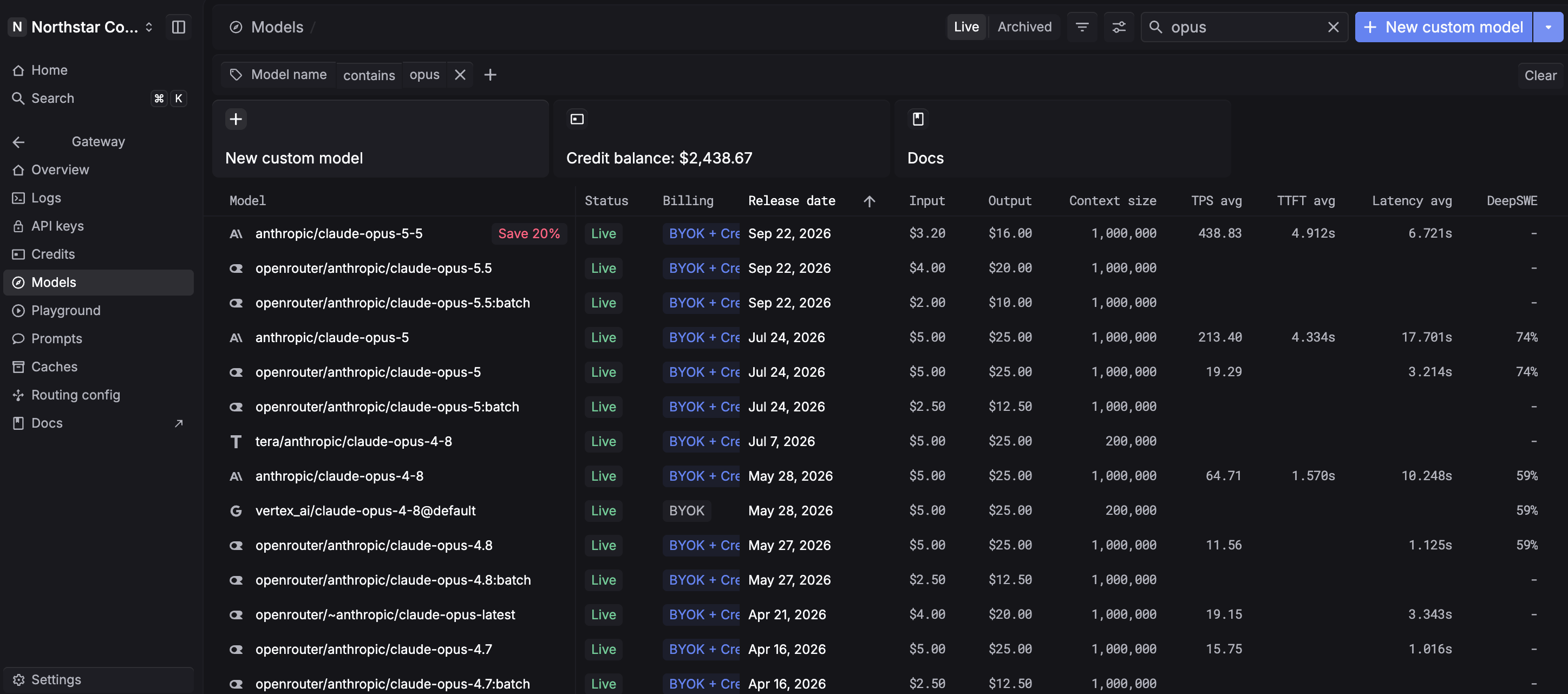
- One endpoint for Opus 5.5 - Opus 5.5 is live on the Respan gateway as
anthropic/claude-opus-5-5, alongside 1,000+ other models, so switching from Opus 5 or Sonnet 5 is a one-word change. - Every request traced - Each call becomes a span with its input, output, latency, and cost attached, so an Opus 5.5 answer that looks wrong opens straight to the trace behind it.
- Cost per request - Spend breaks down by model, by request, and by end customer, with hard caps that stop a runaway effort setting at the ceiling you set.
- Evals before you switch - Pull real requests from your logs into a dataset, then run Opus 5 and Opus 5.5 through the same evaluations in an experiment and compare scores row by row.
- Evals on live traffic - Online evals score production spans as they arrive, so a quality shift after the migration, including one caused by a safeguard reroute, shows up as a score change instead of a customer complaint.
- Fallback chains - Set a chain once, at the org level or per request, so an Anthropic error or rate limit sends Opus 5.5 traffic to the next model you picked.
Together, those turn "should we move to Opus 5.5" from a judgment call into a comparison you can read off your own data.
Run Opus 5.5 on Respan at 20% off
Opus 5.5 is 20% off on Respan. Route it through the gateway and score its output on your own traffic before you switch. Try Respan free.
FAQ
How much does Opus 5.5 cost?
Opus 5.5 costs $4 per million input tokens and $20 per million output tokens on Anthropic's API, with cache reads at $0.20 and cache writes at $5 per million. Fast mode runs $8 input and $40 output per million, and thinking tokens bill at the output rate.
Can you turn off thinking in Opus 5.5?
No. Thinking can't be disabled on Opus 5.5, so the setting to adjust is effort, which defaults to medium on the API and controls how much the model reasons before it answers.
Why was my Opus 5.5 request answered by another model?
Opus 5.5 launched with safeguards on cybersecurity, biology, and distillation, and when one intervenes, the request falls back to another Claude model, with most cybersecurity tasks going to Opus 4.8. Scoring production outputs with online evals catches the quality impact of those reroutes in your own data.
What is the Opus 5.5 model ID?
The model ID is claude-opus-5-5 on Anthropic's API. Through the Respan gateway, the same model is anthropic/claude-opus-5-5, alongside 1,000+ other models behind one endpoint.
Is Opus 5.5 available on AWS, Google Cloud, and Azure?
Yes. Anthropic lists Opus 5.5 as available on AWS, Google Cloud, and Microsoft Azure, in addition to the Claude Platform.
When are Sonnet 5.5 and Haiku 5.5 coming out?
Anthropic says both will follow Opus 5.5 in the coming weeks. It hasn't published release dates or pricing for either yet.