Portkey is the third LLM gateway or observability vendor to change hands in five months. ClickHouse announced its acquisition of Langfuse on January 16, Mintlify acquired Helicone on March 3, and on May 29 Palo Alto Networks closed its acquisition of Portkey. Six weeks later the gateway shipped as Prisma AIRS AI Gateway, generally available and positioned as the AI control plane for the enterprise.
Teams that picked Portkey for its developer experience will feel the repositioning first. Palo Alto's announcement frames the gateway around agent identity and runtime inspection of AI traffic, and prompt management and evals don't come up in it.
Nothing breaks on a deadline here. Free signup still works and existing keys keep routing. What's worth asking is whether the routing, logs, prompt templates, and budgets you consolidated into one integration are still being built for your team, or for a security team standardizing AI traffic across an enterprise.
If you're comparing Portkey alternatives, here are 12 that can replace your LLM gateway, along with what switching to each one actually takes.
TL;DR: Portkey Alternatives at a Glance
Every option below accepts OpenAI-format requests in some form, so the bigger differences are what you get back for each call and how spend gets capped.
| Tool | Switching from Portkey | Per-request record | Spend controls | Pricing |
|---|---|---|---|---|
| Respan | Base URL swap | Trace with cost, eval scores | Per-key caps, customer budgets | Free, $199/mo Team |
| LiteLLM | Self-host, then base URL | Logs, observability via callbacks | Budgets on virtual keys | Free OSS, Enterprise custom |
| OpenRouter | Base URL and one key | Activity logs per request | Workspace budgets, paid plans | 5.5% fee on credits |
| Merge Gateway | OpenAI SDK, new base URL | Multi-step traces | Caps by project, team, customer | LLM cost plus 5% |
| Bifrost | Self-host, then base URL | Exported via OpenTelemetry | Virtual key budgets | Free OSS, Enterprise custom |
| Vercel AI Gateway | Endpoint swap | Usage and spend per request | Budgets per team, project, key | No token markup |
| Cloudflare AI Gateway | OpenAI-compatible endpoint | Request-level logs | Rate limiting per gateway | Free core features |
| TrueFoundry | Endpoint swap on SaaS | Request logs with latency | Budget rules scale by plan | $25/user/mo Pro |
| Kong AI Gateway | Route plus plugin config | Token analytics in Konnect | Token rate limits | From $25/mo plus usage |
| LLM Gateway | URL change or self-host | Cost and latency analytics | Budgets per key, member | 5% on credits, BYOK free |
| Helicone | Endpoint swap | Logs plus agent sessions | Cost analytics | Free, $79/mo Pro |
| Braintrust | Gateway URL (preview) | Traces with eval scores | Usage and cost dashboards | Free, $249/mo Pro |
What Is Portkey AI?
Portkey is an AI gateway and control plane. Your application calls Portkey instead of calling OpenAI or Anthropic directly, and Portkey handles routing and retries while logging the calls it routes.
The routing layer covers a universal OpenAI-compatible API, automatic fallbacks, load balancing, request timeouts, and caching, with semantic caching reserved for paid tiers. Virtual keys wrap provider credentials with per-key budgets so a runaway agent hits a ceiling instead of an invoice. On top of that sits observability with logs and traces, plus versioned prompt templates, guardrails, and an MCP gateway.
The core gateway is open source and self-hostable, while the managed platform holds the observability, prompt templates, and governance that make Portkey more than a plain LLM gateway. For teams that adopted it, the appeal was that one integration covered four jobs, and that bundling is also why replacing it takes more thought than swapping a router.
The free Developer tier records 10,000 logs a month with three-day retention, and Portkey's pricing page says it is not suitable for production workloads, so an incident you investigate the following week has no data behind it. Production is $49 a month for 100,000 recorded logs and 30-day retention, while compliance certifications and private cloud deployment sit on Enterprise.
What the Palo Alto Networks Acquisition Changes
Palo Alto Networks announced its intent to acquire Portkey on April 30, 2026 and closed the deal on May 29. Portkey now serves as the core AI gateway for Prisma AIRS, Palo Alto's AI security platform, and the Prisma AIRS AI Gateway reached general availability on July 16. The deal fits the consolidation among LLM observability vendors that started earlier in the year, though Portkey is the one that landed inside a security company.
The GA announcement opens with usage observability and governance, then spends the rest on security: agent identity, least-privilege access, runtime defense against prompt injection, and retiring shadow AI. Prompt management and evals don't come up. The buyer it describes is a CISO consolidating AI traffic under existing policy, and the engineer working out why an agent returned the wrong answer at 2am is a secondary audience.
For teams running Portkey today, there is no failure date and no forced migration. What has changed is how you upgrade, since the Production plan's upgrade button now leads to a Palo Alto Networks demo request, and the product's positioning targets that security buyer. That is reason enough to know your options before you need them.
12 Best Portkey Alternatives in 2026
Comparing Portkey's competitors mostly comes down to how much work the cutover takes and how much of what Portkey bundled you get back afterward.
All of these accept OpenAI-format requests, so for most of them pointing traffic is a base URL change, while a few need infrastructure running first. As a result, a Portkey alternative that takes an afternoon to adopt but replaces a quarter of Portkey's surface can leave you shopping for three more products. If you only need routing, the wider field of best LLM gateways opens up, but if you also used Portkey's logs, prompts, and budgets, the shortlist gets shorter.
1. Respan
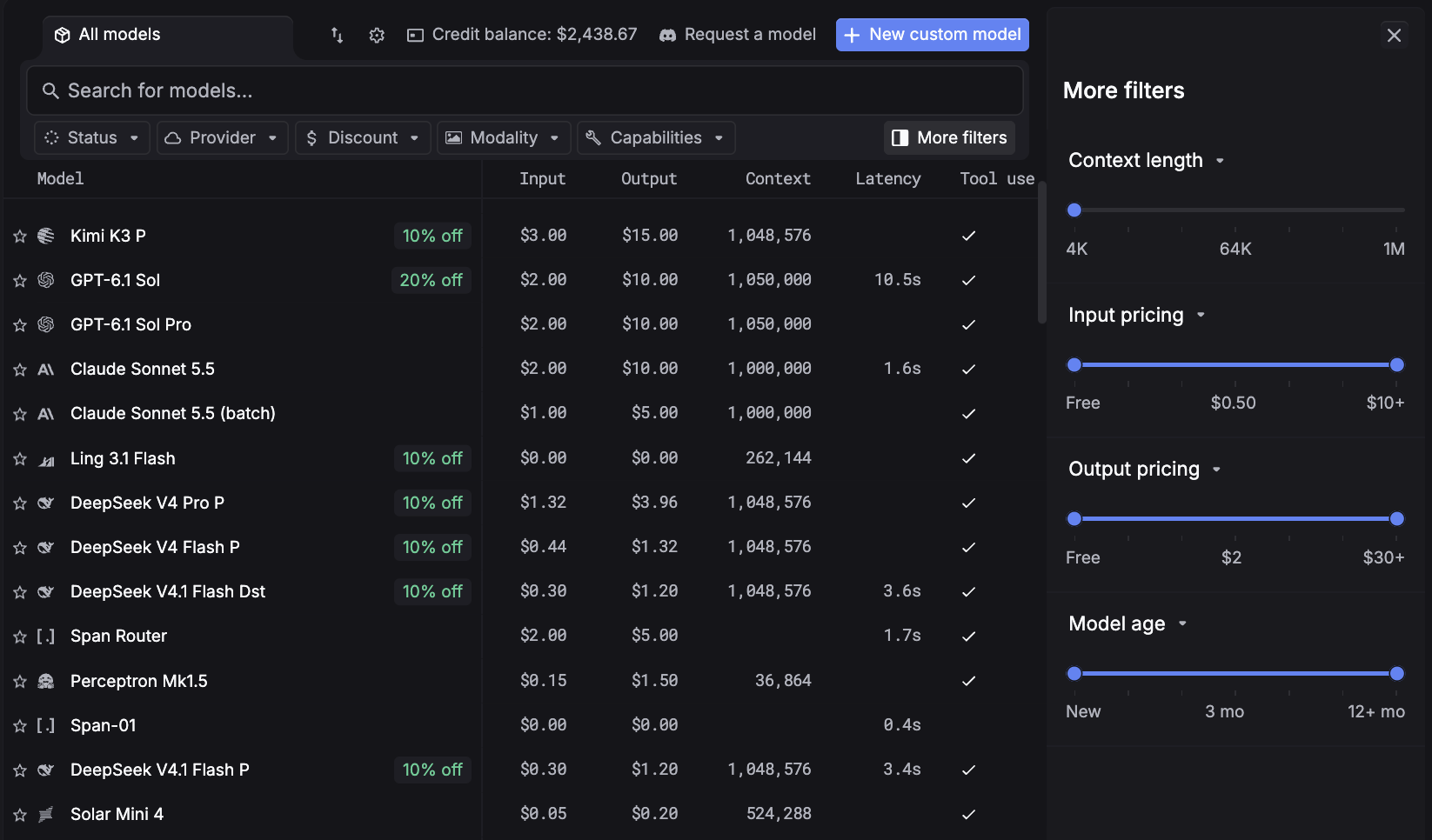
Route, observe, and evaluate every LLM call. Respan's AI gateway sends every model call through one OpenAI-compatible endpoint to 1,000+ models, with fallback chains and retries so a provider outage or rate limit doesn't take your product down.
Observability and evals live inside the router, and guardrails block prompt injection and jailbreak attempts before a request reaches the model. That changes what you can do with each request:
- Every request is already a trace - Each routed call is traced and priced as it happens, ready to score, with no second integration to wire up.
- Scores lead back to their cause - Respan scores live production traffic against behaviors you define, and clicking any score lands you on the trace behind it.
- The fix happens in the same product - A bad production trace becomes a dataset, then an experiment against a new prompt version, so you watch the score move before the change ships.
- Routing that knows the task - Respan Router, in beta, picks the model for each task and weighs cache costs before switching, so a cheaper model doesn't end up costing more.
Instead of reading logs after the fact, use Respan to run observability in production, know when production shifts, and act before it spreads.
Switching from Portkey: Point your OpenAI-compatible client at a new base URL. Configs map to ordered fallback lists, virtual keys to per-key spend limits, and prompt templates to versioned prompts you deploy without shipping code.
Per-request record: A trace for every call, nested across agent steps, with the model that served it, its cost, and any eval scores attached.
Spend controls: Hard caps per API key and budgets per end customer, so a leaked key or a runaway customer stops at a ceiling.
Pricing: Free includes 100,000 logs and 7-day retention. Team is $199 a month billed yearly, with higher gateway throughput and 30-day retention.
2. LiteLLM
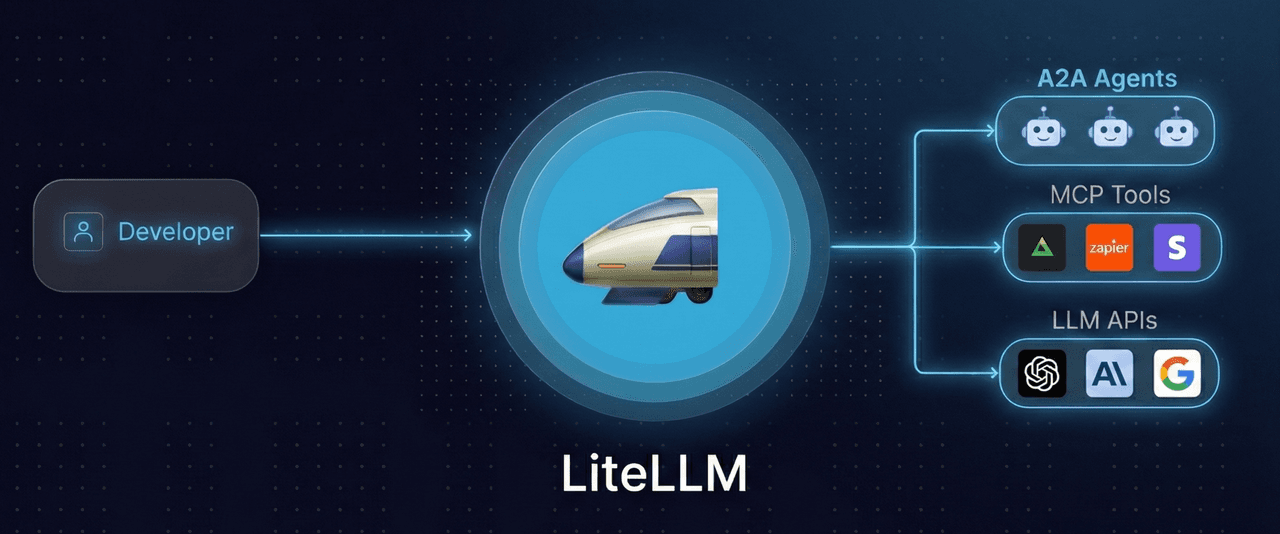
LiteLLM is an open-source proxy that normalizes calls to 100+ LLM providers into OpenAI format. Routing, load balancing, fallbacks, virtual keys with budgets, and spend tracking are all in the open-source build, and because you operate it, keys and traffic stay in your infrastructure.
It suits teams with platform engineers who want to own the gateway outright. The tradeoff is that SSO beyond five users, JWT auth, and audit logs sit in the Enterprise tier. A production deployment also means running Postgres, plus Redis once you scale past one instance, and that infrastructure is what to put next to the price of hosted LiteLLM alternatives.
Switching from Portkey: The proxy has to exist before any traffic moves, so this is infrastructure work first and a base URL change second. Fallback chains and virtual keys have direct equivalents, and prompt templates can move to LiteLLM's beta prompt management or an integrated tool.
Per-request record: Request logs, with deeper observability delegated to callbacks into tools like Langfuse or MLflow, and no native eval layer.
Spend controls: Budgets on virtual keys, in the open-source build.
Pricing: The open-source gateway carries no license fee, so the real cost is infrastructure and on-call time. Enterprise is quoted rather than published.
3. OpenRouter
OpenRouter puts 500+ models from 80+ providers behind one OpenAI-compatible API and one bill. Its guardrails can restrict a request to providers that meet your data retention terms, alongside PII redaction and prompt-injection detection. Stripe agreed to acquire OpenRouter in August 2026, and OpenRouter says it will keep operating as it is.
OpenRouter suits teams who mainly used Portkey to reach a lot of models. It's managed only, so teams that need the gateway inside their own network can't use it, and that requirement is where self-hosted OpenRouter alternatives come in.
Switching from Portkey: A base URL change and a single key, with no infrastructure to stand up first. Fallback order and provider preferences move into request parameters.
Per-request record: Activity logs with cost and token usage for each request.
Spend controls: Budgets and guardrails per workspace, available on paid plans rather than the free tier.
Pricing: Tokens pass through at provider list price, with a 5.5% fee on credit purchases ($0.80 minimum). Bring-your-own-key is free up to $25,000 of list-price inference a month, then 5%.
4. Merge Gateway
Merge Gateway is the LLM routing product from Merge, the unified API company. It routes by cost, latency, or quality, fails over between providers, and puts every provider on a single Merge bill.
Data loss prevention and prompt-injection protection come on every plan, and an Evals API runs eval suites from CI. VPC deployment requires Enterprise, and Merge doesn't document prompt management, so Portkey templates need another home.
Switching from Portkey: OpenAI SDKs work by pointing the base URL at Merge's /v1/openai path. Routing rules and fallbacks get rebuilt inside Merge.
Per-request record: Multi-step traces grouped by a trace ID header, with cost and token totals per run.
Spend controls: Spend caps by project, team, or customer.
Pricing: The free plan covers free models only. Pro bills LLM cost plus a 5% fee and includes $10 a month in credits that don't roll over, and Enterprise is contracted.
5. Bifrost
Maxim's Bifrost is written in Go and built to run on infrastructure you control. The open-source build covers fallback across providers and models, weighted load balancing, simple and semantic caching, virtual keys, an MCP gateway, and Prometheus and OpenTelemetry export, and it works as a drop-in for the OpenAI, Anthropic, and Google GenAI SDKs.
Governance beyond virtual keys is a different story, since SSO, RBAC, guardrails, audit logs, adaptive load balancing, and clustering are Enterprise features.
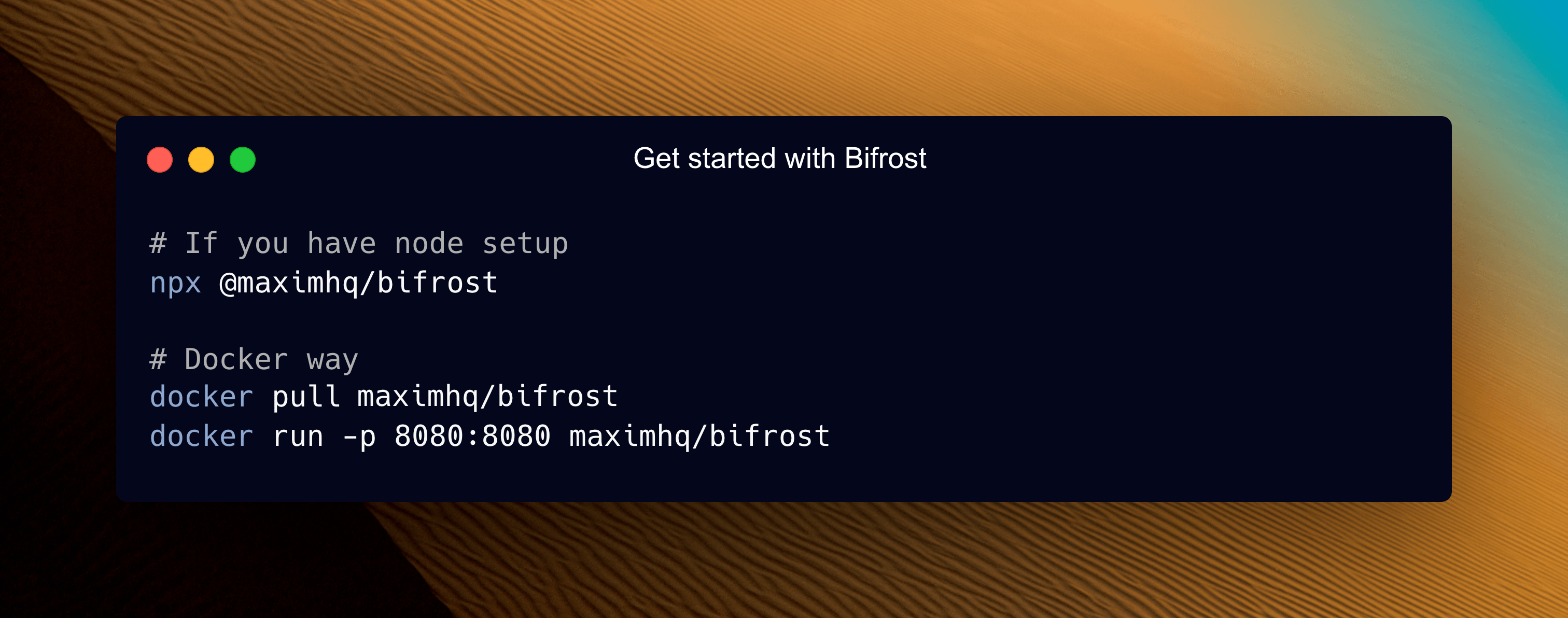
Switching from Portkey: Self-hosting comes first, though Bifrost starts from a single NPX or Docker command, and after that it's a base URL change. Portkey's virtual key model maps closely to Bifrost's.
Per-request record: Metrics and traces exported to the Prometheus or OpenTelemetry stack you already run, with evaluation in Maxim's separate platform.
Spend controls: Virtual keys carry budgets and rate limits without a paid plan.
Pricing: Free to self-host. Enterprise is custom-priced, with a 14-day trial.
6. Vercel AI Gateway
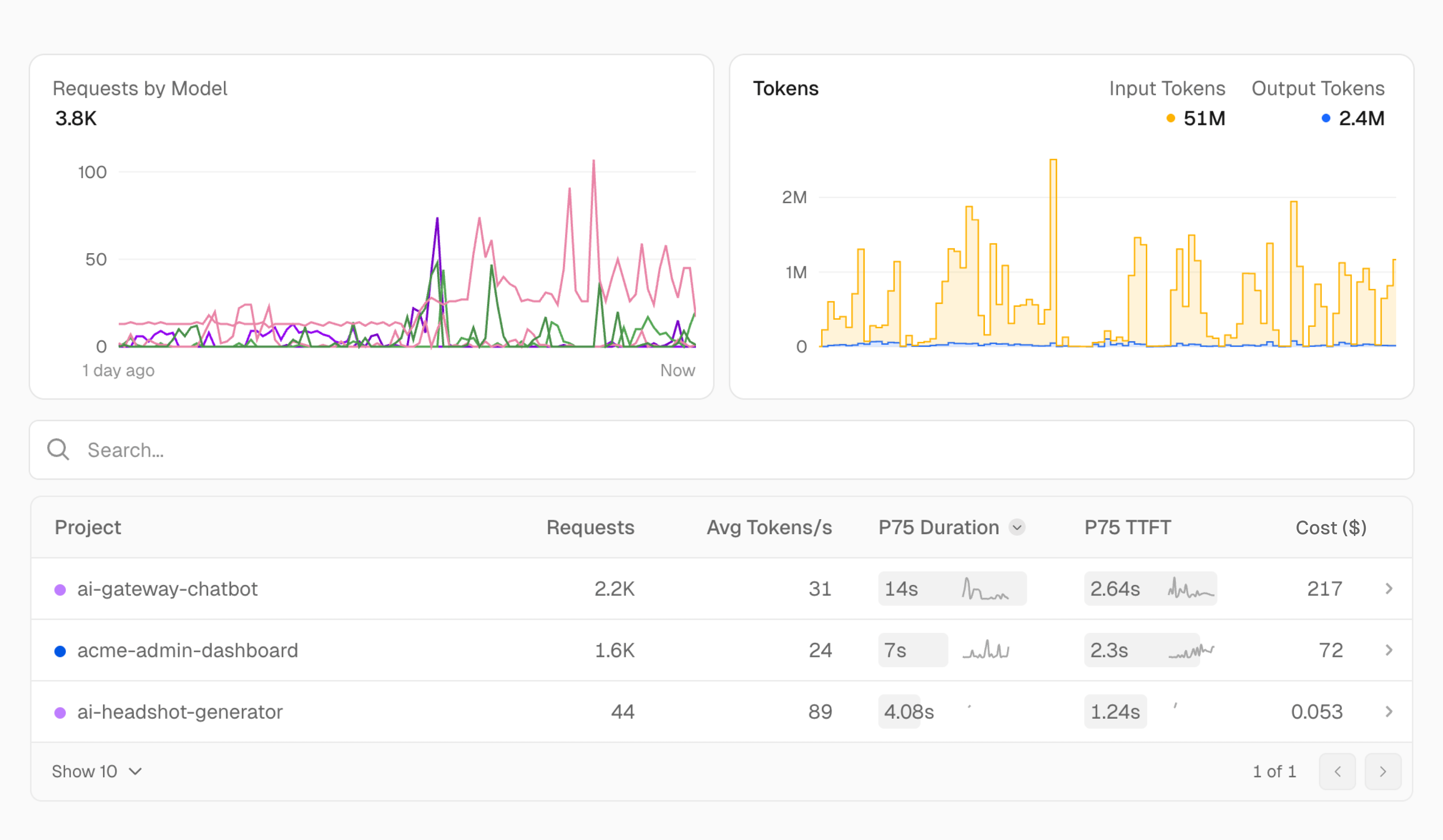
Vercel AI Gateway gives you one endpoint across hundreds of models, with automatic retries and fallback across a model's other providers. It accepts OpenAI Chat Completions, OpenAI Responses, and Anthropic Messages formats.
It's managed only, so prompts and completions transit Vercel's infrastructure. There's no content filtering, although zero data retention, provider allowlists, and regional inference cover the governance side. It fits Next.js teams whose stack already lives on Vercel, and the platform coupling matters less there than for teams comparing Vercel AI Gateway alternatives.
Switching from Portkey: Close to zero work if your app already deploys to Vercel, since it's an endpoint swap. Provider routing runs on order and allowlist options rather than weighted load balancing.
Per-request record: Usage, spend, token counts, and time to first token for each request, with traces exportable through Trace Drains on Pro and Enterprise.
Spend controls: Budgets per team, project, API key, or member.
Pricing: No markup on tokens, including bring-your-own-key, which requires purchased credits. Each team gets a $5 monthly credit until it buys credits, and team-wide zero data retention or provider allowlisting adds $0.10 per 1,000 requests.
7. Cloudflare AI Gateway
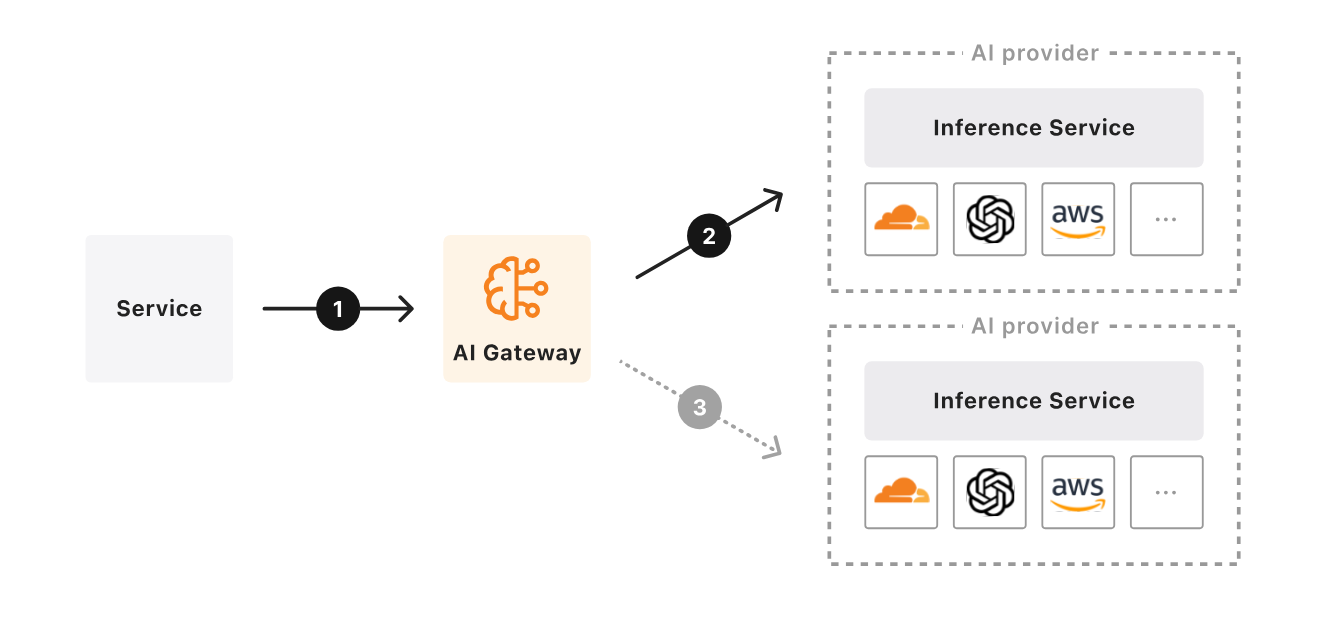
Cloudflare AI Gateway proxies model traffic across Cloudflare's edge network, so the control plane sits close to your users rather than in one region. A default gateway is created on your first request, and analytics, exact-match caching, and rate limiting are free on every plan.
Guardrails and DLP scan prompts and responses, and Dynamic Routing handles fallback. Built-in evaluations are deprecated and closed to new accounts, so quality scoring has to happen in another tool.
Switching from Portkey: Point your OpenAI SDK at the OpenAI-compatible endpoint, since the older Universal Endpoint is deprecated. Fallback chains get rebuilt in Dynamic Routing.
Per-request record: Request-level logs, so a multi-step agent run arrives as separate calls rather than one trace.
Spend controls: Rate limiting per gateway.
Pricing: Core features cost nothing beyond your Cloudflare plan. Credits bought through Unified Billing carry a 5% fee, and Logpush bills separately on Workers Paid.
8. TrueFoundry
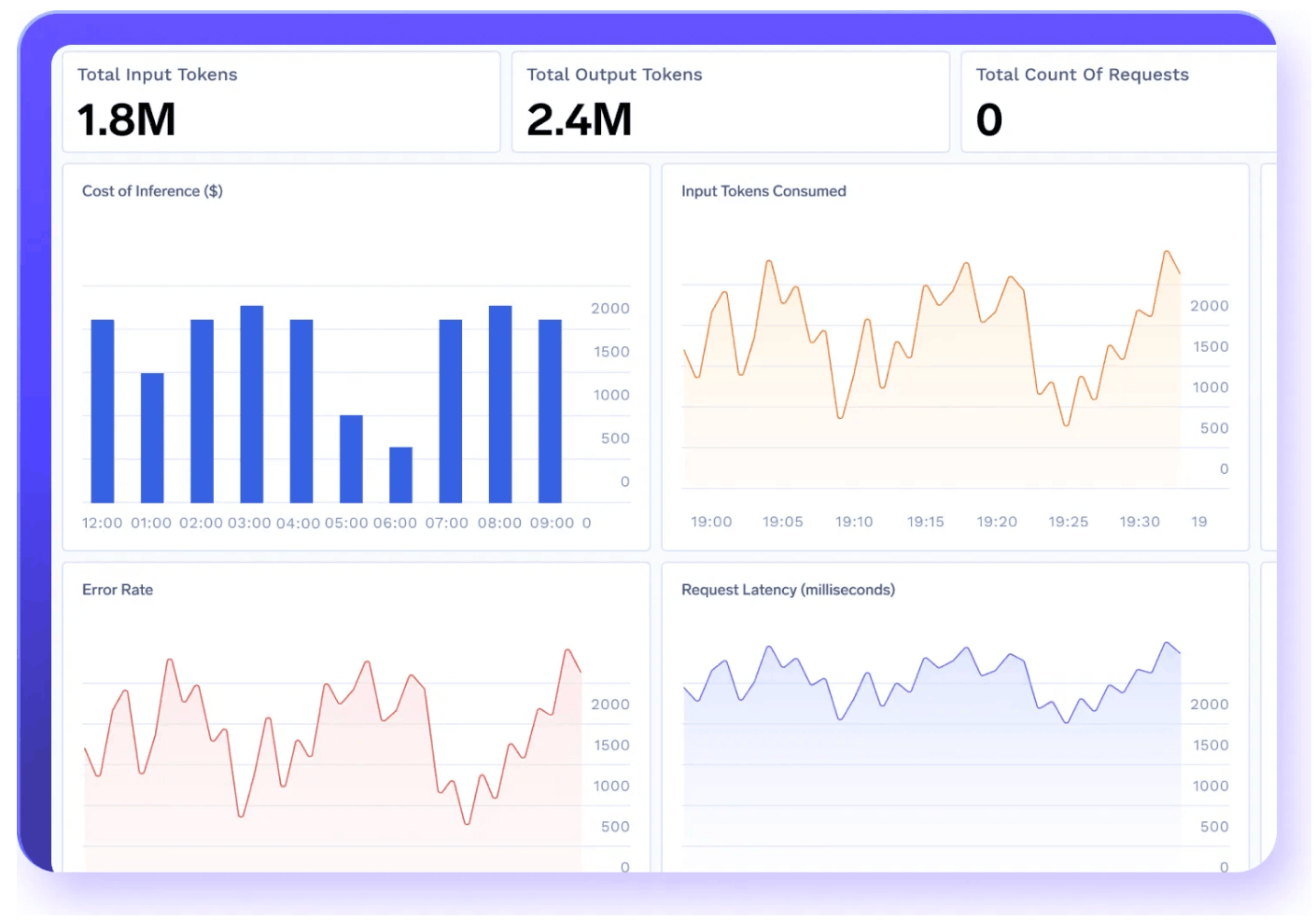
TrueFoundry pairs an LLM gateway with a model deployment platform, so the same product routes to provider APIs and to models you run on your own GPUs. The gateway covers weighted or latency-based load balancing, retries, priority fallback, an MCP gateway, versioned prompt templates, and guardrails.
Because the platform is broader than a gateway, onboarding includes model serving and fine-tuning features a routing-only team won't use. Running the gateway in your own cloud or on-prem requires Enterprise.
Switching from Portkey: The hosted version takes an endpoint swap, and fallbacks, budgets, and prompt templates all have equivalents.
Per-request record: Request-level logs with latency metrics.
Spend controls: Budget rules scale by plan, from one on Developer to ten on Pro and unlimited on Enterprise.
Pricing: Developer is free for up to three users at 10,000 requests each. Pro is $25 per user a month with 20,000 requests per user pooled across the team and $20 per additional 100,000, and it's where SSO and guardrails unlock.
9. Kong AI Gateway
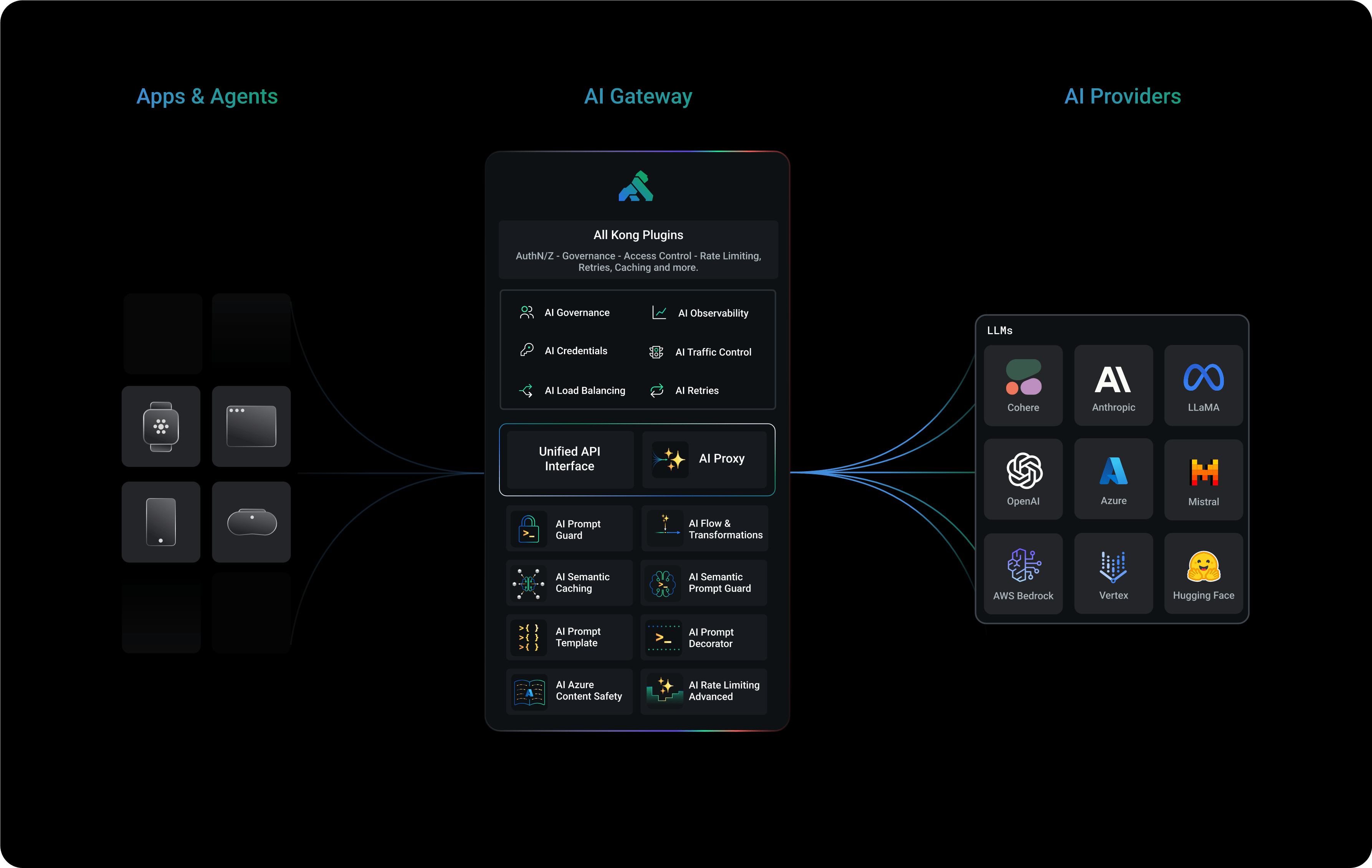
Kong AI Gateway adds AI routing to Kong's existing API gateway, so model traffic follows the same plugins, policies, and control plane as the rest of your APIs. Its AI Proxy plugin accepts OpenAI-format requests, and other plugins add prompt templates, prompt guards, token-based rate limiting, and an LLM-as-judge scorer.
Much of that surface needs the Enterprise license, including PII sanitization, semantic caching, the MCP proxy, the LLM-as-judge plugin, RBAC, SSO, and audit logs. Organizations already standardized on Kong get model traffic under the governance they already run, while teams starting fresh can compare Kong AI Gateway alternatives that don't need an API gateway underneath.
Switching from Portkey: You configure a route and the AI Proxy plugin before there's a URL to point an OpenAI SDK at. Prompt templating has no versioning, so Portkey's versioned templates lose their history.
Per-request record: Token analytics in Konnect, with LLM-as-judge scoring available on Enterprise.
Spend controls: Token-based rate limits, with token budgeting tracked in Konnect.
Pricing: Plus starts at $25 a month plus usage and includes five LLMs, then $100 a month per additional model, with control planes priced by type (Dedicated Cloud Gateways run $500 a month each). Enterprise is custom.
10. LLM Gateway
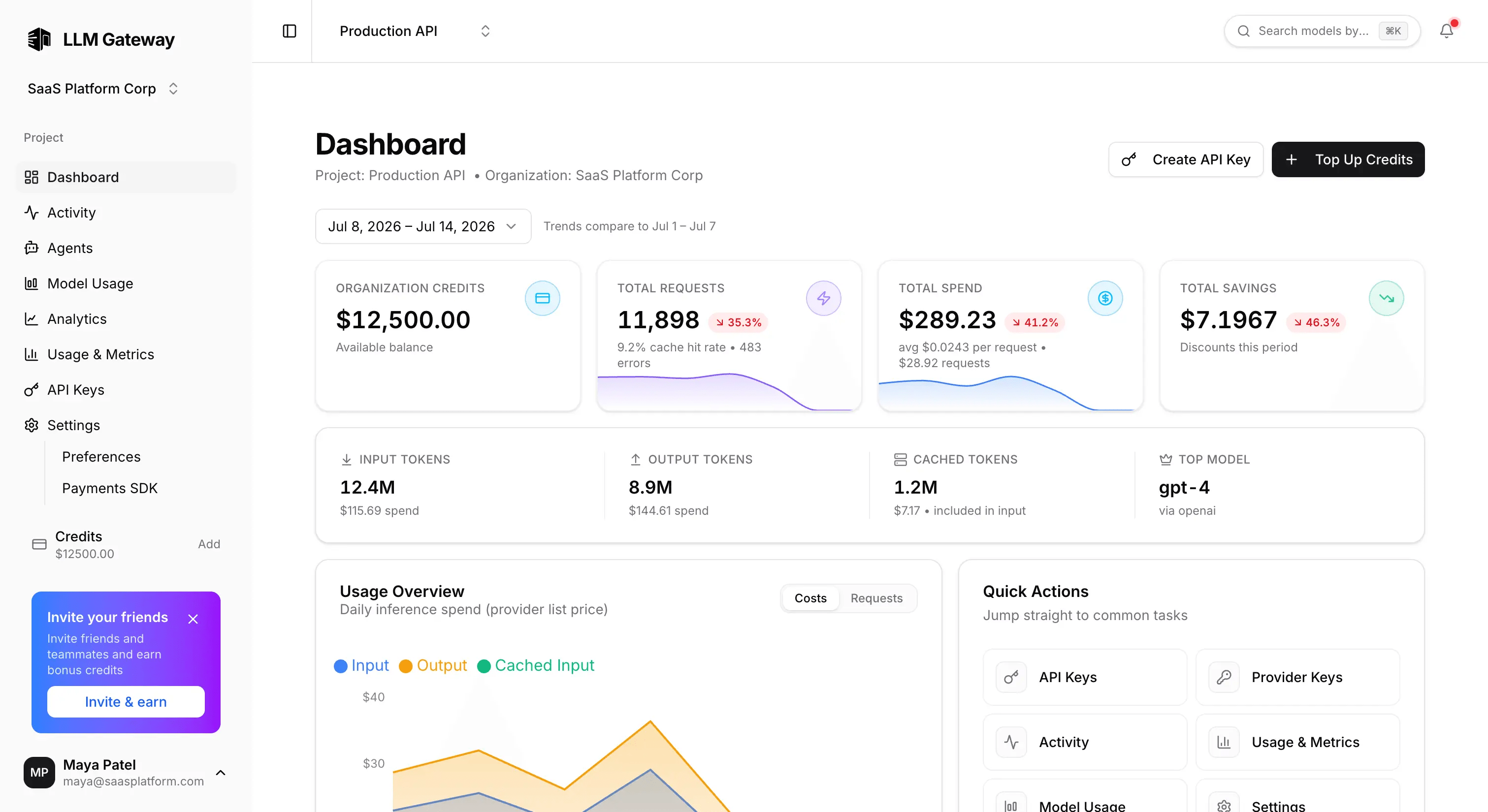
LLM Gateway reaches 250+ models across 40+ providers through one OpenAI-compatible API, and its core is open source under AGPLv3, so you can self-host it or use the hosted platform.
Cost and latency analytics, caching, and budgets come on every plan, while guardrails for prompt injection and PII sit in Enterprise along with SSO and audit trails. There's no paid self-serve tier between the free plan and Enterprise.
Switching from Portkey: On the hosted platform it's a URL change, and self-hosting comes first if you want the gateway inside your own network.
Per-request record: Cost and latency analytics for each request.
Spend controls: Budgets per API key or per team member.
Pricing: The free plan charges 5% on credit usage and nothing when you bring your own provider keys. Enterprise is custom, with a 30-day trial and an uptime SLA.
11. Helicone
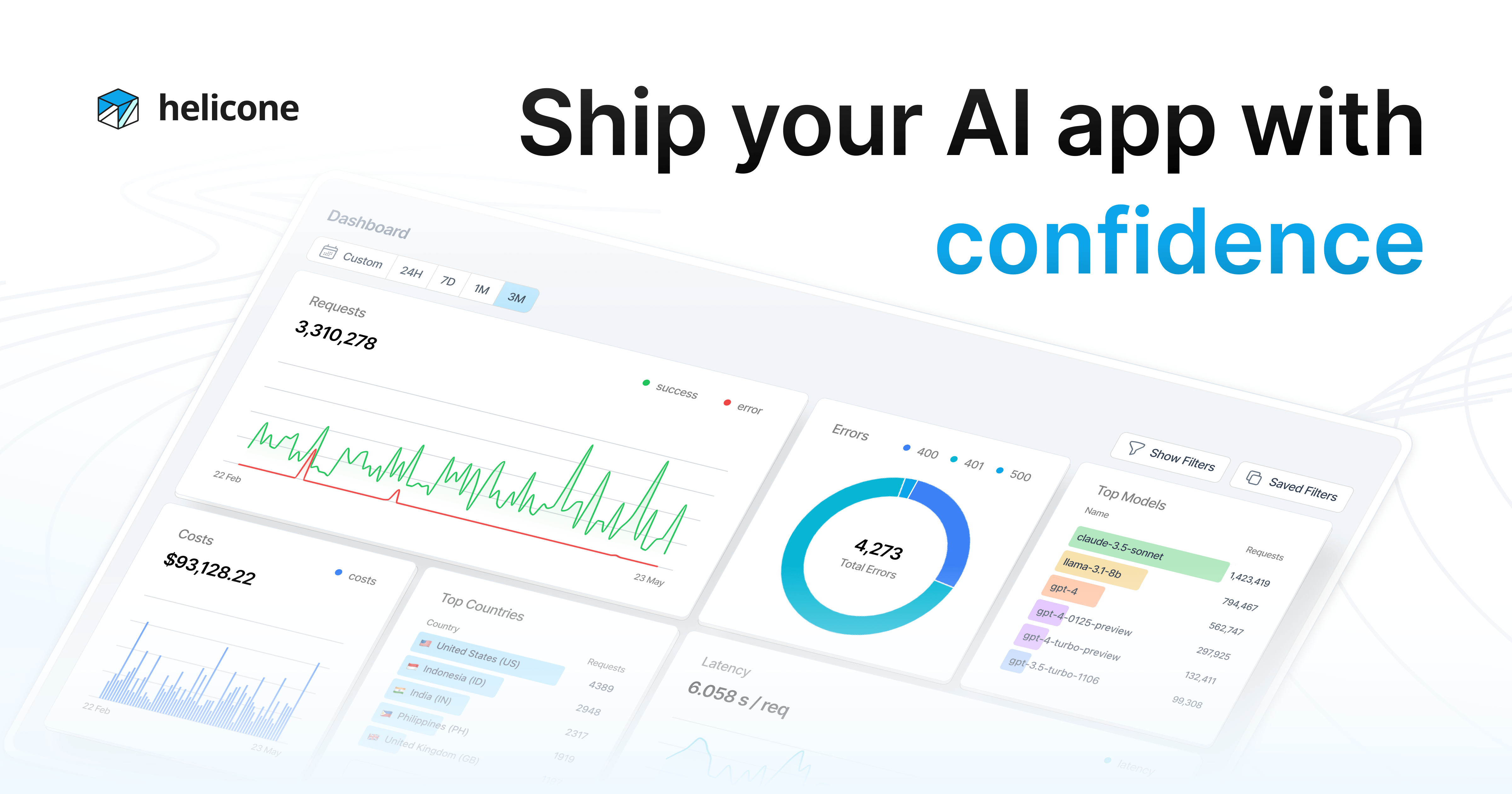
Helicone combines an AI gateway with request logging, covering provider fallback, cheapest-first routing, and exact-match caching. Mintlify acquired Helicone on March 3, 2026, and the product is now in maintenance mode, with security updates, bug fixes, and new model support still shipping.
That makes it a reasonable home for existing installs. Moving off one acquired product onto another in maintenance mode is a migration you may end up repeating, though, which is why Helicone alternatives are worth a look before you commit.
Switching from Portkey: Familiar, since Helicone uses the same proxy shape Portkey did and the switch is a one-line endpoint change.
Per-request record: Request logs, plus Sessions that group calls into a multi-step agent run when you tag them with session headers.
Spend controls: Cost analytics for each request.
Pricing: Hobby is free with 10,000 requests a month and seven-day retention. Pro is $79 a month and Team $799, both billing usage above the same 10,000-request baseline, and the Apache 2.0 build is free to self-host.
12. Braintrust
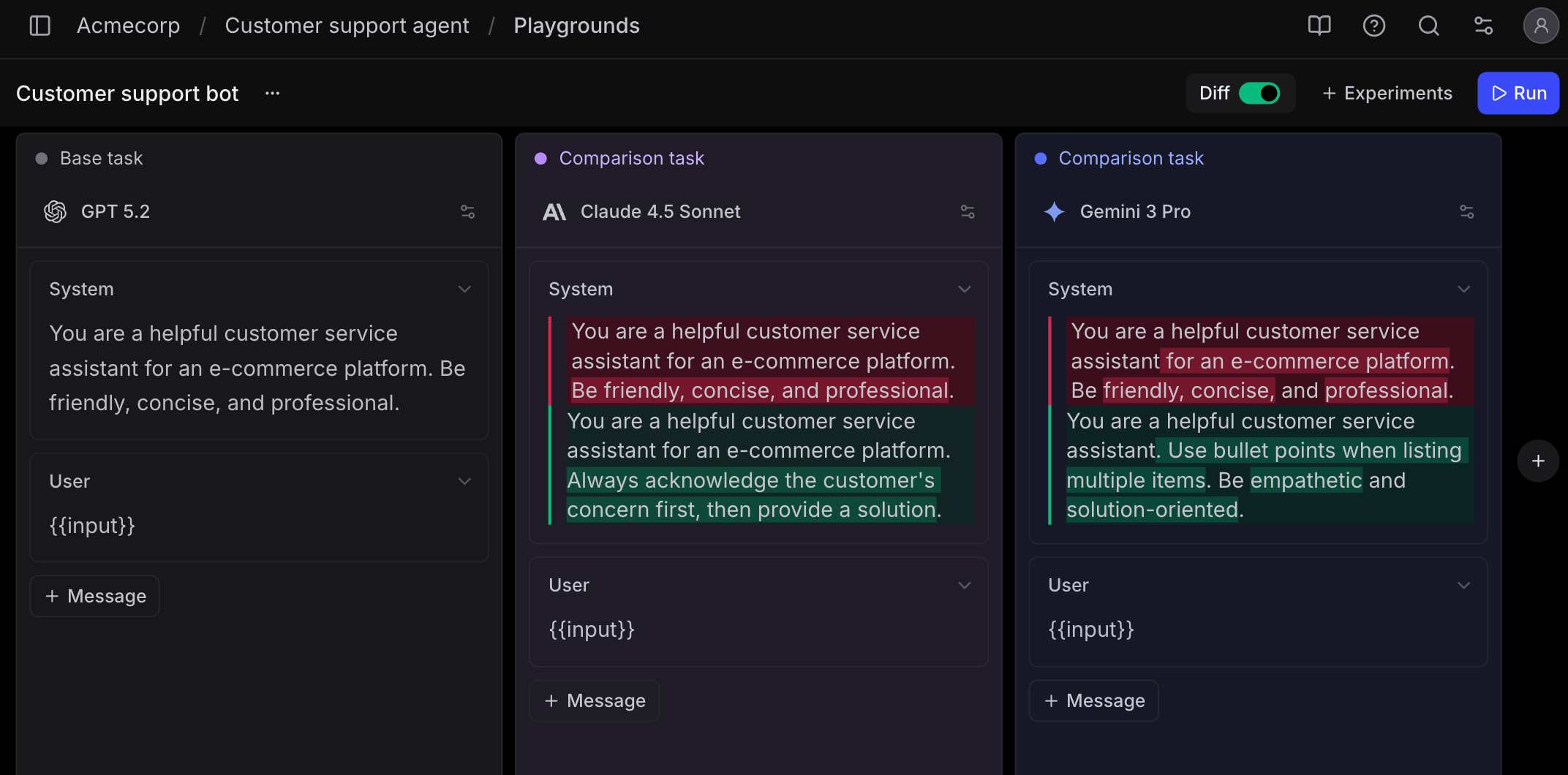
Braintrust is an evaluation platform that now runs its own gateway, in public preview, across major providers with failover and encrypted response caching. Calls routed through it can nest inside existing traces, which connects them to Braintrust's datasets, scorers, and online scoring rules.
The gateway is free during the preview but has no SLA, and built-in models called through it need the Pro plan. That matters if you need a gateway with an SLA today, which is where Braintrust alternatives with a generally available gateway pull ahead.
Switching from Portkey: Point your SDK at the gateway URL and set fallback providers with a request header. Portkey's prompt templates can move into Braintrust's prompt versioning.
Per-request record: Traces with scores attached, from LLM-as-judge, autoeval, or custom code scorers.
Spend controls: Usage and cost tracked in dashboards alongside eval scores.
Pricing: Starter is free with 1 GB of processed data, 10,000 scores, and 14-day retention. Pro is $249 a month with 5 GB, 50,000 scores, and 30-day retention, so the bill tracks processed data rather than request count.
How to Migrate Off Portkey
The code change is small because every option here accepts OpenAI-format requests. What takes time is the configuration Portkey held, since none of it ports automatically.
- Export your logs before retention lapses - Retention runs three days on Developer and 30 on Production, so anything you want for baselining needs pulling now rather than after the cutover.
- Pull your Configs as JSON - Fallback chains, load balancing rules, retries, and cache settings live in Portkey Configs, which the Admin API returns as JSON. That JSON is Portkey-specific, so translate it into the new gateway's format with the order intact.
- Map your virtual keys - Each one carries a budget, a rate limit, and a set of permissions. These become per-key spend caps or budget rules in the new tool, with different names and different scoping.
- Account for prompt templates - If you deployed prompts by ID rather than shipping them in code, only some gateways can receive them, so check this before you pick.
- Run both in parallel for a day - Send real traffic through the new path and reconcile token counts and cost against your provider invoices before tearing anything out.
- Verify you kept what you moved for - If the reason was visibility, confirm the new tracing can tell you which model served a request and whether output quality shifted after the switch. If it can't, the migration solved the ownership question and left the harder one in place.
Most of that work happens before any traffic moves, which is why the inventory takes longer than the code.
Frequently Asked Questions
What is the best Portkey alternative?
For teams who used Portkey as a full developer platform, Respan covers the routing, tracing, evals, and prompt management that Portkey bundled, behind the same base URL change Portkey users already made once. If you only used the router, LiteLLM and Bifrost are open-source options you run yourself, and OpenRouter needs only a base URL and one key. If routing logic itself is the priority, the wider field of LLM routers is worth comparing too.
Is Portkey still available after the Palo Alto Networks acquisition?
Yes. Portkey's pricing page still lists the free Developer plan and the $49 Production plan, under a banner saying Portkey is now Prisma AIRS AI Gateway and generally available for all enterprises.
What is Prisma AIRS AI Gateway?
Prisma AIRS AI Gateway is the name Palo Alto Networks gave Portkey after the acquisition. Palo Alto positions it as an enterprise control plane that governs which people and agents can reach models, data, and tools, with policy enforced inline.
Is Portkey's open-source gateway still maintained?
The repository is still public and hasn't been archived, but activity has slowed. The last tagged release was v1.15.2 on January 12, 2026, the last commit landed on May 25, four days before the acquisition closed, and neither the README nor the acquisition announcement mentions its future. A self-hosted install keeps working, but there are no new releases to plan around.